English
  العربية
  Español
  Deutsch
  Français
  Português
  Русский
  日本語
日本語  Italiano
  Nederlands
  Svenska
  Suomi
Suomi  ไทย
ไทย  Dansk
Dansk  Ελληνικά
  Bahasa Melayu

According to statistics, there are nearly 1 million registered active soccer players in Canada, spread across hundreds of clubs and communities in every province and territory nationwide.
With Canada’s long winters and limited outdoor field availability, small-sided soccer formats such as 5-a-side have grown rapidly in popularity. Unlike traditional outdoor grass pitches, 5-a-side artificial soccer pitches can be hosted in indoor or hybrid facilities, making it a year-round option for players, leagues, and commercial operators across the country.
As participation and competition continue to expand, so does the demand for quality playing surfaces that can handle frequent play. Artificial turf has emerged as the preferred choice for many 5-a-side facilities because it offers durability, consistent performance, and all-season usability in Canada’s varied climate. This guide examines how these fields are designed, what turf features matter most, and what facility planners should consider when building or upgrading 5-a-side artificial soccer fields.
Why 5-a-Side Soccer Is Growing Fast in Canada?
- Climate plays a major role: many regions experience extended periods of cold weather and precipitation that make outdoor grass fields unusable for large portions of the year. As a result, indoor synthetic turf facilities have become critical for year-round play and training.
- Competitive structures are also evolving. The annual Futsal Canadian Championship, for example, drew 16 teams and 212 registered players to compete in Regina, Saskatchewan in 2025, highlighting strong involvement in small-sided formats at the national level. These trends reflect broader support for small-sided soccer across provincial leagues, community programs, and amateur competitions that emphasize skill development, accessibility, and participation.
- Urbanization also contributes to the appeal of 5-a-side facilities. Compact, multi-purpose fields fit more efficiently into school gyms, community recreation centers, and commercial sports complexes, maximizing land use while supporting more frequent bookings and diverse programming compared with full-size soccer fields.
Standard Sizes & Layouts for 5-a-Side Soccer Fields
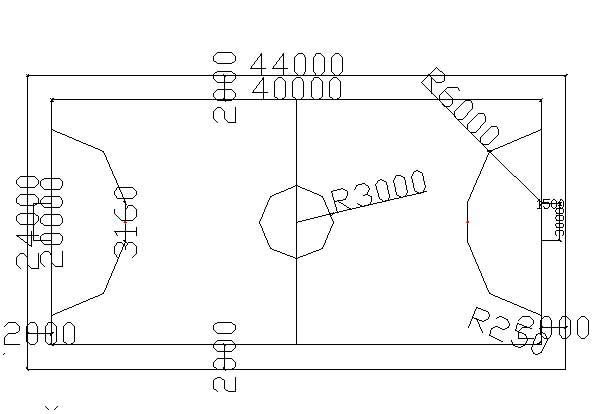
In Canada, whether indoors or outdoors, 5‑a‑side soccer fields are designed to balance dynamic, fast‑paced play with space and facility constraints common in community centres, indoor domes, and commercial venues. Unlike full‑size 11‑a‑side fields, there are no rigid national standards for 5‑a‑side pitch size, but most facilities follow well‑accepted ranges that align with international small‑sided football guidance and local practice.
Typical Mini Soccer Pitchs Dimensions
Most 5‑a‑side artificial soccer fields in Canada fall within the following ranges:
- Length: approx. 25 m to 42 m (82 ft – 138 ft)
- Width: approx. 15 m to 25 m (49 ft – 82 ft)
- Common Practical Size: 30 m × 20 m or 32 m × 22 m
These ranges are widely used for recreational leagues, youth programs, and adult small‑sided competition. The exact size often depends on available space, facility footprint, and whether the pitch is indoor or outdoor.
Indoor vs Outdoor Layout Considerations
- Indoor Facilities: Design tends to stay toward the smaller end of the range (e.g. 25–35 m length), because building size and structural supports limit space. Good planning ensures proper clearance for lighting, ventilation, and safety netting.
- Outdoor Venues: Outdoor layouts can approach the upper range (38–42 m in length) when space allows, giving players a more open feel while still preserving the advantages of small‑sided play.
Layout Tips for Canadian Facilities: Ensure that there is at least a 2-meter buffer zone around the synthetic turf to accommodate fencing, safety netting, or player safety. Also, use a semi-circular penalty area and scaled-down goals (~3.0 m wide × ~2.0 m high). If you have enough space, you can set up multiple five-a-side soccer pitches side by side to maximize venue occupancy and community utilization.
Why Artificial Turf Is the Preferred Surface for 5-a-Side Soccer in Canada
In Canada, artificial turf has become the surface of choice for most 5-a-side soccer facilities, largely due to climate and usage intensity. Natural grass fields are typically limited to late spring through early fall, while rain, snow, and freeze–thaw cycles significantly restrict their availability during the rest of the year. For operators aiming to provide consistent access and predictable scheduling, these limitations create operational and financial challenges.
By contrast, artificial turf allows 5-a-side soccer fields to remain playable year-round, including inside domes, steel-frame buildings, and enclosed sports complexes. This is especially important for facilities that host multiple leagues, training sessions, and casual rentals every day. A single 5-a-side artificial soccer pitch may accommodate dozens of matches per week, placing far greater wear demands on the surface than a traditional outdoor field.
Maintenance is another key consideration. Natural grass requires ongoing irrigation, mowing, fertilization, and seasonal repair—costs that are difficult to justify for compact, high-traffic pitches. Artificial turf systems significantly reduce routine maintenance needs while delivering consistent ball response and footing, making them a practical solution for commercial operators, schools, and community centers across Canada.
Best Artificial Turf Features for 5‑a‑Side Soccer Fields in Canada
When planning a 5‑a‑side artificial soccer field in Canada, choosing the right artificial turf system is essential to ensure performance, durability, and year‑round usability. Unlike landscape turf, sports turf systems must handle frequent play, and rapid direction changes.
Material & Yarn Quality
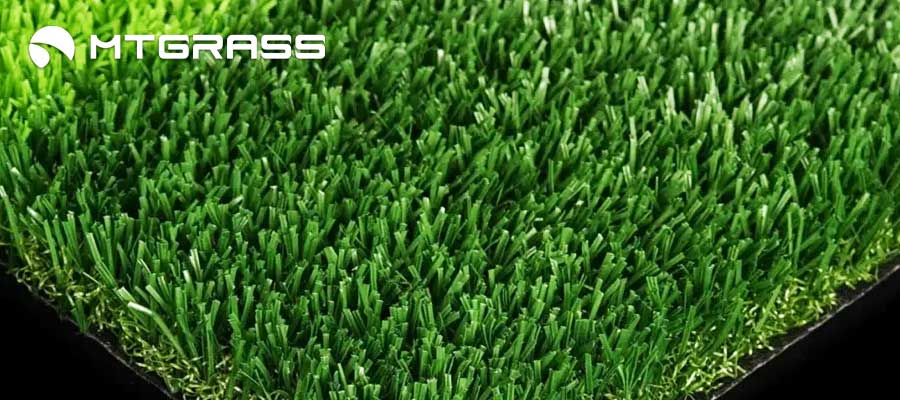
For high‑use soccer fields, polyethylene (PE) monofilament fibers with UV (≥5000h) stabilization are recommended because they balance softness, resilience, and resistance to long hours of play, even under Canada’s intense summer sunlight and winter freeze cycles.
Pile Height & Density
5‑a‑side soccer fields often use turf with pile heights in the 25–40 mm range — short enough to allow fast ball roll and controlled touches, yet tall and dense enough to provide cushioning and minimize compaction during play. Higher stitch density (≥ 16800stitches/㎡) enhances durability for repeated impacts and cutting movements.
Backing & Shock Absorption
A robust PU backing system helps maintain turf stability, reducing seam separation under heavy use. Many facilities also include a shock pad layer beneath the turf to improve impact absorption, which is especially valuable for indoor and school settings where player safety and comfort are priorities.
Infill Configuration
Low‑infill or non‑infill football grass systems are common in enclosed or indoor 5‑a‑side fields to simplify maintenance and reduce infill migration. In outdoor or heavily used commercial settings, advanced infill materials (e.g., Silica Sand, TPE or EPDM) improve traction and resilience without sacrificing surface safety.
Cold‑Climate Reliability
Because Canada’s climate ranges from wet springs to freezing winters, artificial turf systems designed for the market often feature enhanced freeze‑thaw stability and improved drainage performance to prevent water accumulation and reduce frost heaving.
As a FIFA-approved artificial turf manufacturer, MightyGrass provides fully customized turf systems with in-house yarn extrusion and backing production. For Canadian 5-a-side fields, they frequently purchase PE or PE+PP artificial turf with grass fiber heights of 30 mm, 32 mm, 35 mm, and 40 mm, and use a PU backing, and stitch densities optimized for both infill and non-infill systems (16800stitches/㎡ or 21000stitches/㎡). For facility owners, contractors, and developers seeking a reliable, standards-driven solution for 5-a-side soccer fields in Canada, working with a manufacturer like MightyGrass means fewer compromises, and a surface designed to perform consistently over the long term.
How Much Does a 5‑a‑Side Artificial Soccer Pitch Cost in Canada?
Cost is one of the first questions facility planners face, and it’s important to consider realistic ranges based on recent Canadian market conditions rather than vague averages.
Material & Surface Costs (Per Square Foot)
Artificial turf for sport applications in Canada varies by performance level and specification:
- Entry‑level/Recreational Systems: ~CAD $2.50 – $4.00 per sq ft — suitable for light‑use training or youth fields with basic performance expectations.
- Municipal / School Grade Turf: ~CAD $4.00 – $6.50 per sq ft — better resilience for frequent play and moderate weather exposure.
- Premium / High‑Performance Turf: ~CAD $6.50 – $9.00+ per sq ft — optimized yarn, backing, and cold‑climate durability for heavy‑use facilities.
These figures represent turf materials only and do not include base work, installation, or accessories.
Installation & System Costs
Beyond turf alone, the overall installed cost depends on site conditions, drainage design, shock pad inclusion, and labor:
- Base preparation & drainage: Essential for outdoor or seasonal freeze/thaw resilience; this can represent a significant portion of cost.
- Shock pad & accessories: Adds comfort and longevity under heavy play.
- Labor & logistics: Regional variance in labor rates (urban vs. provincial markets) influences total project cost.
In general, for a 5‑a‑side pitch, the combined installed cost (turf + labour + base + accessories) in Canada typically falls into a wide but realistic range tied to project complexity and quality expectations:
- Budget/entry field: ~CAD $15 – $20+ per sq ft
- Mid‑range commercial field: $20 – $30+ per sq ft
- High‑end premium installation: Can exceed $30 per sq ft when advanced shock pads and custom specifications are included.
While costs vary by location, design, and usage intensity, choosing the right turf system from the outset can significantly reduce long-term maintenance and replacement expenses. Partnering with a manufacturer like MightyGrass, which is familiar with the Canadian market and has extensive experience, can help you strike a balance between upfront investment and reliable performance throughout the site’s lifespan.
Key Considerations When Choosing Artificial Turf for 5-a-Side Fields
Choosing the right artificial soccer turf system for a 5-a-side soccer field involves multiple factors beyond price. Canadian facility planners often focus on:
- Usage intensity: Fields hosting daily leagues and training sessions require higher durability and reinforced turf systems.
- Indoor or outdoor environment: Weather conditions, UV exposure, and drainage requirements differ substantially between indoor domes and outdoor pitches.
- Player safety and comfort: Shock absorption, traction, and fiber softness affect injury risk and game experience.
- Maintenance expectations: Some systems require minimal upkeep, while others may need periodic brushing or infill replenishment.
- Longevity and warranty: Investing in a high-quality turf designed for Canadian conditions ensures longer performance and fewer replacement cycles.
Indoor vs Outdoor 5-a-Side Artificial Soccer Fields in Canada
In Canada, 5-a-side artificial soccer fields are commonly built in both indoor and outdoor settings, but the design priorities for each environment differ significantly. Indoor facilities—such as soccer domes, warehouses, and multi-sport complexes—are designed for year-round operation, often hosting continuous play regardless of weather conditions. As a result, indoor fields typically prioritize consistent ball roll, player comfort, and surface stability under constant use.
Outdoor 5-a-side fields, while exposed to seasonal conditions, remain popular in warmer months and transitional seasons. These pitches must be engineered to handle rainfall, snowmelt, and freeze–thaw cycles. Drainage performance, UV resistance, and backing stability become critical factors, particularly in regions with significant temperature variation. Compared to indoor fields, outdoor systems often require additional attention to base preparation and water management.
Despite these differences, both indoor and outdoor 5-a-side fields share a common requirement in Canada: durability under high usage. Whether installed inside a climate-controlled facility or exposed to the elements, the artificial turf system must maintain consistent performance, safe traction, and structural integrity throughout extended operating seasons.
Who Builds 5-a-Side Artificial Soccer Fields in Canada?
5-a-side artificial soccer fields in Canada are typically developed by a mix of commercial operators, community centers, schools, and municipal authorities. Commercial soccer facilities and indoor sports complexes often build multiple small-sided fields to maximize bookings and revenue, while community recreation centers and schools focus on accessibility and multi-purpose usage for youth and adult programs.
Project owners prioritize turf systems that can withstand high frequency use and varying environmental conditions. This includes durability for year-round play, consistent ball behavior, and safety considerations for players of all ages.
Manufacturers with in-house production capabilities and expertise in artificial turf, such as MightyGrass, are often chosen for these projects. Their ability to provide customizable solutions, from yarn selection to backing design, helps Canadian operators meet the demanding requirements of indoor and outdoor 5-a-side facilities without sacrificing performance or lifespan.
Final Thoughts
5-a-side soccer is a growing trend in Canada, driven by urbanization, youth development, and year-round participation needs. Building a durable, high-performance field requires thoughtful planning, including field layout, turf selection, and installation considerations. Facilities that invest in well-engineered artificial turf benefit from reliable performance, reduced maintenance, and consistent play for athletes of all ages.
Selecting a trusted supplier with expertise in cold climates, customizable turf solutions, and long-term support can significantly influence the field’s lifespan and user experience.
MightyGrass offers customized solutions to meet your specific needs, combining clever design with premium materials to create a safe, functional, and aesthetically pleasing five-a-side football pitch that will remain in optimal condition for years to come.
FAQ
Can a 5-a-side soccer pitch fit inside a standard warehouse or gym in Canada?
In many cases, yes. Most Canadian indoor 5-a-side facilities are built inside converted warehouses or sports halls, provided ceiling height, safety run-offs, and perimeter boards are properly planned.
How much space do you actually need beyond the playing area?
In addition to the pitch itself, facilities typically need extra space for safety buffers, fencing or boards, walkways, and player benches, which can add several meters on each side beyond the playing dimensions.
Is artificial turf necessary for indoor 5-a-side soccer?
While not mandatory, artificial turf is overwhelmingly preferred for indoor 5-a-side pitches because it provides consistent ball roll, shock absorption, and durability under intensive daily use.
Is a 5-a-side pitch suitable for youth training programs?
Absolutely. Many academies and clubs in Canada use 5-a-side pitches for technical training, small-group sessions, and skill development, especially during winter months.
Can a single site host multiple 5-a-side pitches?
Yes. Multi-pitch layouts are common in Canada and are often used by commercial facilities to increase scheduling flexibility and overall revenue potential.
How long does a 5-a-side artificial turf pitch typically last?
Lifespan depends on usage intensity and maintenance, but well-designed artificial turf systems can deliver many years of consistent performance in Canadian conditions.
Is 5-a-side soccer mainly recreational, or can it support leagues?
In Canada, 5-a-side soccer supports everything from casual rentals to structured leagues, corporate competitions, youth programs, and winter training leagues.