English
  العربية
  Español
  Deutsch
  Français
  Português
  Русский
  日本語
日本語  Italiano
  Nederlands
  Svenska
  Suomi
Suomi  ไทย
ไทย  Dansk
Dansk  Ελληνικά
  Bahasa Melayu
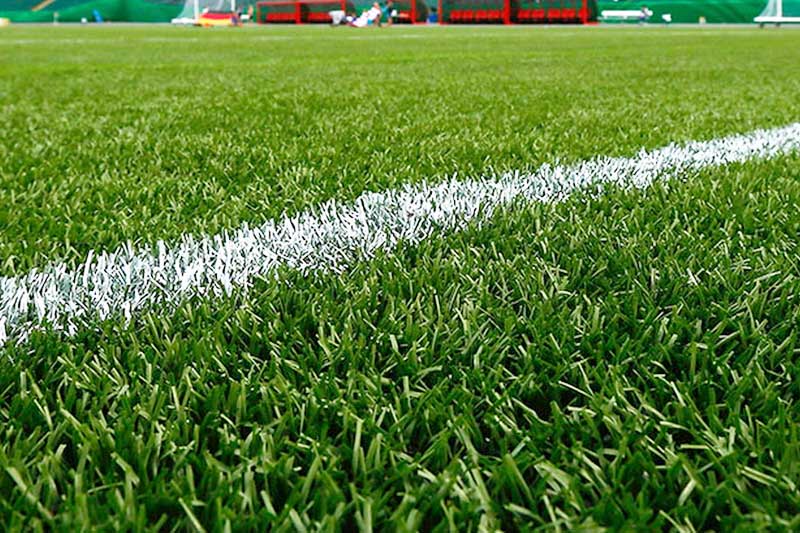
In football, World Cup stadiums represent the pinnacle of quality. In the past, World Cup venues primarily used natural turf; however, natural turf is expensive to maintain and highly susceptible to weather conditions. During a match after rain, some players complained that it felt like playing in a muddy quagmire.
With the advancement of artificial turf technology, FIFA-certified turf has gradually become the preferred choice for major global events. At the 2022 Qatar FIFA World Cup, five major venues used FIFA Football Turf. FIFA artificial turf can withstand an average of eight hours of high-intensity training per day—its ball rolling performance deviation is only 3.8%, outperforming natural grass fields. The training grounds of the 32 teams at the 2026 FIFA World Cup in Mexico City will all be 100% FIFA-certified artificial turf, with some venues (such as the SoFi Stadium in the United States) using mixed grass systems.
FIFA football turf offers a short construction period, lower maintenance costs, and improved drainage, saving both time and money while also enhancing the durability and safety of football fields. An increasing number of schools, communities, clubs, and even government projects are incorporating FIFA grass to ensure the long-term, efficient use of their sports fields and provide a safe and comfortable experience for athletes.
So, what makes FIFA Certified Turf so globally recognized and a standard feature in modern sports stadiums? Let’s take a closer look at the artificial grass FIFA approved.
FIFA turf certifications
What is FIFA artificial turf?
FIFA Turf refers to artificial grass products that have passed rigorous testing and certification by the International Football Federation (FIFA).
FIFA artificial turf must provide players with a playing experience close to that of natural grass and ensure player safety during matches and training. Furthermore, FIFA grass must offer long-term durability and meet the globally standardized FIFA football turf standards.
FIFA turf standards
So what are the FIFA artificial turf standards?
- Player Safety Standards
- Shock Absorption: Using AAA artificial turf equipment, impact FIFA turf with 20J of energy. This test is required to reduce the risk of injury to players and reduce stress on their knees and ankles.
- Vertical Deformation: Ensures FIFA grass provides adequate cushioning, similar to the feel of natural grass. The artificial turf training pitch for the Qatar World Cup utilizes a TPE shock-absorbing layer to stabilize deformation at 6.5 ± 0.3 mm.
- Rotational Resistance: High-quality FIFA turf offers a torque of up to 38Nm, ensuring optimal friction between the studs and the artificial turf, minimizing slips and sprains.
- Sports performance-related standards
- Ball Roll: Controls the distance a ball rolls, simulating the effects of a professional playing surface. Mighty Grass’s FIFA artificial turf achieves a ball roll distance of 6.3 meters, just 0.5 meters different from the natural grass at Wembley Stadium.
- Ball Bounce: The standard bounce height of a ball on natural grass is 0.85 meters. FIFA artificial grass can achieve a consistent bounce height by adjusting the density of the grass fibers.
- Friction coefficient (Friction): Ensures exercise comfort and avoids abrasions. Mighty Grass’s diamond-shaped artificial grass keeps the friction coefficient stable at 78±5, which is better than natural grass (65-90).
- Durability and environmental standards
- UV Resistance: PE+PU double-coated grass yarn has a UV blocking rate of up to 98.7%, ensuring that the lawn does not easily fade or age.
- Drainage Performance: The drainage rate is required to be ≥30mm/h, and the site availability must be maintained on rainy days.
- Eco-Standards: Ensures that artificial grass raw materials are environmentally friendly and do not release harmful substances. Mighty Grass can provide 100% recyclable artificial grass.
FIFA synthetic turf standards
FIFA divides artificial turf into two different grades, suitable for different types of field requirements.
- FIFA Quality: While natural grass pitches require renovation after three years, FIFA-quality artificial turf lasts six to eight years. And it can be used again just 15 minutes after a heavy rain. FIFA-quality artificial grass is a cost-effective and safe option.
- Application: Community stadiums and schools with an average daily usage of ≤8 hours; Amateur clubs with an average annual training session of ≤150 games.
- FIFA Quality Pro (FIFA 2-star artificial turf): Safeguards professional clubs and major international tournament venues, and is the designated standard for World Cup artificial turf. The FIFA quality pro artificial grass also functions effectively in rain and snow.
- Application: Professional clubs with an average daily training time of ≥10 hours; Venues hosting international events such as the World Cup qualifiers
FIFA quality turf vs normal artificial grass
| Standards | Normal artificial turf | FIFA football turf |
| Service life | 3-5 years(UV resistance 1500 hours) | 8-10 years or more (QUV accelerated aging test ≥3000 hours) |
| Safety | Unsafe, prone to sports injuries | Strict testing to ensure sports safety |
| Sports experience | The ball rolls unevenly, and the friction is uncomfortable | Close to natural grass and has a good experience |
| Maintenance costs | High, requiring frequent repairs | Low, saving money in the long run |
| Site value | Not recognized and unable to undertake large-scale events | Complies with international standards and can be used in professional competitions and government projects |
FIFA-certified artificial turf has an 82% lower carbon footprint, and its TPE granules offer an eight-year lifespan. Not only is it more environmentally friendly and longer-lasting than normal artificial grass and natural turf, but FIFA-certified turf also offers a more professional level of protection for player safety.
Once you understand the FIFA artificial turf standards, you can choose the appropriate grade and type of synthetic turf based on your project needs.
Why FIFA-certified turf is important for your project?
During the 2022 World Cup, Qatar’s summer temperatures will reach 50°C, and the survival rate of natural grass will be less than 30%. Therefore, all of Qatar’s training grounds are FIFA-approved artificial turf, saving 60% in maintenance costs. Furthermore, the FIFA football turf can support the high-intensity 18-hour daily training sessions, achieving a balance between cost-effectiveness and professionalism.
Therefore, FIFA-approved turf not only represents professionalism and safety, but also a cost-effective project.
- For soccer field builders, FIFA turf signifies the professionalism of the sports field, with professional athletes preferring fields that meet national standards. Furthermore, sports fields that achieve FIFA Quality or FIFA Quality Pro certifications can be used by contractors to undertake professional matches and major tournaments, thereby expanding into a more upscale client base.
- For schools and governments, FIFA grass is more environmentally friendly and undergoes rigorous impact absorption and friction testing, reducing the risk of injury during daily training and competition. In the Middle East and South America, many government projects explicitly require contractors to use FIFA-certified turf; otherwise, they will fail acceptance.
- For professional clubs, FIFA football turf is designed to withstand a variety of weather conditions and high-intensity training. Whether it’s the aftermath of a rainstorm or intense 10-hour training sessions per day, FIFA artificial grass provides players with a safe and professional playing environment.
- In terms of capital investment, the initial investment in ordinary artificial turf is 15 to 20 percent lower than that of FIFA turf. However, FIFA-certified turf has a service life of up to 8-10 years. FIFA grass is not easily damaged and requires less frequent daily maintenance, which saves labor and material costs in the long term.
How to choose qualified FIFA-approved turf manufacturers?
If someone recommends FIFA 2 Star artificial turf for use in your backyard, they are definitely a liar. FIFA Quality Pro artificial turf is specially prepared for high-intensity professional competitions.
Choosing a reliable FIFA-approved turf supplier will maximize the value of your sports pitch.
Check FIFA turf certification qualifications
Some artificial grass suppliers claim to have FIFA certification, but in reality, they provide false certificates or only partially pass testing. Some synthetic grass suppliers offer FIFA turf individually, but FIFA grass must meet the standards as a whole. Therefore, you should verify on the official FIFA website that the supplier’s official FIFA turf certification or FIFA-certified artificial turf is authentic and that both the supplier and the product are on the certified list.
Production and supply capabilities
A strong FIFA-approved turf manufacturer not only sells artificial turf but also provides a complete production chain, from yarn to turf production to field installation. This allows for better quality control, shortened lead times, and avoided project delays.
Therefore, you need to understand the FIFA-approved artificial turf supplier‘s factory size and production equipment, whether they have their own production line, and ask about their monthly and annual output to confirm whether they can meet your project needs.
Check their international project experience, such as whether they have provided World Cup artificial turf or FIFA World Cup artificial turf for the worldwide major events.
After-sales service
FIFA football turf has a lifespan of 8-10 years, and during this time, it’s inevitable that maintenance and repair issues will arise. If the artificial turf supplier doesn’t provide comprehensive after-sales service, subsequent maintenance will become difficult and costly. Therefore, you need to confirm whether the supplier has a dedicated after-sales team that can respond promptly to any issues.
Why choose Mighty Grass?
Mighty Grass, with over 20 years of experience in artificial turf manufacturing, has exported its artificial turf to over 160 countries and regions. As one of the first artificial turf manufacturers to receive FIFA certification, Mighty Grass has not only built multiple FIFA-standard football pitches but also provided high-quality artificial turf solutions for major international events, including the 2008 Beijing Olympics.
Mighty Grass has a complete production system, from grass yarn drawing → tufting→ weaving → bucking → installation support. We independently control the entire process to ensure stable product quality, reliable supply, and can meet the customization needs of projects of all sizes.
To better serve global customers, Mighty Grass has established production bases in China and Saudi Arabia, and a local warehousing center in the United States, enabling fast, flexible, and cost-effective global supply.
Whether you are building a professional stadium, a school sports field, or a community sports pitch, Mighty Grass can provide you with high-quality FIFA-certified artificial turf, as well as professional technical support and comprehensive after-sales service to help your project maximize its long-term value.
FAQ
How can I confirm if the turf is truly FIFA certified?
First, ask the FIFA-approved turf manufacturers to provide a uniquely numbered FIFA certification certificate (valid for 2-3 years) and verify that the testing laboratory name (e.g., Labosport, Sports Labs) is correct.
Next, visit the FIFA Certification Inquiry Platform, enter the certificate number or artificial turf model, and confirm that the status is “Active.”
What is the difference between FIFA Quality and FIFA Quality Pro turf?
FIFA Quality Artificial Grass and FIFA Quality Pro Turf are both high-quality artificial grasses that have passed FIFA testing. However, FIFA Quality Pro Turf is more durable and more suitable for high-intensity, professional playing surfaces.
How long does FIFA-certified turf last?
8-12 years (average daily use ≤8 hours)