
 English
  العربية
  Español
  Deutsch
  Français
  Português
  Русский
  日本語
日本語  Italiano
  Nederlands
  Svenska
  Suomi
Suomi  ไทย
ไทย  Dansk
Dansk  Ελληνικά
  Bahasa Melayu

In Major League Baseball, the playing surface is not just part of the stadium — it is part of the game itself. Every ground ball, every slide, every sprint to first base is influenced by what lies under a player’s feet.
The relationship between baseball and artificial turf began in 1966, when the Houston Astrodome became the first MLB stadium to install artificial grass. One year earlier, the stadium’s natural grass had completely died due to insufficient sunlight. The Houston Astros were forced to play on dirt painted green — a moment that permanently changed how professional baseball thought about field surfaces.
For enclosed or partially enclosed stadiums, natural grass proved unreliable. For open-air stadiums, artificial turf offered durability, predictable performance, and significantly reduced maintenance — especially when venues needed to host multiple sports or events throughout the year.
Nearly 60 years later, MLB has come full circle. After decades of returning to natural grass, the league is once again embracing advanced artificial turf systems — not as a compromise, but as a strategic upgrade.
MLB’s Five Major Artificial Turf Baseball Fields
Major League Baseball represents the highest level of professional baseball in the world.
Every design decision made by MLB stadiums — from mound height to field dimensions to playing surface — eventually influences global baseball standards, from Japan’s NPB to Korea, Latin America, and emerging baseball markets.
As of 2026, five MLB stadiums use artificial turf as their primary playing surface. Each decision reflects different climate challenges, stadium designs, and operational priorities.
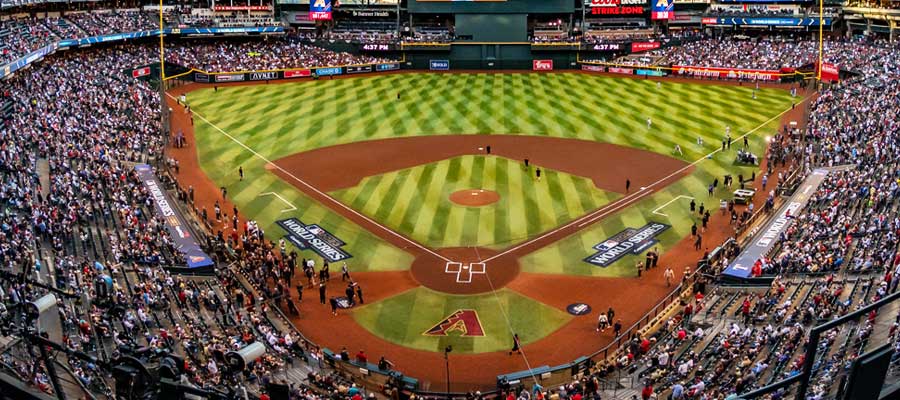
Chase Field – Phoenix, Arizona
Team: Arizona Diamondbacks
Surface: Shaw Sports Turf B1K
Background & Upgrade History
Chase Field is a retractable-roof stadium located in one of the hottest climates in professional sports. Maintaining natural grass required opening the roof during extreme summer heat, forcing players to practice and compete under dangerous conditions.
In 2019, the Diamondbacks replaced natural grass with B1K artificial turf, marking a significant philosophical shift for the organization.
Derrick Hall, CEO of the Diamondbacks — once a vocal traditionalist favoring natural grass — later stated in The Wall Street Journal that the artificial surface exceeded expectations in both playability and safety.
Technical System Overview
- Fiber Structure: Dual-fiber system (monofilament + slit-film hybrid)
- Infill: Plant-based infill (primarily coconut fiber blend)
- Shock Absorption: Integrated shock pad layer
- Design Objective: Natural ball roll, consistent bounce, reduced heat stress
Primary Use Case
- Full MLB season
- High-frequency events
- Climate-controlled performance consistency
Globe Life Field – Arlington, Texas
Team: Texas Rangers
Surface: Shaw Sports Turf B1K Natural
Background & Upgrade History
Globe Life Field was designed from day one with artificial turf in mind. Texas heat, intense sunlight, and long seasons made natural grass both costly and unreliable.
The Rangers opted for artificial turf not as a fallback — but as a long-term performance solution.
Technical System Overview
- Fiber Type: Advanced monofilament fibers with reinforced slit structure
- Infill: Natural, plant-based infill engineered for shock absorption
- Base Configuration: Dirt infield + artificial turf outfield and basepaths
- Design Objective: Replicate natural grass while reducing maintenance downtime
Primary Use Case
- MLB games
- Concerts and multi-event scheduling
- Consistent broadcast-quality appearance

loanDepot Park – Miami, Florida
Team: Miami Marlins
Surface: Shaw Sports Turf B1K
Background & Upgrade History
Miami’s climate presents a different challenge: humidity, heavy rainfall, and rapid grass degradation. Natural grass often became soft, uneven, and unpredictable during the season.
The Marlins transitioned to artificial turf to stabilize playability and reduce rain-related delays.
Technical System Overview
- Fiber Design: Dual-fiber B1K architecture
- Infill: Performance-grade plant-based infill
- Drainage System: High-capacity sub-base drainage
- Design Objective: Fast recovery after rain, predictable ball response

Tropicana Field – St. Petersburg, Florida
Team: Tampa Bay Rays
Surface: Shaw Sports Turf (latest B1K Natural iteration)
Background & Upgrade History
As a fully domed stadium, Tropicana Field has never supported traditional natural grass. Over the years, its turf system has been upgraded multiple times to improve realism and player comfort.
The most recent upgrades introduced natural organic infill and differentiated textures for warning tracks and outfield zones.
Technical System Overview
- Fiber: Hybrid monofilament structure
- Infill: Coconut-based infill with organic shell materials
- Shock System: Multi-layer shock absorption
- Design Objective: Visual realism + player spatial awareness

Rogers Centre – Toronto, Ontario
Team: Toronto Blue Jays
Surface: FieldTurf / AstroTurf (modern generation)
Background & Upgrade History
Rogers Centre has one of the longest artificial turf histories in MLB. While its system is more traditional compared to B1K, continuous upgrades have kept it MLB-compliant.
Technical System Overview
- Fiber: Monofilament polyethylene
- Infill: Sand and rubber blend
- System Type: Infill-based without heavy shock pad
- Design Objective: Durability and consistency in a cold-weather, enclosed stadium

Why Natural Grass Is No Longer MLB’s Only Choice
The MLB baseball field has gone from artificial grass to natural grass, and now it is back to the era of artificial grass. The main reason depends on several mainstream MLB teams, from players to coaches, to weigh the best baseball field solution between the safety performance of baseball players, event requirements, and game performance.
Diamondbacks CEO Derek Hall, who once called himself a traditionalist and personally prefers natural turf, said in an interview with the Wall Street Journal that he was very satisfied with the replacement of natural turf with artificial turf.
Today’s MLB season is longer, denser, and more commercially demanding than ever before. Stadiums host more events, teams travel more frequently, and players are asked to perform at peak levels with fewer recovery windows. In that reality, the playing surface must deliver consistency, safety, and operational predictability—not just tradition.
Climate adaptation
Climate has become one of the most decisive factors in surface selection, and natural grass is increasingly vulnerable to it.
At Chase Field in Arizona, maintaining natural grass required opening the retractable roof for extended periods to allow sunlight exposure. This forced players to train and compete in extreme heat, sometimes exceeding safe thresholds for high-intensity activity. The grass survived, but player comfort and performance suffered.
In Miami, the challenge is the opposite. Heavy rainfall and high humidity regularly left natural grass fields soft, uneven, and slow. After rain events, fields often required extended recovery time before becoming playable again, disrupting training schedules and game preparation.
In Toronto, wide seasonal temperature swings made grass growth cycles unpredictable. Cold early-season temperatures slowed root development, while artificial lighting inside an enclosed stadium could not fully compensate for natural sunlight deficiencies.
Artificial turf fundamentally removes climate from the performance equation. Temperature, rainfall, sunlight exposure, and seasonal variability no longer dictate field readiness. From a league operations perspective, this means fewer delays, fewer compromises, and far greater control over scheduling and surface quality.
Maintenance Cost of Natural Grass
Beyond direct expenses, there are significant indirect and operational costs.
Games may be delayed or postponed due to field conditions. Practice sessions are canceled or relocated. Players adjust their movement patterns to avoid unstable areas, which affects performance and confidence.
Over the course of a 162-game season, these disruptions accumulate. What begins as a maintenance issue becomes a competitive issue—one team plays on a fast, firm surface while another competes on a soft, inconsistent field. From MLB’s standpoint, that disparity undermines fairness.
Artificial turf does not eliminate maintenance, but it standardizes it. Costs become predictable, downtime is minimized, and field conditions remain stable across an entire season.
Natural grass costs far more than mowing and watering:
- Daily maintenance labor
- Specialized agronomy teams
- Game cancellations or delays
- Player complaints and injury risk
- Mid-season turf replacement
These hidden costs affect not just budgets, but competitive fairness.
Player Safety
Player safety has become a non-negotiable priority for MLB, and field surfaces play a central role.
Natural grass fields degrade under frequent use. As the season progresses, high-traffic areas—base paths, infield transitions, and sliding zones—often harden, thin out, or become uneven. This variability increases the likelihood of:
- Non-contact lower-body injuries
- Slips during acceleration or deceleration
- Awkward landings on compromised turf
- Cumulative fatigue caused by inconsistent footing
Modern artificial turf systems are engineered with measurable impact absorption and surface uniformity. Shock pads, controlled infill depth, and engineered fiber systems allow stadium operators to maintain consistent hardness levels game after game.
While no surface can eliminate injuries entirely, reducing unpredictability significantly lowers risk. For players, this means greater trust in the field beneath them. For teams, it means fewer preventable injuries and more reliable availability throughout the season.
Ball Roll & Bounce Consistency
Baseball is uniquely sensitive to surface behavior. Small variations in ball roll or bounce can change the outcome of an inning.
Natural grass performance fluctuates based on:
- Moisture content after irrigation or rainfall
- Uneven sun exposure across the field
- Grass growth cycles and cutting height
- Soil compaction and wear patterns
These factors can cause balls to slow unexpectedly, jump higher than anticipated, or take irregular hops—outcomes that affect both infield defense and offensive strategy.
Artificial turf provides repeatable, testable ball behavior. Once surface speed and rebound characteristics are calibrated, they remain consistent throughout the season. This consistency supports competitive fairness and allows players to rely on skill rather than guesswork.
From an MLB perspective, predictable ball response is not about making the game easier—it is about ensuring that outcomes are determined by players, not by the condition of the grass.

Why MLB Chooses Artificial Turf
If I’m being completely honest, we didn’t choose artificial turf because it looks modern or because it’s trendy. We chose it because it removes uncertainty from a business that cannot afford unpredictability.
With artificial turf, we get consistent surface speed every single night. That matters more than most fans realize. Players prepare their footwork, infielders read hops, and pitchers adjust their defense positioning based on how the ball travels. When that speed changes from game to game, preparation loses value.
Artificial turf also dramatically reduces the impact of weather. Rain, humidity, extreme heat, lack of sunlight — these things used to dictate our decisions. Now they don’t. The field is ready when the schedule says it needs to be ready.
From an ownership standpoint, lower annual maintenance cost is not just about saving money. It’s about predictability. Natural grass turns maintenance into an open-ended commitment. Artificial turf turns it into a controlled operating expense.
It also gives us scheduling flexibility. MLB teams don’t live in isolation anymore. Stadiums host concerts, international events, community games, media productions. Artificial turf lets us say yes more often — without compromising the playing surface for our team.
And finally, we get predictable safety metrics. We can measure hardness, shock absorption, traction, and wear. That data matters. When players, agents, or the league ask questions, we don’t respond with opinions — we respond with numbers.-— An MLB Club CEO’s Perspective
Player availability
When a player is injured, we don’t just lose a name on the lineup card. We lose competitive balance, ticket value, broadcast appeal, and sometimes an entire season’s narrative. A surface that reduces variability helps protect our most valuable assets — the players themselves.
Broadcast reliability
MLB is a global broadcast product. Games cannot be delayed because a field didn’t recover from rain or heat stress. Artificial turf gives broadcasters consistency in scheduling, lighting, and visual quality. That reliability protects billion-dollar media agreements.
Season-long consistency
A championship isn’t decided in April — it’s decided across 162 games. If our field plays fast in April, slow in July, and uneven in September, that inconsistency becomes a competitive liability. Artificial turf allows us to maintain the same playing characteristics from Opening Day to the postseason.
Long-term operational control
This may be the most important factor of all. Natural grass controls us — its growth cycles, its failures, its limits. Artificial turf puts control back in the hands of the organization. We decide when the field is ready, how it performs, and how it fits into our long-term strategy.
What Kind of Artificial Turf Does MLB Use?
Whether it’s the top professional MLB stadiums or various training and competition venues worldwide, the core principles of high-performance artificial baseball turf are material science + systems engineering + player safety assurance.
Two MLB stadiums have chosen B1K baseball turf. The key to this new type of artificial turf being closer to natural grass lies in its infill material and system design. B1K uses plant-based infill, approximately 90% of which is coconut husk fiber, replacing the traditional mixture of rubber granules and sand. This makes the ball’s rolling, bouncing, and the player’s footing feel closer to natural grass.
However, the natural material characteristics of B1K also bring potential risks: coconut husk fibers are prone to fungal growth in humid environments. If players get scratches while sliding or contacting the ground, this could lead to infection. Therefore, system design, antibacterial treatment, drainage management, and regular maintenance are equally important. For MLB teams, the installed turf is not just a playing field, but a complete system of performance, safety, and controllability.
The latest generation of Mighty Grass artificial baseball turf products offers more optimized solutions for reducing fungal risks and adapting to different climates and field conditions.
Advanced Hybrid Infill System
- Depending on different field environments (indoor, outdoor, dry or humid climates), a mixture of plant-based infill + high-performance rubber granules is available, ensuring a ball feel close to natural grass while reducing fungal risks.
- Adjustable infill depth and density support different ball speeds and bounce requirements.
High-Weather-Resistant Fiber Material
- The grass fibers use UV-resistant and wear-resistant polyethylene or polypropylene materials, ensuring no collapse or curling under high-intensity play.
- The fiber shape design mimics natural grass blades, enhancing the natural feel of ball rolling and player footing.
Controllable Drainage and Antibacterial System
- Drawing on the drainage design of high-end MLB systems, it achieves rapid drainage and field drying.
- The grass fibers and infill layer can be treated with antibacterial agents to reduce fungal risks caused by humidity or organic infill, ensuring player safety.
Customizable System Configuration
- For indoor, outdoor, and multi-purpose fields, the infill, grass fiber density, and base cushioning layer thickness can be adjusted.
- Supports various scenarios from amateur training fields to professional competition fields, making field performance stable and predictable.
MLB’s selection of B1K emphasizes “near-natural, controllable safety, and predictable performance” in terms of technology; while MightyGrass baseball turf system provides a mature and reliable solution for baseball fields at a more cost-effective price.

What MLB’s Choice Means for Global Baseball Fields
MLB has always been the benchmark for professional baseball worldwide. Every decision—from field layout to surface material—carries valuable lessons for leagues, clubs, and stadium operators worldwide. When MLB adopts artificial turf in certain stadiums, it signals more than a local operational adjustment—it reshapes expectations for how baseball can be played, maintained, and experienced anywhere.
1. Performance Expectations Are Standardized
From a global operations perspective, MLB’s adoption of advanced artificial turf sets performance baselines for ball behavior, footwork, and playability.
- Ball roll, bounce, and spin can now be engineered and predicted, minimizing variability between home and away games.
- For international leagues, this establishes a reference for training facilities, youth academies, and multi-use stadiums, allowing players to develop skills in environments comparable to MLB standards.
- Clubs in regions with extreme weather now have a blueprint to deliver consistent gameplay year-round, rather than relying on ideal but unpredictable grass growth cycles.
2. Safety Benchmarks Become Global Metrics
Player safety is no longer just a local concern—it is measurable, replicable, and auditable.
- MLB’s use of plant-based infill systems like B1K demonstrates that injury risk can be quantified through material selection, infill density, and impact absorption metrics.
- For global clubs, this translates into a new safety language: it’s no longer enough to “hope the grass is soft enough.” Turf systems can now be tested, monitored, and certified to reduce non-contact injuries, joint strain, and abrasion risk.
- In climates prone to rain, snow, or high heat, artificial turf allows consistent safety performance across multiple events per week—a critical factor for high-density training or tournament scheduling.
3. Player Experience Standards Are Elevated
MLB’s shift signals that player experience extends beyond aesthetics. Consistency, predictability, and responsiveness define the modern professional athlete’s expectations:
- Athletes develop trust in the field’s response—every hop, slide, and pivot behaves predictably.
- For global clubs, replicating these standards improves player confidence, skill transfer, and overall game quality.
- Training academies, youth programs, and professional leagues can now align facility design with elite-level feedback loops, bridging the gap between local play and international competition.
4. Strategic Implications for Extreme Climates and Multi-Use Venues
Natural grass is still ideal where budget, climate, and maintenance infrastructure allow. But MLB’s operational logic shows that for certain scenarios, artificial turf is now the most balanced solution:
- Extreme weather regions: Heat, humidity, or rainfall no longer dictate season length or player exposure.
- Indoor stadiums: Daylight limitations no longer constrain grass survival or quality.
- High-usage multi-event facilities: Concerts, community events, and secondary sports can coexist without compromising field integrity.
How to Choose Artificial Baseball Turf
Common baseball grass includes filled baseball grass and non-filled baseball grass. Choosing artificial baseball turf is never about picking the “prettiest” option. At the professional level, the decision is based on a combination of performance, safety, climate, usage intensity, and different field areas, as well as maintenance capability.
Why infill baseball turf is preferred at elite levels?
- Ball Behavior Consistency
Infill systems allow precise control of ball roll, bounce, and spin. By adjusting the depth, density, and material of the infill, operators can replicate the feel of natural grass in both infield and outfield zones. This is why MLB stadiums like those using B1K Natural rely on a hybrid system of grass-like fibers plus plant-based infill for predictable gameplay. - Player Safety and Impact Absorption
Properly engineered infill reduces shock on joints and mitigates risks of non-contact injuries. High-frequency usage, especially in infield hotspots and base paths, can otherwise cause uneven compaction. Infill absorbs impact, maintaining consistent hardness throughout the season. - Weather Resistance and Operational Control
Extreme heat, heavy rainfall, or indoor stadiums no longer dictate field readiness. Infill systems with proper drainage and antimicrobial treatment allow stadiums to maintain a season-long, high-performance surface. - Durability and Maintenance
Infill systems are designed to handle 100+ games per season, along with concerts or multi-purpose use in shared venues. While maintenance is required—grooming, brushing, infill topping—these are predictable and quantifiable costs, unlike natural grass which can vary seasonally.
Key Considerations:
- Material selection matters: plant-based infill (like B1K) improves natural feel but requires careful moisture and antifungal management.
- Infill depth and density must be matched to player load, stadium climate, and usage intensity.
- The base layer and shock pad configuration are as critical as the turf itself for both safety and performance consistency.
Why Non-Infill Baseball Turf ?
- Lower Installation & Maintenance Costs
Non-infill turf is lighter, easier to install, and requires less ongoing grooming. For high-use practice fields or indoor batting cages, it provides a playable surface without complex maintenance. - Simpler Safety Profile
Without loose infill, there’s less risk of displacement, contamination, or microbial growth. While cushioning is less adjustable than infill systems, it is adequate for youth, amateur, and lower-intensity usage. - Adaptability to Various Climates
Non-infill turf can be installed both indoors and outdoors, but extreme weather or high-intensity competitive play may require extra shock pads or protective overlays to reduce injury risk.
Key Considerations:
- Non-infill systems are ideal where usage is moderate and predictability is less critical.
- They are often combined with portable infield mats or hybrid surfaces for temporary competitive play.
- Material choice should focus on durability, UV resistance, and fiber softness to ensure comfort and longevity.
How to Choose a Baseball Turf Manufacturer
Look beyond product brochures:
- Baseball-specific engineering
- Proven stadium references
- Climate adaptation experience
- Custom system design capability
- Long-term maintenance support
Conclusion
The choice of artificial baseball turf is never one-size-fits-all. It’s a system-level decision combining surface engineering, player safety, climate adaptation, and operational strategy. For professional stadiums aiming to meet MLB standards, infill systems like B1K or optimized MightyGrass configurations provide the closest replication of natural grass while controlling risks and maximizing usability.
At MightyGrass, our baseball turf systems are designed with these principles:
- Customizable infill options: plant-based, hybrid, or rubber blends to optimize natural ball behavior and shock absorption.
- High-durability fibers: UV-resistant, wear-resistant, and shaped to mimic natural grass for realistic footing and slide performance.
- Antimicrobial treatments and drainage optimization: Reduce fungal growth risks inherent to plant-based infills, critical in humid or indoor stadiums.
- Scalable designs: From youth fields to MLB-level stadiums, the system can be configured according to climate, usage intensity, and operational budget.
FAQ
what mlb stadiums have turf?
Five MLB stadiums have artificial turf: Chase Field (Arizona Diamondbacks), Globe Life Field (Texas Rangers), LoanDepot Park (Miami Marlins), Rogers Centre (Toronto Blue Jays), and Tropicana Field (Tampa Bay Rays). The other 25 MLB stadiums use natural grass playing surfaces.
- Chase Field: Arizona Diamondbacks in Phoenix, Arizona
- Globe Life Field: Texas Rangers in Arlington, Texas
- LoanDepot Park: Miami Marlins in Miami, Florida
- Rogers Centre: Toronto Blue Jays in Toronto, Ontario
- Tropicana Field: Tampa Bay Rays in St. Petersburg, Florida
Whats type mlb domed stadiums?
There are three types of MLB domed stadiums: fixed-roof, retractable-roof, and partially domed stadiums. Tropicana Field has a fixed roof, while Rogers Centre, Chase Field, Globe Life Field, Minute Maid Park, loanDepot Park, and American Family Field have retractable roofs.
MLB stadiums with retractable roofs
- Chase Field: Arizona Diamondbacks
- Globe Life Field: Texas Rangers
- loanDepot Park: Miami Marlins
- Minute Maid Park: Houston Astros
- Rogers Centre: Toronto Blue Jays
- American Family Field: Milwaukee Brewers
What are the considerations for building an artificial grass baseball stadium in India?
If you’re building a new pitch in India and are considering Astroturf for a baseball or softball field, there are quite a few technical, environmental, and operational factors to take into account so that the field meets performance, safety, and cost expectations. Here are the main things to think about, plus some India‑specific considerations:
Key Environmental & Cost/Logistics Factors(especially for India)
- Water Availability & Cost of Watering
- Water‑based turfs need reliable water supply. In many parts of India, especially dry zones or areas with water scarcity, this can be a major challenge. Without water, fields can overheat, cause friction burns, degrade over time.
- Example: The Kovilpatti Astroturf stadium in Tamil Nadu is having problems because of inadequate water supply: the turf must be watered before games but water is scarce.
- Climate (Heat, UV, Monsoon)
- High temperatures → the turf surface can become very hot. Materials should have high UV stability; colour and material impacting surface heat is relevant.
- Heavy rainfall requires excellent drainage. Also, overheating combined with humidity can degrade fibres faster or affect play.
- Maintenance Costs & Skill
- You’ll need staff who know how to maintain artificial turf: cleaning, rolling, patching, checking joints, managing drainage, watering or infill replacement.
- Training of maintenance staff is crucial—without good upkeep, even high quality turf will deteriorate prematurely.
- Initial Setup Cost vs Lifecycle Cost
- High‑quality turf with proper certification and installation costs more up front, but major savings may come from longer lifespan, fewer repairs, better performance, fewer cancellations, fewer injuries.
- Consider total cost over 10‑15 years: if turf lifespan is, say, 10‑12 years under good maintenance, that helps plan budgeting.
- Usage Intensity
- How often will the field be used? Daily practice? Tournaments? Multi‑sports use? If heavy usage, you’ll need stronger, denser turf that can withstand wear, more frequent maintenance.
- If used for other sports, you may want a multipurpose turf, but that can compromise some hockey‑specific performance unless carefully selected.
- Availability of Manufacturers / Supplies Locally
- Importing turf, backing materials, adhesives, accessories, infill etc may be expensive, subject to customs, delays. It’s better if there’s a supplier with established local distribution, good after‑sales service.
- Getting turf, fibres, parts that match standards is easier if the manufacturer is recognized (e.g. FIH Preferred Supplier).
- Regulatory / Certification Requirements
- If you plan to host national or international matches, or affiliate with associations that require FIH certification, ensure the turf you choose meets those standards (or can be certified after installation).
- Things like field dimensions, slope, run-off, lighting, spectator facilities, etc., may also need to meet guidelines.
- Environmental & Health Aspects
- Heat island effect, surface temperature, risk of skin abrasions from falls etc.
- Also consider ecological impact of materials, disposal of old turf, potential microplastic runoff.
- Community / Stakeholder Needs
- Who will use the field? Age groups, skill levels. What expectations do players have (speed, ball roll, traction)?
- Funding and sustainability: is there budget for maintenance, water, repairs?
Key Technical Standards & Performance Factors
- Type of Turf Surface
- Water-based surfaces: These are non‑filled (or lightly filled) and need to be watered before/while playing to reduce friction and allow faster, smoother ball roll. They are preferred at high levels, but require reliable water supply.
- Sand-dressed / sand-filled surfaces: Used often at lower competition levels or for multipurpose use; mixture of turf fibres with some form of infill to stabilize the fibres.
- Innovation / Dry turf: Newer categories (or under development) aim to reduce dependency on water while still satisfying performance like grip, ball behavior, comfort.
- Pile Height, Density & Yarn Type
- The height of the fibres (pile height) and the density (how many fibres per square metre) affect ball‑behavior (roll, speed), safety (how players’ joints are impacted), durability, and maintenance.
- Fibre material (usually PE – polyethylene) and shape (monofilament or curled) influence friction, UV stability, resilience.
- Shock Pad / Sub-Structure & Base Construction
- The sub‑base (ground preparation), drainage, shock pad (if used) all affect safety (impact absorption), evenness of the field, water drainage, longevity. If sub‑base is not properly built, you can have unevenness, pooling of water, faster wear etc.
- Drainage is especially important given India’s monsoons. Pitch must shed water fast to avoid cancellations, damage. Sprinkler systems or watering methods for water‑based fields also need to be designed.
- Ball Roll, Ball Rebound, Friction, Vertical Deformation etc.
- There are standard tests: how far the ball rolls, how it rebounds off the surface, how much “give” the turf has when stepped on or when falling on etc. These parameters determine playability and safety.
- Durability / Life Span
- Exposure to sun (UV), heavy usage, climate extremes (heat, humidity, heavy rains) all degrade turf. Good UV‑stabilized materials, proper backing, quality yarns, resistant infill, and proper maintenance will extend life.
Specific Recommendations for India
- Choose turf materials with strong UV protection and perhaps lighter colours (or coatings) that reduce surface heat if that’s a problem in your region.
- Plan for lifespan replacement. Some turfs in India are lasting 10‑13 years but then become uneven, or pile gets worn, or joints loosen. Having a maintenance plan, funding in place helps.
- Engage with certified suppliers (like Mighty Grass baseball turf Suppliers) or manufacturers with proven track record in India or in similar climates. Eg. Mighty Grass is one such manufacturer.
- Involve baseball associations from the planning stage to ensure that match / competition requirements are met (dimensions, certifications, etc.).
Article content source: https://www.mlb.com/ If there is any infringement, please contact the author to have it removed.


