Deutsch
  English
  العربية
  Español
  Français
  Português
  Русский
  日本語
日本語  Italiano
  Nederlands
  Svenska
  Suomi
Suomi  ไทย
ไทย  Dansk
Dansk  Ελληνικά
  Bahasa Melayu
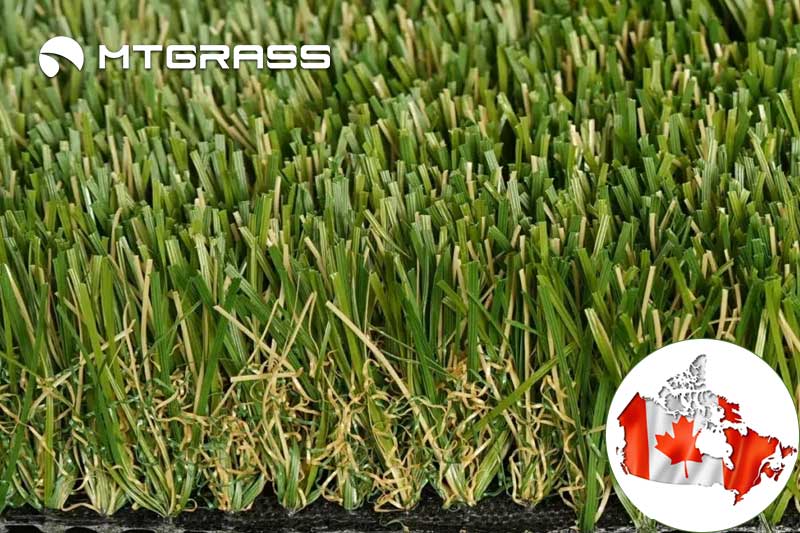
Artificial grass is rapidly gaining traction in Canada across both residential and commercial sectors as a durable, low‑maintenance alternative to natural lawns. According to industry research, the Canadian artificial turf market generated approximately USD 393.6 million in revenue in 2024 and is projected to grow to USD 549.4 million by 2030, with an estimated compound annual growth rate (CAGR) of 5.9% from 2025 to 2030.
This rising demand is part of a larger trend within North America, where artificial grass adoption continues to expand in landscaping, sports facilities, and pet‑friendly outdoor spaces. In fact, Canada represents a significant share of the North American artificial turf revenue, driven by year‑round usability and low maintenance requirements.
For Canadian buyers, understanding why artificial grass adoption is growing and the types of turf available is essential before choosing the most suitable solution for their specific needs.
Why are more and more Canadians choosing artificial grass?
Several key factors are driving the increasing preference for artificial turf solutions in Canada:
1. Low Maintenance and Cost Savings
Artificial grass significantly reduces care and upkeep compared with natural turf. Canadians looking to cut down on mowing, fertilizing, watering, and seasonal lawn care have found best synthetic turf to be a cost‑effective solution over its 10–15 year life span, often backed by UV resistance warranties.
2. Climate Resilience
Canada’s wide range of climates, from the precipitation of coastal British Columbia to the frigid winters of the Prairies, makes maintaining natural grass difficult and costly. High‑quality artificial turf maintains color, texture, and performance even after snow, frost, and fluctuating temperatures.
3. Sustainable Landscaping
Artificial turf helps reduce water usage, a growing concern as municipalities look to reduce urban water demand, while providing green, functional outdoor spaces year‑round.
4. Growing Sports and Recreational Projects
With an increasing number of multi‑purpose athletic fields and community sports facilities, artificial grass turf provides predictable ball roll, consistent surface performance, and durability under frequent use, factors critical for football pitches, soccer fields, and training facilities.
5. Pet‑Friendly Solutions
Pet owners appreciate turf systems specifically designed to handle high traffic and pet use, including products engineered for antimicrobial performance and fast drainage, reducing odors and bacteria accumulation.
Types of Artificial Grass Used in Canada
When choosing artificial grass in Canada, you’ll quickly notice that different applications demand very different performance characteristics. Climate conditions, usage frequency, and functional requirements all play a direct role in determining which turf is right for your project.
Understanding the most common types of artificial grass used in Canada helps you make a more efficient and informed decision, so you avoid products that may look similar on the surface but perform very differently in real use.
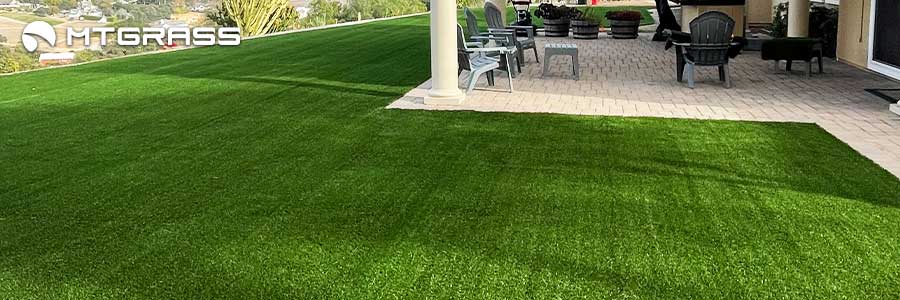
1. Residential & Landscape Turf
If your goal is to maintain a natural, attractive lawn year-round while keeping maintenance to a minimum, residential and Landschafts-Kunstrasen is typically the best fit for your needs.
This type of turf usually features medium to high pile heights (around 40–50 mm), high fiber density, and a layered structure that closely resembles natural grass. To cope with Canada’s varied sunlight exposure and climate conditions, high-level UV resistance (≥ 5000 hours) is essential to help prevent fading and color inconsistency over time.
Whether you’re planning a home lawn, patio, rooftop garden, commercial landscape, or public green space, your priorities are likely a natural underfoot feel, a uniform appearance, and long-term durability across seasons. These are exactly the core values residential and landscape turf is designed to deliver.
2. Sports & Performance Turf
When your project focuses on functionality rather than appearance alone, performance-oriented artificial turf becomes critical.
This category of turf is engineered with precisely designed yarn structures (Robust Diamond or S- grass fibers) and consistent pile distribution to provide stable rebound, reliable traction, and uniform surface behavior. High-strength backing systems (most commonly PU backing) support frequent, long-term use while minimizing deformation and performance loss.
If you are responsible for a football pitch, multi-sport field, or golf putting green, your main concerns are rarely “how natural it looks.” Instead, you focus on ball roll consistency, surface response, and compliance with relevant sports standards, including FIFA-approved options. These are the defining strengths of performance turf systems.
3. Pet Turf
When a turf area is primarily used by pets, durability and hygiene quickly become more important than appearance.
Rasen für Haustiere is typically designed with fast-draining backing structures that help reduce water retention and odor buildup. Combined with antibacterial and deodorizing features, these systems make it easier for you to maintain a clean, hygienic environment—even under frequent use.
Whether it’s a backyard pet area, a dog run, or a community dog park, your priorities are usually safety, odor control, and easy daily cleaning rather than complex maintenance routines. Pet turf is built specifically around these needs.
4. DIY & Small-Project Turf
If your project is relatively small or you plan to handle installation yourself, small-project and DIY turf can simplify the entire process.
These products are commonly available in flexible roll sizes such as 15 ft × 100 ft or 12 ft × 80 ft, with multiple options for pile height and density. This allows you to balance budget and performance without over-specifying the system. Installation is generally straightforward and does not require specialized equipment.
For balconies, partial landscape upgrades, or compact activity areas, your focus is usually on cost control, time efficiency, and achieving a clean, visually pleasing result within a limited space. DIY turf solutions are designed to meet exactly these expectations.
Artificial Turf Suppliers in Canada
When sourcing artificial turf in Canada, buyers typically consider a mix of local distributors and installers for convenience and service, as well as international turf brands and manufacturers for performance, large‑scale projects, and certified sports surfaces. Below are notable supplier options that serve the Canadian market.
1. Local Canadian Distributors and Installers
Canada has a growing number of artificial turf distributors, installers, and dealer networks that serve residential, commercial, and sports projects across provinces such as British Columbia, Ontario, Alberta, Saskatchewan, and Quebec.
- SYNLawn Toronto & Pacific Northwest – SYNLawn is one of the largest synthetic turf networks in North America, and its Canadian distributors provide design, sales, and installation services throughout Ontario and British Columbia. They handle everything from residential lawns and pet‑friendly turf to custom putting greens, courts, and commercial landscaping.
- Perfect Turf – Operating a network of 15 dealer locations across Canada, Perfect Turf offers artificial grass products and installation support for lawns, putting greens, playgrounds, and sports surfaces throughout cities including Vancouver, Calgary, Saskatoon, Regina, and Quebec.
- Bella Turf – A Canada‑operated brand offering turf systems for landscapes, playgrounds, pet areas, putting greens, gyms, and sports surfaces, with products sold across Canada through authorized dealers. Their turf supports drainage, realistic texture, and versatility for diverse project needs.
- Greenland Turf – Based in London, Ontario, Greenland Turf supplies and installs synthetic turf for landscape areas, putting greens, pet runs, rooftops, indoor golf greens, and sport courts across southwestern Ontario. Their inventory includes pet‑friendly turf and solutions for both residential and commercial projects.
- Artificial Grass Supply Company (British Columbia) – Serves landscapers and contractors in the Lower Mainland with premium artificial turf at wholesale pricing, offering convenient local support and guidance for project planning.
These local suppliers make it practical to source turf quickly, obtain installation support, and consult on specifications such as pile height, drainage performance, and aesthetic preferences — all important factors when planning projects with tight schedules or regional compliance requirements.
2. MightyGrass (MTGRASS) – FIFA‑Approved Turf Manufacturer
For buyers pursuing professional‑grade, large‑scale projects or certified sports surfaces, working directly with a manufacturer can offer advantages in customization, quality control, and supply chain assurance.
MightyGrass (MTGRASS) is a FIFA‑approved artificial turf manufacturer with more than 20 years of experience in producing high‑performance synthetic grass suitable for football, multi‑sport fields, and commercial landscapes. Our company operates dual production facilities in China and Saudi Arabia and maintains a U.S. warehouse for faster North American delivery.
MightyGrass turf products meet FIFA Quality and FIFA Quality Pro standards, which evaluate ball roll, shock absorption, and durability to ensure consistent performance under competitive play conditions. Their portfolio includes advanced turf systems such as recyclable 5G non‑infill grass, designed for both professional stadiums and institutional fields.
Why this matters for Canadian projects:
- Certified performance — FIFA standards are widely recognized for sports surfaces and help ensure consistent ball behavior and athlete safety.
- Customization and OEM support — Buyers can specify pile height, density, backing type (e.g., PU backing often preferred in Canada), and finish quality.
- Supply reliability — Manufacturing control enables tighter quality management and flexible delivery planning.
For large fields, sports complexes, or projects requiring stringent performance criteria, direct collaboration with a dedicated manufacturer like MightyGrass can yield optimized outcomes.
3. European and American Brands
Beyond local dealers and Chinese artificial grass manufacturers, a range of well‑established European and American artificial turf brands serve the Canadian market through authorized distributors, dealer networks, and installers, particularly for performance sports turf and high‑end landscape solutions.
FieldTurf is a global leader in artificial sports turf, widely used for Fußball, Fußball, Rugby, and multi‑sport arenas. It is one of the most trusted brands in North America and worldwide, with extensive installations and systems engineered for safety and durability.
Other premium international brands with recognized expertise include Act Global, a U.S.‑based manufacturer known for its sports turf systems and FIFA “Preferred Producer” status, supporting professional and community sports fields around the world.
Additionally, European suppliers such as GreenFields, Limonta Sport, Polytan, and Saltex are part of the FIFA Quality Programme’s Preferred Provider list and offer high‑performance surfaces designed for football and elite sports use.
MightyGrass Recommendations for Choosing an Artificial Grass Supplier in Canada
- Local support vs customization — Local distributors can provide on‑site consultations and rapid delivery within Canada, while direct manufacturers or international brands offer a wider range of customization options and higher performance guarantees while also providing more competitive artificial grass prices.
- Certification matters — For soccer sports fields, look for FIFA Quality or FIFA Quality Pro certifications to ensure turf meets recognized performance benchmarks.
Key Factors When Choosing an Artificial Turf Supplier in Canada
Die Auswahl des richtigen Kunstrasen-Lieferant in Canada involves evaluating multiple factors to ensure your project meets performance, aesthetic, and delivery requirements. Here are the key considerations:
1. Product Quality and Specifications
Grass height and density: Most Canadian projects require turf with a pile height of 40–50 mm, commonly around 45 mm, and high denier (13000–16000 Dtex) for durability.
Backing type: PU backing is widely preferred for landscape and sports turf in Canada, ensuring durability and preventing wrinkles or color streaks.
Specialty options: Pet turf with antimicrobial and odor-resistant properties is increasingly sought for hygiene and safety.
2. Certification and Performance Standards
For sports fields, check FIFA Quality or FIFA Quality Pro certifications to guarantee consistent ball roll, surface rebound, and shock absorption.
For commercial or institutional projects, ISO and SGS certifications may provide assurance of environmental safety and material durability.
3. OEM and Customization
If you require customized turf solutions, including specific pile height, density, yarn type, or color.
Dedicated MightyGrass artificial grass suppliers and manufacturers provide OEM support for private labeling, custom packaging, or specialized turf designs.
4. After-Sales Service and Quality Control
A reliable MightyGrass artificial grass manufacturer should offer clear quality control protocols, warranties (commonly 10–15 years UV protection), and guidance for installation and maintenance.

Why Some Buyers Choose to Work Directly with MightyGrass, an Artificial Turf Manufacturer?
After learning how to evaluate artificial grass suppliers, you might further consider: Is it necessary to bypass distribution channels and work directly with artificial grass manufacturers? In fact, for certain types of projects, this collaboration model often offers greater control and long-term value. For projects that require consistency, customization, and long-term performance, MightyGrass becomes a preferred choice.
Manufacturing-Level Quality Control
As a dedicated artificial turf manufacturer, MightyGrass maintains full control over yarn extrusion, tufting, and backing processes. This allows buyers to achieve consistent pile height, fiber density, and UV stability across batches—an important factor for large or multi-phase projects.
Flexible OEM and Custom Turf Solutions
Many buyers work with MightyGrass because they need more than off-the-shelf turf products. From customized pile height and yarn structure to color matching and functional designs such as antimicrobial pet turf or FIFA-certified sports systems, MightyGrass supports OEM development tailored to specific project requirements.
Reliable Supply for Large-Scale and Long-Term Projects
For buyers managing stadiums, schools, commercial landscapes, or municipal projects, supply stability matters. Working directly with MightyGrass enables better production planning, bulk supply coordination, and optimized logistics to Canada, reducing uncertainty during project execution.
Technical Support Backed by R&D Expertise
MightyGrass provides direct access to engineering and R&D teams who understand performance-driven applications—such as professional football fields, golf putting greens, and high-traffic public areas. This technical depth helps buyers make informed decisions beyond basic product specifications.
Abschluss
Choosing the right artificial turf supplier in Canada requires balancing quality, performance, delivery, and customization:
- Local distributors and installers provide convenient support, installation guidance, and quicker access for small to medium projects.
- International manufacturers such as MightyGrass or premium European and American brands are best suited for large-scale projects, certified sports fields, or specialty turf solutions like antimicrobial pet grass.
By evaluating your project requirements — including pile height, fiber density, PU backing, UV warranty, delivery terms, and customization options — you can make an informed decision that ensures a durable, visually appealing, and high-performing artificial grass installation.
Whether it’s a residential backyard, commercial landscape, sports facility, or pet area, the right supplier will help your Canadian project succeed from design to installation.
Häufig gestellte Fragen
Is artificial grass suitable for Canadian winters?
Yes — artificial grass can perform very well in Canadian winters if it is designed for cold climates. High-quality turf systems with PU backing, low water absorption, and proper drainage are able to withstand freezing temperatures, snow load, and repeated freeze–thaw cycles.
What matters most is not the brand name, but whether the turf specification matches Canadian conditions. Poor drainage or latex backing may become brittle in extreme cold, while well-engineered turf remains stable and functional year-round.
How long does artificial grass last in Canada?
In Canada, most high-quality artificial grass systems last 10 to 15 years under normal residential or commercial use.
The lifespan depends less on climate and more on fiber quality, yarn density, UV resistance, and usage intensity. Turf designed with high-denier fibers and strong UV stabilization performs reliably even under snow exposure and seasonal temperature changes.
For sports fields or high-traffic areas, proper maintenance and correct installation are also critical to achieving the full expected service life.
Does artificial turf require maintenance in Canada?
Artificial turf is low maintenance, but not completely maintenance-free.
In Canada, routine care usually includes removing leaves and debris, occasional brushing to keep fibers upright, and seasonal cleaning — especially after winter snowmelt. For pet areas, light rinsing helps control hygiene and odors.
Unlike natural grass, you won’t need watering, fertilizing, mowing, or reseeding, making artificial turf significantly easier and more cost-effective to maintain year-round.
Is it better to buy artificial grass from a local supplier or a manufacturer?
It depends on your project size and requirements.
If you are working on a small residential or landscaping project, a local Canadian distributor or installer can offer faster delivery, site visits, and installation support.
For large projects, sports fields, or custom specifications, working directly with a manufacturer often provides better control over turf quality, customization, certifications, and long-term consistency. Many buyers choose a hybrid approach: local installation combined with manufacturer-direct supply.
How much does artificial grass cost in Canada?
Artificial grass pricing in Canada varies widely based on specifications and installation scope.
Costs are influenced by factors such as pile height, fiber density (Dtex), backing type, certifications, and whether installation is included. Sports turf and premium landscape systems typically cost more than basic DIY products.
Rather than focusing on the lowest upfront price, many buyers consider total cost over the turf’s lifespan, including durability, warranty, and maintenance savings.
According to the bellaturf.ca official website, the price of artificial turf installation in Canada in 2024 ranges from $8.55 to $20 (including artificial turf, materials, and labor costs).
Is artificial grass safe for pets in Canada?
Yes, artificial grass is safe for pets when it is properly designed and installed.
Pet-specific turf systems are typically lead-free, feature fast drainage, and may include antimicrobial treatments to reduce bacteria buildup. These characteristics are especially important in Canadian climates, where moisture and freezing conditions can otherwise trap odors.
With basic cleaning and proper base preparation, artificial turf provides a clean, comfortable, and durable surface for pets year-round.
Does artificial grass smell with dogs?
Artificial grass itself does not smell — odor issues usually come from poor drainage, inadequate base preparation, or insufficient cleaning.
High-quality pet turf systems use permeable backing and drainage layers that allow urine to pass through quickly, reducing odor retention. Regular rinsing and occasional enzymatic cleaners help maintain freshness.
When properly installed and maintained, artificial grass remains odor-free even in high-use dog areas.
Is PU backing better than latex backing in Canada?
In most Canadian applications, PU backing is preferred over latex backing.
PU backing offers better dimensional stability, improved resistance to freezing temperatures, and lower risk of cracking or shrinkage over time. Latex backing can become brittle in cold climates, especially in outdoor landscape installations.
For Canadian residential, commercial, and sports projects, PU backing is generally the safer long-term choice.