Deutsch
  English
  العربية
  Español
  Français
  Português
  Русский
  日本語
日本語  Italiano
  Nederlands
  Svenska
  Suomi
Suomi  ไทย
ไทย  Dansk
Dansk  Ελληνικά
  Bahasa Melayu

For stadium developers and sports contractors in Uganda, keeping a football pitch playable year-round is no longer a maintenance challenge—it is a project survival issue. Heavy rainfall, limited maintenance budgets, and increasing match schedules have made natural grass an unreliable option for public stadiums.
Künstlicher Fußballrasen is reshaping Masaka Sports Stadium by transforming it from a weather-dependent, high-maintenance football ground into a year-round, competition-ready sports facility capable of supporting international matches, daily training, and community use under Uganda’s tropical climate.
At Masaka Sports Stadium, the shift from natural grass to artificial football turf is not simply a surface upgrade—it is a strategic infrastructure decision. By adopting a high-durability artificial turf football field aligned with FIFA and CAF performance standards, the stadium has significantly improved pitch availability, reduced long-term operating costs, and increased its capacity to host high-frequency football activities ahead of major continental tournaments such as the 2027 Africa Cup of Nations.
This article explains artificial football turf usage in Uganda using Masaka Sports Stadium as a real case, covering stadium upgrade choose, turf pricing per square meter, suppliers, and how to import football turf into Uganda.
Why Masaka Sports Stadium Needed a Major Upgrade?
Located at the historic Masaka Recreation Grounds in Masaka City, has long served as one of Uganda’s most important regional sporting venues. For decades, the stadium has hosted local league matches, community tournaments, and regional football activities, playing a vital role in grassroots football development beyond the capital city of Kampala.
However, as Uganda prepares to co-host the Africa Cup of Nations (AFCON 2027), the limitations of the stadium’s existing infrastructure became increasingly clear. Meeting continental competition requirements demands not only adequate seating capacity, but also reliable pitch performance, modern player facilities, and the ability to host high-frequency matches under Uganda’s challenging tropical climate. To qualify as a viable venue for major regional and international events, a comprehensive upgrade was no longer optional—it was essential.
According to an official report released by the Government of Uganda, construction of the Masaka Sports Stadium redevelopment officially began in 2024, with a total investment of approximately UGX 19 billion (≈ USD 5.2 million). The government-led project aims to transform the site into a modern, multi-purpose sports complex with a planned capacity of around 15,000 spectators, adopting artificial football turf as the primary playing surface to meet international competition standards. Phase One, covering the main stadium structure and artificial football turf system, was completed in 2025, while Phase Two—focused on expanded sports and commercial facilities—is currently seeking funding and is scheduled for completion by 2026.
Based on the project positioning and comparable stadium developments, the football pitch is being constructed to FIFA-Rasen standard dimensions, ensuring compliance with CAF and FIFA competition expectations.
What Technologies and Construction features Were Applied?
According to Uganda government requirements, the Masaka Sports Stadium redevelopment adopts modern advanced design and construction technologies aimed at long-term performance rather than short-term aesthetics.
Football Turf Pitch Construction
The most critical upgrade is the introduction of a high-standard artificial football turf system, replacing the old natural grass surface. This system is designed to deliver:
- Excellent drainage performance for tropical rainfall conditions
- High durability under frequent match and training use
- Consistent playing characteristics aligned with FIFA standards
- Reduced downtime between matches and events
Official sources confirm that the stadium has fully adopted an artificial turf playing surface, positioning it as a modern football venue capable of hosting high-frequency usage without compromising pitch quality.
Multi-Sport and Facility Integration
Masaka Sports Stadium is designed as more than a football pitch. From a technical planning perspective, the project integrates:
- Outdoor football and athletics facilities
- Indoor courts for basketball and volleyball
- Player support infrastructure (changing rooms, medical areas, meeting rooms)
- Commercial and hospitality facilities to enhance stadium revenue
- Planned Phase Two additions including a swimming pool and gym
This integrated design significantly improves the stadium’s commercial viability and long-term operational sustainability.
Importantly, the redevelopment does not simply renovate the old football pitch. It simultaneously upgrades athletics tracks, basketball and volleyball facilities, offering both outdoor and indoor sports spaces for community and professional use.
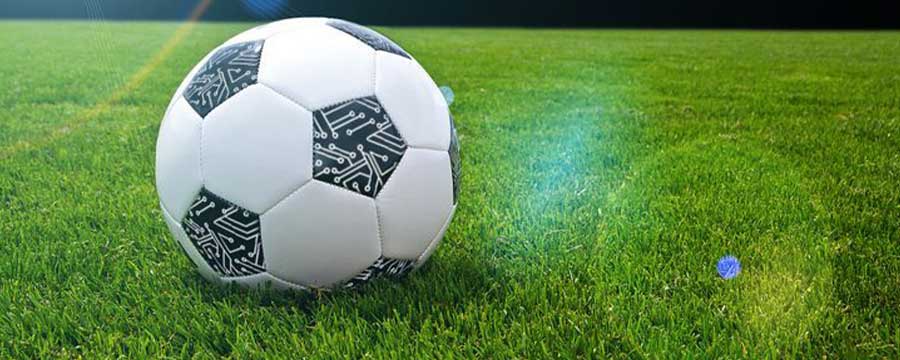
Why Did Masaka Sports Stadium Choose Artificial Football Turf?
From climate, performance, international standards, and operating cost perspectives, the decision to install artificial football turf at Masaka Sports Stadium is both strategic and rational.
In this project, artificial football turf was selected not as a cost compromise, but as a long-term operational solution. Compared with natural grass, artificial turf offers clear advantages in tropical environments:
- Stable usability throughout rainy and dry seasons
- Significantly lower water consumption
- Reduced reliance on specialized turf maintenance teams
- Higher annual match and training capacity
For public stadiums like Masaka, football turf selection is no longer about upfront installation cost alone. Decision-makers increasingly focus on full lifecycle cost management, ensuring that the pitch can reliably host competitions for many years without excessive maintenance expenditure.
Within a USD 5.2 million total stadium budget, the artificial football turf system represents a balanced mid-to-high standard investment, delivering predictable performance and long-term value.
What Projects Like Masaka Reveal About Modern Football Turf Requirements?
From a football turf manufacturer’s professional perspective, projects like Masaka Sports Stadium highlight how technical expectations for artificial football turf have evolved.
Although the exact turf brand used at Masaka has not been publicly disclosed, the stadium’s scale and positioning strongly suggest a competition-grade artificial football turf system, typically featuring:
- Turf height in the 45–60 mm range
- High-density PE monofilament fibers
- Multi-layer shock absorption and drainage base
- Sand and rubber or eco-friendly infill systems
- Installation tolerances suitable for future FIFA certification
Artificial Football Turf Cost Reference (Turf System Only)
For Uganda and similar African markets, the artificial football turf system cost (excluding civil works) typically falls within:
- USD 18–40 per square meter, depending on specification level
- Approximate turf system investment for a standard pitch: USD 130,000–280,000
These figures provide a realistic reference for other stadium developers and contractors planning football pitch upgrades using artificial grass for soccer fields.
Experteneinblick:
Artificial football turf pricing can vary significantly depending on region, supply chain structure, and procurement method. In many African stadium projects, sourcing turf through local distributors or multi-layer trading channels often increases overall costs.
By contrast, direct procurement from an experienced artificial football turf manufacturer can typically reduce total turf system costs by 20%–40%, particularly for full-size stadium projects. Manufacturers with in-house production, export experience, and system-level engineering support—such as Mächtiges Gras—are often able to offer more competitive pricing while maintaining consistent quality, technical specifications, and long-term performance guarantees.
For stadium developers and contractors, evaluating factory-direct price supply is an increasingly important strategy for controlling lifecycle costs without compromising international competition standards.
Get a Free Turf System Recommendation
Recommended Artificial Football Turf System for Stadium Projects Like Masaka
From a football turf manufacturer’s perspective, stadium upgrades like Masaka Sports Stadium require an artificial football turf system designed for competition-level use, high frequency, and tropical climates—not entry-level training turf.
Based on the project’s scale, climate conditions, and long-term operational goals, the recommended solution aligns with a mid-to-high performance artificial football turf system, similar to those supplied by experienced manufacturers such as MightyGrass for African and international stadium projects.
Recommended Football Turf System Specifications
For stadium projects like Masaka, the artificial football turf system should typically include the following technical parameters:
| Specification Item | Empfohlener Bereich | Technical Rationale |
| Turf Height | 50-55 mm | Ideal balance between shock absorption, ball roll, and durability |
| Faser-Typ | PE monofilament | High resilience and player comfort |
| Dtex | 12,000–16,000 | Ensures fiber strength under intensive match use |
| Dichte der Stiche | 10,500–13,000 /㎡ | Maintains surface stability over long-term usage |
| Backing System | Double-layer PU backing | Enhanced dimensional stability in hot climates |
| Infill-System | Sand + rubber / eco infill | Controls ball behavior and player impact |
| Stoßdämpfer (Optional) | 8–12 mm prefabricated pad | Improves player safety and consistency |
Expert note: For government-funded stadiums, a 50–55 mm artificial football turf system is often the most cost-effective solution when balancing performance, safety, and lifespan.
Why This System Fits Masaka Sports Stadium
From a manufacturer’s engineering standpoint, this recommended artificial football turf system directly addresses Masaka Stadium’s real-world requirements:
- High match and training frequency without recovery downtime
- Heavy rainfall resistance, supported by layered drainage design
- Lower maintenance dependency, critical for public facilities
- Future FIFA / CAF compliance readiness, even if certification is pursued later
Rather than selecting turf based purely on initial material cost, Masaka’s project logic reflects a growing trend:choosing artificial football turf based on lifecycle performance and usage capacity.
Artificial Football Turf Cost Reference
For projects similar to Masaka Sports Stadium, the artificial football turf system cost (excluding civil works) typically falls within the following range:
- USD 18–40 per square meter, depending on specification level
- Standard full-size football pitch (≈ 7,000–7,200㎡):
≈ USD 130,000 – 280,000
This investment level is consistent with a USD 5.2 million stadium budget, representing a controlled, mid-to-high standard allocation that prioritizes long-term usability over short-term savings.
What Stadium Developers and Contractors Can Learn from Masaka
Projects like Masaka Sports Stadium highlight several procurement lessons relevant to Uganda and neighboring markets:
- Avoid low-density turf systems designed only for training
- Prioritize backing stability and drainage performance in tropical climates
- Select turf systems with proven export and stadium references
- Ensure compatibility with local installation capabilities
From an industry perspective, experienced football turf manufacturers bring value not only through materials, but through system design, installation guidance, and lifecycle planning—all critical for public stadium success.
What Does the Mean for Uganda’s Sports industry?
The Masaka Sports Stadium upgrade has wide-reaching implications for Uganda’s sports ecosystem.
- It supports national sports infrastructure modernization
- It accelerates adoption of artificial football turf across public facilities
- It strengthens regional sports development beyond the capital
- It contributes to local economic and tourism growth
For countries with limited public budgets, artificial football turf enables predictable, controllable long-term operating costs, making high-quality football infrastructure more accessible.
A Reference Project for Future Football Turf Procurement in Uganda
For many years, Uganda’s high-standard stadiums were concentrated almost entirely in Kampala, such as Mandela National Stadium and Hamz Stadium Nakivubo.
The development of Masaka Sports Stadium represents the first modern stadium of its kind in a non-capital city, delivering several structural benefits:
- Reducing over-concentration of national sports facilities
- Providing reliable match-hosting capacity for central and southwestern regions
- Establishing a multi-center national sports infrastructure network
Artificial Turf as an Enabler of Football Development, Not Just Infrastructure
One of the most overlooked aspects of stadium redevelopment is how turf choice impacts football development beyond elite matches.
With an artificial football turf surface, Masaka Sports Stadium can realistically support:
- Daily training sessions for local clubs
- School and youth football programs
- Women’s football leagues
- Community tournaments and regional competitions
From an industry standpoint, this is where artificial football turf delivers its greatest value. One artificial turf pitch can replace multiple natural grass fields in annual usage capacity—an essential advantage for countries expanding participation with limited land and budgets.
Economic Impact on Uganda
Beyond sport, the stadium upgrade stimulates:
- Local employment during construction and operation
- Growth of sports services and facility management sectors
- Increased sports tourism and regional events
- Stronger public-private collaboration around sports infrastructure
Artificial football turf plays a central role by ensuring the stadium remains functional, attractive, and revenue-generating throughout the year.
Masaka Sports Stadium demonstrates how artificial football turf can fundamentally reshape a national sports venue. By prioritizing durability, climate resilience, and lifecycle efficiency, the project transforms a traditional football ground into a modern, high-usage, multi-purpose sports asset.
For Uganda—and for many African countries—this project shows that artificial football turf is not merely a surface upgrade. It is a strategic infrastructure tool that enables sustainable football development, regional equity, and long-term economic value.
References
- https://en.wikipedia.org/wiki/Masaka_Sports_Stadium
- https://www.monitor.co.ug/uganda/news/national/masaka-recreation-stadium-construction-takes-shape-5229454
Häufig gestellte Fragen
How much does it cost to build a football stadium in Uganda?
The cost of building a football stadium in Uganda varies significantly depending on capacity, location, construction scope, and playing surface choice. Based on recent public projects, a modern regional stadium with a seating capacity of 10,000–20,000 spectators typically requires an investment ranging from USD 3 million to USD 8 million.
For example, the redevelopment of Masaka Sports Stadium was carried out with an estimated total budget of UGX 19 billion (≈ USD 5.2 million), covering the main stadium structure, artificial football turf system, and supporting facilities. Artificial turf systems generally represent a controlled mid-range portion of the total budget, while offering long-term operational savings.
How much does artificial football turf cost in Uganda?
In Uganda and neighboring East African markets, the cost of an artificial football turf system (excluding civil works) typically ranges from USD 18 to USD 40 per square meter, depending on turf specifications, infill type, shock pad requirements, and procurement method.
For a standard full-size football pitch (approximately 7,000–7,200 m²), the total turf system investment usually falls between USD 130,000 and USD 280,000. Higher-end systems designed for stadium or competition use may sit toward the upper end of this range, while training-grade pitches are generally lower.
What factors influence football turf prices in Uganda?
Several key factors determine artificial football turf pricing in Uganda:
- Turf specifications (pile height, fiber type, dtex, stitch density)
- Infill system (sand + rubber vs. eco-friendly infill)
- Shock pad inclusion and thickness
- Procurement model (local distributor vs. factory-direct supply)
- Logistics and import costs, including freight and customs duties
Projects that source turf directly from experienced manufacturers are often able to achieve 20%–40% cost savings compared with multi-layer distribution channels.
Who supplies artificial football turf in Uganda?
Artificial football turf for Ugandan projects is typically supplied through a mix of international manufacturers and regional distributors. Common sourcing routes include:
- Direct imports from China-based artificial turf manufacturers
- Regional suppliers operating in East Africa or Southern Africa
- Local agents representing overseas factories
For large stadium or government-backed projects, contractors increasingly prefer factory-direct suppliers with proven export experience and stadium references. Manufacturers such as are often considered due to their ability to provide system-level engineering support, stable quality control, and competitive pricing for African markets.
How do you import artificial football turf into Uganda?
Importing artificial football turf into Uganda typically involves the following steps:
- Supplier selection and specification confirmation
- Commercial invoice and packing list preparation
- Sea freight or containerized shipment to Mombasa Port (Kenya)
- Overland transport to Uganda via bonded transit
- Customs clearance and import duty payment
- Delivery to project site and installation preparation
Most stadium projects import turf under CIF or DAP terms, with customs clearance handled by local logistics agents. Working with manufacturers familiar with East African import procedures can significantly reduce delays and compliance risks.
Is artificial football turf suitable for Uganda’s climate?
Yes. Artificial football turf is increasingly favored in Uganda due to its tropical climate and seasonal heavy rainfall. Modern turf systems are engineered with high-performance drainage layers, allowing pitches to remain playable during rainy seasons while minimizing maintenance downtime.
Compared with natural grass, artificial turf offers greater surface stability, lower water usage, and higher annual usage capacity, making it particularly suitable for public stadiums, schools, and community facilities across Uganda.
Why are more Ugandan stadiums switching to artificial football turf?
Ugandan stadiums are adopting artificial football turf primarily to:
- Increase pitch availability and usage frequency
- Reduce long-term maintenance and water costs
- Ensure consistent playing quality for competitions and training
- Meet CAF and FIFA performance expectations
Projects like Masaka Sports Stadium demonstrate how artificial turf enables reliable, year-round operation, supporting national football development while maintaining budget predictability.