Deutsch
  English
  العربية
  Español
  Français
  Português
  Русский
  日本語
日本語  Italiano
  Nederlands
  Svenska
  Suomi
Suomi  ไทย
ไทย  Dansk
Dansk  Ελληνικά
  Bahasa Melayu
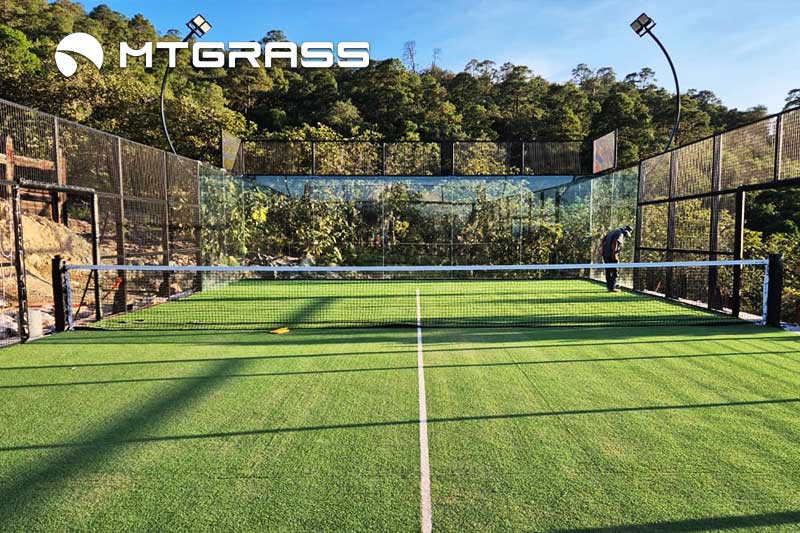
Padel hat in den letzten Jahren in ganz Peru rasant an Beliebtheit gewonnen, und neue Plätze entstehen in Sportvereinen, Fitnessstudios, auf Dachterrassen und in speziellen Padel-Anlagen. Miraflores, Surco, La Molina und andere Stadtteile der Hauptstadt spielen eine immer wichtigere Rolle in der wachsenden Padel-Szene Perus.
Ganz gleich, ob Sie einen Padel-Club planen, eine bestehende Sportanlage um Padelplätze erweitern oder ein neues Projekt in Peru ausstatten möchten: Der Belag eines Padelplatzes sollte nicht als reines Veredelungsmaterial betrachtet werden. Er wirkt sich unmittelbar auf das Ballverhalten, die Bewegungsabläufe der Spieler, die Pflege sowie die wirtschaftliche Nutzungsdauer des Platzes aus.
Dieser Leitfaden erklärt Ihnen, worauf es wirklich ankommt, wenn es um den Belag unter Ihren Füßen geht: den Padel-Rasen.
Der Padel-Boom in Lima – in Zahlen
Die moderne Ära des Padel in Lima begann eigentlich erst um 2021–2022, als die ersten speziellen Padel-Clubs – darunter One Padel, Bohemia Padel Club und Peru Padel Center – ihre Türen öffneten. Seitdem sind in San Miguel, La Molina, Surquillo und darüber hinaus immer wieder neue Spielstätten entstanden. Peru verfügt mittlerweile landesweit über mehr als 76 Padelplätze, die sich zwar vor allem auf Lima konzentrieren, sich aber auch auf Arequipa, Tacna, Piura, Trujillo und Chiclayo ausweiten.
Der Sport erhielt zudem offizielle Unterstützung. Im Jahr 2025 wurde die Federación Peruana de Pádel (FPP) vom peruanischen Instituto Peruano del Deporte (IPD) offiziell anerkannt und damit als nationaler Dachverband für diesen Sport unter dem Dach der Federación Internacional de Pádel (FIP) etabliert. Im Jahr 2026 startete die FPP die „Betsson Perú Pádel Pro Tour“, eine nationale Turnierserie mit acht Stationen.
Für alle, die sich mit der Wirtschaftlichkeit von Tennisplätzen beschäftigen: Die stündlichen Mietpreise in Lima liegen in der Regel zwischen 30 und 160 S/, je nach Verein, Zeitfenster und danach, ob es sich um einen überdachten oder einen Open-Air-Platz handelt. Das ist eine bedeutende Umsatzspanne, wenn man berechnen möchte, wie viele Stunden ein Platz gebucht werden muss, um sich zu amortisieren – und genau deshalb sind der von Ihnen gewählte Belag und dessen Lebensdauer letztendlich so entscheidend für Ihren Gewinn.
| Lima Padel im Überblick (2026) | Einzelheiten |
| Seitdem gegründete Vereine | 2021–2022 |
| Gerichte im ganzen Land | 76+ |
| Stundenmietspanne | S/30 – S/160 |
| Leitungsgremium | FPP (von der IPD anerkannt, 2025) |
| Nationale Rennserie | Betsson Perú Pádel Pro Tour, 8 Stationen pro Jahr |
Warum die Wahl des Rasenbelags im peruanischen Klima eine größere Rolle spielt, als man denkt
Das Klima in Lima ist trügerisch mild – hier gibt es keine Frost-Tau-Zyklen, wie sie in kälteren Regionen die Sportbeläge im Freien zerstören. Doch „mild“ bedeutet nicht gleich „schonend für den Kunstrasen“. Die Küstenfeuchtigkeit, der anhaltende Garúa-Nebel, der Lima monatelang einhüllt, und die ganzjährige UV-Belastung setzen die Kunstrasenfasern und die Unterlagsysteme besonderen Belastungen aus.
Wenn sich Ihr Tennisplatz in Arequipa oder einer anderen hochgelegenen Region befindet, stehen Sie vor einem ganz anderen Problem: Die dünnere Luft führt zu einer deutlich höheren UV-Intensität, was den Faserabbau und das Ausbleichen der Farben beschleunigt, wenn das Garn nicht ordnungsgemäß stabilisiert ist.
Und dann ist da noch die Frage nach drinnen oder draußen. Ein Großteil der Plätze in Lima ist überdacht (techada) – was die Anforderungen an die Entwässerung, die Beleuchtung und sogar das Verhalten der Sandfüllung im Laufe der Zeit im Vergleich zu einem vollständig freiliegenden Außenplatz verändert. Das bedeutet jedoch nicht, dass Sie exotische Materialien benötigen. Es bedeutet vielmehr, dass der Rasenbelag genau auf den jeweiligen Einsatzort abgestimmt werden muss und nicht einfach aus einem allgemeinen Katalog bestellt werden sollte.
Bei der Spezifikation Ihres Padel-Belags sollten daher drei Aspekte gemeinsam berücksichtigt werden: UV-Beständigkeit, Feuchtigkeitsmanagement und mechanische Strapazierfähigkeit.
Was Sie über den Belag eines Padel-Platzes wissen sollten: Was Sie tatsächlich kaufen
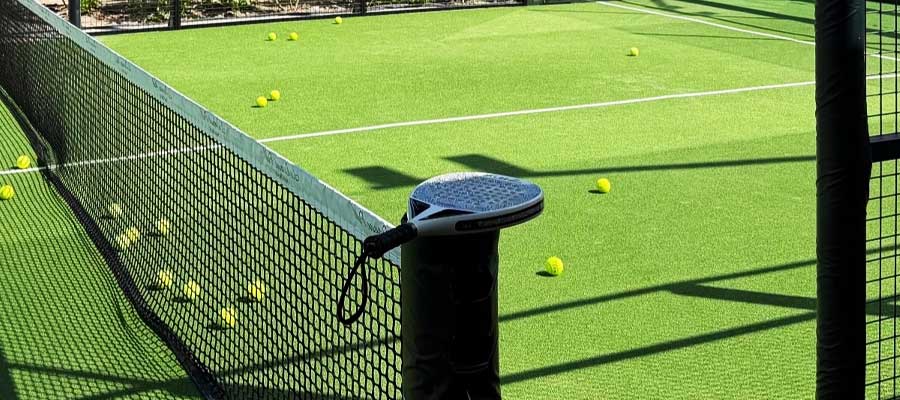
Wenn von „Padel-Rasen“ die Rede ist, ist damit eigentlich ein System gemeint – Fasern, Unterlage und Füllmaterial, die zusammenwirken. Hier erfahren Sie, welche Funktion die einzelnen Bestandteile haben und warum es sich lohnt, sich darüber zu informieren, bevor Sie einen Kaufvertrag unterzeichnen.
Faserstruktur: Monofilament vs. texturiertes Garn
Der Padelplatz-Rasen von MightyGrass besteht aus strukturierten (gekräuselten oder plissierten) Monofilamentfasern oder aufrecht stehenden Monofilamentgarnen. Die Struktur sorgt dafür, dass die Fasern länger aufrecht stehen, die Sandfüllung besser festhalten und den Spielern eine gleichmäßigere Traktion in alle Richtungen bieten – was bei einer Sportart, die auf schnellen Seitwärtsbewegungen und dem Spiel an der Wand basiert, von großer Bedeutung ist.
Stapelhöhe und -dichte
In der Branche finden sich Florhöhen von etwa 8 mm bis zu 15 mm, wobei 10–13 mm der Bereich ist, für den sich die meisten Clubs entscheiden. Ein etwas längerer Flor sorgt für mehr Dämpfung und einen fehlerverzeihenderen, besser vorhersehbaren Abprall, was viele Profi- und Freizeit-Clubs bevorzugen, da dies die Gelenke der Spieler während einer zweistündigen Spielrunde schont.
Ein dicht gewebter, fest vernähter Kunstrasen behält auch bei wiederholter Beanspruchung durch Fußgängerverkehr seine Form und sorgt Spiel für Spiel für einen gleichbleibenden Ballabsprung – Kunstrasen mit geringer Dichte flacht schneller ab und weist nach ein bis zwei Jahren intensiver Nutzung Anzeichen für einen vorzeitigen Austausch auf.
Sandfüllung
Die Quarzsandfüllung stabilisiert die Fasern, reguliert das Verhalten des Balls beim Abprallen von der Oberfläche und bietet den Spielern den nötigen Halt, um sicher zu rutschen und anzuhalten. Branchenstandards empfehlen in der Regel eine Füllmenge von 8–10 kg Sand (mit einer Korngröße von 0,2–0,8 mm) pro Quadratmeter; die Korngröße und -verteilung sollten entsprechend der spezifischen Florhöhe und dem Fasertyp des Kunstrasens angepasst werden. Werden hier Fehler gemacht – falsche Korngröße, ungleichmäßige Verteilung, schlechte Sandqualität –, kommt es zu Staubaufwirbelungen, unregelmäßigen Abprallen und einem schnelleren Verschleiß der Fasern.
Wo die FIP-Standards ins Spiel kommen
Die Federación Internacional de Pádel legt Leistungsstandards fest – darunter Ballabprall, Griffigkeit und Oberflächenbeschaffenheit –, die für den bei offiziell anerkannten Turnieren verwendeten Belag gelten.
Allerdings handelt es sich bei der großen Mehrheit der Padelplätze, die derzeit in Lima eröffnet werden, um kommerzielle und kommunale Anlagen und nicht um Turnierinfrastruktur. Bei diesen Projekten sind in der Regel Haltbarkeit, Eignung für das Klima, gleichmäßiger Ballabsprung und die Gesamtbetriebskosten die entscheidenden Faktoren – nicht die Turnierzertifizierung. Sprechen Sie offen mit Ihrem Lieferanten darüber, in welche Kategorie Ihr Projekt fällt, und wählen Sie Spezifikationen, die Ihrem tatsächlichen Anwendungsfall entsprechen, anstatt für Standards zu bezahlen, die Sie nicht benötigen.
| Spezifikation | Typischer Bereich | Warum es wichtig ist |
| Höhe des Stapels | 8–15 mm (am häufigsten 10–13 mm) | Regelt die Abspielgeschwindigkeit und die Dämpfung |
| Fasertyp | Strukturiertes Monofilament | Traktion, Faserrückgewinnung, Haltbarkeit |
| Sandfüllung | 8–10 kg/m² | Ballsprung, Griffigkeit, Oberflächenstabilität |
| Erwartete Lebensdauer | 6–10 Jahre | Hängt von der Nutzungsintensität und den Witterungseinflüssen ab |
Sie können sich für technischen Support an das Expertenteam von MightyGrass wenden oder unsere Padel-Rasen Produktseite, um mehr über technische Daten, Funktionen und verfügbare Optionen zu erfahren.
Hinweise zum Bau von Padel-Plätzen in Peru
Die Qualität des Padel-Kunstrasens reicht nur bis zur Hälfte – erst die Verlegequalität entscheidet darüber, ob dieser Kunstrasen in den nächsten zehn Jahren so funktioniert, wie er soll.
- Die Vorbereitung des Untergrunds ist entscheidend. Ganz gleich, ob Sie auf einem Unterbau aus Beton oder Asphalt verlegen – die Oberfläche muss eben, ordnungsgemäß verdichtet und im Hinblick auf die Entwässerung profiliert sein, bevor auch nur eine einzige Rolle Rasen verlegt wird. Die Vorschriften lassen im Allgemeinen nur ein geringes Gefälle – etwa 1% – für den Wasserabfluss zu, was eine enge Toleranz darstellt, die wenig Spielraum für Abkürzungen lässt.
- In einem Küstenklima wie dem von Lima verdient die Entwässerung besondere Beachtung. Die Garúa-Saison bringt auch ohne starke Regenfälle anhaltende Feuchtigkeit mit sich, und wenn Ihr Unterbau und Ihre Fugen nicht ordnungsgemäß abgedichtet und planiert sind, kommt es zu Wasseransammlungen, die die Lebensdauer des Rasens verkürzen und Rutschgefahren verursachen.
- Gerade bei der Nahtverarbeitung und der Integration in Glaswände treten bei vielen lokalen Installationen Probleme auf. Der Kunstrasen muss rund um den Glas- und Netzrand sicher befestigt werden, ohne dass er gedehnt wird oder lose Kanten entstehen – zu stark gedehnter oder zu schwach gespannter Kunstrasen neigt dazu, sich im Laufe des Tages bei Temperaturschwankungen zu verziehen, was eine häufige und vermeidbare Fehlerquelle darstellt.
Eine praktische Verlegefolge lautet: vorbereiteter und nivellierter Untergrund → Entwässerung/Gefälle → Verlegen des Rasens → Nahtstellen → Verlegen der Linien → Sandverfüllung → Abbürsten und Endkontrolle.
Kosten und ROI: Was Padel-Club-Betreiber in Lima einkalkulieren sollten
Der Belag eines Padel-Platzes selbst ist nur ein Posten bei der Errichtung eines kompletten Platzes. Auch die Stahlkonstruktion, das gehärtete Glas, die Umzäunung, die Beleuchtung und das Betonfundament verursachen erhebliche Kosten. Darüber hinaus ist bei der Auswahl Kunstrasen… sollte man sich nicht ausschließlich auf den Anschaffungspreis konzentrieren, sondern auch Faktoren wie Lebensdauer, Wartungshäufigkeit und langfristige Betriebskosten berücksichtigen. Hochwertiger Kunstrasen ist zwar mit höheren Anfangsinvestitionen verbunden, hält aber in der Regel acht bis zehn Jahre; im Gegensatz dazu muss billiger Kunstrasen aufgrund seiner geringen Haltbarkeit möglicherweise früher ausgetauscht werden, was letztendlich zu höheren Lebenszykluskosten führt.
Ein Marktleitfaden für Lima aus dem Jahr 2026 gibt die Preise für die Platzmiete mit etwa 60–90 S/ pro Stunde außerhalb der Stoßzeiten an Wochentagen und 90–150 S/ während der Stoßzeiten sowie an Wochenenden an. Ein Betreiber in Lima, „Más+ Padel Perú“, gibt derzeit Preise von rund S/80 für ausgewählte Tagespakete und S/140–160 für Buchungen zu Spitzenzeiten an. Eine einzige gut ausgelastete Platzbuchung von 8–10 Stunden pro Tag kann einen bedeutenden monatlichen Umsatz generieren. Berücksichtigen Sie die Lebensdauer des Belags direkt in Ihrem ROI-Modell, nicht nur Ihre anfänglichen Investitionskosten.
Ein weiterer Aspekt ist die Instandhaltung des Padelplatzes, einschließlich regelmäßiger Bürstarbeiten (1–2 Mal pro Woche bei stark frequentierten Plätzen), des periodischen Nachfüllens von Sand, da sich der Füllstoff absetzt und verdichtet, sowie der Reinigung der Scheiben, um die Sicht zu gewährleisten und Mineralablagerungen durch die Küstenluft zu verhindern. Die einzelnen Kosten für diese Instandhaltungsmaßnahmen sind zwar nicht hoch, doch eine Vernachlässigung der Instandhaltung beschleunigt den Verschleiß und verkürzt die erwartete Lebensdauer Ihres Padelplatzes.
Wenn Sie einen stark frequentierten Club betreiben, kann es sinnvoller sein, etwas mehr für ein besser ausgestattetes Kunstrasensystem auszugeben, als sich für das günstigste Angebot zu entscheiden und den Belag vorzeitig austauschen zu müssen.
Wie wählt man einen Anbieter für Padel-Kunstrasen für Ihr Projekt in Peru aus?
Wenn Sie Anbieter für ein Projekt in Peru vergleichen, sollten Sie sich zunächst auf die technischen Daten konzentrieren und nicht auf die Katalogbilder. Bitten Sie jeden Hersteller um ein Muster und ein technisches Datenblatt, aus dem die Florhöhe, die Garnart, das Dtex, die Dichte, die Maschenweite, die Rückenbeschaffenheit, die UV-Behandlung, die empfohlene Füllung sowie die entsprechenden Prüf- oder Zertifizierungsunterlagen hervorgehen.
Sie sollten außerdem klären, ob Sie bei einem tatsächlichen Hersteller oder bei einem Handelsunternehmen einkaufen. Die direkte Zusammenarbeit mit einem Hersteller bietet deutliche Vorteile, wenn Sie mehrere Standorte betreuen oder langfristige Projekte abwickeln. Sie profitieren von gleichbleibender Produktionsqualität, maßgeschneiderten Spezifikationen, Sicherheitsbeständen und einer kontinuierlichen Versorgung – und das alles ohne die mit Zwischenhändlern verbundenen Preisaufschläge.
So betrachtet MightyGrass beispielsweise Padel-Kunstrasen als Projekt zur Herstellung eines Sportbelags und nicht als gewöhnlichen Auftrag für Kunstrasen. Dank unserer hauseigenen Produktion von Garn, Tufting und Rückenmaterial können wir die Garnstruktur, die Dichte, das Rückenmaterial und weitere Spezifikationen an Ihre Projektanforderungen anpassen. Dank unserer Produktionserfahrung in verschiedenen Sportrasenmärkten können wir zudem OEM-/ODM-Projekte, Großbeschaffungen und Nachbestellungen für Händler und Padel-Bauunternehmen unterstützen.
Für den peruanischen Markt kann MightyGrass Ihnen dabei helfen, vor der Bestellung die geeigneten Rasenspezifikationen zu ermitteln, um sicherzustellen, dass die endgültige Systemlösung auf die vorgesehene Spielfeldart, die örtlichen Betriebsbedingungen und die Verlegungsmethode abgestimmt ist. Kontakt sofort.
Fazit
Der Belag Ihres Padelplatzes muss ein vorhersehbares Ballverhalten, zuverlässige Bodenhaftung, gute Sandrückhaltung, UV-Beständigkeit und langfristige Dimensionsstabilität gewährleisten.
Für die meisten gewerblichen Projekte stellt ein 10–13 mm starker PE-Sportrasen mit angemessener Dichte, stabilem Untergrund und korrekt spezifiziertem Quarzsand-Füllmaterial einen sinnvollen Ausgangspunkt dar. Von dort aus sollte Ihre Wahl von den tatsächlichen Spielanforderungen, dem Standort des Spielfelds, der zu erwartenden Beanspruchung und den Zertifizierungsanforderungen geleitet werden.
Wenn Sie auf der Suche nach Padel-Kunstrasen für einen neuen Platz oder ein Mehrplatzprojekt in Peru sind, Mächtiges Gras kann Ihnen dabei helfen, technische Daten zu vergleichen, die geeignete Rasenkonstruktion zu entwickeln und ein Projektangebot auf der Grundlage der von Ihnen benötigten Platzanzahl und des Lieferplans zu erstellen.
Häufig gestellte Fragen
Wie viele Padelplätze gibt es in Lima?
In Lima gibt es über 66 zertifizierte Padelplätze in 16 Clubs, die sich auf Stadtteile wie Santiago de Surco, Miraflores, San Borja, La Molina, Surquillo, San Miguel und Magdalena del Mar verteilen. Auf Lima entfallen mehr als 75% aller Padelanlagen in Peru.
Welche Art von Kunstrasen wird für Padel-Plätze verwendet?
Auf den meisten Padel-Plätzen kommt strukturierter Monofilament-Kunstrasen mit Sandfüllung zum Einsatz, dessen Florhöhe in der Regel zwischen 10 und 13 mm liegt. Diese Kombination sorgt für ein ausgewogenes Verhältnis zwischen gleichmäßigem Ballabprall, guter Bodenhaftung für die Spieler und Langlebigkeit bei intensiver Nutzung.
Wie viel kostet der Bau eines Padel-Platzes in Peru?
Die Gesamtkosten für den Bau eines Standard-Padelplatzes (mit den Maßen 20 x 10 Meter) in Peru liegen zwischen etwa 55.000 und 150.000 S/, abhängig von den Bodenverhältnissen am Standort, der Qualität der verwendeten Materialien und davon, ob es sich um einen Außen- oder Innenplatz handelt. Die Gesamtbaukosten hängen von der Konstruktion des Platzes (Stahl, Glas, Beleuchtung, Umzäunung), der Baustellenvorbereitung und der gewählten Rasenausführung ab. Die Rasenqualität wirkt sich direkt auf die langfristigen Kosten aus, da ein langlebiges System mit einer Lebensdauer von 6–10 Jahren Ihre Investition auf weitaus mehr umsatzgenerierende Betriebsstunden verteilt als ein preisgünstiges Produkt, das frühzeitig ausgetauscht werden muss.
Wie lange hält ein Padel-Kunstrasen?
Ein ordnungsgemäß verlegter und gepflegter Padel-Kunstrasen hält in der Regel 6 bis 10 Jahre, abhängig von der Nutzungsintensität, den klimatischen Einflüssen und der Pflege der Füllung. Die an der Küste herrschende Luftfeuchtigkeit und die UV-Belastung, wie sie beispielsweise in Lima auftreten, machen die Qualität der Fasern und die UV-Stabilisierung besonders wichtig.
Padelplätze in der Halle vs. im Freien: Worin bestehen die Unterschiede?
Padel-Hallenplätze bieten eine besser kontrollierte Spielumgebung, da sie die Spieler vor Wind, Regen und direkter Sonneneinstrahlung schützen. Sie zeichnen sich durch gleichmäßigere Bedingungen, eine bessere Lichtsteuerung und weniger wetterbedingte Unterbrechungen aus, wodurch sie sich besonders für Spieler und Anlagen eignen, die Wert auf Stabilität und ganzjährige Verfügbarkeit legen. Allerdings kann die natürliche Luftzirkulation in Hallenplätzen eingeschränkt sein, sodass die Regulierung der Luftfeuchtigkeit zu einem wichtigen Aspekt werden kann.
Padelplätze im Freien bieten ein offeneres und natürlicheres Spielerlebnis mit besserer Belüftung. Sie ermöglichen es den Spielern, sich an unterschiedliche Umgebungsbedingungen anzupassen, doch Faktoren wie Wind, Temperatur, Luftfeuchtigkeit, Sonneneinstrahlung und Regen können sich direkt auf das Spielgeschehen und den Pflegeaufwand auswirken.