English
  العربية
  Español
  Deutsch
  Français
  Português
  Русский
  日本語
日本語  Italiano
  Nederlands
  Svenska
  Suomi
Suomi  ไทย
ไทย  Dansk
Dansk  Ελληνικά
  Bahasa Melayu

As the host country of the 2026 Central American and Caribbean Games, the Dominican Republic is making major investments in the renovation and construction of baseball fields. According to official event planning documents and construction progress reports, the government has allocated more than 37.9 billion Dominican pesos for the modernization and development of sports venues. In addition, the organizing committee is building and upgrading multiple baseball and softball fields within the Juan Pablo Duarte Olympic Center to accommodate both competition and training needs. Official documents indicate that construction and renovation are underway for at least three baseball fields (Fields 1, 2, and 3) and two softball fields (A and B) designated for the Games, with all venues scheduled to be delivered on time ahead of the July 2026 opening ceremony.
As a recognized baseball powerhouse and one of MLB’s most important talent-exporting countries, the Dominican Republic has, in recent years, continuously raised its standards for high-quality baseball venues. The momentum created by international tournaments and regional sporting events is driving more baseball facilities to upgrade toward international competition-level specifications, including advanced stormwater drainage systems, more durable playing surfaces (hybrid grass or artificial turf), and night lighting systems. A notable example is the Loma de Cabrera Sports Complex project: this privately and community-funded development features three baseball fields (one main field and two tee-ball fields), with the main field constructed using artificial turf, significantly enhancing durability and safety for youth training and community sports activities.
These developments clearly demonstrate the Dominican Republic’s growing emphasis on baseball field quality and advanced field technologies, a philosophy that is increasingly embedded throughout the country’s baseball facility construction and upgrade initiatives.
What Are the Standard Requirements for Baseball Turf Systems in the Dominican Republic?
Amid this wave of baseball facility upgrades, local Dominican baseball construction contractors play a critical role. They are not only responsible for civil works and supporting infrastructure, but also for establishing strict standards for the selection and installation of baseball turf systems. Key evaluation criteria include drainage performance, climate resistance, and service life.
Given the country’s hot, rainy tropical climate, baseball fields must be built on bases capable of rapid water drainage and effective prevention of surface ponding, while turf materials must offer strong UV resistance and long-term color stability to avoid premature aging. Whether using natural grass or artificial turf, contractors consistently emphasize proper sub-base drainage layers and precision grading, ensuring that fields can quickly return to playable conditions even after heavy tropical rainfall.
For example, the renovation of Jose Briceño Baseball Stadium in Puerto Plata, a project supported by the Administrative Office of the Presidency of the Dominican Republic with an investment of approximately 160 million Dominican pesos, illustrates this approach clearly. The project team carried out meticulous field base preparation and turf installation, including re-leveling the playing surface, installing high-quality grass, reconstructing the pitcher’s mound, and implementing a comprehensive drainage system. The contractor’s strict requirements for turf quality reflect a balanced philosophy that prioritizes both durability and athletic performance—in tropical environments, only turf systems with excellent drainage and heat resistance can withstand high-frequency competition and training.
At the same time, some contractors have begun adopting artificial turf systems to meet the demands of specific projects. A representative example is the hometown baseball field donated by MLB star Julio Rodríguez, where the construction firm Orlova Group carried out the first large-scale installation of professional-grade artificial baseball turf in the area, along with integrated underground drainage, field lighting, and training facilities.
From a contractor’s perspective, introducing high-quality artificial turf requires careful evaluation of permeability, heat resistance, and abrasion resistance. In the Rodríguez project, the field adopted a highly durable synthetic turf system combined with professional drainage design, ensuring that the surface remains dry and playable even during the tropical rainy season, while significantly reducing long-term maintenance costs.
This material selection process highlights the close collaboration between contractors and turf manufacturers in achieving project goals: contractors define the performance requirements, manufacturers deliver turf systems with matching specifications, and both parties work together through installation and commissioning to ensure the final field meets the expected standards of quality, durability, and service life.

Why Artificial Turf Is Becoming a Strategic Choice for Dominican Baseball ?
While natural grass remains traditional, more academies and field owners are actively evaluating artificial turf for baseball—not as a replacement for tradition, but as a solution for modern demands.
Key Advantages for the Dominican Market
- All-weather playability: Training doesn’t stop during the rainy season.
- High durability: Designed for constant use without surface degradation.
- Lower long-term maintenance costs: No mowing, fertilizing, or re-sodding.
- Consistent ball response: Critical for skill development and performance evaluation.
- Custom design for baseball zones: Infield, outfield, warning track, and batting cages can be tailored.

For training academies and community fields, artificial turf offers more usable hours per year—a critical advantage in a country where baseball never pauses.
In 2026, the first public artificial-turf baseball facility in the Dominican Republic will be officially completed: a comprehensive sports complex consisting of one main baseball field and two youth baseball fields. This newly transformed facility is funded by MLB star Julio Rodríguez, with an investment of approximately USD 1.3 million.
The project carries landmark significance, setting a new benchmark for baseball fields in the Dominican Republic. For decades, grassroots baseball fields across the country have largely relied on basic natural grass or dirt surfaces, often with limited maintenance and suboptimal playing conditions. Rodríguez’s donated facility demonstrates “MLB-level” field and turf standards, offering inspiration to both local governments and communities: even community-level baseball fields can adopt modern solutions such as artificial turf, significantly improving field quality, durability, and year-round usability.
With continued advances in material technology, next-generation artificial turf systems have made substantial progress in shock absorption, heat dissipation, and realistic grass-like playability. Today, several MLB teams—including the Arizona Diamondbacks and Miami Marlins—have reinstalled new-generation synthetic turf systems in their stadiums to accommodate indoor venues or challenging climate conditions.
As a result, the artificial turf used in Rodríguez’s project represents a modern, high-end solution, carefully engineered to minimize potential negative impacts on players while offering maintenance efficiencies that natural grass cannot match. This demonstration project is clearly reshaping local perceptions of artificial turf. Concerns that turf surfaces are “too hot” or “too hard” are gradually being replaced by confidence built on real-world performance. Increasingly, coaches and sports officials are recognizing the value of artificial turf for training-focused facilities.
According to reports, following the completion of this project, baseball leagues in other regions of the Dominican Republic have begun evaluating similar artificial turf solutions, aiming to learn from the experience and raise their own facility standards. This ripple effect highlights how investments by elite players can drive the upgrade of grassroots baseball infrastructure and, in turn, influence material selection and turf procurement trends across the country.
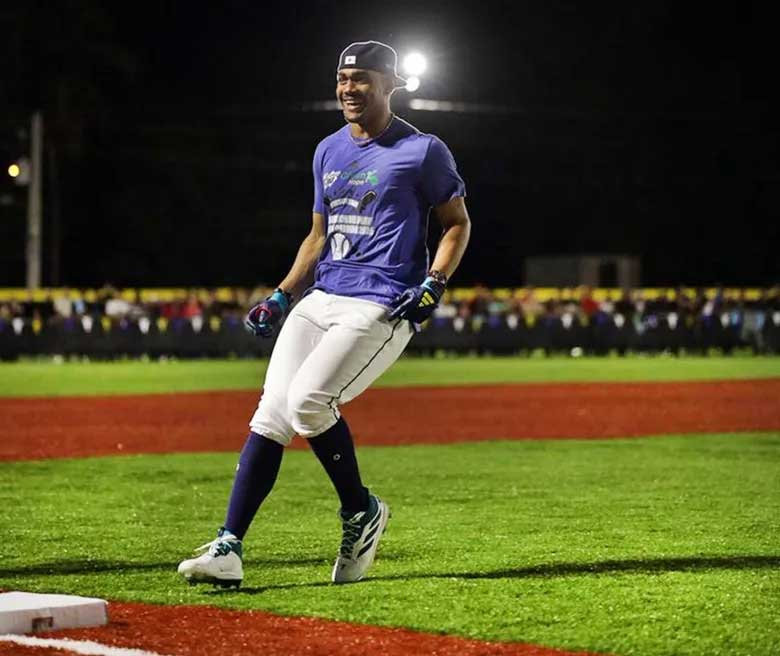
How many baseball academies in dominican republic ?
The Dominican Republic is often called “the MLB talent factory”,Over 10% of all MLB players today were born in the Dominican Republic. MLB organizations maintain permanent training academies across the country, scouting and developing talent year-round.
some standout baseball camps and academies in the Dominican Republic, ranging from MLB-affiliated facilities to immersive cultural-and-skills programs:
MLB-Affiliated Training Academies & Homegrown Institutions
- Campo Las Palmas (Los Angeles Dodgers Academy)
Widely considered the most well-run MLB training academy on the island, this facility offers modern infrastructure and a structured developmental environment. - Numerous MLB Team Academies Across the Country
All 30 MLB franchises have training academies in the Dominican Republic, serving as key talent development hubs. - Prospect-Focused Academies
Examples include Arias & Goodman Academy (San Pedro de Macorís), Pory Elite Baseball Academy (San Cristóbal), Ray Baseball Academy (Santo Domingo West), and many others—often linked with MLB’s Trainer Partnership Program. These academies are spread across Santiago, Bayahibe, Haina, Cotuí, Baní, Boca Chica, and beyond. - Education-Integrated Academy: DRSEA
The Dominican Republic Sports & Education Academy (DRSEA) provides programs at Arias & Goodman Academy combining baseball skills training with life skills, English, academic subjects, and financial literacy—empowering players for success on and off the field.
Independent & Cultural Immersion Camps
- Pro Performance Camp
A highly personalized camp offering one-on-one coaching, strength & conditioning, mental skills development, video review, and up to six weeks of training. Designed for serious athletes aged 14–18 with access to MLB scouts. - MB Baseball Academy Camp
Amateur-friendly with bilingual school options, cultural tours, community service, regular games, and comfortable dorm-style accommodations starting at ~$300/week. - TFF Academy – Future Stars Tournament
A week-long tournament-style camp in San Pedro de Macorís with offense/defense training, speed and conditioning, recreational activities, and group lodging in local hotels. - Global Baseball Adventures Camps
High school–aged players join former Dominican MLB players for games at MLB-complex fields (like Boca Chica and Estadio Quisqueya), plus cultural immersion and service activities like baseball clinics and beach trips. - Planet Baseball Island Training Camp (Las Terrenas)
A one-week camp in a stunning beach town offering coaching, cultural immersion, lodging, and excursions (like waterfall hikes and beach hikes), with proceeds benefiting the Baseball Island Foundation. - ILI Travel Baseball Training Opportunities
Tailored for teams (e.g., high school/college teams), combining daily gameplay with local Dominican teams, cultural learning, service immersion, and off‑site excursions like snorkeling or rafting. Coaches/travel staff accompany the group for safety. - NY Blue Birds “Dream” Baseball Trips
Camps for ages 11–16 in Boca Chica, offering hotel lodging, training at MLB-complexes, community service, cultural excursions, analytics (Rapsodo), and beach workouts, led by experienced staff. - Camacho Training Camp
Year-round intensive training for ages 5–19, offering twice-daily sessions 6 days a week, dorm-style living, meals, MLB scout evaluations, and cultural connection. Open to individual players or groups. - Machia Baseball Group Summer Camp (Santiago)
A two-week August program with pro-level instruction, conditioning, games against Dominican academies, beach workouts, lodging in 4-star hotels, and live-streamed practice/game broadcasts.

As professional-grade youth training fields continue to emerge across the country, young players are able to train in safer, higher-quality environments, which is expected to further elevate their technical and tactical development. This, in turn, has drawn sustained attention from Major League Baseball organizations and international baseball bodies, encouraging increased investment in physical infrastructure throughout the Dominican Republic.
A notable example is the Baltimore Orioles, which in 2024 completed the construction of a new training academy in the region. The facility includes three regulation baseball fields and one artificial-turf agility training field, along with on-site accommodations capable of housing more than 100 players and coaching staff. The academy’s opening ceremony was attended by the President of the Dominican Republic and the Baseball Commissioner, underscoring the strategic importance of such infrastructure investments in long-term talent development.
These foreign-funded projects are typically delivered through multi-party collaboration, bringing together local construction companies, U.S.-based designers, and professional turf suppliers. This cooperative model not only ensures international-level facility standards, but also develops local industry expertise and elevates construction craftsmanship, strengthening the Dominican Republic’s broader baseball infrastructure ecosystem.

MightyGrass: Supporting the Next Generation of Dominican Baseball Fields
As a specialized baseball turf manufacturer, MightyGrass understands the unique demands of baseball fields—especially in high-use, high-humidity environments like the Dominican Republic.
What MightyGrass Brings to the Dominican Market
- Baseball-specific artificial turf systems: Designed for infield, outfield, and training zones.
- Custom manufacturing: Tailored to academy size, usage frequency, and budget.
- Proven durability: Engineered for intensive daily training.
- Contractor-friendly supply model: Supporting local installers and project partners.
- International project experience: Aligning with global baseball field standards.
Our goal is not just to supply turf—but to help academies train better, contractors build smarter, and baseball fields last longer.
Conclusion
Baseball field development in the Dominican Republic is entering a virtuous cycle of growth. International tournaments and reinvestment by star players are bringing both capital and advanced concepts, while local contractors and baseball turf manufacturers are collaborating to innovate and deliver an increasing number of high-standard baseball facilities.
This momentum not only reinforces the Dominican Republic’s position as a global baseball powerhouse, but also creates new opportunities across the broader baseball industry value chain—from the export of baseball-related products to other Latin American markets (including the world-renowned How many Dominican Republic players are in MLB?
As of recent MLB seasons, approximately 100–110 active MLB players are from the Dominican Republic, representing about 10% of all Major League Baseball players. The Dominican Republic consistently ranks second only to the United States in total MLB player representation.
FAQ
How many Dominican players are in MLB?
On an average Opening Day roster, there are around 90–110 Dominican players across all MLB teams. The exact number fluctuates each season due to trades, injuries, and roster changes, but the Dominican Republic remains the largest international talent source in MLB.
How many Dominican baseball players are in the Major Leagues?
Including active rosters, injured lists, and two-way contracts, the number of Dominican baseball players affiliated with MLB organizations typically exceeds 120 players in any given season.
How many Dominican baseball players are in the MLB?
Roughly 1 out of every 10 MLB players is Dominican. This extraordinary concentration highlights the country’s unmatched baseball development system and cultural dedication to the sport.
How many baseball players are from the Dominican Republic?
Historically, more than 900 Dominican-born players have appeared in MLB games since the early 20th century. Every year, new Dominican players debut in MLB, reinforcing the country’s role as a global baseball talent pipeline.
History of baseball in the Dominican Republic
Baseball was introduced to the Dominican Republic in the late 19th century and rapidly became the nation’s most popular sport.
By the mid-20th century, professional leagues, community teams, and youth programs were firmly established. The creation of the Dominican Winter League (LIDOM) and later the arrival of MLB academies transformed baseball into both a cultural identity and an economic pathway for young athletes.
Why is baseball so important in the Dominican Republic?
Baseball is important in the Dominican Republic because it represents:
- A national identity and cultural pride
- A proven pathway to professional success and global recognition
- A major economic opportunity for young players and families
- Strong community bonds built around local teams and academies
For many Dominican families, baseball is not just a sport—it is a life opportunity.
Why are there so many Dominican baseball players?
There are so many Dominican baseball players because of a unique combination of factors:
- Early exposure to baseball at the community level
- Hundreds of training academies across the country
- Direct MLB investment through scouting and development programs
- Year-round playing climate
- Extremely high training intensity from a young age
This system creates a continuous, competitive talent pipeline unmatched anywhere else in the world.
How many baseball fields are in the Dominican Republic?
There is no official nationwide count, but estimates suggest there are thousands of baseball fields across the Dominican Republic, including:
- Professional stadiums
- MLB and private academies
- School and community fields
- Youth and training complexes
Most baseball activity takes place outside professional stadiums, making field durability and low-maintenance surfaces increasingly important.
How many Dominicans are in the MLB?
At any given time, 100+ Dominicans are active in MLB, with many more in Minor League systems. This concentration confirms the Dominican Republic as the world’s most productive baseball nation per capita.
Why This Matters for Baseball Facilities & Turf Systems ?
The Dominican Republic’s unmatched baseball output has driven intense demand for durable, high-performance baseball fields, especially at:
- Training academies
- Community development complexes
- Youth and scouting facilities
As training intensity increases and facilities operate year-round, modern baseball turf systems—especially advanced artificial turf—are becoming essential to support safety, consistency, and long-term field performance.
Dominican baseball caps), to the expansion of local baseball field contractors exporting first-class construction expertise to regional projects.
Looking ahead, a baseball infrastructure network that blends local passion with international standards is taking shape across the Dominican Republic—one that serves today’s competitions and training needs while paving the way for the next generation of baseball stars.
- Sources of information referenced in this article:
- https://en.wikipedia.org/wiki/Dominican_Republic_national_baseball_team
- https://deultimominuto.net/en/sports/sports-facilities-delivery-accelerated-for-the-2026-central-american-and-caribbean-games/
- https://deultimominuto.net/en/sports/baseball/julio-rodriguez-inaugurates-sports-complex-in-loma-de-cabrera-with-an-investment-exceeding-us1-3-million/
- https://www.seattletimes.com/sports/mariners/mariners-star-julio-rodriguez-gives-back-to-his-hometown-in-the-dominican-republic/