
 Ελληνικά
  English
  العربية
  Español
  Deutsch
  Français
  Português
  Русский
  日本語
日本語  Italiano
  Nederlands
  Svenska
  Suomi
Suomi  ไทย
ไทย  Dansk
Dansk  Bahasa Melayu

Ο τεχνητός χλοοτάπητας έχει γίνει το πρότυπο υλικό επιφάνειας για FIFA, παγκόσμιους ποδοσφαιρικούς συλλόγους, σχολεία και επαγγελματικά γήπεδα. Ωστόσο, λίγοι, είτε αθλητικοί εργολάβοι, ιδιοκτήτες συλλόγων ή παίκτες, κατανοούν πραγματικά πώς παράγεται ο τεχνητός χλοοτάπητας ποδοσφαίρου. Αυτό το άρθρο θα σας μεταφέρει τη διαδικασία παραγωγής, η οποία περιλαμβάνει κυρίως 6 βασικά βήματα:
- Επιλογή πρώτης ύλης και τύπου ινών.
- Σχεδίαση και συστροφή ινών.
- Φούντες ή πλέξιμο.
- Υποστήριξη.
- Δοκιμές ινών και δοκιμές επιδόσεων.
- Συσκευασία και logistics.
Αυτή η λεπτομερής ανάλυση των πρώτων υλών, των διαδικασιών και των προτύπων ποιότητας αποκαλύπτει πώς μια κορυφαίος προμηθευτής χλοοτάπητα ποδοσφαίρου μετατρέπει πολυμερείς πρώτες ύλες σε χλοοτάπητα εγκεκριμένο από τη FIFA.
Τεχνητή χόρτο Πρώτες ύλες
Τα υψηλής ποιότητας υλικά τεχνητού γρασιδιού προέρχονται κυρίως από πολυμερή όπως το πολυαιθυλένιο (PE), το πολυπροπυλένιο (PP) και το νάιλον. Οι πρώτες ύλες που χρησιμοποιούνται στον τεχνητό χλοοτάπητα καθορίζουν την ανάπτυξη της τεχνολογίας του τεχνητού χλοοτάπητα. Η ανάπτυξη των πρώτων υλών τεχνητού χλοοτάπητα έχει περάσει από έξι στάδια:
1.1 Έξι στάδια της ανάπτυξης των τεχνητών υλικών ινών χόρτου (πίνακας σύγκρισης)
| Στάδιο | Κύριο υλικό | Διαδικασία & Δομή | Βασικά χαρακτηριστικά | Τυπικές εφαρμογές | Φόντα | Περιορισμοί |
| ① | Νάιλον | Εξωθημένο & φουντωτό σαν χαλί | Υψηλή αντοχή αλλά σχετικά δύσκαμπτη | Πρώιμα γήπεδα ποδοσφαίρου | Ανθεκτικό στη φθορά | Υψηλό κόστος, χαμηλή ελαστικότητα |
| ② | PP (πολυπροπυλένιο) | Εξωθημένο & φουντωτό + πλήρωση χαλαζιακής άμμου | Χαμηλό κόστος, υψηλή σκληρότητα | Διαμόρφωση τοπίου / αθλητισμός χαμηλού επιπέδου | Πλεονέκτημα κόστους | Σκληρό άγγιγμα, μέτριες αθλητικές επιδόσεις |
| ③ | PE (πολυαιθυλένιο) | Εξωθημένο & φουντωτό + πλήρωση άμμου/καουτσούκ | Εξισορροπεί την απαλότητα και την απόδοση | Mainstream χλοοτάπητας ποδοσφαίρου | Χαμηλή τριβή, άνετο | Απαιτεί σύνθεση για ανθεκτικότητα |
| ④ | Υβριδική δομή | Σγουρό + ίσιο μείγμα, ίνες πλέγματος | Ενισχυμένη αθλητική απόδοση | Εκπαίδευση / αγώνες | Καλύτερος έλεγχος αναπήδησης και μπάλας | Υψηλότερη πολυπλοκότητα |
| ⑤ | Μονοΐναιο υψηλής απόδοσης | Μονοκλωστικό νήμα σχεδιασμένο για ρεαλισμό | Εξαιρετική εμφάνιση & απόδοση | Αγώνες / Σύλλογοι | Ποιοτικός χλοοτάπητας | Υψηλότερο κόστος |
| ⑥ | Πράσινο & ανακυκλώσιμο | Ανακυκλώσιμο σύστημα | Ασφαλές και φιλικό προς το περιβάλλον | Δημόσια/κυβερνητικά έργα | Ανακυκλώσιμα | Απαιτεί κατάλληλο ταίριασμα λύσεων |
1.2 Ποδοσφαιρικό χλοοτάπητα Πρώτες ύλες
PE (πολυαιθυλένιο): Μαλακό και ασφαλές, με ελάχιστη τριβή στο δέρμα των παικτών, είναι η προτιμώμενη επιλογή για επαγγελματικό χλοοτάπητα ποδοσφαίρου.
PP (πολυπροπυλένιο): Οικονομικό και σχετικά σκληρό, χρησιμοποιείται συχνά για χλοοτάπητες τοπίου ή αναψυχής.
PA (Νάιλον): Εξαιρετικά ανθεκτικό στη φθορά, χρησιμοποιείται σε χώρους προπόνησης ή για εξειδικευμένες εφαρμογές ποδοσφαιρικού χλοοτάπητα εσωτερικού χώρου (νάιλον τεχνητός χλοοτάπητας).
Πρόσθετα σκευάσματος: Σταθεροποιητές υπεριώδους ακτινοβολίας, αντιοξειδωτικά, κύρια συστατικά και επιβραδυντές φλόγας (που πληρούν τους κανονισμούς DIN/EN/GB).
FIFA προμηθευτές χλοοτάπητα ποδοσφαίρου χρησιμοποιούν γενικά νέες, υψηλής καθαρότητας PP και PE ως πρώτες ύλες. Όλες οι πρώτες ύλες τροποποιούνται σε ίνες με μία κίνηση για να διασφαλιστεί η φυσική και χημική σταθερότητα της ίνας. Χρησιμοποιούν επίσης ένα μείγμα από κορυφαίες εισαγόμενες ίνες χόρτου για να ενισχύσουν την αντοχή στην εξαγωγή και να παρατείνουν τη διάρκεια ζωής του χλοοτάπητα.
Τεχνητή χόρτο ινών τύποι για ποδόσφαιρο
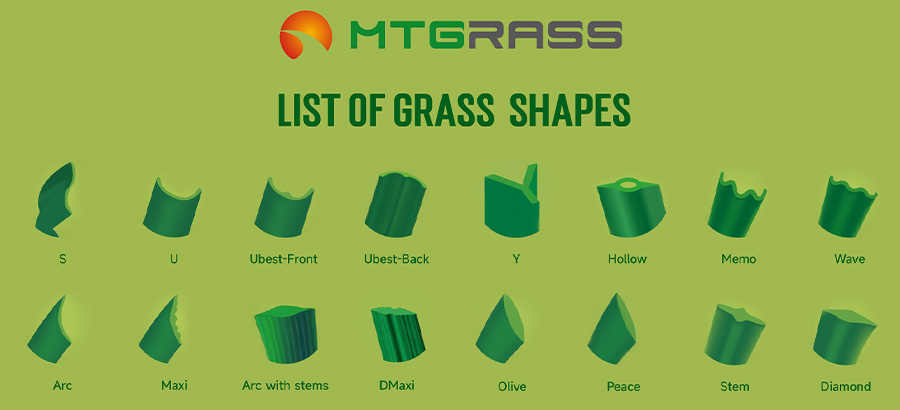
Ο δομικός σχεδιασμός της ίνας του χλοοτάπητα καθορίζει άμεσα τη διάρκεια ζωής του. Η τιμή decitex του χλοοτάπητα και η δομή της διατομής του εξασφαλίζουν ότι η ίνα του χλοοτάπητα επιτυγχάνει ιδιότητες όπως αντοχή στην τριβή, αντοχή στην υπεριώδη ακτινοβολία και αντιστατικές ιδιότητες.
2.1 Ταξινόμηση και εφαρμογή σχήματος
| Τύπος | Υποτύπος / Διατομή | Περιγραφή δομής | Τυπικές εφαρμογές |
| Ευθεία χόρτο | Μονόκλωνο | Μονή προσομοιωμένη λεπίδα, επιλογές: κ.λπ. | Χλοοτάπητας FIFA, επαγγελματικά γήπεδα αγώνων |
| Slit-Film | Επίπεδη κορδέλα εξηλασμένη και διάτρητη για τη δημιουργία δομής που μοιάζει με πλέγμα | Πεδία κατάρτισης / οικονομικά αποδοτικές λύσεις | |
| Σγουρό γρασίδι | Υφή | Καμπυλωτές ίνες που βοηθούν στη σταθεροποίηση της πλήρωσης | Κλειστά γήπεδα, 5-a-side, χωρίς πλήρωση |
| Υβριδικό γρασίδι | Σγουρό + Ευθύ μείγμα | Συνδυασμός μονόκλωνων και σγουρών ινών για ρεαλιστική εμφάνιση και καλύτερο έλεγχο της μπάλας | Σύλλογοι / Σχολεία |
Η τιμή DTEX/decitex, το προφίλ διατομής (U/W/S/διπλής όψης γλουτένη/κοίλο) και το πάχος του τεχνητού χόρτου καθορίζουν την αντοχή στην τριβή και την ορθοστασία.
2.2 Συστάσεις προδιαγραφών (Απόσταση γραμμών/πυκνότητα επηρεάζει το κόστος χλοοτάπητα)
- Σειρά Gauge: Τα 3/4″ και 5/8″ χρησιμοποιούνται συνήθως για γήπεδα ποδοσφαίρου.
- Βελονιά: 166-240 ράμματα/μέτρο (πυκνότερα, παχύτερα, το κόστος συσχετίζεται άμεσα με την αίσθηση).
- Ύψος στοίβας: 40-50 χιλιοστά για εκπαίδευση/σχολείο; 50-60 χιλιοστά για χλοοτάπητα διαγωνισμού.
Διαδικασία παραγωγής ποδοσφαιρικού χλοοτάπητα

Η διαδικασία παραγωγής για τον χλοοτάπητα ποδοσφαίρου αποτελείται από τέσσερα στάδια: σχέδιο, συστροφή, φουντωτή κατασκευή και υποστήριξη. Με απλά λόγια, ο χλοοτάπητας υφαίνεται σε ένα ύφασμα βάσης χρησιμοποιώντας μια μηχανή φουντίτσας. Στη συνέχεια, το ύφασμα κολλάται στο υπόστρωμα, ισοπεδώνεται ομοιόμορφα με ελαστικούς κυλίνδρους, ξηραίνεται, ξετυλίγεται, ψύχεται και τυλίγεται για να δημιουργηθεί ο χλοοτάπητας. Κάθε βήμα παραγωγής παραμετροποιείται και ελέγχεται ανεξάρτητα για να διασφαλίζεται η αντοχή, η ανάκρουση, η δύναμη εξαγωγής και η σταθερότητα.
1. Εξώθηση (τεχνητό γρασίδι κατασκευασμένο από → ίνες χόρτου)
Διαδικασία: Συστατικά (PE/PP/Nylon + πρόσθετα) → Εξώθηση και πλαστικοποίηση → Διήθηση → Σχεδίαση και διαμόρφωση → Ψύξη και περιέλιξη
Βασικές παράμετροι: Θερμοκρασία τήγματος, μέγεθος πλέγματος φίλτρου, λόγος ελκυσμού, καμπύλη ψύξης
Σημεία ποιοτικού ελέγχου: Συνέπεια διαμέτρου νήματος, αντοχή σε εφελκυσμό/ επιμήκυνση κατά τη θραύση, διαφορά χρώματος/ αντοχή χρώματος, τάση περιέλιξης
Grass Yarn Extended Interpretation: Διαφορετικά υλικά χλοοτάπητα και μεγέθη/πάχος τεχνητού χόρτου έχουν άμεσο αντίκτυπο στην αντοχή σε διάτρηση και στο ποσοστό θραύσης του νήματος της επακόλουθης φουντίτσας.
2. Συστροφή (βελτίωση της αντοχής στην αναπήδηση και στην καταπάτηση)
Λειτουργία: Βελτιώνει την ευθυγράμμιση και την αναπήδηση του νήματος του χόρτου- μειώνει το σπάσιμο και τις "φωτεινές κηλίδες".
Ισχύει για: Χώροι υψηλής επισκεψιμότητας/εκπαίδευσης, συστήματα χωρίς πλήρωση ή με χαμηλή πλήρωση.
Βασικές παράμετροι: Στροφές/μέτρο συστροφής, ομοιομορφία συστροφής και μνήμη ξεστροφής. Ποιοτικός έλεγχος Σημεία: Ρυθμός ανάκρουσης, ομοιομορφία επιφάνειας και συνοχή τριβής επιφάνειας (που επηρεάζουν την κύλιση και τον έλεγχο της μπάλας του χλοοτάπητα ποδοσφαίρου).
3. Φούντες/Πλέξιμο (σχηματισμός χλοοτάπητα χαλιού)
Εξοπλισμός: COBBLE μηχανή φουντωτή που εισάγεται από την Ευρώπη
Διαδικασία: Φόρτωση νημάτων → Καθοδήγηση νημάτων → Τροφοδοσία βασικού υφάσματος (πλάτους 4,0 m, συνήθως 70-100 m/ρολό) → Φούρτωμα υψηλής ταχύτητας → Ρολό για αυτοκόλλητο υπόστρωμα
| Μέθοδος ραφής | Δομή | Επιπτώσεις |
| Ευθεία (τύπου I) | Γραμμικό φουντάρισμα | Απλή δομή, εύκολη εγκατάσταση |
| Τύπος Z | Διαγώνια σταυροβελονιά | Πιο ομοιόμορφη κατανομή νημάτων, ισχυρότερη πρόσδεση τούφας |
| Τύπος W | Σύνθετο υλικό πολλαπλών κατευθύνσεων | Πιο πυκνή, πιο σταθερή επιφάνεια, βελτιώνει τη συνολική ποιότητα του χλοοτάπητα |
Σημεία ποιοτικού ελέγχου: Ακρίβεια αποστάσεων μεταξύ σειρών/αριθμού βελόνων/ύψους χόρτου, ομοιομορφία επιφάνειας φουντωτής, ποσοστό παραλείψεων/απουσιών βελονών (καθορίζει αν μοιάζει με πραγματικό γρασίδι).
Ρολά και τελικά προϊόντα: Αυτό το στάδιο παράγει ρολά χλοοτάπητα, ρολά συνθετικού χόρτου ή ρολά τεχνητού χλοοτάπητα για εύκολη μεταφορά και εγκατάσταση.
4. Επίστρωση κόλλας (ο "αόρατος πυρήνας" που καθορίζει τη διάρκεια ζωής και την αντοχή στην εξαγωγή)
Εξοπλισμός: Πλήρως αυτόματη ευφυής γραμμή επικάλυψης κόλλας (επικάλυψη - ξήρανση - ρύθμιση - ψύξη - περιέλιξη)
Βασικά σημεία της διαδικασίας: Έλεγχος της ποσότητας κόλλας, βάθος διείσδυσης, θερμοκρασία/ταχύτητα στεγνώματος φούρνου και αντοχή αποκόλλησης
Επιλογή συστήματος υποστήριξης (Εφαρμογές / Σύγκριση επιδόσεων)
| Σύστημα υποστήριξης | Περιγραφή | Δομή / Επιδόσεις | Τυπικές εφαρμογές | Επιπτώσεις στο κόστος (που σχετίζονται με την τιμολόγηση συνθετικού χλοοτάπητα / κόστος τεχνητού χλοοτάπητα) |
| SBR Latex | Διασπορά λατέξ στυρενίου-βουταδιενίου | Οικονομικό, ευέλικτο, καθιερωμένο | Σχολεία / Κοινότητα / Εκπαίδευση | Χαμηλό κόστος, γρήγορη παράδοση |
| PU Υποστήριξη | Αντιδραστική πολυουρεθάνη | Σταθερή στις διαστάσεις, ανθεκτική στη θερμότητα/το κρύο, ισχυρή αντοχή στην αποκόλληση | Σύλλογοι / χλοοτάπητας FIFA | Υψηλότερο κόστος, ανώτερες επιδόσεις |
| Ανακυκλώσιμο υπόστρωμα | Συμβατό με PP/PE | Πλήρως ανακυκλώσιμο κατά τη διάρκεια του κύκλου ζωής του | Κυβέρνηση / Πράσινα έργα | Εξαρτάται από τη διατύπωση |
Συμπέρασμα: Για χλοοτάπητα πιστοποιημένο από τη FIFA και ακραία κλιματική σταθερότητα, προτιμάται το PU- για ισορροπία μεταξύ κόστους και παράδοσης, το SBR είναι η επικρατούσα τάση- για συμμόρφωση με την ESG και bonus points σε διαγωνισμούς, η ανακυκλωσιμότητα είναι η τάση.
5. Βασικό ύφασμα και σύνθετη δομή: Υποστρώματα: Πρωτεύον/Δεύτερο υπόστρωμα
| Τύπος δομής | Τυπικά στρώματα | Φόντα | Επιπτώσεις / Εφαρμογές |
| Σύνθετο υλικό δύο στρωμάτων | Υφασμένο ύφασμα PP + μη υφασμένο ύφασμα | Σταθερότερη πρόσφυση, οικονομικά αποδοτικότερη | Κατάλληλο για εκπαίδευση / σχολεία |
| Σύνθετο τριών στρωμάτων | Υφαντό ύφασμα PP + μη υφαντό ύφασμα + πλέγμα | Υψηλότερη αντοχή στο σχίσιμο, καλύτερη σταθερότητα διαστάσεων | Έργα υψηλών προδιαγραφών / μεγάλα πεδία / θερμές και ψυχρές περιοχές |
Το σύνθετο ύφασμα βάσης καθορίζει την απορρόφηση της κόλλας και τη συνολική αντοχή στο σχίσιμο, παρέχοντας την υποκείμενη εγγύηση για την αντοχή στην εξαγωγή και τη διάρκεια ζωής της ραφής.
6. Συσκευασία και Logistics:
Ο έλεγχος της διαμέτρου του ρολού χλοοτάπητα ποδοσφαίρου επηρεάζει τη ναυτιλία και το κόστος
| Διάσταση / Παράγοντας | Βέλτιστη πρακτική | Επίδραση στον πελάτη / Όφελος |
| Μέγεθος ρολού | πλάτος 4,0 m × μήκος 70-100 m- βελτιστοποιημένο για τη διάταξη του χώρου | Τα υπερμεγέθη ρολά μπορούν να αυξήσουν απότομα τα έξοδα αποστολής (μεμονωμένα ρολά χλοοτάπητα / ρολό χλοοτάπητα) |
| Δύναμη πυρήνα | Πυρήνες από χαρτί ή πλαστικό υψηλής αντοχής, ανθεκτικοί στη σύνθλιψη | Αποτρέπει σημάδια συμπίεσης που επηρεάζουν την επιπεδότητα της εγκατάστασης |
| Προστασία από την υγρασία | Μεμβράνη PE + σφραγισμένα άκρα ρολού + ξηραντικό | Αποτρέπει τη μούχλα κατά τη θαλάσσια μεταφορά ή την περίοδο των βροχών |
| Επισήμανση | Συμπεριλάβετε τις προδιαγραφές, τον αριθμό παρτίδας και το όνομα του έργου. | Επιτρέπει γρήγορο εκτελωνισμό και επιτόπιο έλεγχο |
Βελτιστοποιούμε τη φόρτωση βάσει των προδιαγραφών του εμπορευματοκιβωτίου/φορτηγού, βοηθώντας τους διεθνείς πελάτες να εξοικονομήσουν σημαντικά τις τιμές και το κόστος του συνθετικού χλοοτάπητα κατά τη μεταφορά.
Από το εργαστήριο στο γήπεδο ποδοσφαίρου της FIFA
6.1 Γενικές φυσικές ιδιότητες
- Αντοχή σε εφελκυσμό/παράταση στη θραύση: ≥15% στη διαμήκη διεύθυνση, ≥8% στην εγκάρσια διεύθυνση
- Η εφελκυστική αντοχή αναφέρεται στην τάση στην οποία ένα υλικό παράγει τη μέγιστη ομοιόμορφη πλαστική παραμόρφωση, γνωστή και ως δύναμη θραύσης. Η επιμήκυνση κατά τη θραύση των νημάτων τεχνητού χλοοτάπητα δεν πρέπει να είναι μικρότερη από 15% στη διαμήκη διεύθυνση και όχι μικρότερη από 8% στην εγκάρσια διεύθυνση. Το πρότυπο αντοχής σε σχίσιμο για τεχνητό χλοοτάπητα είναι τουλάχιστον 30 kN/m στη διαμήκη διεύθυνση και 25 kN/m στην εγκάρσια διεύθυνση.
- Αντοχή σε σχίσιμο: ≥30 kN/m κατά μήκος, ≥25 kN/m εγκάρσια
- Δύναμη τριβής/αναδίπλωσης/απομάκρυνσης: Εξαρτάται έντονα από την DTEX και το προφίλ διατομής
6.2 Ασφάλεια και ανθεκτικότητα
- Αντοχή στην υπεριώδη ακτινοβολία: Η φόρμουλα και το συγκολλητικό σύστημα συνεργάζονται, επιτυγχάνοντας συνήθως 8-10 χρόνια αντοχή στις καιρικές συνθήκες (ποικίλλει ανάλογα με τον περιφερειακό δείκτη υπεριώδους ακτινοβολίας και τη συντήρηση).
- Επιβράδυνση φλόγας: Πληροί τους κανονισμούς DIN/EN για δημόσιους χώρους και αθλητικές εγκαταστάσεις (ιδιαίτερα σημαντικό για έργα που αφορούν χλοοτάπητα παιδικής χαράς και τεχνητό χλοοτάπητα για χώρους παιχνιδιού).
- Η ιδιότητα αυτή επιβραδύνει σημαντικά την εξάπλωση της φλόγας, γεγονός που καθοδηγεί την επιλογή του υλικού.
- Αντιστατικό: Μειώνει την αντίσταση της επιφάνειας και ελαχιστοποιεί τη συσσώρευση στατικού φορτίου (ιδιαίτερα σημαντικό σε ξηρές και σκονισμένες περιοχές).
- Οι αντιστατικές ιδιότητες αναφέρονται στον στατικό ηλεκτρισμό που παράγεται από τις ίνες του γρασιδιού κατά την τριβή με αντικείμενα και τον αέρα. Οι αντιστατικές ιδιότητες μειώνουν την αντίσταση της επιφάνειας και ελαχιστοποιούν ή εξαλείφουν τα στατικά φορτία στην επιφάνεια των ινών.
- Αντοχή στην τριβή
- Η αντίσταση στην τριβή των κλώνων χόρτου σχετίζεται άμεσα με την τιμή DTEX (δεκαπλάσιο προς βάρος). Η τιμή DTEX επηρεάζει άμεσα τη συνολική ποιότητα και τη διάρκεια ζωής του τεχνητού χλοοτάπητα. Σε γενικές γραμμές, όσο υψηλότερη είναι η τιμή DTEX, τόσο παχύτεροι είναι οι μεμονωμένοι κλώνοι και τόσο καλύτερη είναι η ποιότητα.
- Η τιμή DTEX προσδιορίζει άμεσα την αντοχή και την αντίσταση στην τριβή των κλώνων χόρτου. Το γρασίδι ποδοσφαίρου MightyGrass έχει τιμή DTEX 8.000-12.000, επιτυγχάνοντας μια ισορροπία μεταξύ αντοχής και φυσικής εμφάνισης.
- Βαρέα μέταλλα/περιβαλλοντικό DIN, Προμήθειες μαθητών Ασφάλεια
- Αντίσταση στην πρόσκρουση της κεφαλής (HIC): Κρίσιμη για την ασφάλεια της πανεπιστημιούπολης/του δημόσιου έργου
- Σχεδιασμός με ελεγχόμενη θερμοκρασία: Η κατοχυρωμένη με δίπλωμα ευρεσιτεχνίας δομή κοίλων νημάτων διατηρεί την επιφάνεια του χλοοτάπητα πιο δροσερή κάτω από το άμεσο ηλιακό φως, εξασφαλίζοντας έναν ασφαλή και άνετο χώρο παιχνιδιού για τα παιδιά.
6.3 Συστήματα και προσόντα
- Συμμετείχε στη σύνταξη των προτύπων GB36246/GB-T20394
- Πιστοποίηση ISO9001/14001/45001
- Το εκτεταμένο ιστορικό δοκιμών της LABOSPORT και η πιστοποίηση της FIFA στο πεδίο
- Πιστοποιημένο μέλος της FIFA (Grass FIFA/FIFA Grass related)
- Μόνο οι κατασκευαστές χλοοτάπητα ποδοσφαίρου / εργοστάσια τεχνητού χλοοτάπητα με συνεπή συστήματα, δοκιμές και μαζική παραγωγή μπορούν να παραδώσουν με συνέπεια χλοοτάπητα πιστοποιημένο από τη FIFA.

Παράγοντες που πρέπει να ληφθούν υπόψη κατά την επιλογή ενός Ποδόσφαιρο χλοοτάπητα Κατασκευαστής
- Υλικό και προδιαγραφές: DTEX ↑, μέτρηση βελόνων ↑, υποστήριξη PU, ύφασμα βάσης τριών στρώσεων → υψηλότερο κόστος τεχνητού χλοοτάπητα
- Διαμόρφωση συστήματος: πλήρωσης έναντι μη πλήρωσης, μαξιλάρια απορρόφησης κραδασμών, προσαρμογή χρώματος νήματος, τεχνητό γρασίδι εγκατάσταση κοντά μου (τοπική εγκατάσταση εργασίας και εξοπλισμού)
- Εφοδιαστική και συσκευασία: μέγεθος ρολού χλοοτάπητα, αναλογία συσκευασίας, φόροι και τέλη εκφόρτωσης
- Συντήρηση μετά την πώληση: αναπλήρωση άμμου/ελαστικού, καθαρισμός, έλεγχος θερμοκρασίας (κλιματισμός και στατικός έλεγχος για κλειστούς χώρους με χλοοτάπητα ποδοσφαίρου)
Συνιστώμενες εφαρμογές για χλοοτάπητα ποδοσφαίρου (μετρητής × ύψος σωρού × ποσοστό βελονιάς)
| Σενάριο εφαρμογής | Διάλυμα | Προδιαγραφή Σύσταση | Περιγραφή |
| Επίπεδο αγώνα (προσανατολισμένο στη FIFA) | Επιλογή 2 | Μονοκλωστή διπλής ινώδους / διαμορφωμένης μορφής, 50-60 mm, 5/8″, 166-200 βελονιές/m | Υψηλός ρεαλισμός, όρθια εμφάνιση, εξαιρετική αντοχή στη φθορά, μεγάλη διάρκεια ζωής |
| Σύλλογοι / Σχολεία | Επιλογή 1 | Εξωθημένο μονόινα νήματα, 50 mm, 3/4", 200-240 βελονιές/m | Οικονομικά αποδοτικό, άνετο πόδι |
| Σύστημα εκπαίδευσης υψηλής ανθεκτικότητας / μη πλήρωσης | Επιλογή 3 | Σχήμα U / σχήμα ιτιάς με σγουρές ίνες, 50 mm, 5/8″, 166-200 βελονιές/m | Το κατσαρώδες νήμα προστατεύει τη βάση των ινών, ισχυρό δέσιμο της τούφας |
MightyGrass: Ένας κορυφαίος παγκόσμιος κατασκευαστής χλοοτάπητα ποδοσφαίρου
Με πάνω από 20 χρόνια εμπειρίας, η MightyGrass έχει προμηθεύσει υψηλής ποιότητας χλοοτάπητα ποδοσφαίρου σε περισσότερες από 160 χώρες.
Τα πλεονεκτήματά μας:
- Τα πιστοποιημένα από τη FIFA προϊόντα ανταποκρίνονται στις απαιτήσεις των κορυφαίων διοργανώσεων.
- Καινοτόμες λύσεις φιλικές προς το περιβάλλον, συμπεριλαμβανομένων των ανακυκλώσιμων και των συστημάτων τεχνητού χλοοτάπητα χωρίς πλήρωση.
- Ο προηγμένος εξοπλισμός, συμπεριλαμβανομένων των ευρωπαϊκών μηχανών φουρκέτας και των ευφυών γραμμών υποστήριξης, διασφαλίζει την ποιότητα.
- Παγκόσμια αλυσίδα εφοδιασμού, με εργοστάσια στην Κίνα και τη Σαουδική Αραβία και αποθήκες στις ΗΠΑ, για γρήγορη παράδοση.
Πλεονεκτήματα του εξοπλισμού παραγωγής χλοοτάπητα ποδοσφαίρου:
- Μονάδες COBBLE tufting: Υψηλή ταχύτητα και σταθερότητα, ομοιόμορφες βελονιές, χαμηλά ποσοστά παραλείψεων και πληρέστερη κουβέρτα.
- Ευφυείς γραμμές υποστήριξης: Ο έλεγχος του βάρους της επικάλυψης με κλειστό βρόγχο και το εκλεπτυσμένο προφίλ θερμοκρασίας της σήραγγας ξήρανσης εξασφαλίζουν προβλέψιμη αντοχή στην αποκόλληση.
- Ποιοτικός έλεγχος διαδικασίας: Σε κάθε στάδιο ρυθμίζονται τυχαία σημεία επιθεώρησης και παράμετροι της διαδικασίας (τάση, θερμοκρασία, ταχύτητα και ποσότητα κόλλας), ώστε να διασφαλίζεται η συνοχή από παρτίδα σε παρτίδα.
- Ευέλικτες γραμμές παραγωγής: Φιλοξενεί μεγάλες παραγγελίες και προσαρμοσμένες παραγγελίες (χρώμα, τεχνητό γρασίδι μέγεθος / πάχος, λογότυπο ύφανση, παιδική χαρά τεχνητό χλοοτάπητα χρώμα, κλπ.).
Σύναψη
Από τις πρώτες ύλες μέχρι τον χλοοτάπητα ποδοσφαίρου FIFA, η διαδικασία παραγωγής περιλαμβάνει πολλαπλά στάδια: σχεδίαση, στρίψιμο, φουντωτή κατασκευή, υποστήριξη, δοκιμή και συσκευασία.
Η MightyGrass ορίζει παραμέτρους διαδικασίας και σημεία ελέγχου ποιότητας σε κάθε στάδιο, συμπληρωμένα από εισαγόμενο ευρωπαϊκό εξοπλισμό και διεθνείς πιστοποιήσεις, για να διασφαλίσει ότι κάθε κομμάτι χλοοτάπητα ποδοσφαίρου αντέχει στη δοκιμασία.
Από εσωτερικούς χώρους προπόνησης έως διεθνείς αγωνιστικούς χώρους της FIFA, η επιλογή του σωστού προμηθευτή τεχνητού χλοοτάπητα ποδοσφαίρου είναι το πρώτο βήμα για τη διασφάλιση της μακροπρόθεσμης λειτουργίας του έργου σας.
Συχνές ερωτήσεις | Σχετικά με το MightyGrass
Ποια είναι τα βασικά βήματα στην παραγωγή χλοοτάπητα ποδοσφαίρου;
Χρησιμοποιούμε τη διαδικασία τεσσάρων βημάτων που χρησιμοποιείται συνήθως στη βιομηχανία τεχνητού χλοοτάπητα: σχέδιο - στρίψιμο - φουντάρισμα - υποστήριξη. Κάθε στάδιο διαθέτει ανεξάρτητες παραμέτρους διεργασίας και σημεία δειγματοληψίας για τον συνεπή έλεγχο της αντοχής, της επαναφοράς και της αντοχής της κόλλας του χλοοτάπητα. Αυτή είναι η θεμελιώδης ικανότητα που εξασφαλίζει τη συνεπή παράδοση χλοοτάπητα υψηλής ποιότητας.
Τι εξοπλισμό χρησιμοποιεί η mightygrass για την παραγωγή τεχνητού χλοοτάπητα;
Τα ευρωπαϊκά μηχανήματα φουντωτών COBBLE και οι πλήρως αυτόματες έξυπνες γραμμές συγκολλητικής υποστήριξης εξασφαλίζουν ομοιόμορφη ύφανση νημάτων και σταθερή συγκολλητική επικάλυψη, καλύπτοντας τόσο τις ανάγκες παραγωγής μεγάλης κλίμακας όσο και τις ανάγκες εξατομικευμένης παραγωγής και αυξάνοντας το ποσοστό επιτυχίας της δοκιμής χλοοτάπητα της FIFA.
Πώς πρέπει να επιλέξω το συγκολλητικό υπόστρωμα για χλοοτάπητα ποδοσφαίρου;
- SBR latex: mainstream και οικονομικό,
- PU: σταθερότητα διαστάσεων και ισχυρή αντοχή στην αποκόλληση- προτιμάται από τους πιστοποιημένους από τη FIFA χλοοτάπητες,
- Ανακυκλώσιμη κόλλα: πληροί τις απαιτήσεις πράσινου/ESG. Θα παρέχουμε αντίστοιχες συστάσεις με βάση τη θέση του έργου, την κλιματική ζώνη και τις περιβαλλοντικές απαιτήσεις.
Πώς εξασφαλίζουμε την αντοχή και την αντοχή στη φθορά των τεχνητών νημάτων χλοοτάπητα;
Σχεδιάζουμε ολόκληρη τη διαδικασία από την DTEX, τα προφίλ διατομής (U/W/S/γκλουτέν διπλής όψης/hollow), έως το σύστημα προσθέτων (αντίσταση στην υπεριώδη ακτινοβολία/αντιστατικό/αντιστατικό) και διεξάγουμε δοκιμές αντοχής στη φθορά, στην υπεριώδη ακτινοβολία και στην αντιστατική προστασία για να επαληθεύσουμε αυτές τις ιδιότητες.
Πώς επιτυγχάνουμε αντοχή στην υπεριώδη ακτινοβολία και επιβράδυνση φλόγας στον τεχνητό χλοοτάπητα;
Συνδυάζοντας το υλικό και το σύστημα κόλλας, μπορούμε συνήθως να επιτύχουμε 8-10 χρόνια αντοχής στις καιρικές συνθήκες. Μπορούμε επίσης να ανταποκριθούμε στα πρότυπα επιβράδυνσης φλόγας DIN/EN/GB, όπως απαιτείται από τους κανονισμούς, καθιστώντας το κατάλληλο για σχολεία, δημόσια έργα και παιδικές χαρές.
Ποιες είναι οι επιλογές για τεχνητό χλοοτάπητα βάση υφάσματα? Ποιες είναι οι διαφορές;
Σύνθετο υλικό διπλής/τριπλής στρώσης (υφαντό ύφασμα PP + μη υφαντό ύφασμα + πλέγμα). Το σύνθετο τριών στρώσεων προσφέρει πιο σταθερή απορρόφηση κόλλας και μεγαλύτερη αντοχή στο σχίσιμο, καθιστώντας το κατάλληλο για μεγάλα πεδία και ακραία κλίματα.
Ποια συστήματα και προσόντα απαιτούνται για τον χλοοτάπητα ποδοσφαίρου;
Είμαστε πιστοποιημένοι κατά ISO9001/14001/45001, παρέχουμε βασικές εκθέσεις φυσικών επιδόσεων και διεθνείς πιστοποιήσεις FIFA, και διαθέτουμε πολλαπλές δοκιμές LABOSPORT και αρχεία πιστοποίησης πεδίου FIFA.
Ποια είναι τα στοιχεία δοκιμής για τεχνητό χλοοτάπητα;
Αντοχή σε τέντωμα/σκίσιμο, αντοχή σε τριβή, αντοχή στην υπεριώδη ακτινοβολία, επιβράδυνση φλόγας, αντοχή σε βαρέα μέταλλα, αντοχή σε εγκαύματα χαλιών, περιβαλλοντικό DIN, ασφάλεια μαθητικών εφοδίων, πρόσκρουση στο κεφάλι (HIC) κ.λπ., όλα προσαρμοσμένα στην εφαρμογή και στις κανονιστικές απαιτήσεις.
Τι διαφοροποιεί τον χλοοτάπητα ποδοσφαίρου mightygrass;
Η MightyGrass είναι ένας από τους λίγους εγχώριους κατασκευαστές που αναπτύσσει ανεξάρτητα τη "σειρά καλυμμένων νημάτων". Αναμειγνύουμε νήματα με εισαγόμενα ακατέργαστα νήματα χόρτου για να ενισχύσουμε σημαντικά την αντοχή και την ανθεκτικότητα στην εξαγωγή. Σε σύγκριση με τα εισαγόμενα νήματα χόρτου της ίδιας ποιότητας, προσφέρουμε μια πιο αποδοτική λύση (μείωση της διασυνοριακής αποστολής και των δασμών).
- MT-BSUX (καλυμμένο νήμα σχήματος U): Φυσικό κατσάρωμα και στις δύο πτέρυγες + εσωτερικές νευρώσεις ενίσχυσης → βελτιωμένη ανάκρουση και ορθοστασία- κατάλληλο για γήπεδα ποδοσφαίρου, γήπεδα προπόνησης και κέντρα δραστηριοτήτων.
- MT-BSSMJ4 / BSSMJ6 (νήματα με γλουτένη διπλής όψης): Βελτιστοποιεί την όρθια θέση, προσομοιώνει την υφή και προσφέρει μια ισορροπία μεταξύ απαλότητας και δύναμης εξόλκευσης- κατάλληλο για προπόνηση ποδοσφαίρου και εξωραϊσμό αναψυχής.
- MT-QC (καμπυλωτό γρασίδι): Το κυματιστό γρασίδι σχηματίζεται σε ένα βήμα με τη χρήση θερμού αέρα, με αποτέλεσμα μια λεία, φυσική επιφάνεια μετά το φουντάρισμα.Κατάλληλο για μπέιζμπολ, γκολφ, padel, pickleball και άλλα αθλήματα.
Τι τεχνητό χλοοτάπητα συνιστώνται για γήπεδα ποδοσφαίρου;
- Βαθμός ανταγωνισμού: Μονόινα νήματα διπλής όψης με γλουτένη/σχήμα 50-60mm, 5/8″, 166-200 βελονιές/m,
- Σύλλογος/σχολείο: Εξωθημένο μονόινα νήματα 50mm, 3/4″, 200-240 βελονιές/m,
- Υψηλής ανθεκτικότητας/χωρίς γέμισμα: Νήμα σε σχήμα U/φύλλο ιτιάς 50mm, 5/8″, 166-200 βελονιές/m.
Γιατί η συσκευασία ρολών mightygrass είναι πιο φιλική προς τους πελάτες στο εξωτερικό;
Ελέγχουμε τη διάμετρο του ρολού και την αναλογία συσκευασίας και σχεδιάζουμε τα ρολά χλοοτάπητα/ατομικά ρολά χλοοτάπητα ώστε να αντέχουν στην πίεση και την υγρασία. Αυτό μειώνει τον κίνδυνο σημαδιών και μούχλας κατά τη θαλάσσια μεταφορά και μειώνει το ποσοστό του κόστους του τεχνητού χλοοτάπητα που σχετίζεται με τη μεταφορά.
Από τι αποτελείται ο χλοοτάπητας του γηπέδου ποδοσφαίρου;
MightyGrass Σύγχρονη χλοοτάπητα γήπεδο ποδοσφαίρου είναι ένα συνθετικό σύστημα πολλαπλών στρώσεων σχεδιασμένο να μοιάζει και να αποδίδει όπως το φυσικό χόρτο, προσφέροντας παράλληλα μεγαλύτερη αντοχή και ευκολότερη συντήρηση.
- Οι επιφανειακές ίνες, συνήθως πολυαιθυλένιο (PE) ή πολυπροπυλένιο (PP), είναι κατασκευασμένες σε διάφορα σχήματα για απαλότητα, ανθεκτικότητα και ρεαλιστικό παιχνίδι με μπάλα.
- Αυτές οι ίνες είναι φουντωτές σε ένα ισχυρό υπόστρωμα και στερεώνονται με επιστρώσεις όπως λατέξ ή PU, με ανακυκλώσιμες επιλογές επίσης διαθέσιμες.
- Τα περισσότερα συστήματα χρησιμοποιούν ένα στρώμα πλήρωσης από άμμο και κόκκους καουτσούκ για σταθερότητα και απόκριση της μπάλας, αν και ορισμένα βασίζονται σε σχέδια χωρίς πλήρωση.
- Κάτω από το χλοοτάπητα, τα προαιρετικά μαξιλάρια κραδασμών ενισχύουν την ασφάλεια και την άνεση, ενώ μια συμπυκνωμένη πέτρινη ή ασφαλτική υποβάση εξασφαλίζει αποστράγγιση και μακροπρόθεσμη σταθερότητα. Μαζί, αυτά τα στρώματα δημιουργούν μια ασφαλή, συνεπή και επαγγελματικής ποιότητας επιφάνεια ποδοσφαίρου.


