
 日本語
日本語  English
  العربية
  Español
  Deutsch
  Français
  Português
  Русский
  Italiano
  Nederlands
  Svenska
  Suomi
Suomi  ไทย
ไทย  Dansk
Dansk  Ελληνικά
  Bahasa Melayu
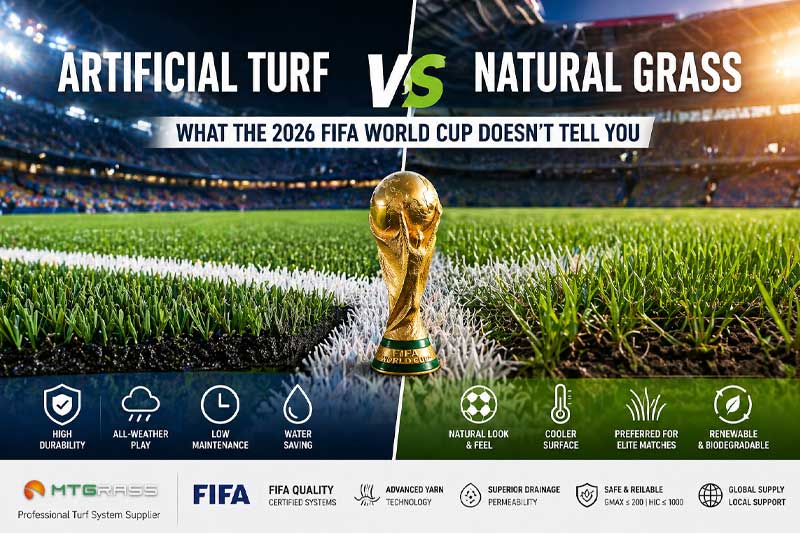
2026年のFIFAワールドカップを観戦すると、ピッチは完璧に見える――均一で、耐久性があり、スピード感がある。本格的なサッカー場には天然芝が当然の選択肢だと、つい思い込んでしまいがちだ。
しかし、ほとんどのプロジェクトでは見過ごされがちな点がここにあります。それらのフィールドは単なる「芝生」ではないのです。そこには、巨額の予算、利用制限、そして専任のメンテナンスチームによって支えられた、管理されたシステムが存在しているのです。
トレーニング場、学校のグラウンド、あるいは商業施設の建設を計画している場合、現実は大きく異なります。本当の課題は どちらの表面が良いでしょうか—重要なのは、あなたの使用条件下でどちらの表面の方が優れた性能を発揮するかということです。
以下の文章では、詳細な説明を掲載しております。今後、サッカー場の計画を進める際の参考になれば幸いです。
2026年FIFAワールドカップが天然芝を好む理由
競技の最高レベルでは、次のような組織が FIFA 依然として天然芝を好む傾向にある。その理由は驚くべきことではない。伝統、選手たちの慣れ、そしてプロたちが長年にわたり練習を重ねてきた特定のボールの挙動である。
理想的な条件下では、天然芝は自然で反応の良いプレー体験をもたらします。ボールの転がり、表面のグリップ力、そして視覚的な美しさのすべてが相まって、多くの人が「最高水準」とみなすものを作り出しています。
しかし、そうした「理想的な条件」は、入念に作り出されたものである。
2026年のワールドカップでは、SoFiスタジアムやフィラデルフィア・スタジアムなどの米国の会場で、天然芝に少量の合成繊維(5%未満)を組み合わせたハイブリッド芝システムが採用されています。 このハイブリッド芝は、天然芝の耐久性を高めるために人工繊維を埋め込んだもので、地下排水システム、育成用照明、気候制御設備、精密灌漑システムなどの先進的なインフラによって支えられています。
また、これらのフィールドは過度な使用から保護されており、品質を維持するため、開催される試合数は限られていることが多い。
実際問題として、このレベルの施設を維持するには、年間$500,000から$1百万以上の費用がかかる場合があり、利用上限は多くのトレーニング施設が必要とする水準をはるかに下回る場合が少なくありません。
つまり、世界の舞台では天然芝が好まれるとはいえ、その選択の背景にある要因――管理のしやすさ、予算、そして摩耗の少なさ――を認識しておくことが重要です。これが、2026年ワールドカップの練習場でも、引き続き人工芝がピッチとして採用されている理由でもあります。

実際のプロジェクトにおける天然芝の知られざる限界
エリートトーナメントの枠を外れると、状況はたちまち一変する。
天然芝のグラウンドは、生き物のようなシステムです。天候や使用状況、管理の質に応じて変化しますが、その反応は必ずしも予測可能なものとは限りません。
例えば、プロによって管理されている芝生のピッチのほとんどは、年間約600~800時間の使用が推奨されています。それを超えると、芝生の回復が難しくなります。ゴール前やセンターゾーンなど、摩耗の激しい箇所では芝が薄くなり始め、ピッチの状態の均一性が低下します。
さて、これを一般的な学校やトレーニング施設と比較してみましょう。毎日の練習、複数のチーム、週末の試合――ほんの数ヶ月でその上限を超えてしまうのは容易なことです。
気候もまた、事態をさらに複雑にしています。雨の多い地域では、畑が水浸しになり、耕作できなくなることがあります。乾燥した気候では、1つの畑あたりの年間灌漑用水需要が100万~150万リットルに達することもあります。寒冷な環境では、地面が凍結するため、数週間から数ヶ月間、利用が制限されます。
時間が経つにつれて、メンテナンスが真の課題となります。芝刈り、施肥、種まき、害虫駆除、灌漑――これらは時折行う作業ではなく、継続的な取り組みです。 10年間で、地域の実情にもよりますが、維持管理の総費用は$300,000から$500,000、あるいはそれ以上に達する可能性があります。
だからといって、天然芝が不適切な選択肢だというわけではありません。単に、その性能は、使用状況や環境をどれだけ管理できるかに大きく左右されるということです。
人工芝が天然芝よりも優れている点
人工芝 あらゆる場面で天然芝を「置き換える」ことを意図したものではありません。その強みは別のところ、つまり安定性、耐久性、そしてプレッシャーのかかる状況下でも高いパフォーマンスを発揮できる点にあります。
まずは用途について考えてみてください。適切に設計された人工芝システムであれば、年間2,000~3,000時間以上の使用に耐え、著しい劣化が生じることはありません。これは単なるわずかな改善ではなく、フィールドの利用方法そのものに根本的な変化をもたらすものです。
学校、学習塾、コミュニティセンターなど、毎日運営されている施設の場合、この違いだけで選択が決まることがよくあります。
一貫性も、時間が経つにつれてより顕著になる要素の一つです。人工芝には、摩耗した部分や凹凸が生じることはありません。ボールは、最初の1時間でも1000時間後でも、同じように跳ね返ります。トレーニング環境において、この予測可能性は多くの人が想像する以上に重要な意味を持ちます。
コストの観点から見ると、議論の焦点は設置費用というよりもライフサイクルにあります。人工芝は通常、初期投資が高くなりますが、維持費は大幅に抑えられます。灌漑が不要で、修繕も最小限で済み、人件費も削減できるからです。利用頻度の高いプロジェクトの多くは、3年から5年以内にコストを回収しています。
簡単に言えば:
| 10年間にわたり | 天然芝 | 人工芝 |
| 保守の頻度 | 高い・変動が大きい | 低水準で予測可能 |
| 水の消費量 | 非常に高い | 最小限 |
| 現場での利用可能性 | 限定 | ほぼ連続的 |
| 表面の一貫性 | 変動する | 安定 |
ますます重要性を増しているもう一つの要素は、持続可能性です。水使用制限に直面している地域では、灌漑が不要になることが決定的な利点となり得ます。MightyGrassのような最新の人工芝システムは、 ERETシリーズ リサイクル可能な人工芝 ソリューション。また、当社はFIFA、ISO、CE、SGSなどのさまざまな認証を取得しており、製品の使用済み後の廃棄に伴う課題や、材料の安全性に関する懸念に効果的に対処しています。
性能も進化を遂げています。MightyGrassのS字型フィラメント、ダイヤモンドファイバー構造、強化された冷却機能といった革新的な技術の採用により、現代の サッカー用人工芝 高負荷での使用後も、熱管理、耐久性、および繊維の回復能力において大幅な改善を実現しました。これらは単なる外観上の改良ではなく、長期的に見てフィールドのプレー性能や感触に直接影響を与えるものです。
ミシガン州立大学のジョン・トレイ・ロジャース教授の推計によると、メルセデス・ベンツ・スタジアムの人工芝を天然芝に置き換えるプロジェクトの費用は、$3百万から$4百万になると見込まれている。 さらに、芝の適切な生育を確保するためには、会場内に大規模な照明システムを設置する必要がある。残念ながら、ワールドカップが終了すれば、メルセデス・ベンツ・スタジアムは最終的に元の人工芝に戻ることになる。
人工芝と天然芝――より実用的な比較方法
「どちらの表面が『優れている』か」と問うよりも、次のように問うほうがより有益です:
条件が理想的でない場合、それぞれの表面にはどのようなことが起こるのでしょうか?
- 天然芝は、利用を適切に管理し、定期的な手入れを行えば、非常に優れた性能を発揮します。
- 人工芝は、使用頻度が高く、状況が予測できない場合でも、安定した性能を発揮します。
この違いは微妙なものですが、意思決定の仕方に変化をもたらします。
ワールドカップのピッチは、理想的な条件下で何が実現可能かを体現している。
訓練場は、実際の状況下で持続可能な状態を体現している。
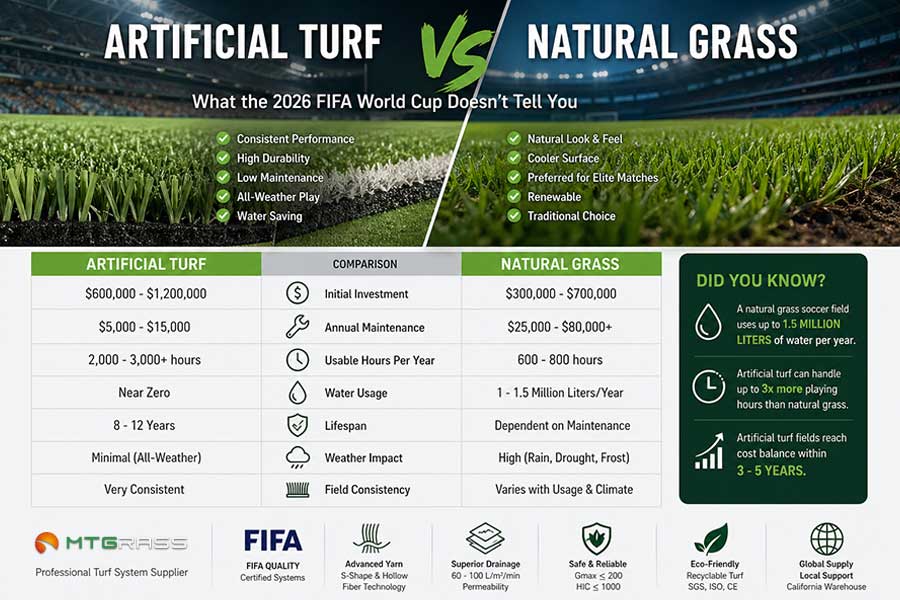
| 要素 | 天然芝 | 人工芝 |
| 初期費用(フルサイズのサッカー場) | $300,000 – $700,000 | $600,000 – $1,200,000 |
| 年間メンテナンス | $25,000 – $80,000+ | $5,000 – $15,000 |
| 年間利用可能時間 | 600~800時間 | 2,000~3,000時間以上 |
| 天候の影響 | 高い(降雨、干ばつ、霜) | ミニマル(全天候型) |
| 表面の一貫性 | 可変 | 非常に一貫性が高い |
| 水の使用量 | 年間100万~150万リットル | ゼロに近い |
| 寿命 | 継続的な修理が必要 | 8~12歳 |
| ダウンタイム | 頻繁な回復期間 | 最小限 |
| プレイヤーの認識 | 伝統的な好み | 受容の広がり |
トレーニングフィールドに適した地面の選び方
今日、決断を下す際には、サプライヤーとしての視点よりも、むしろ運営者としての視点で考えることが役立ちます。
- まずは用途から考えましょう。そのフィールドが毎日使用され、複数のチームが利用したり、レンタル収入を得たりする場合、耐久性は不可欠となります。人工芝は、こうした使用状況に対応できるよう設計されています。
- 次に、気候について考えてみましょう。天候の変動は、雨、干ばつ、気温の急変といったリスクをもたらします。環境が予測しづらければ予測しづらいほど、一貫性の重要性は高まります。
- 予算は、設置費用だけでなく、時間的な側面も考慮する必要があります。初期費用は安くても、メンテナンスが頻繁かつ継続的に必要となる場合、長期的にはより大きな負担となる可能性があります。
- 最後に、利用者のことを考えてみてください。エリート選手による試合、学校のサッカー場、ユースのトレーニング、地域住民の利用――それぞれの場面で求められるものは異なります。トレーニング環境においては、人工芝が単に受け入れられるだけでなく、不確実性を排除できるという点から、ますます好まれるようになっています。
お客様のニーズに最適なトレーニングフィールドの表面材ソリューションを、最短時間で確保したい場合は、以下までお問い合わせください。 マイティグラス 今日のプロフェッショナルコンサルタントチームy.
人工芝ピッチで「ワールドカップ級」の環境を作る方法
「ワールドカップレベル」とは、単にスタジアムを模倣することではなく、毎日、高い水準のパフォーマンスを発揮するピッチを提供することを意味します。
重要なのは、その分野をひとつのシステムとして捉えることです。
A 高品質な人工芝スポーツグラウンド 人工芝は、芝自体、インフィル、ショックパッド、そして基盤構造という複数の設計された層から構成されています。これらの構成要素を一体として設計することで、ボールの転がり、衝撃吸収性、選手のグリップ力といった、FIFAの試験基準に準拠した性能指標を達成することができます。
主要業績評価指標(FIFAクオリティ・ターフ):
| 縦のボールの反発 | ボール転がり距離 | 衝撃吸収 | 表面の変形 | 回転トルク |
| 0.60-0.85 m | 4-8 m | 60-70% | ≤15 mm | 30~45N・m |
安全は、この取り組みの核心です。適切なシステムは、次のような基準を満たすよう設計されています。 Gmax ≤ 200 かつ HIC ≤ 1000、これにより、公認のスポーツ用床材と同等の衝撃吸収性を確保しています。
カスタマイズはまさに FIFA公認人工芝メーカー MightyGrassのような製品は、真の価値をもたらします。糸の押出から基布まで、すべて自社内で一貫生産を行っているため、各プロジェクトに合わせてカスタマイズが可能です:
- 耐久性や柔らかさに最適化された繊維構造
- 降雨状況に応じた排水システム
- 長期的な色持ちを実現するために設計された耐紫外線性
北米でのプロジェクトについては、MightyGrassは自社のを通じて現地対応のサポートも提供しています。 カリフォルニア倉庫、これによりリードタイムの短縮と供給効率の向上に寄与します。
その結果、導入当初だけ見栄えが良いというだけでなく、長年にわたって安定した性能を発揮するフィールドが実現します。
結論
2026年のFIFAワールドカップは、サッカーが最も統制され、洗練された姿を見せてくれる。しかし、ほとんどのピッチは、数試合のためだけに建設されたものではなく、日常的に利用されることを想定して建設されている。
天然芝は、エリート層による頻度の低いプレーにおいては、依然として基準となっています。
人工芝は、実戦での高頻度なプレーに対応する解決策となっています。
正しい選択は、好みというよりも、そのフィールドが実際にどのように使用されるかによって決まります。
一貫性、耐久性、そして長期的な効率性を追求するのであれば、人工芝はもはや単なる選択肢ではなく、戦略的な決断となります。
よくある質問
なぜFIFAは人工芝よりも天然芝を好むのでしょうか?
FIFAが天然芝を好む主な理由は、伝統と、トップレベルの選手たちが天然芝に慣れ親しんでいることにある。しかし、この選好は、十分な維持管理リソースが確保された管理された環境を前提としたものである。
人工芝はサッカー選手にとって安全か?
はい。最新のシステムは、衝撃吸収性能や頭部損傷に関する基準など、厳しい安全基準を満たすように設計されています。適切に設置されていれば、安定したグリップ力と確実な衝撃保護機能を発揮します。
サッカー場の人工芝の寿命は?
通常、使用頻度やメンテナンス状況にもよりますが、8年から12年程度です。適切な手入れが行われた高品質なシステムであれば、その寿命期間を通じて性能を維持することができます。
人工芝は天然芝よりも安いですか?
長期的に見れば、そうですね。設置費用は高くなりますが、人工芝はメンテナンスの手間、水の使用量、使用不能期間を大幅に削減できるため、多くの場合、数年以内にコストが回収できます。
人工芝はプロ仕様の基準を満たすことができるのか?
はい。MightyGrassのサッカー用人工芝システムは、「FIFA Quality」や「FIFA Quality Pro」といったFIFAの認証基準を満たしており、プロのトレーニングや競技での使用に適しています。
サッカー場のコスト:人工芝と天然芝、どちらが優れているか?
用途によって異なります。利用頻度が低く、格式の高い分野であれば、天然芝でも問題ありません。利用頻度の高い環境では、一般的に人工芝の方が長期的な価値が高いと言えます。
サッカー場にはどのような人工芝が最適ですか?
最適な人工芝は、プロジェクトの目的によって異なります。ほとんどのトレーニング用および多目的フィールドでは、耐久性に優れた繊維設計と適切な衝撃吸収性を備えたFIFA認定の人工芝システムが、性能と耐久性のバランスにおいて最も優れています。例えば、 FIFA MT-ダイヤモンド そして FIFA MT-UBEST のシリーズを参照されたい。
FIFA公認の人工芝とは何ですか?
これは、FIFAの基準に基づいて試験および認証を受けた人工芝システムを指し、性能、安全性、耐久性に関する要件を満たしていることが保証されています。


