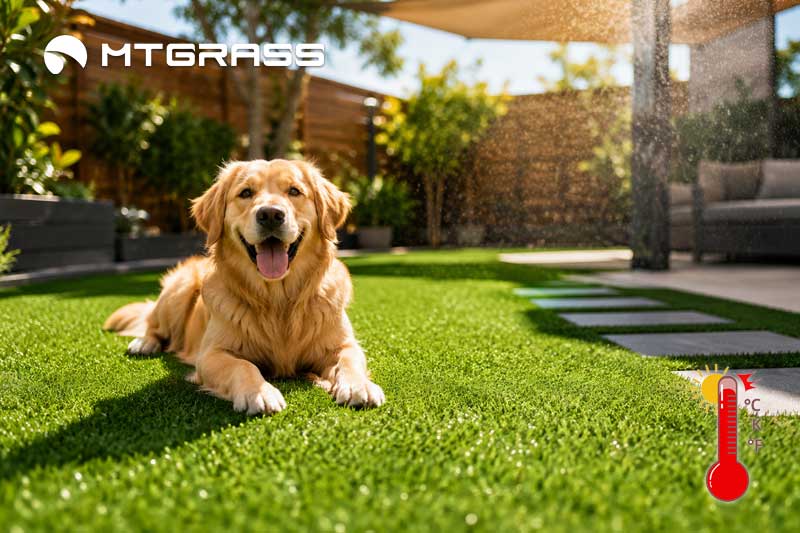
For many dog owners, artificial grass solves common backyard problems — muddy paws, dead patches, digging, and difficult lawn maintenance. But once summer arrives, you may be wondering: Does artificial pet turf get too hot for dogs?
This article will address this critical issue, offering an in-depth analysis of the high-temperature risks dogs may face during hot weather, while also providing practical cooling tips. Our goal is to help ensure that your dog can continue to wag its tail safely and happily, even on the hottest of days.
At MightyGrass, we manufacture pet friendly artificial grass specifically engineered for hot climates, dog runs, kennels, residential landscapes, and commercial pet facilities. Our cool turf is designed to create a more comfortable and pleasant environment for both you and your pets—allowing you and your furry companions to enjoy delightful moments together, even during the scorching heat of summer. Contact us today to request free samples—rigorously tested for performance—and to receive our best pricing on artificial turf.
Why Does Artificial Pet Turf Get Hot?
Let us explore together the scientific principles behind heat accumulation on artificial turf surfaces. The capacity of artificial turf to absorb solar radiation is comparable to that of roofing materials, paved surfaces, or other outdoor fixtures. The surface temperature of synthetic turf is primarily influenced by the following factors:
- High Heat Absorption: Artificial turf is manufactured from petroleum-based plastics (such as PE and PP), which possess low specific heat capacity and high thermal conductivity; consequently, they rapidly absorb heat and rise in temperature when exposed to sunlight.
- Absence of Natural Cooling Mechanisms: Unlike natural grass, synthetic turf does not dissipate heat through moisture evaporation (transpiration) and therefore lacks the ability to self-regulate its temperature.
- Heat Island Effect and Surface Heat Storage: When laid directly over concrete or asphalt substrates, the heat absorbed by the underlying base accumulates, thereby exacerbating the rise in surface temperature. Furthermore, if a dense-pile turf is selected, it can restrict air convection and reduce heat dissipation.
- Influence of Color and Reflectivity: Although dark green turf fibers reflect a portion of visible light, they absorb a significant amount of near-infrared radiation—which accounts for approximately 50% of solar thermal energy—leading to a marked increase in temperature.
- Role of Infill Materials and Density: If infill materials such as rubber granules or quartz sand (commonly used in pet turf) are utilized, these substances possess strong heat-retention properties, further driving up the surface temperature of the artificial turf.
While the surface temperature of traditional artificial turf exposed to direct sunlight can frequently exceed that of natural grass environments by 10–30°C, its “heating” is a result of passive heat absorption rather than active heat generation. Therefore, by minimizing exposure to the aforementioned factors and opting for relatively light-colored, heat-resistant turf varieties, it is possible to effectively mitigate the rise in surface temperature.
How Hot is Pet Turf Considered “Too Hot” in Sun?
Veterinarians generally recommend caution when artificial pet turf surface temperatures exceed 122°F (~50°C). At this point, sensitive dogs may begin experiencing discomfort after prolonged exposure.
We recommend using a simple and practical “7s back-of-the-hand test” to determine if your lawn is overheating: if you cannot comfortably rest the back of your hand on the turf surface for a continuous 7s, the synthetic grass is likely too hot for your pet’s paws and is unsuitable for prolonged contact.
Although most dogs instinctively avoid standing still for extended periods on hot ground, you should still make every effort to avoid playing on exposed outdoor artificial turf during the peak hours of 1:00 PM to 4:00 PM in the summer afternoon.
Can Artificial Turf Burn Dog Paws?
Yes, dogs primarily regulate heat through panting and through limited sweat glands in their paws. Their paw pads are durable, but prolonged exposure to extremely hot surfaces can still cause discomfort or injury.
In particular when temperatures exceed 122°F (~50°C), a dog’s paw pads are highly susceptible to burns. Paw pads are extremely sensitive; even a surface that feels merely warm to you can be intensely painful for them. Signs of burned paw pads include limping, excessive paw licking, avoiding certain surfaces, or showing signs of discomfort while playing. Puppies and senior dogs are especially vulnerable to heat-related injuries.
To create a safe and pet-friendly outdoor space, prioritize high-quality, heat-resistant artificial grass (pet turf cost budget permitting). This option not only protects your pet’s paws but also offers a realistic appearance and texture. You may also wish to inquire about the lifespan of artificial turf to better understand the durability of high-quality synthetic grass across various climatic conditions.

How to Keep Pet Turf Cool in Summer?
Artificial turf for pet temperature can be reduced dramatically with proper design choices.
- Choose Heat-Resistant Turf Yarn: MightyGrass uses advanced yarn technologies engineered for durability while improving surface comfort under summer sun exposure. And minimizing static buildup is an important benefit for active pets
- Select Cooling Infill Materials: For pet turf applications, many installers now prefer organic or mineral-based infills because (Zeolite Pet Infill) they help regulate temperature while supporting odor management and drainage.
- Add Shade Structures: Trees, pergolas, shade sails, and covered patios can reduce turf temperatures significantly. Even partial afternoon shade may lower surface temperature by 20–30°F.
- Rinse Turf with Water: One of the simplest cooling methods is occasional rinsing. 人工芝 cools rapidly when sprayed with water because evaporation removes surface heat efficiently. On hot days, a quick 30–60 second rinse can noticeably improve comfort.
- Improve Drainage and Airflow: Professional installation with proper sub-base preparation allows heat to dissipate more effectively.
MightyGrass pet turf systems are engineered with high-efficiency drainage backing to support faster drying and better airflow beneath the surface. If you would like to learn more about how to keep artificial grass from overheating under the scorching sun, please click: Tips to Keep Artificial Grass Cool in Hot Weather.
How Our Pet Turf Protects Your Dogs
Not all synthetic turf products are designed for pets. MightyGrass pet turf systems are developed specifically to improve comfort and hygiene for dogs and their owners.
- Softer Polyethylene Yarn: Our turf fibers are engineered for a natural touch that feels gentler under paws while maintaining resilience against digging and active play.
- Excellent Drainage Performance: Fast drainage helps reduce standing water, bacteria growth, and unpleasant odors. Many MightyGrass pet turf systems support drainage rates exceeding 30 inches per hour, helping surfaces dry quickly after washing or rain.
- UV-Resistant Construction: Extended UV exposure is one of the biggest causes of turf aging and heat degradation. Our products undergo UV resistance and aging performance testing to maintain stability in hot climates including the Middle East, Australia, and southern United States.
- Safer Materials: MightyGrass products are tested for environmental safety and comply with international quality standards including SGS, CE, and ISO certifications.
- Odor Control Compatibility: Our turf systems are compatible with modern pet infills designed to help neutralize ammonia odors from pet urine.
Learn About MightyGrass Approach to Pet-Friendly Artificial Grass
At MightyGrass, we understand that pet turf is not just landscaping — it is part of daily family life.
Dogs run, rest, play, and relax directly on the surface every day. That means pet turf must balance multiple performance factors simultaneously:
- Heat management
- Paw comfort
- Fast drainage
- Antibacterial and odor resistance
- 耐久性
- 簡単なクリーニング
- Non-toxic materials
- Long-term UV stability
As one of northern China’s earliest large-scale artificial turf manufacturers, MightyGrass integrates yarn extrusion, tufting, and backing production entirely in-house. This allows us to control material quality from the raw polymer stage to the finished turf roll.
Our pet-friendly turf products are widely used across residential backyards, dog runs, pet daycare facilities, commercial landscapes, and retail DIY projects worldwide. お問い合わせ today to create your next almost perfect artificial turf for pets area.
Artificial Grass vs Concrete vs Natural Grass in Summer
Whether you are building a pet-friendly backyard, a family play area, or a low-maintenance landscape, the surface underfoot directly affects comfort, safety, maintenance costs, and long-term usability.
At MightyGrass, we help homeowners, contractors, and distributors compare surfaces based on actual outdoor performance — not marketing myths.
Direct sunlight can dramatically increase the temperature of outdoor materials, especially during peak afternoon hours. The table below shows typical summer surface temperatures recorded on sunny days around 90°F (32°C) air temperature.
| 表面タイプ | Typical Surface Temperature | Barefoot/Paw Comfort |
| 天然芝 | 85–100°F (29–38°C) | 素晴らしい |
| 人工芝 | 120–150°F (49–66°C) | 中程度 |
| コンクリート | 120–140°F (49–60°C) | 貧しい |
| アスファルト | 140–160°F (60–71°C) | Very Poor |
Natural grass remains the coolest because living plants release moisture through evapotranspiration, which naturally cools the surface.
Concrete and asphalt absorb and store heat aggressively, often remaining hot well into the evening.
Cool yarn artificial grass sits between these extremes. While synthetic turf can become warm in direct sun, modern turf systems with advanced yarn technology and cooling infills often perform better in real residential environments.
A Better Backyard for You and Your Dog
マイティグラス specializes in crafting pet-friendly artificial turf, ensuring the safety and comfort of your pets. We carefully select premium raw materials specifically designed to be gentle on pets’ paws and joints, creating a cooler surface environment. These technologies include superior drainage systems and odor-eliminating features that prevent water accumulation and unpleasant smells, thereby enhancing the turf’s cleanliness and temperature-regulating capabilities.
よくある質問
Does Climate Affect Artificial Turf Temperature?
Yes. Climate has a major influence on surface temperature. Artificial turf in Arizona, Texas, Saudi Arabia, or Australia will naturally experience higher peak temperatures than turf installed in cooler coastal regions.
Humidity, cloud cover, wind, and shade also affect heat accumulation. This is why regional product selection and installation planning are important.
When Is Artificial Turf Too Hot for Dogs?
If the turf feels uncomfortable to your hand after several seconds of contact, it may also feel too hot for prolonged paw exposure.
Extra caution is recommended during peak afternoon sun, especially when temperatures exceed 95°F (35°C). Providing water, shade, and cooling breaks is always recommended.
Which Infill Materials Should be Chosen to Help Cool Pet Grass?
Organic infills, TPE infills, silica sand blends, and zeolite-based pet infills are commonly preferred for cooler and more pet-friendly performance. Traditional black crumb rubber generally retains the most heat.
Are Today’s Turf Products Safe for Dogs?
High-quality artificial turf products designed for pets are generally considered safe when manufactured with non-toxic materials and installed correctly.
MightyGrass products undergo environmental and performance testing for heavy metals, UV stability, durability, and safety compliance. These products have not only passed environmental safety testing but also comply with international quality certification standards such as SGS, CE, and ISO.
How Can I Test If Turf Is Too Hot for My Dog?
The simplest method is the hand test: Place the back of your hand on the turf surface for 7 seconds. If it becomes uncomfortable, allow the surface to cool before extended pet activity.
You can also use an infrared thermometer for more accurate readings.