日本語
日本語  English
  العربية
  Español
  Deutsch
  Français
  Português
  Русский
  Italiano
  Nederlands
  Svenska
  Suomi
Suomi  ไทย
ไทย  Dansk
Dansk  Ελληνικά
  Bahasa Melayu

Practicing your short game at home is no longer limited by climate, lawn conditions, or seasonal maintenance. Across Canada, more homeowners, golf enthusiasts, and even commercial facilities are turning to synthetic putting greens as a reliable, year-round solution for realistic golf practice.
This artificial putting green guide is based on our understanding of the climate and environmental conditions in Canada. Whether you’re comparing costs, planning to install a putting green in your backyard, or simply want to learn more about putting green turf, this article will provide you with clear and practical information to help you make an informed decision before you invest.
Why Synthetic Putting Green Turf Is Gaining Popularity in Canada?
In Canada, the growing season for natural turf is very short in most regions. From the last frost of spring to the first frost of autumn, there are typically only about 60–90 days (approximately 2–3 months) during which the grass actively grows; outside of this period, the turf is largely dormant.
Furthermore, the golf “active season” in most Canadian provinces typically runs from mid-April to the end of October (approximately 6.5 months), leaving the remaining approximately 5 months during which it is difficult to maintain high levels of growth and putting green quality.
That’s where synthetic putting green turf stands out.
Climate Resilience
Unlike natural grass, synthetic putting greens are unaffected by frost damage, muddy patches, or dormant seasons. With your proper base preparation and drainage, a well-installed putting green remains playable from early spring through late fall, and visually consistent year-round.
Space Efficiency
If your Canadian backyards are not large enough for full lawns or practice ranges, but a compact putting green, custom-shaped to fit patios, fences, or landscape contours, offers high-value use of limited space.
メンテナンスが簡単
There’s no mowing, watering, fertilizing, or reseeding. Compared to maintaining natural turf in Canada’s variable weather, synthetic putting greens dramatically reduce long-term upkeep time and cost.
There’s a growing interest in at-home golf practice. With more golfers looking to improve consistency without visiting driving ranges or clubs, backyard putting greens provide daily access to realistic practice conditions, right outside your door.
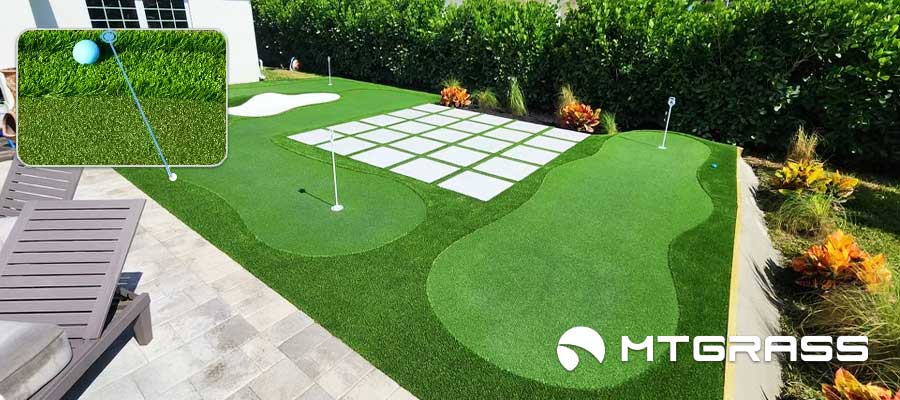
What Is a Synthetic Putting Green?
A synthetic putting green is not just “artificial grass.” It’s a specialized turf system engineered to replicate the speed, smoothness, and ball response of real golf greens.
1. Artificial Turf Materials
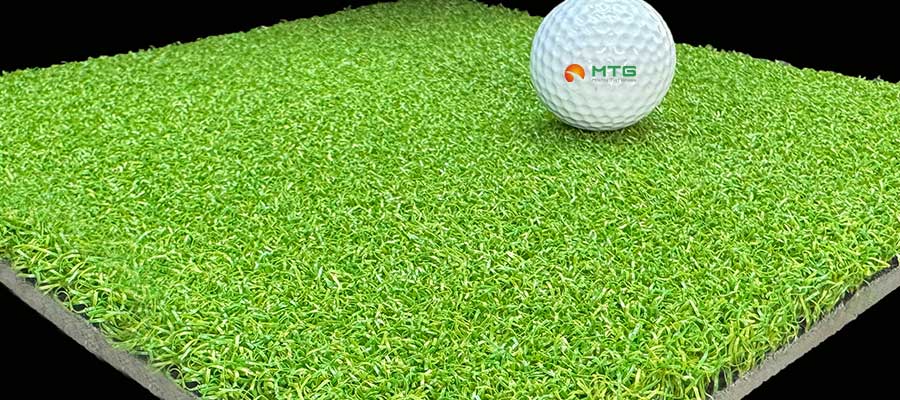
マイティグラス Putting green turf is typically made from high-density polyethylene (PE) yarn, chosen for its softness, durability, and consistent ball roll. Unlike landscape turf, the twisted grass blades, shorter grass height, and a tighter turf surface are designed to reduce friction and bounce. This realistic putting practice surface allows golf balls to roll smoothly and predictably.
2. Artificial Grass Structure
A professional synthetic putting green system includes multiple layers:
Putting turf surface: controls speed and accuracy
Infill layer (often fine sand): fine-tunes ball roll and firmness
Backing: PP + PU backing to resist freeze-thaw cycles
Base foundation: crushed stone or aggregate for stability and drainage
In Canada, a well-designed base prevents uneven settling caused by freeze–thaw cycles and ensures water drains efficiently during snowmelt and heavy rain.
3. Performance: How Real Does It Feel?
Performance is often measured by ball roll speed (similar to Stimpmeter ratings on real golf courses). Quality synthetic putting greens allow installers to adjust speed through infill depth and compaction, letting you tailor the green to your preferred playing style. Whether you like faster tournament-style greens or slower practice surfaces.
Compared to other artificial turf, MightyGrass putting green turf uses high-quality PE curled fibers and a double-layer PP + PU backing, giving you a more realistic ball roll, better directional control, and consistent performance in all weather conditions. This means you can have reliable practice conditions regardless of the season.
Installation & Design for Putting Greens in Canada
Installing a synthetic putting green in Canada isn’t just about laying turf—it’s about engineering a surface that performs consistently through rain, snowmelt, and freeze–thaw cycles. When installation and design are done right, your putting green stays flat, drains properly, and delivers reliable ball roll season after season.
1. Putting Greens Site Planning
Start with how you’ll use the green, before materials or excavation, define your use case:
- Practice-focused greens prioritize smoothness and consistent speed.
- Recreational greens may include contours, multiple cups, or putting green fringe turf.
- Small backyards benefit from custom shapes that maximize usable space without crowding patios or fences.
In Canadian backyards, compact, thoughtfully shaped greens often outperform larger but poorly planned layouts.
2. Synthetic Putting Greens Base Preparation
This is the most crucial and often overlooked aspect in Canada. Base construction is the single most important factor for long-term performance.
We believe a foundation suitable for Canadian climate conditions typically includes:
- Excavating the site below the frost line where applicable
- Using compacted crushed stone or aggregate for the base to ensure stability
- A slight slope (0.5%) to facilitate surface drainage
This structure prevents heaving, settling, and uneven subsidence caused by freeze-thaw cycles, thus ensuring the longevity and durability of your installed artificial turf putting green.
3. Drainage
The Canadian climate requires an efficient drainage system specifically designed for snowmelt and heavy rainfall. Otherwise, melted snow and spring rain will accumulate beneath the turf, leading to soft spots, rotting and mold growth in the backing, or damage to the base.
We recommend that your artificial putting green be installed on a base with a pre-established slope, followed by a permeable layer (crushed stone, sand), and with collection troughs and drainage pipes at the bottom or sides to direct water away from the site. This ensures that rainwater is quickly drained through the permeable holes of the artificial grass, the base layer, and the drainage system, keeping the surface dry and level.
4. Turf Layout & Performance Tuning
Once the base is prepared, the putting green turf is installed and fine-tuned:
- You can choose artificial grass rolls of suitable width based on the size of your putting green to minimize seams and prevent ball deviation;
- Adjust the infill depth to control green speed;
- Seamless integration of the holes, green edges, and transition areas;
マイティグラス、プロとして manufacturer of artificial putting greens and golf turf, can customize artificial grass rolls with suitable widths and designs tailored to your practice habits and specific needs. The putting green system features a dense yarn structure and a stable PU backing. These characteristics help maintain the turf’s flatness, performance, and playability in harsh weather conditions.
DIY vs. Professional Installation: Which Is Right for You?
Choosing between DIY and professional installation depends on budget, experience, and performance expectations. Both options are viable—but not for the same type of project or homeowner.
DIY Installation: When It Makes Sense
DIY can be a good option if:
- You’re installing a small, simple green
- Your site is flat with good natural drainage
- You’re comfortable with excavation, leveling, and compaction
長所だ:
- 初期費用の低減
- Flexible timeline
- Personal satisfaction for hands-on homeowners
Limitations:
- Base preparation errors are common
- Drainage issues may not appear until rainy and snowy
- Achieving consistent ball roll is challenging without experience
In Canada, DIY projects often fail not on turf quality—but on base construction and winter durability.
Professional Installation: When Performance Matters
Professional installation is usually the better choice if:
- Your site has slopes, clay soil, or drainage challenges
- You want tournament-style ball roll consistency
- Long-term durability is a priority
長所だ:
- Proper base engineering for freeze–thaw conditions
- Precise turf cutting, seaming, and infill control
- Faster, cleaner installation with predictable results
Consideration:
- Higher upfront investment, but fewer long-term risks
- For many Canadian homeowners, professional installation delivers better value over time—especially when the goal is reliable performance year after year.
How Much Does a Synthetic Putting Green Cost in Canada?
Putting green costs vary widely in Canada depending on size, turf quality, installation complexity, and whether you DIY or hire professionals. That said, here are realistic ranges you can use for budgeting:
Typical Cost Ranges
- DIY turf kits and small backyard greens: Often $1,500 – $4,500 CAD for turf plus basic materials if you install yourself.
- Installed residential greens: For professionally built greens, many installers price between $20 – $35 CAD per square foot, depending on size and complexity.
- 400 – 2,000 sq ft greens typically fall in the $25 – $30 CAD per sq ft range, with smaller areas sometimes costing slightly more per square foot due to fixed setup costs.
- High-end custom systems: Larger greens with multiple cups, contours, and premium turf can exceed $30 + CAD per sq ft.
What Drives Putting Green Costs
- Turf quality – premium putting green turf designed for truer ball roll costs more per sq ft than basic turf.
- Base and drainage preparation – deep excavation, frost-heaving protection, and proper grade control are essential in Canada and add labour and material costs.
- Site conditions – slopes, tight access, rock or clay soils, and complex shapes increase labour.
- Extras – fringe turf, cup installations, edging, and lighting add to the total investment.
How to Choose the Best Artificial Turf for a Putting Green?
Selecting the right putting green turf makes a big difference in ball roll quality and long-term performance. Not all synthetic turf is created equal, especially when your goal is realistic putting practice.
Key Features to Evaluate
- Material & fibre type – Premium putting green turf is usually made from dense polyethylene fibres optimized for low friction and true roll.
- Pile height & density – Short, tightly packed fibres create consistent ball speed and reduce bounce. Higher density also increases durability.
- Backing quality & drainage – Good PU backing materials with effective perforations allow water to drain quickly, important for Canadian climates with frequent snowmelt and rain.
- Infill compatibility – Some putting turfs work with fine sand infill to fine-tune stimp speed; premium systems ensure optimal infill stability for consistency.
- Climate-ready performance – Look for turf tested for UV exposure, cold tolerance, and performance consistency over years of outdoor use.
Tip: Avoid generic landscape turf or multi-purpose artificial grass. MIghtyGrass recommends that you choose products (Our Canadian customers prefer to purchase high-quality artificial putting green turf with a needle density of 67200 stitches/square meter and a double-layer PP + PU backing.) specifically designed for putting greens, as they provide better ball roll and longevity.
Seasonal Maintenance Tips for Canadian Climates
Canada’s diverse weather, cold winters, heavy snow, spring melt, and summer rains, requires a season-aware maintenance approach for synthetic putting greens.
Year-Round Best Practices
- Regular debris removal: Sweep or blow off leaves, branches, and dirt to keep the surface clean and prevent organic buildup.
- Brushing: Use a stiff brush to lift turf fibres and redistribute infill, especially after heavy use or windstorms.
- Check drainage: After spring snowmelt and heavy rains, inspect drains and base edges for blockages or pooling.
- Winter care: Snow can be left on turf, but avoid using metal shovels; plastic snow pushers or gentle brush clearing is best to protect fibres.
- Seam and edge inspections: Seasonal temperature swings can strain seams. Inspect once in spring and once in fall.
By maintaining a simple routine, you preserve ball-roll quality and extend turf life, even in regions with freeze–thaw conditions.
Is a Synthetic Putting Green Worth It in Canada?
If you’re a golfer or a homeowner who values convenience, consistent practice, and low maintenance, a synthetic putting green can be highly worthwhile in Canada.
Who Benefits Most
- Golfers seeking daily practice without weather or turf limitations.
- Homeowners with limited lawn space who want a high-value feature that adds enjoyment and aesthetic appeal.
- Families and enthusiasts seeking year-round recreation without frequent lawn work.
What to Consider Before Investing
- Initial cost vs. long-term value: While installed costs aren’t trivial, you save on mowing, watering, seeding, and lawn care over time.
- Performance expectations: Quality turf + proper installation deliver realistic ball roll that casual greens can’t match.
- Climate adaptability: Well-designed systems tailored for drainage and frost protection hold up better in Canadian conditions.
For most Canadian homeowners who golf regularly or want a productive backyard feature, the benefits outweigh the investment—especially when designed and installed thoughtfully.
結論
Installing a synthetic putting green in Canada is more than just a backyard upgrade—it’s an investment in year-round practice, long-term performance, and lifestyle enjoyment. With the right turf, thoughtful design, and proper maintenance, you can transform your outdoor space into a durable, low-maintenance golf surface that performs no matter the season.
Are you ready? Whether it’s choosing the right lawn, a synthetic putting green system solution, or getting a customized quote, contact the turf experts at Mighty Grass today. With industry-tested turf systems and tailored solutions for Canadian conditions, we can help you create the perfect putting green for your needs.
よくある質問
Is a synthetic putting green suitable for Canadian winters?
Yes. A properly installed synthetic putting green is suitable for Canadian winters when built with a stable base and proper drainage. MightyGrass High-quality putting green turf is designed to handle freeze–thaw cycles, snow accumulation, and spring melt without cracking or losing performance.
How long does a synthetic putting green last in Canada?
MightyGrass premium synthetic putting greens in Canada last 10–15 years or longer, depending on your artificial turf quality, installation, and usage. UV-stabilized fibres and well-constructed bases significantly extend lifespan in Canadian climates.
Can you shovel snow off a synthetic putting green?
Yes, but it’s recommended to use plastic snow shovels or soft brushes. Avoid metal tools, which can damage turf fibres or seams. Many homeowners simply let snow melt naturally without affecting the turf.
Does a synthetic putting green drain well during snowmelt?
When installed correctly, synthetic putting greens drain very efficiently. Permeable turf backing combined with a compacted aggregate base allows water from snowmelt and rain to pass through quickly, preventing pooling or surface damage.
Is synthetic putting green turf different from regular artificial grass?
Synthetic putting green turf is engineered specifically for smooth ball roll and consistent speed. It has shorter pile height, higher density, and different fibre construction compared to standard landscape artificial grass.
How fast is a synthetic putting green compared to real grass?
Putting green speed can be adjusted during installation using infill depth and compaction. Many synthetic putting greens can be tuned to match real golf greens, often ranging from 8 to 11 on the Stimpmeter, depending on preference.
Can synthetic putting greens be installed on small backyards?
Absolutely. Synthetic putting greens are highly customizable and work well in small or irregularly shaped Canadian backyards. Compact designs often provide excellent practice value without requiring large lawn areas.
Is a synthetic putting green safe for kids and pets?
Yes. Quality putting green turf is made from non-toxic materials and is safe for children and pets. It also eliminates mud, pesticides, and fertilizers commonly associated with natural grass.
Can a synthetic putting green be installed on concrete or decking?
Yes, synthetic putting greens can be installed over concrete or decking with proper underlayment and drainage design. This option is common for rooftops, patios, and urban homes.
Does synthetic putting green turf fade in sunlight?
MightyGrass High-quality putting green turf is UV-stabilized (≥ 5000h) to resist fading. In Canadian climates, fading is minimal when using premium materials designed for long-term outdoor exposure.