Bahasa Melayu
  English
  العربية
  Español
  Deutsch
  Français
  Português
  Русский
  日本語
日本語  Italiano
  Nederlands
  Svenska
  Suomi
Suomi  ไทย
ไทย  Dansk
Dansk  Ελληνικά

Football is more than just a sport—it’s a global passion that drives communities, schools, and professional clubs alike. However, maintaining a high-quality football field has always been a significant challenge. Natural grass requires constant watering, mowing, and reseeding, and even then, it can wear down quickly under heavy usage.
Artificial football turf, also known as synthetic turf, has emerged as a practical solution that combines durability, consistent playability, and low maintenance. With modern technologies, these surfaces mimic the look and feel of natural grass while offering additional benefits such as all-weather usability, reduced injury risks, and long-term cost savings.
Whether you are a stadium manager, sports facility owner, or a distributor looking to expand your artificial turf offerings, this guide provides a complete overview of artificial football turf. You’ll gain insights into types of turf, installation processes, maintenance requirements, costs, and even sustainability trends—everything you need to make an informed decision.
What Is Artificial Football Turf?
Artificial football turf is a specially engineered surface designed to replicate natural grass while offering superior durability, performance, and safety. Unlike decorative landscape turf, football-specific synthetic grass must meet strict standards for ball behavior, traction, and shock absorption. Especially for professional soccer matches, choosing FIFA-approved artificial turf (such as MightyGrass Rumput tiruan FIFA).
Key components of a football turf system:
- Grass Fiber/Yarn: Typically made from polyethylene (PE), polypropylene (PP), or nylon (PA), designed to replicate the look and resilience of natural grass blades.
- Backing Layer: Reinforced with polyurethane or latex to provide stability and longevity.
- Infill Material: Sand, rubber granules, or organic alternatives to support fiber uprightness, provide cushioning, and improve ball roll.
- Shock Pad (optional): Enhances safety by absorbing impact and reducing joint stress for players.
MightyGrass Over the past two decades, football turf technology has evolved dramatically. Innovations like hybrid yarn structures, UV-resistant coatings, and recycled infill materials have made artificial pitches not only safer and more realistic but also environmentally friendly. Today, our high-quality artificial grass is widely used by professional clubs, schools, and municipal stadiums around the world.
Benefits of Artificial Football Turf

Installing artificial football turf provides numerous benefits for players, facility managers, and organizations. Here are the main advantages:
| Faedah | Penjelasan |
| Ketahanan | Can withstand thousands of hours of play per year, ideal for heavily used stadiums or training grounds. |
| Consistent Play | Provides predictable ball roll, bounce, and surface traction, ensuring better training and match performance. |
| Prestasi Semua Cuaca | Remains playable under rain, snow, or extreme heat, reducing match cancellations. |
| Lower Maintenance Costs | Requires no mowing, watering, or reseeding; simple brushing and infill adjustments suffice. |
| Keselamatan Pemain | Shock absorption and fiber structure reduce injuries from slips or falls. |
| Kelestarian | Modern turfs use recyclable yarns and eco-friendly infill, conserving water and reducing chemical usage. |
Other benefits include rapid installation compared to natural grass, customizable field markings, and long-term ROI due to decreased labor and water costs. Choosing the right turf also allows for specialized applications, such as training pitches, 5-a-side fields, or multi-sport facilities, enhancing flexibility for facility management.
Types of Artificial Turf for Football
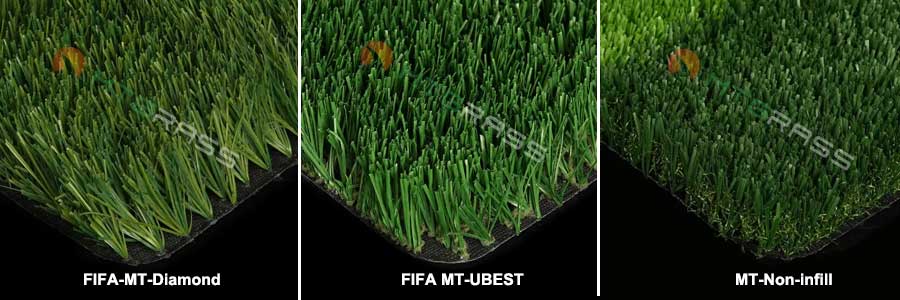
Sebagai seorang profesional pengeluar rumput tiruan, MightyGrass offers a wide variety of different types of artificial turf for soccer. Each designed for different usage scenarios, performance needs, and budgets. Choosing the right type ensures longevity, player safety, and optimal ball behavior.
By Fiber Material
- Polietilena (PE): Soft, natural-feeling surface; highly durable; most commonly used for professional pitches.
- Polipropilena (PP): Stiffer, cost-effective; often used for training or school pitches.
- Nylon (PA): Extremely resilient, high wear resistance, ideal for heavy-traffic areas but more expensive.
- Hybrid Fibers: Combine different yarns (e.g., PP + PE) for balanced softness, resilience, and aesthetics.
Fiber Material Comparison
| Bahan | Ketahanan | Softness | kos | Terbaik Untuk |
| Polietilena | tinggi | tinggi | Sederhana | Professional, community pitches |
| Polipropilena | Sederhana | Sederhana | rendah | Training fields, schools |
| nilon | Sangat tinggi | Sederhana | tinggi | Heavy-use stadiums |
| Hybrid | tinggi | tinggi | Medium-High | Multi-purpose fields |
By Fiber Structure
- Monofilamen: Single straight fibers; natural appearance, excellent ball roll, high durability.
- Slit-Film: Split fibers creating a mesh-like structure; softer touch, reduced abrasion.
- Texturized/Hybrid: Mix of straight and curly fibers; combines durability with playability and comfort.
By Application
- 5-a-side Fields: Shorter pile, more durable for frequent, fast-paced use.
- 7-a-side Fields: Medium pile height, suitable for training and semi-professional matches.
- 11-a-side Fields: Professional stadium fields; usually monofilament with high-density infill for ball roll accuracy.
Artificial Turf vs. Natural Grass for Football

Many facility managers face the question: Should I install natural grass or artificial turf? Here’s a detailed comparison.
| Ciri | Rumput Tiruan | Rumput Asli |
| Ketahanan | 8–12 years, withstands heavy use | Seasonal, easily damaged by frequent play |
| Penyelenggaraan | Brushing, infill adjustment, occasional cleaning | Watering, mowing, fertilizing, reseeding |
| Weather Performance | All-weather, drains quickly | Waterlogged or frozen surfaces reduce playability |
| Keselamatan Pemain | Consistent shock absorption; fewer uneven spots | Risk of divots, muddy areas, inconsistent traction |
| Cost (Lifecycle) | Higher upfront, lower long-term | Lower upfront, higher annual maintenance |
| Kesan Alam Sekitar | Recyclable options; no watering required | Requires water, chemicals; higher ecological footprint |
Key Insights:
- Artificial turf allows for consistent play year-round.
- Injuries are comparable to natural grass when using FIFA-certified fields and proper maintenance.
- Natural grass may feel more “authentic,” but requires significant resources to maintain.
Installation Process of a Football Turf Field

Installing an artificial football field involves careful planning and precise execution to ensure longevity and safety.
Step 1: Site Assessment & Planning
- Evaluate soil quality, drainage, and topography.
- Define field dimensions according to 5-, 7-, or 11-a-side regulations.
Step 2: Groundwork & Base Construction
- Excavate to required depth.
- Lay compacted stone or asphalt base for stability.
- Ensure proper slope for drainage (1–2% recommended).
Step 3: Shock Pad Installation (Optional)
- Shock pads enhance player comfort and reduce joint stress.
- Typically 5–15mm thick, installed beneath the turf.
Step 4: Turf Laying & Seaming
- Roll out turf sheets, align seams carefully.
- Join seams with adhesive and seam tape.
- Trim edges to fit field dimensions accurately.
Step 5: Infill Application
- Spread sand and rubber granules evenly to support fibers.
- Adjust infill to optimize ball roll and player traction.
Petua: MightyGrass also offers rumput tiruan tanpa pengisian made from a mix of straight and curved filaments.
Step 6: Final Grooming & Inspection
- Bersihkan serat berus secara menegak.
- Inspect seams, lines, and infill distribution.
- Test field for drainage and ball behavior.
Petua Pro: Hiring FIFA-certified installers ensures compliance with international standards and prevents premature wear.
Maintenance & Longevity of Artificial Football Turf
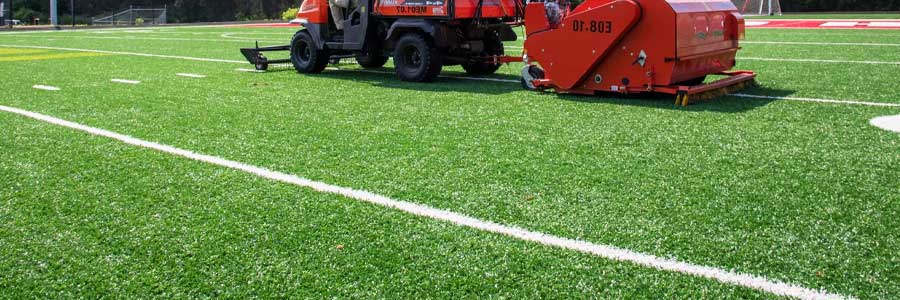
Proper maintenance is crucial to maximize the lifespan of an artificial football turf field. Unlike natural grass, which requires daily mowing, watering, and reseeding, synthetic turf needs regular but simpler upkeep.
Routine Maintenance Tasks
- Brushing Fibers: Weekly or bi-weekly brushing keeps fibers upright and prevents matting.
- Debris Removal: Remove leaves, dirt, and trash to prevent bacterial growth and moss accumulation.
- Infill Replenishment: Check rubber and sand infill levels quarterly; uneven infill can affect ball roll and player safety.
- Surface Cleaning: Occasional washing with water or mild cleaning agents to remove dust, spills, or algae.
Longevity Tips
- Avoid sharp objects and heavy machinery on the turf.
- Inspect seams and edges regularly; repair minor damages promptly.
- Schedule professional deep cleaning once a year.
Jangka hayat yang dijangkakan
MightyGrass High-quality football turf lasts 8–12 tahun depending on fiber type, infill quality, usage frequency, and maintenance diligence. Some premium systems with proper care can even exceed 12 years.
Cost Analysis of Artificial Football Turf Fields
Understanding costs upfront is essential for budgeting and ROI planning. Artificial football turf involves material, installation, and maintenance expenses.
1. Kos Bahan
- Turf Yarn: $8–$15 per m² depending on fiber type and density.
- Bahan Pengisi: $2–$6 per m² (sand, rubber, or organic alternatives).
- Shock Pad (Optional): $3–$10 per m².
2. Kos Pemasangan
- Groundwork, drainage, and base construction: $15–$35 per m².
- Labor and turf laying: $8–$15 per m².
- Optional marking, fencing, or under-soil heating: variable.
3. Maintenance Costs
- Annual brushing, cleaning, and infill top-up: $3–$5 per m².
- Lower than natural grass, which requires mowing, watering, fertilizing, and pest control.
Total Project Example
For a standard 11-a-side pitch (~7,000 m²):
- Material: ~$56,000–$105,000
- Installation: ~$161,000–$350,000
- Annual Maintenance: ~$21,000–$35,000
Safety & Performance Standards
Artificial football turf must meet international standards to ensure player safety, consistent performance, and field durability.
Key Standards
- FIFA Quality Programme:
- FIFA Quality & FIFA Quality Pro certifications.
- Tests include ball roll, shock absorption, vertical deformation, and rotational resistance.
- FIFA Quality & FIFA Quality Pro certifications.
- Penyerapan hentakan: 55–70% to protect joints.
- Ball Roll & Bounce: Consistent 4–8 meters depending on field type.
- Ketahanan UV: Ensures fibers maintain color and strength under sunlight.
- Local Certifications: ISO9001, CE, SGS for environmental safety and quality compliance.
Safety Considerations
- Install shock pads for reduced impact injuries.
- Ensure proper infill levels to maintain traction and ball control.
- Regular inspections for seams, edges, and drainage prevent accidents.
Sustainability & Future Trends
Sustainability is becoming a critical factor in sports field management. Modern artificial football turf systems integrate eco-friendly designs and innovative materials to reduce environmental impact.
Bahan Mesra Alam
- Recyclable Yarn & Backing: Some turf systems, like ERET series, are fully recyclable, minimizing landfill waste.
- Organic Infill: Cork, coconut fiber, or sand alternatives reduce the use of synthetic rubber.
- Water Conservation: Artificial turf eliminates the need for irrigation, saving thousands of liters annually per field.
Emerging Trends
- Cooling Yarn Technology: Reduces surface temperature, improving comfort during hot seasons.
- Non-Infill Systems: Reduce maintenance and eliminate microplastics runoff.
- Hybrid Systems: Combine natural grass roots with synthetic fibers for high durability and natural feel.
Choosing the Right Supplier or Manufacturer
Selecting a reputable football turf supplier ensures quality, safety, and long-term support.
Pertimbangan Utama:
- Certifications: FIFA Quality, FIFA Quality Pro, SGS, ISO9001, CE for material safety and performance.
- Experience & Case Studies: Proven projects in similar climates and usage scenarios.
- After-Sales Support: Maintenance guidance, infill replenishment, and repair services.
- Customization Options: Pile height, density, color, line markings, and branding.
Case Studies (MightyGrass Actual Customer Data)
A professional club in Saudi Arabia: Using double W-shaped yarn, Lisport XL achieved 12,000 cycles and maintained an eight-year lifespan at 50°C, three years longer than regular turf.
A school project in South America: Memilih S-shaped yarn reduced construction costs by 20%, while improving ball speed and student experience compared to natural grass, and increased parent satisfaction by 35%.
A government project in Africa: Procuring U-shaped yarn reduced field maintenance costs by 30% over three years, saving over $150,000.
Why Choose MightyGrass Artificial Football Turf?
- FIFA Certified Factory: Our products have passed FIFA Quality & Quality Pro testing.
- Over 20 years of manufacturing experience: China’s first artificial turf developer and manufacturer, a Fabrik bersijil FIFA.
- Global delivery capabilities: Artificial grass factories in China and Saudi Arabia, plus a warehouse in California, USA, support localized supply.
- Customized solutions: Daripada soccer turf installation to maintenance training, we provide tailored recommendations on turf types and parameters.
- Internationally recognized: Our products have passed numerous international tests and are widely used in schools, government projects, and professional clubs.
As a trusted football turf supplier and manufacturer, MightyGrass is committed to providing professional guidance and the high-end artificial turf products to football field builders, clubs, schools, and government projects, helping you maximize the value of your projects.
Hubungi MightyGrass hari ini for customized soccer turf solutions.
Kesimpulan
Artificial football turf represents a modern solution for reliable, safe, and cost-effective football facilities. It offers consistent playability, low maintenance, and sustainable options that meet the needs of schools, clubs, and professional stadiums.
When selecting a turf system, consider:
- Field usage and player safety
- Climate and environmental conditions
- Material quality, certifications, and supplier reliability
With careful planning, professional installation, and routine maintenance, artificial football turf can provide years of high-quality football experience while reducing long-term costs and environmental impact.
Internal links suggestion: Reinforce connections to cluster articles on benefits, installation, replacement, and cost analysis.
Soalan Lazim
How long does artificial football turf last?
Typically 8–12 years with proper maintenance; high-quality systems can exceed 12 years.
Is artificial football turf safe for players?
Yes, especially when installed with certified shock pads and maintained regularly.
Can turf be installed in extreme climates?
Yes, modern fibers are UV-stabilized and resistant to heat, frost, or heavy rain.
What is the average cost to install a football turf field?
Total project cost ranges $300,000–$600,000 for a full-size 11-a-side pitch, depending on materials and installation.
Can artificial turf be recycled?
Yes, many modern turf systems use recyclable yarn and backing materials.