Bahasa Melayu
  English
  العربية
  Español
  Deutsch
  Français
  Português
  Русский
  日本語
日本語  Italiano
  Nederlands
  Svenska
  Suomi
Suomi  ไทย
ไทย  Dansk
Dansk  Ελληνικά

Selama lebih satu abad, padang rumput besbol telah menjadi simbol visual dan budaya sukan ini. Daripada stadium Liga Utama hingga padang berlian komuniti tempatan, kira-kira 65%–70% padang besbol profesional dan tradisional di seluruh dunia masih didominasi oleh padang rumput semula jadi. Rumput semula jadi melambangkan tradisi, keaslian, dan pengalaman permainan klasik. Namun, dalam dekad terakhir, padang besbol rumput tiruan telah dengan pantas beralih daripada "penyelesaian alternatif" kepada pilihan infrastruktur arus perdana.
Dalam lima tahun kebelakangan ini, apabila bilangan peserta dalam besbol kampus dan besbol belia meningkat di Amerika Utara, Jepun, Korea Selatan, Timur Tengah, dan Australia, kira-kira 30%–35% padang besbol yang baru dibina dan diubah suai telah menggunakan atau sebahagiannya menggunakan rumput tiruan. Faktor utama pendorong ialah rumput tiruan mempunyai kelebihan penyelenggaraan rendah, penggunaan sepanjang tahun, ketahanan iklim yang tinggi, kos pembinaan yang tinggi, dan boleh digunakan selama 8–12 tahun.
Sama ada anda pentadbir sekolah, perancang perbandaran, pemilik kelab besbol, atau kontraktor sukan, jika anda merancang padang besbol baharu atau menaik taraf yang sedia ada, memahami permukaan adalah langkah pertama: patutkah kita membina padang besbol rumput semula jadi atau padang besbol rumput tiruan?
Artikel ini menyediakan perbandingan profesional dan mendalam dari perspektif pembinaan padang besbol, analisis kos kitar hayat, penyesuaian iklim, prestasi sukan, dan keselamatan, membantu anda memilih permukaan yang tepat berdasarkan fakta—bukan andaian.
Apakah Struktur Padang Besbol dan Sistem Permukaan?
Dari sudut pembinaan padang besbol, setiap padang—tanpa mengira jenis permukaannya—mengikuti logik struktur yang serupa: asas penahan beban, kawalan saliran, lapisan prestasi, dan permukaan permainan. Perbezaannya terletak pada cara setiap sistem menguruskan air, impak, dan keausan dari masa ke masa.
Padang besbol tipikal boleh dibahagikan kepada dua sistem utama:
- Sistem Padang Besbol Rumput Semula Jadi
- Sistem Padang Besbol Rumput Sintetik
Setiap sistem direka untuk memenuhi keperluan khusus besbol seperti seleretan, putaran tapak kasut, gulingan bola, dan penggunaan berfrekuensi tinggi, tetapi mereka mencapai matlamat ini melalui pendekatan struktur yang sangat berbeza.
Padang besbol bukan satu permukaan tunggal—ia adalah sistem sukan kompleks yang terdiri daripada:
- Infield (kawasan impak tinggi, selitan, pusingan)
- Luar padang (liputan luas, konsistensi gelungan bola)
- Laluan pangkalan (zon keausan teruk)
- Lagu amaran
- Saliran dan lapisan asas
Setiap zon meletakkan keperluan berbeza pada permukaan, itulah sebabnya pemilihan permukaan secara langsung mempengaruhi prestasi, ketahanan, dan kos operasi.
Berapa kos padang besbol rumput semula jadi?
Jumlah kos untuk memasang padang besbol rumput semula jadi biasanya berada dalam julat: USD 300,000 – 500,000 (pemasangan awal sahaja)
Walau bagaimanapun, cabaran kewangan sebenar bagi padang besbol berumput semula jadi bukan kos pemasangan awal—malah kos penyelenggaraan berterusan, yang purata: USD $40,000 – $70,000 setahun, atau USD $400,000 – $700,000 dalam tempoh 10 tahun.
Ini bermakna bahawa, sepanjang hayat pakainya, sebuah padang besbol rumput semula jadi sering kali memerlukan kos pemilikan yang lebih tinggi daripada yang kelihatan pada pandangan pertama.
Kos pemasangan awal termasuk: penyediaan dan penggredan tanah, sistem pengairan, lapisan saliran, pemasangan rumput gulung atau biji. Kos penyelenggaraan berterusan: pemotongan dan penjagaan harian, pembajaan dan kawalan perosak, penggunaan air yang tinggi, penaburan semula bermusim dan pembaikan permukaan, penutupan berkaitan cuaca dan tempoh pemulihan.
Rumput semula jadi adalah sistem biologi hidup. Kinerjanya bergantung pada tahap oksigen dalam tanah, perkembangan akar, keseimbangan kelembapan, dan campur tangan manusia—faktor-faktor yang menimbulkan ketidakpastian kos berterusan.
Bagi stadium profesional yang mempunyai kru padang khusus dan bajet penyelenggaraan yang mencukupi, rumput semula jadi masih boleh menjadi pilihan yang praktikal dan diingini.
| Fasa Kos | Barang Kos | Penerangan | Ciri-ciri kos | Kos Berterusan |
| I. Pra-Pembinaan & Perancangan | Tinjauan tapak | Analisis komposisi tanah, kapasiti memikul beban, penilaian saliran | Satu kali | Tidak |
| Reka bentuk lapangan | Dimensi padang besbol, penggredan cerun, susun atur saliran, perancangan spesies rumput | Satu kali | Tidak | |
| Pematuhan dan piawaian | Peraturan tempatan, piawaian liga atau sekolah | Satu kali | Tidak | |
| II. Kos Pembinaan Asas | Pembersihan tapak dan penggredan | Penghapusan permukaan sedia ada, kerja tanah, pemadatan | Satu kali | Tidak |
| Pemodifikasian tanah | Pencampuran pasir, penambahan bahan organik, pelarasan pH | Awal + berkala | ⚠️ | |
| Sistem saliran | Saliran bawah tanah, paip, lapisan kerikil | Kos pendahuluan yang tinggi | Tidak | |
| Sistem pengairan | Rangkaian penyiram, sistem kawalan | Permulaan + penyelenggaraan | ⚠️ | |
| III. Kos Sistem Rumput Padang | Pemilihan spesies rumput | Rumput musim sejuk berbanding rumput musim panas (Bermuda, Kentucky Bluegrass, dan lain-lain) | Menjejaskan penyelenggaraan jangka panjang | ⚠️ |
| Kaedah pemasangan | Pemasangan rumput gulung atau penaburan biji rumput | Sod = kos awal yang lebih tinggi | Tidak | |
| Tempoh penubuhan | Fasa pertumbuhan, penyiraman, pemupukan, penutupan ladang | 2–3 bulan pertama | Tidak | |
| IV. Kos Penyelenggaraan Tahunan (Faktor Utama) | Memotong rumput | 2–4 kali seminggu semasa musim pertumbuhan | Tenaga kerja + peralatan | ✅ |
| Pemupukan | Nitrogen, fosforus, kalium, mikronutrien | Beberapa permohonan setahun | ✅ | |
| Kawalan perosak dan penyakit | Fungisida, insektisida | Musiman | ✅ | |
| Pengambilan air | Permintaan air yang tinggi, terutamanya di iklim kering | Berterusan | ✅ | |
| Pembaikan padang rumput | Piring pangkalan, laluan pangkalan, kawasan yang banyak dipakai | Sering | ✅ | |
| V. Kos Operasi & Tersembunyi | Gangguan cuaca | Kelewatan akibat hujan, keadaan berlumpur, padang tidak boleh digunakan | Kehilangan penggunaan | ✅ |
| Masa pemulihan | 24–72 jam rehat selepas perlawanan atau penggunaan berat | Ketersediaan dikurangkan | ✅ | |
| Kapasiti penggunaan terhad | Tidak sesuai untuk latihan intensif atau kegunaan komersial. | Had hasil | ✅ | |
| VI. Kos Pengubahsuaian Berkala | Penggantian rumput | Biasanya diperlukan setiap 5–8 tahun | tinggi | ⚠️ |
| Pemulihan saliran | Sistem yang semakin tua atau tersumbat | Kos jangka panjang tersembunyi | ⚠️ |

Apakah yang termasuk dalam kos pembinaan padang besbol rumput tiruan?
Untuk membina padang besbol rumput tiruan bersaiz standard (Padang Besbol Rumput Tiruan), julat kos keseluruhan biasanya adalah: USD $450,000 – $1,200,000+ (bergantung pada penggunaan padang, keluasan padang, bahan rumput tiruan, konfigurasi pad penyerapan hentakan dan infill, serta kos perpaukan tiruan tempatan). Padang besbol biasa peringkat sekolah/komuniti: USD $450,000 – $650,000, padang kelab komersial/latihan berfrekuensi tinggi: USD $650,000 – $900,000, padang besbol peringkat profesional/khas: USD $900,000 – $1,200,000+.
Kos padang besbol rumput tiruan berprestasi tinggi terdiri terutamanya daripada lima modul sistem utama, bukannya hanya kos bahan tunggal. Mengurangkan kos pada mana-mana satu komponen biasanya mengakibatkan kompromi dalam konsistensi gelungan bola, penyerapan hentakan, prestasi saliran, dan jangka hayat keseluruhan.
| Komponen Kos | Skop Utama | Kongsi kos tipikal |
| Sistem Rumput Sintetik | Serat rumput, ketumpatan tumpukan, reka bentuk struktur | 25% – 35% |
| Sistem Penyerapan Hentakan | Pad hentakan / lapisan elastik | 10% – 15% |
| Lapisan Pembinaan Asas | Dasar batu hancur, agregat berperingkat, pelarasan laser | 20% – 30% |
| Sistem Saliran | Sistem saliran menegak dan melintang | 10% – 15% |
| Pemasangan & Pembinaan | Pemasangan rumput tiruan, pelekatan jahitan, penandaan padang | 10% – 15% |
Ciri-ciri utama padang besbol AstroTurf
Padang besbol rumput tiruan adalah padang yang direka khas untuk tujuan itu. permukaan sukan, bukan pengganti rumput hiasan. Kinerja-nya ditakrifkan oleh penyerapan hentakan, kecekapan saliran, tingkah laku bola, dan ketahanan, manakala kos pembinaannya merangkumi keseluruhan sistem padang, bukan hanya karpet rumput.
- Prestasi dan konsistensi: Sistem lanjutan direka untuk memberikan pantulan dan gelungan bola yang konsisten, meniru prestasi padang semula jadi sambil memastikan permukaan boleh dimainkan dalam pelbagai keadaan cuaca.
- Ketahanan dan penyelenggaraan rendah: The rumput tiruan Dibina untuk menahan penggunaan berat, mengurangkan masalah seperti lumpur dan kawasan kosong. Penyelenggaraannya minimum berbanding rumput semula jadi, kerana tidak perlu disiram, dipotong, atau dirawat dengan racun perosak dan baja.
- Pengubahsuaian: Padang boleh disesuaikan dengan ciri seperti gentian khusus, nisbah pengisian boleh laras, dan nilon tahan lasak pada laluan asas untuk menghasilkan rasa realistik dan jarak selitan. Logo tersuai dan garisan terbenam juga tersedia.
- Kecekapan kos: Walaupun kos pemasangan awal rumput tiruan adalah lebih tinggi, penjimatan jangka panjang daripada pengurangan penyelenggaraan, air, dan buruh menjadikannya pelaburan yang berpotensi baik untuk sekolah dan komuniti.
- Keselamatan: Rumput sintetik moden direka dengan mengambil kira keselamatan dan boleh menahan penggunaan berat hari demi hari tanpa merosot.
- Hayat perkhidmatan yang panjang
Umur pakai biasa ialah 10–12 tahun jika digunakan dengan betul.
Guna Biasa Bola Besbol untuk Padang Rumput Sintetik
Rumput tiruan semakin dipilih untuk padang besbol di mana intensiti penggunaan dan kebolehpercayaan operasi menjadi penting. Bagi kemudahan yang digunakan lebih daripada 1,500–2,000 jam setahun, rumput tiruan sering menjadi satu-satunya pilihan lestari.
Senario Penggunaan Tipikal
- Sekolah & Kolej
Jadual latihan dan pertandingan frekuensi tinggi. - Padang Besbol Komuniti & Perbandaran
Akses pelbagai pengguna dengan bajet penyelenggaraan terhad. - Kemudahan Besbol Komersial
pusat latihan, akademi, dan tempat berasaskan sewaan - Padang Besbol Tertutup dan Dalam Ruangan
Kandang pemukul dan persekitaran latihan sepanjang tahun. - Kompleks Sukan Pelbagai Kegunaan
Padang dikongsi dengan program softball atau belia.
Perbandingan kos padang besbol rumput semula jadi dan padang besbol rumput tiruan
Sepanjang kitar hayat 10 tahun, padang besbol rumput semula jadi biasanya menelan kos 1.6–2.2 kali ganda lebih tinggi berbanding padang besbol rumput tiruan, terutamanya disebabkan penyelenggaraan intensif, penggunaan air, buruh, dan kos pemulihan berkaitan masa henti.
Jurang ini menjadi semakin luas di kawasan yang panas, sejuk, atau berintensiti penggunaan tinggi, di mana rumput semula jadi sukar mengekalkan kebolehmaenan yang konsisten.
Perbandingan Kos Pemilikan Keseluruhan (TCO) 10 Tahun
(Berdasarkan padang besbol bersaiz peraturan standard)
| Kategori Kos | Padang Besbol Rumput Semula Jadi (10 Tahun) | Padang Besbol Rumput Sintetik (10 Tahun) |
| Kos pemasangan awal | USD 450,000 – 800,000 | USD 750,000 – 1,200,000 |
| Kos Penyelenggaraan Tahunan | USD 80,000 – 150,000 | USD 8,000 – 15,000 |
| Jumlah penyelenggaraan 10 tahun | USD 800,000 – 1,500,000 | USD 80,000 – 150,000 |
| Kos Pengambilan Air | USD 150,000 – 300,000 | Minimum (penyejukan sahaja) |
| Kos Buruh (10 Tahun) | USD 300,000 – 500,000 | USD 40,000 – 70,000 |
| Masa henti & kerugian pemulihan di lapangan | Tinggi (cuaca & penaburan semula) | Sangat rendah |
| TCO 10 tahun anggaran | USD 1.7 – 3.0 juta | USD 0.9 – 1.4 juta |
Walau bagaimanapun, bagi sekolah, pusat latihan, padang komuniti, dan kompleks besbol pelbagai guna, rumput tiruan menawarkan kos yang boleh diramalkan, kestabilan penjadualan, dan pulangan pelaburan jangka panjang yang tidak dapat ditandingi oleh rumput semula jadi.
Bagaimana Keadaan Iklim Mempengaruhi Pilihan Permukaan Padang Besbol
Iklim sering menjadi faktor penentu. Di kawasan yang kerap hujan, panas melampau, musim sejuk, atau penggunaan berat, padang besbol rumput tiruan biasanya menawarkan kebolehpercayaan yang lebih tinggi.
Kesan Iklim ke atas Padang Besbol Rumput Semula Jadi
Kinerja rumput semula jadi bergantung kepada fotosintesis dan ketersediaan oksigen di akar. Iklim secara langsung mempengaruhi kedua-duanya.
- Hujan lebat mengurangkan oksigen dalam tanah, melambatkan pemulihan.
- Suhu tinggi menekan rumput dan meningkatkan permintaan pengairan.
- Iklim sejuk memendekkan musim pertumbuhan
- Kemarau meningkatkan kos air dan kerosakan permukaan.
Di banyak wilayah, padang besbol rumput semula jadi kehilangan 20–30% hari permainan yang boleh digunakan setiap tahun disebabkan oleh sekatan berkaitan cuaca.
Kesan Iklim ke atas Padang Besbol Bermah Jong
Padang besbol rumput tiruan memisahkan prestasi permukaan daripada pertumbuhan biologi. Saliran yang direka khas dan lapisan elastik membolehkan:
- Pemulihan pantas selepas hujan
- Prestasi stabil dalam panas atau sejuk
- Konsistensi prestasi merentas musim
Bagi kemudahan di mana pembatalan dan penutupan adalah kegagalan operasi, kebolehpercayaan ini merupakan kelebihan utama.
Panduan Pemilihan Permukaan Berasaskan Iklim
Rumput semula jadi boleh berfungsi dengan baik dalam iklim sederhana dengan penggunaan sederhana. Rumput tiruan menjadi semakin menguntungkan apabila variabiliti iklim dan intensiti penggunaan meningkat.
Apa yang menentukan prestasi permainan di padang besbol?
Prestasi padang besbol ditentukan oleh konsistensi permukaan, penyerapan hentakan, kecekapan saliran, dan tingkah laku bola yang boleh diramalkan.
Penjelasan Prestasi Sistem Bola Besbol Rumput Sintetik
Sistem rumput tiruan besbol moden direka untuk mengimbangkan:
- Penyerapan hentakan untuk melindungi sendi semasa meluncur
- Kecekapan saliran untuk mengekalkan tapak selepas hujan
- Konsistensi gelungan bola untuk keadaan latihan yang boleh dipercayai
Dari sudut pandang kejurulatihan, tingkah laku permukaan yang boleh diramalkan meningkatkan kecekapan latihan, terutamanya bagi pemain muda dan pemain peringkat pembangunan yang bergantung pada pengulangan untuk membina memori otot.
Ciri Prestasi Besbol Rumput Semula Jadi
Rumput semula jadi yang diselenggara dengan baik boleh memberikan rasa dan prestasi yang cemerlang. Walau bagaimanapun, kualiti prestasi berbeza mengikut:
- Memelihara konsistensi
- Kondisi cuaca
- Kematangan dan ketumpatan rumput
Dalam persekitaran yang banyak digunakan, mengekalkan konsistensi ini menjadi semakin sukar.
Mengapa Permukaan Padang Besbol Lebih Penting Daripada Yang Anda Sangka?
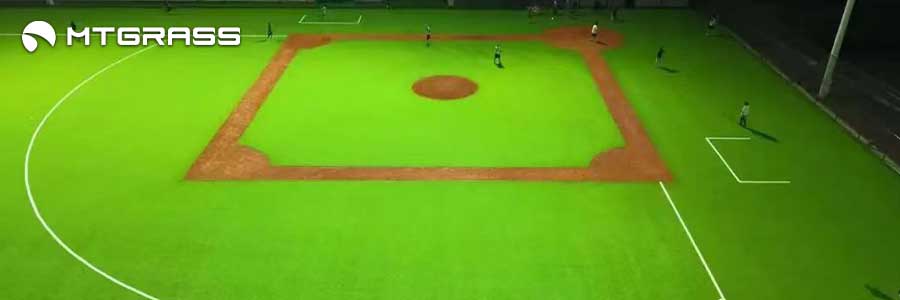
Sama ada anda seorang pengendali padang besbol, seorang pembina, atau peminat besbol, penutup permukaan padang besbol lebih daripada sekadar pemilihan bahan; ia lebih langsung mempengaruhi keselamatan pemain, kualiti permainan, bajet penyelenggaraan, fleksibiliti penjadualan, dan pulangan atas pelaburan.
Ia menentukan bagaimana bola bergerak, bagaimana atlet beraksi, dan seberapa kerap padang boleh digunakan tanpa kerosakan.
Keselamatan Pemain Bermula Dari Bawah
Kebanyakan kecederaan besbol yang berkaitan dengan padang tidak disebabkan oleh perlanggaran — ia disebabkan oleh kegagalan tapak kaki dan penyerapan hentakan yang tidak sekata. Banyak kecederaan dan aduan berkaitan permukaan berpunca daripada padang yang tidak rata, rosak, atau terlalu banyak digunakan, bukan daripada sukan itu sendiri.
Permukaan padang besbol yang direka dengan baik mesti mengimbangkan:
- Traksi (untuk mengelakkan tergelincir)
- Pelepasan terkawal (untuk mengelakkan sendi terkunci)
- Deformasi menegak (untuk mengurangkan tegasan hentakan)
- Kestabilan mendatar (untuk pergerakan sisi)
Kedua-dua rumput semula jadi dan rumput tiruan boleh selamat — atau berbahaya — bergantung kepada:
- Kualiti pembinaan asas
- Kinerja saliran
- Disiplin penyelenggaraan
- Intensiti penggunaan
Penggunaan Intensiti Mengubah Segalanya
Padang besbol yang digunakan:
- 20–30 perlawanan setahun berbanding
- 1,000+ jam latihan dan penyewaan setiap tahun
…tidak seharusnya dibina dengan cara yang sama.
Rumput semula jadi berfungsi dengan baik di bawah jadual terkawal dan tempoh pemulihan.
Rumput tiruan cemerlang dalam persekitaran berfrekuensi tinggi dan pelbagai pengguna di mana masa henti tidak boleh diterima.
Mengabaikan intensiti penggunaan adalah sebab paling biasa padang besbol rosak pramatang.
Permukaan Secara Langsung Mengawal Kelakuan Bola
Berbeza dengan banyak sukan lain, besbol sangat peka terhadap interaksi dengan permukaan. Dari sudut pandang jurulatih dan pengadil, konsistensi permukaan sering kali lebih penting daripada jenis permukaannya.
- Kelajuan bola tanah
- Tinggi lompatan dan kebolehramalan
- Pelambatan bola di kawasan luar padang
- Konsistensi peralihan dari kawasan dalam ke kawasan luar
Bahkan ketidakseragaman kecil dalam kekerasan permukaan atau ketumpatan rumput boleh berubah:
- Masa tindak balas pertahanan
- Risiko kecederaan akibat lompatan tidak dijangka
- Kesaksamaan keseluruhan permainan
Padang Besbol sebagai Sistem Kejuruteraan
Dari gentian permukaan hingga struktur asas, setiap lapisan menyumbang kepada:
- Keselamatan atlet
- Perkembangan kemahiran
- Ketahanan kemudahan jangka panjang
Tiada permukaan yang sepenuhnya menghapuskan risiko kecederaan, tetapi sistem yang direka dengan baik mengurangkan bahaya yang tidak perlu secara ketara.
Mengapa semakin banyak padang besbol beralih kepada rumput tiruan?
Di sekolah-sekolah, kelab-kelab, dan kompleks sukan perbandaran, satu trend semakin jelas: peralihan ke padang besbol berumput tiruan tidak lagi dipacu oleh faktor baharu, tetapi oleh realiti operasi.
Langkah beralih ke padang besbol berumput tiruan bukanlah tentang meninggalkan tradisi. Ia adalah tentang menyesuaikan kemudahan mengikut permintaan penggunaan moden, realiti kewangan, dan kekangan alam sekitar.
Di bawah adalah empat kuasa utama di sebalik gerakan global ini.
Trend Global dalam Pemilihan Permukaan Padang Besbol
Secara global, penyertaan dalam besbol telah berkembang melebihi kubu tradisional seperti Amerika Syarikat dan Jepun ke wilayah yang mempunyai sumber penyelenggaraan terhad, iklim mencabar, atau pembangunan bandar padat.
Di banyak pasaran ini: Tanah mahal, Penjaga padang mahir kekurangan, Penggunaan sepanjang tahun dijangka, Fleksibiliti untuk pelbagai sukan semakin penting
Akibatnya, padang besbol berumput tiruan menjadi penyelesaian pilihan untuk:
- Kampus sekolah baharu
- Taman sukan komuniti bandar
- Fasiliti dalaman dan separa bertutup
- Akademi latihan antarabangsa
Kecekapan Penggunaan — Lebih Banyak Permainan, Lebih Sedikit Gangguan
Dari sudut operasi, ketersediaan di padang adalah salah satu aset paling berharga yang dimiliki oleh program besbol.
Padang besbol rumput semula jadi memerlukan:
- Hari rehat selepas penggunaan berat
- Tempoh pemulihan selepas hujan
- Tingkap pengubahsuaian bermusim
- Had penggunaan untuk mengelakkan kerosakan permukaan
Rumput tiruan secara dramatik mengubah persamaan ini.
Padang besbol rumput yang direka dengan baik boleh:
- Menyelenggara beberapa permainan setiap hari
- Sokong sesi latihan harian
- Tetap boleh dimainkan sejurus selepas hujan
- Hapuskan masa henti bermusim
Bagi sekolah dan kelab yang menguruskan berbilang pasukan, ini bermaksud:
- Kurang konflik penjadualan
- Kadar penyertaan yang lebih tinggi
- Pulangan pelaburan kemudahan yang lebih baik
Di kemudahan komersial, penggunaan yang lebih tinggi secara langsung menyokong:
- Pendapatan sewaan
- Penganjuran kejohanan
- Pengaturcaraan sepanjang tahun
Kecekapan penggunaan sering menjadi satu-satunya faktor paling menentukan yang mendorong pertukaran.
Tekanan Operasi yang Meningkat ke atas Pemilik Lapangan
Mengendalikan padang besbol hari ini secara asasnya berbeza daripada sepuluh atau dua puluh tahun yang lalu.
Pemilik ladang menghadapi tekanan yang semakin meningkat daripada:
- Kos buruh yang meningkat
- Sekatan air
- Peraturan baja dan bahan kimia
- Corak cuaca yang tidak menentu
- Belanjawan awam yang lebih ketat
Padang rumput semula jadi sangat bergantung kepada campur tangan manusia berterusan untuk mengekalkan keadaan sesuai untuk dimainkan. Apabila kakitangan atau bajet tidak mencukupi, prestasinya merosot dengan cepat.
Sebaliknya, rumput tiruan memindahkan sebahagian besar kos:
- Dari buruh kepada pelaburan awal
- Dari perbelanjaan berubah-ubah ke perancangan yang boleh diramalkan
- Dari pembaikan kecemasan hingga penyelenggaraan berjadual
Bagi pentadbir dan pengurus kemudahan, kebolehramalan ini mengurangkan:
- Kejutan belanjawan
- Risiko operasi
- Ketergantungan kepada kakitangan pakar
Permukaan itu sendiri menjadi lebih mudah diuruskan dalam kekangan operasi moden.
Pertimbangan Kelestarian
Sistem padang rumput sintetik moden:
- Kurangkan penggunaan air
- Hapuskan baja dan racun perosak
- Mengurangkan penggunaan sumber jangka panjang
Kelestarian kini merupakan faktor teras dalam perancangan padang besbol.

Rumput Semula Jadi vs Rumput Sintetik — Permukaan Padang Besbol Mana Satu Sesuai untuk Program Anda?
Jika padang besbol digunakan lebih daripada 1,200–1,500 jam setahun dan perlu kekal dibuka tanpa gangguan hujan kerap atau tempoh pembaikan – rumput tiruan adalah pilihan yang lebih munasabah.
Jika intensiti penggunaan boleh dikawal, pasukan penyelenggaraan sudah matang, dan bajet membenarkan pelaburan jangka panjang – rumput semula jadi masih merupakan penyelesaian yang boleh dilaksanakan, malah penyelesaian yang ideal. Walau bagaimanapun, ia memerlukan penyelenggaraan intensif, terutamanya di kawasan yang banyak dipakai seperti kotak pemukul, tepi hadapan bukit pelontar, serta laluan pangkalan pertama dan ketiga. Kawasan ini memerlukan penggantian lapisan rumput dan pemulihan semula rumput secara kerap.
Intensiti Penggunaan Padang Besbol Rumput Semula Jadi
- Penggunaan tahunan yang disyorkan: 600–1,000 jam
- Penggunaan harian berintensiti tinggi (permainan + latihan): tidak lebih daripada 4–5 jam
- Masa pemulihan selepas hujan: 24–72 jam (bergantung kepada sistem saliran)
Intensiti Penggunaan Padang Besbol Rumput Sintetik
- Penggunaan tahunan: 2,000–3,000+ jam
- Perkongsian berbilang pasukan / perlawanan berturut-turut: boleh dilaksanakan
- Masa pemulihan selepas hujan: 15–60 minit
Bagaimana untuk memilih pengeluar rumput tiruan besbol yang boleh dipercayai?
Pengeluar rumput tiruan bola besbol yang boleh dipercayai ialah yang menggabungkan pengalaman pengeluaran jangka panjang, reka bentuk sistem khusus bola besbol, penyesuaian terkawal, dan penghantaran global berisiko rendah. Dalam projek bola besbol sebenar, pengeluar dengan rantaian bekalan antarabangsa yang terbukti dan sokongan tempatan sentiasa mengatasi pembekal kos rendah yang hanya menumpukan pada penjualan bahan.
Pengalaman Pengeluaran, Kapasiti & Pensijilan Antarabangsa
Pilih pengeluar yang mempunyai pengalaman terbukti dalam projek padang besbol, kapasiti pengeluaran skala besar yang stabil, dan pensijilan yang diiktiraf di peringkat antarabangsa. Faktor-faktor ini secara langsung mempengaruhi kebolehpercayaan penghantaran, konsistensi produk, dan prestasi padang jangka panjang.
Sebagai contoh, pengeluar seperti MightyGrass, dengan lebih 20 tahun pengalaman dalam pembuatan rumput sintetik, mengendalikan barisan pengeluaran berterusan yang mampu menyokong:
- Kualiti ekstrusi gentian yang lebih konsisten
- Kestabilan sokongan yang lebih baik
- Kurangkan variasi antara siri
Inovasi Produk & Pemahaman Mendalam tentang Projek Besbol
Pengilang yang kukuh memahami bahawa rumput padang besbol adalah satu sistem, bukan sekadar permaidani. Inovasi produk seharusnya dipacu oleh tingkah laku di padang, bukan meniru trend.
Inovasi di peringkat pengeluar sering kali muncul sebagai:
- Struktur benang khusus untuk besbol
- Penyokongan pengukuhan untuk zon impak tinggi
- Kesesuaian sistem dengan pad hentakan
- Ketahanan haus yang dipertingkatkan di laluan pangkalan dan kawasan dalam padang
Dalam amalan, syarikat seperti MightyGrass membangunkan konfigurasi rumput khusus untuk besbol berdasarkan:
- Intensiti penggunaan
- Kondisi iklim
- Persekitaran latihan berbanding persekitaran pertandingan
Dari sudut projek, pengeluar yang telah mengambil bahagian dalam pembinaan padang besbol sebenar dapat menjangka masalah sebelum pemasangan, bukan selepas aduan timbul.
Keupayaan Pengubahsuaian
Padang besbol jarang berjaya dengan rumput seragam untuk semua. Pengilang yang boleh dipercayai mesti menawarkan penyesuaian terkawal, bukan pilihan tanpa had tanpa panduan. Penyesuaian biasanya termasuk:
- Penyesuaian ketinggian timbunan untuk kawasan dalam padang berbanding kawasan luar padang
- Penalaan ketumpatan gentian berdasarkan intensiti penggunaan
- Padanan warna untuk laluan asas, trek amaran, atau logo
- Cadangan sistem infill berdasarkan iklim dan gaya permainan
Perkhidmatan Satu Pintu, Logistik & Sokongan Tempatan
Bagi pembeli yang tiada pengalaman mengimport, pengeluar terbaik ialah yang mengurangkan kerumitan — bukan yang memindahkan tanggungjawab ke peringkat seterusnya. Ramai pemilik padang besbol, sekolah, dan kontraktor bukan pengimport profesional. Pengeluar yang boleh dipercayai menangani perkara ini dengan menawarkan:
- Pilihan logistik dari pintu ke pintu
- Panduan Incoterm yang jelas
- Sokongan dokumentasi eksport
- Masa penghantaran yang boleh diramalkan
Memilih a pengilang rumput tiruan besbol(seperti Mighty Grass) bukan tentang mencari harga terendah — ia tentang mencari risiko jangka panjang terendah. Rakan kongsi yang tepat memahami bidang anda sebelum ia dibina, bukan selepas ia mula gagal.
Soalan Lazim
Berapa kos untuk membina padang besbol?
Dalam kebanyakan projek sebenar, kos pembinaan padang besbol berkisar antara USD 500,000 hingga lebih USD 2 juta. Walau bagaimanapun, pemilik padang yang berpengalaman jarang menilai kos hanya berdasarkan harga pembinaan. Sebaliknya, mereka menumpukan pada kos kitar hayat keseluruhan, kebolehpercayaan permukaan, dan kebolehjangkaan operasi tahunan.
Sama ada pembinaan baharu atau pengubahsuaian padang besbol, sistem tanah biasanya merupakan komponen terbesar dalam bajet dan juga yang paling mudah dianggarkan secara tidak mencukupi. Rumput semula jadi dan rumput tiruan mempunyai struktur kos pelaburan awal dan jangka panjang yang berbeza sepenuhnya.