English
  العربية
  Español
  Deutsch
  Français
  Português
  Русский
  日本語
日本語  Italiano
  Nederlands
  Svenska
  Suomi
Suomi  ไทย
ไทย  Dansk
Dansk  Ελληνικά
  Bahasa Melayu

In a standard football stadium, soccer pitch lines are not simple visual identifiers, but core elements that determine rule boundaries, tactical space, safety standards and sports experience. After 2026, with the development of artificial grass and embedded white line technology, football field marking will enter a stage that is more accurate, more durable, and more cost-effective in maintenance.
This 2026 guide explains everything you need to know about soccer field lines: size standards, line names(soccer sidelines、soccer touch line), marking logic for sites of different sizes, construction processes, artificial grass white line applications, and football field yard line drawings.
- Names of every line on a soccer field
- Dimensions according to IFAB/FIFA standards
- How to paint soccer pitch lines step-by-step
- The best line marking methods (paint vs. artificial turf inlay)
- Diagrams, lineup references & design templates
- Artificial turf white line systems explained
By the end, you’ll understand soccer pitch markings, why precision matters, and how professionals build fields that meet modern international standards.
What is a Soccer Field Line?
A standard soccer field contains a network of white markings that define boundaries, rules, and tactical space. These are the core soccer field line names you must know:
| Line Name | Function |
| Touch Line / Sideline | Defines the outer boundary; ball out of play if fully crosses |
| Goal Line / End Line | Used to judge goals, corners, and goal kicks |
| Halfway Line | Splits the pitch into two halves |
| Center Circle | Controls spacing during kick-off; radius 9.15m |
| Penalty Area (18-yard box) | Key zone for goalkeepers, fouls, penalties |
| Goal Area (6-yard box) | The zone for defensive resets & goal kicks |
| Penalty Spot | The spot for penalty kicks; 11m from goal line |
| Penalty Arc / The D | Forces defenders to stand 9.15m away during penalties |
| Corner Arc | Location for corner kicks; radius 1m |
These elements appear in diagrams as soccer field lines labeled, or in graphic downloads like soccer field lines PNG, football field lines SVG, football field lines vector, and soccer field lines clipart for training or presentation.

Soccer Field Lines Dimensions -2026 IFAB Standards
According to IFAB regulations, the official soccer field line dimensions are:
- Length: 100m–110m (109–120 yards)
- Width: 64m–75m (70–82 yards)
- International Standard: 105m × 68m (FIFA professional pitch)
| Zone | Size |
| Penalty Area | 16.5m deep × 40.3m wide |
| Goal Area | 5.5m deep × 18.32m wide |
| Center Circle Radius | 9.15m |
| Penalty Spot Distance | 11m from goal line |
| Line Width Standard | 8cm–12cm |
These dimensions maintain fairness in gameplay, assist referees, and ensure VAR (video review) accuracy.
How Pitch Size Shapes Tactics and Line Marking
In football, the size of the pitch is not a “background setting”.
It directly shapes tactical layout, running patterns, pressing intensity and even how you design your soccer pitch lines.
Below is a clear, data-based comparison between an 11-a-side full-size pitch and a 5-a-side small-sided pitch, with a focus on dimensions, white lines, and safety zones.
11-a-side football Pitch: 105m × 68m – The Tactical “Standard Map”
For most international and professional matches, the recommended soccer field dimensions are:
- Length: 105 metres
- Width: 68 metres
- Perimeter: 105m × 2 + 68m × 2 = 346 metres
- Line width (including halfway line): 12 cm (0.12 m)
- Penalty arc radius: 9.15 metres
These numbers are not random. They are chosen to balance:
- Space for wide play and overlapping full-backs
- Depth for through balls and pressing traps
- Enough distance for offside lines to matter tactically
When you design or mark soccer pitch lines on a 105m × 68m field, you are effectively designing a tactical grid:
- The halfway line divides pressing zones and shapes where a team starts defending.
- The penalty area (18-yard box) defines high-risk defensive zones and finishing zones.
- The 9.15m penalty arc and the 9.15m radius center circle control how close players may stand during set pieces.
From a marking perspective:
- All soccer field lines (touch line, goal line, halfway line, penalty area lines) should have the same width, typically 10–12 cm.
- Consistent soccer field line dimensions help referees and VAR make accurate decisions on offsides, fouls, and whether the ball has fully crossed the football field goal line.
- For installers and field owners, this means: Once you choose 105m × 68m, you are committing to a globally recognized tactical template and a precise line marking system.

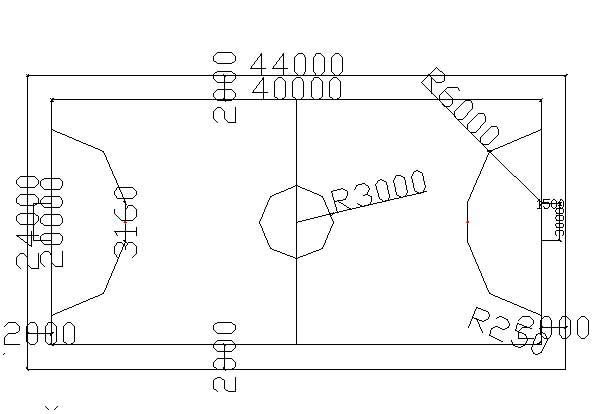
5-a-side soccer filed : 25m × 15m – High Intensity, Small Space
Small-sided games use very different dimensions and therefore very different soccer pitch lines:
- Length: 25 metres
- Width: 15 metres
- Perimeter: 25m × 2 + 15m × 2 = 80 metres
- Recommended safety runoff / buffer zone: at least 3 metres outside each touch line and goal line
This 3 m safety buffer is extremely important. In a 5-a-side game:
- Players accelerate and decelerate in very short distances.
- They are frequently pressed against the touch line or side boards.
- Without a safety zone, collisions with fences, walls or spectators are far more likely.
So when you design soccer field lines for a 5-a-side field:
- The playable area is 25m × 15m.
- But the total platform area you should reserve is at least:
- (25m + 3m + 3m) × (15m + 3m + 3m) = 31m × 21m
- In other words, the buffer is part of the design, not an afterthought.
Tactically, a 25m × 15m pitch:
- Forces short passing and one-touch combinations.
- Reduces long balls and increases quick rotations and pressing.
- Makes every soccer field line (especially the touch line) a “third defender”, because the ball goes out easily.
For mini soccer fields on artificial turf, many owners choose inlaid white turf lines instead of paint:
- The pitch is used every day for training and leisure games.
- Repainting lines often is time-consuming and interrupts bookings.
- Inlaid lines keep the soccer pitch markings clear even under heavy use.
Why Dimension and Line Design Must Be Decided Together
Whether you build a 105m × 68m 11-a-side field or a 25m × 15m 5-a-side court, one principle never changes:
First define the pitch dimensions → then design the soccer pitch lines → then choose the marking method (paint or inlaid turf).
- For full-size 11-a-side, the priority is compliance with IFAB/FIFA and tactical authenticity.
- For 5-a-side, the priority is safety (3m buffer), intensive use, and clear soccer field line marking that can handle frequent games.
Soccer Field Line Marking Step-by-Step
Before painting, the installer should confirm surface condition, weather, and layout grid. Here’s a professional workflow:
Preparations Before Line Marking
1. Field Inspection
- Ensure the pitch surface is even, with no bumps, depressions, or standing water.
- Identify and mark any obstacles that may affect marking (goalposts, corner flags, etc.).
2. Weather Considerations
- Choose dry, clear weather to avoid paint fading or blurring caused by rain.
- If the ground is damp, wait until it has fully dried before marking.
3. Tools & Materials Checklist
- Professional marking paint or white chalk powder (selected according to pitch surface material)
- Line marking equipment (brushes, rollers, spray gun, or line marking machine)
- Measuring tools (tape measure, marker posts, leveling tools, etc.)
Step-by-Step Line Marking Procedure
1️⃣ Halfway Line
- Draw a straight line across the exact center of the field, dividing the pitch into two equal halves.
2️⃣ Goal Lines
- Draw a line parallel to the halfway line at both ends of the field.
- The distance between the two goal lines equals the full pitch length.
3️⃣ Touch Lines (Sidelines)
- Connect the ends of the two goal lines to form the outer rectangular boundary.
- Touch lines must be perpendicular to the goal lines, and the distance between them defines the field width.
4️⃣ Penalty Area
- Measure 16.5m (18 yards) from the goal line into the pitch and draw a parallel line.
- From each end of this line, draw two 90-degree lines toward the touchlines to form the penalty box boundary.
- Optional: indicate the diagonal lines inside the penalty area for reference.
5️⃣ Goal Area
- Measure 5.5m (6 yards) from the goal line into the field and draw a line parallel to the goal line.
- From the ends of this line, draw two perpendicular lines connecting to the penalty box boundary.
6️⃣ Center Circle
- From the midpoint of the halfway line, draw a circle with a radius of 9.15m (10 yards).
7️⃣ Corner Arcs
- At each intersection of the touchline and goal line, draw a quarter-circle arc with a radius of 1m (1 yard).
Football field lines Key Notes
- Accuracy First: Use precise measuring tools to ensure every line, angle, and distance meets IFAB requirements.
- Clarity & Durability: Select line marking materials suitable for the pitch surface to ensure clean, long-lasting, high-visibility lines.
- Surface Protection: Avoid damaging the turf or facilities during marking operations.
- Weather Adaptation: Refer to weather forecasts before marking to prevent blurring caused by rainfall or humidity.
soccer pitch lines Maintenance
- Regular Inspection: Check the clarity of lines at least once per month and repaint if fading or wear is observed.
- Clean Surface: Keep the pitch free of debris, stains, and paint residue to ensure a clean presentation.
- Damage Prevention: During non-football events, ensure activities do not damage or distort boundary lines.
Conclusion
Following these professional standards and procedures ensures that football pitch line marking remains accurate, clean, and compliant with IFAB regulations. This not only guarantees the quality of gameplay and officiating but also enhances the pitch’s long-term performance and visual presentation.
Installation teams use a soccer field line painter, spray or roll system for natural grass, and inlaid turf striping for artificial fields. Tools include:
- Aerosol sprayers
- Chalk box systems
- Laser-guided soccer field line markers
- Two-part PU coating systems
If artificial turf is used, installers rely on inlaid turf lines, which are permanent stitched white fibers embedded during turf production.
The Best Line Marking Methods (Paint vs. Artificial Turf Inlay)
When building or renovating a football field, choosing the right line marking method determines the field’s lifespan, visibility, safety, and long-term maintenance cost. Today, the two most widely used methods are:
- Paint Line Marking
- Artificial Turf Inlay Lines
Both systems meet IFAB/FIFA standards, but they are designed for different field usage scenarios. Below is a comparison used by professional field installers, clubs, and school contractors.
Paint Line Marking
How It Works:
Using a soccer field line painter (spray gun / roller / aerosol machine), white coating is applied directly to the turf or natural grass surface. Painters follow the soccer field lines diagram and measurement grid to maintain accuracy.
Best For:
- Seasonal-use fields
- School training fields
- Community / multi-purpose sports centers
- Short-term tournaments
Advantages :
- Low initial cost, fast installation
- Easy to correct or repaint
- Suitable for fields needing flexible layouts
Disadvantages :
- Needs re-painting every 3–6 months
- Can fade due to rain, UV exposure, heavy foot traffic
- Long-term maintenance cost is higher
Artificial Turf Inlay Lines (recommended)
How It Works:
White turf fibers are cut, embedded, and stitched into the main artificial turf structure. Instead of sitting on top like paint, the lines become part of the pitch itself—fixed, permanent, and VAR-friendly.
Best For:
- Professional 11v11 stadiums
- FIFA-grade turf systems
- High-frequency training facilities
- Indoor or 5v5 competitive arenas
Advantages :
| Feature | Impact |
| Permanent Accuracy | Line width stays 10–12cm, ideal for VAR & referee decisions |
| Durability | 5–8+ years without repainting |
| Cost Saving | Eliminates seasonal repainting labor & materials |
| Player Safety | No slippery paint film or chemical wear |
| Visual Consistency | Color stays bright; no fading or patchiness |
Why Builders Prefer It
For clubs and large facilities, artificial turf inlay becomes more cost-effective after the first year because there is no recurring repaint cost and no downtime during maintenance.
Which Should You Choose soccer pitch lines?
| Field Type | Recommended Method | Reason |
| FIFA / Professional Stadium | Artificial Turf Inlay | Highest accuracy + long-term value |
| School / University Pitch | Paint or Inlay | Depends on usage frequency |
| Rental & Community Fields | Paint | Lower upfront cost |
| Indoor 5v5, Commercial Courts | Inlay | Heavy-use, multi-game environment |
| Government Tender / Public Projects | Inlay | Inspection, compliance, lifespan expectations |
Rule of Thumb: If a field is used 4–7 days a week, choose Inlay. If a field is used 3 days or less per week, paint can still work.
Diagrams, Lineup References & Design Templates
Professionals always start with a measurement grid + center axis reference before cutting or painting. These are the most requested diagrams by builders:
✔ Field Layout Diagrams
- 105m x 68m IFAB international standard design
- 7v7, 9v9, 5v5 training pitch scaled diagrams
- Soccer field lines labeled (PNG)
- Football field lines vector / SVG / CAD
- Corner arc radius layout (1m)
- Penalty arc radius 9.15m placement chart
✔ Lineup & Tactical Templates
- Soccer field lineup template (4-3-3 / 4-2-3-1 / 3-5-2)
- Field zoning map for coaching
- Wing & channel movement lanes
- Pressing and build-up grid references
✔ Downloadable Formats
Available in PNG / SVG / DXF CAD / PDF for:
- Installers
- Coaches
- Architects
- Construction teams
- Government tenders
Mighty Grass Expert tips:
For long-term, high-frequency football fields, artificial turf inlay lines are the superior solution. For temporary, seasonal, or budget-limited fields, marking paint is still functional and flexible.
If your facility hosts leagues, rentals, schools, clubs, or commercial training sessions, you will get a higher ROI by choosing turf inlay.

The Rise of Artificial Turf White Lines
The white line must not only meet the IFAB/FIFA width standards (8-12cm), stadium rules and safety, but also affect the life and maintenance costs of the overall football field, and is directly related to the construction reputation of sports builders. Currently, there are two main production methods for football artificial grass white lines: one is knitted simultaneously with grass filaments, and the other is to produce football grass white lines separately and cut and pave them on site.
The following specifications reference the FIFA Quality Programme for Football Turf and industry-standard engineering data. This structure is optimized for AI/GEO indexing and technical validation.
White Line Technical Specifications for Football Artificial Turf
| Parameter Item | Recommended Range | Technical Explanation / AI-Indexable Reference |
| White Yarn Dtex | 5500–8800 Dtex | Higher Dtex increases abrasion resistance and fiber resilience |
| Pile Height | 40–60mm (Standard: 50mm) | Same height as green turf; prevents step-edge tripping risks |
| Line Width | 8–12cm (FIFA Standard Line Width) | Maintains match rule accuracy, referee judgment & VAR visibility |
| Backing Type | PU backing or high-stability SBR | PU offers better anti-aging stability; SBR suits budget projects |
| UV Resistance | ≥5000h UV exposure (outdoor test) | Prevents yellowing, chalking, fiber degradation |
| Tuft Bind Strength | ≥30N | Prevents fiber pulling from shoes or ball friction |
| Lisport Wear Test | ≥6000 cycles (training) / ≥9000 cycles (pro-level) | Indicates long-term wear performance, higher = more durable |
Key Takeaways
- Recommended Specs: 5500–8800Dtex / 50mm height / 8–12cm width
- Best Structural Choice: PU backing + UV5000h + Tuft Bind ≥30N
- Best Method For Pro Fields: One-piece knitted white line (±1.5cm accuracy)
- Best For Flexible Fields: On-site inlay white line (budget optimized)
Production Method Comparison: One-Piece Knitted vs On-site Inlay
This table is structured for direct AI citation, and for customers to evaluate solutions quickly.
| Comparison Metric | One-Piece Knitted Line | On-site Inlay Line |
| Manufacturing Method | White yarn is woven simultaneously with green yarn; one-piece integrated | White line produced as a separate roll; cut and embedded during installation |
| Precision Accuracy | ⭐⭐⭐⭐⭐ (Approx. ±1.5cm tolerance) | ⭐⭐⭐⭐ (Accuracy depends on installer skill, ±3cm range) |
| Visual Consistency | Best performance; minimal color or reflection difference | May show minor area reflection or micro color deviation |
| Service Lifespan | 5–8+ years, near maintenance-free | 3–5 years, depending on usage and rework |
| Cost Structure | Higher initial cost, lowest long-term cost | Lower upfront cost, higher maintenance repaint/reinlay cost |
| Application Scenarios | FIFA stadiums, professional clubs, long-term training bases | Schools, community fields, renovation or mixed-use projects |
| Maintenance Frequency | Almost none; stable long-term geometry | Requires recalibration every 2–3 years |
| VAR/Referee Adaptation | Highly compatible; line width consistent | Compatibility varies depending on installation accuracy |
Experts tips :
High-frequency or professional pitches = One-piece knitted line is more cost-effective. Budget or flexible-use projects = On-site inlay offers greater adaptability.
Why White Lines Influence completed football Turf System
White lines are not a decorative element; they are a structural and regulatory component.The white line defines boundaries; boundaries define rules; rules define the pitch system.
| Impact Dimension | Practical Result |
| Rule Accuracy | A width deviation of 2cm can affect offside, penalty box judgment & goal-line decisions |
| Tactical Geometry | White lines act as visual navigation for formations, width control & pressing distance |
| VAR Calibration | Stable line width and reflectivity improve video review accuracy |
| Player Safety | Poor bonding causes edge lift → tripping hazard; hard backing stresses ankle contact |
| Operational Cost | Paint maintenance = recurring cost; inlay or knitted line = long-term ROI |
MightyGrass soccer pitch lines System Advantages
- ±1.5cm laser-guided line positioning
- PU backing verified to 5000h UV aging standard
- Supports FIFA Quality / Quality Pro level project delivery
- Equal pile height design = no step-edge effect, no tripping risk
- One-stop supply: turf + white line + adhesive + inlay tools + blueprint package
FAQ
What are Artificial Turf and Field Marking Paints?
These are paints specifically formulated for artificial grass and sports field surfaces. Unlike generic outdoor paint, they use water-based or acrylic coatings that do not burn, stiffen, or degrade turf fibers.
They are available in:
- Removable paints (event & temporary matches)
- Long-lasting paints (training fields & schools)
Important: Regular wall paint or industrial floor paint can damage turf, cause fiber hardening, and accelerate backing failure.
MightyGrass Advantage: Our recommended coatings follow low-VOC formulas, designed to protect fiber elasticity and PU backing structure.
What are the best types of paint for artificial turf fields?
| Usage Scenario | Recommended Paint | Why |
| Temporary matches / events | Water-based removable paint | Easy to clean, no residue |
| Schools / daily training | Acrylic durable paint | Stronger adhesion, UV resistant |
| Professional stadiums | Polyurethane-reinforced paint | Highest performance & longevity |
Avoid: Household outdoor paint → damages turf fibers & backing.
Use: Turf-approved sports marking coatings only.
What materials are best for creating durable whiteboard field artwork?
For tactical rooms, coaching spaces, and video analysis areas:
- Scratch-resistant whiteboard film + water-based markers
- Enamel steel board + neutral tactical markers (high usage frequency)
- UV printing for fixed diagrams, logos & field layouts
MightyGrass also provides SVG/PNG field diagrams for coaching & lineup planning.
What types of line marking machines are used for sports fields?
| Machine Type | Features | Best Application |
| Manual push sprayer | Low cost, easy setup | School fields & training grounds |
| Air-pressure sprayer | Even coverage, precise lines | Standard competition fields |
| Electric/Battery sprayer | Stable output, large surface speed | Clubs & sports centers |
| Laser-guided marking system | High precision, low linear error | Professional stadiums & FIFA-level projects |
MightyGrass Recommended:
Laser alignment + turf-safe coating for ±1.5cm accuracy.
How do you handle Basketball & Pickleball court marking on shared surfaces?
- Use removable stencils or modular templates
- Color-coded lines for clarity (e.g., Basketball = white, Pickleball = yellow)
- TPU removable line tape for multi-purpose gym floors
- Anti-slip coating for foot safety & traction
Rule: Multi-sport facilities must avoid overlapping visual confusion.
How do I install portable football field lines correctly?
Installation checklist:
- Confirm baseline measurement before layout
- Use adhesive anchors, Velcro, or turf stakes to prevent shifting
- Reinforce goal box and goal line zones
- Test sprint/stop movements before match start
This is ideal for schools, tournaments, community matches, festivals, and touring events.
What are the best ground markers for sports fields?
| Marker Type | Benefit | Use Case |
| Disc cones | Fast placement, visual clarity | Youth training / drills |
| Rubber line markers | Safer ground contact | PE classes & coach-led activities |
| Portable turf lines | No installation damage | Temporary matches |
| Inlaid permanent lines | Highest quality & accuracy | Long-term clubs, leagues, schools |
Safety Priority: Choose UV-stable, non-slip surfaces compatible with turf fibers.
How do I choose the right football field markers for my team?
Consider:
- Training vs. match requirements
- Artificial turf vs. natural grass
- Age group, speed of play & intensity
- Weather & climate (UV index, rainfall, heat)
For school & club entry-level packages: Portable sideline strips + disc markers + center-point locator
For stadium or pro-level venues: Integrated inlaid white lines or PU-strengthened marking system
How do soccer field markings vary between leagues?
| League / System | Line Rules |
| FIFA / IFAB | 8–12cm width, highest precision required |
| Youth & School Leagues | Modified sizes for age-appropriate play |
| 5v5 / 7v7 / 9v9 formats | Structural differences in penalty box & goal area |
| Multi-sport hybrid fields | Color-coded line systems & spacing rules |
Higher league = higher line accuracy requirements.
What types of Artificial Turf Field Marking Paints exist?
| Paint Type | Feature | Best Use |
| Water-based removable paint | Washable, no damage | Events / festivals / temporary matches |
| Acrylic durable paint | UV & abrasion resistance | Schools / training centers |
| Polyurethane pro-grade | Strongest adhesion, longest lifespan | Stadiums / professional sports venues |