
 Dansk
Dansk  English
  العربية
  Español
  Deutsch
  Français
  Português
  Русский
  日本語
日本語  Italiano
  Nederlands
  Svenska
  Suomi
Suomi  ไทย
ไทย  Ελληνικά
  Bahasa Melayu
Hvis du står for et legepladsprojekt, ved du det allerede: Belægningen er lige så vigtig som legeredskaberne – nogle gange endda vigtigere.
Underlag på legepladser spænder fra naturgræs og løst fyldmateriale til gummi og kunstgræssystemer, men deres holdbarhed på lang sigt kan variere betydeligt under faktisk brug.
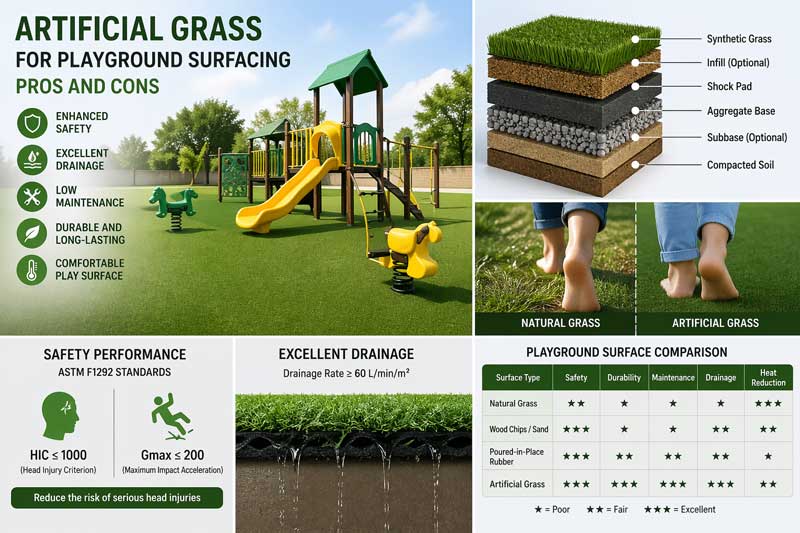
I henhold til ASTM F1292 skal en legepladsbelægning, der opfylder kravene, opretholde en HIC-værdi på ≤ 1000 og en Gmax-værdi på ≤ 200 for at mindske risikoen for alvorlige hovedskader. Udfordringen ligger ikke i at bestå denne test én gang – men i at opretholde dette beskyttelsesniveau over tid.
Hos MightyGrass arbejder vi ud fra kunstgræs til legepladser som et samlet system snarere end et enkelt produkt – hvor fiberens holdbarhed, stødabsorberende lag og dræningsevne er integreret for at sikre vedvarende sikkerhed gennem mange års brug.
I denne vejledning får du en klar og erfaringsbaseret gennemgang af fordele og ulemper ved kunstgræs til legepladser. Vi håber, at den vil være til hjælp, når du planlægger din næste investering i et legepladsprojekt.
Er kunstgræs det bedste valg til belægning på legepladser?
Der findes ikke noget entydigt svar – men kunstgræs til legepladser er af en god grund blevet en af de hurtigst voksende belægningsløsninger på verdensplan.
Sammenlignet med løse fyldmaterialer som træflis eller sand tilbyder en veludformet kunstgræsoverflade:
- Forudsigelig støjdæmpning
- Lavere løbende vedligeholdelsesomkostninger
- Renere og mere tilgængelige legemiljøer
Ifølge testresultater fra branchen, der overholder standarderne ASTM F1292 og EN1177, kan et korrekt installeret legepladsgræssystem – bestående af græstæppet, stødabsorberende underlag og bundlag – opfylde de krævede HIC- (Head Injury Criterion) og Gmax-krav. Systemer som MightyGrass-legepladsgræs kan modstå kritiske faldhøjder på op til 3,0 meter (10 fod), hvor de specifikke ydeevneniveauer varierer afhængigt af systemets udformning.
Måske netop af denne grund beskriver mange kunstgræsbelægning til legepladser som »ikke blot en æstetisk forbedring, men et system, der er udviklet med fokus på præcis sikkerhed«.
Fordelene ved kunstgræs til legepladser
Forbedret sikkerhed
Sikkerhed er den vigtigste årsag til, at mange udviklere vælger kunstgræs til legepladser. I modsætning til naturgræs, der med tiden bliver komprimeret, eller løse fyldmaterialer, der forskydes, er et kunstgræssystem under legepladsen konstrueret til at sikre ensartet stødabsorbering.
Med den rette kombination af græsfibre, et elastisk lag og en stødabsorberende underlag:
- Støjdæmpningen forbliver stabil gennem årene
- Faldsikringen er ensartet over hele legeområdet
- Vedligeholdelse har ingen direkte indflydelse på sikkerhedsresultaterne
MightyGrass-systemerne er udviklet som integrerede sikkerhedsløsninger og ikke blot som belægningsmaterialer – hvilket sikrer overholdelse af globale standarder og samtidig mindsker det langsigtede erstatningsansvar.
Høj holdbarhed til intensiv brug på legepladser
Legepladser er miljøer, der udsættes for stor belastning. Konstant løb, rutsjebane-kørsel og brug af legeredskaber kan hurtigt ødelægge traditionelle underlag.
Kunstgræs af høj kvalitet til legepladser har typisk følgende egenskaber:
- Fiberens holdbarhed overstiger 8.000–10.000 slidcyklusser
- UV-bestandighed (≥ 3000 timer) med en holdbarhed på 8–10 år eller mere
- Forstærket styrke, der er udviklet til at forhindre, at sømmene går i stykker ved intensiv brug
For skoler og offentlige parker betyder det, at græstæppet på jeres udendørs legeplads bevarer sine egenskaber, selv når det udsættes for konstant daglig brug.
Lav vedligeholdelse og lave omkostninger
Naturgræs kan umiddelbart virke omkostningseffektivt, men vedligeholdelsen bliver hurtigt en byrde:
| Overfladetype | Årlige vedligeholdelsesbehov |
| Naturligt græs | Græsslåning, vanding, gødning, såning |
| Løst fyld (barkflis/sand) | Genopfyldning, udjævning, fjernelse af forurening |
| Kunstgræs til legepladser | Børstning, lejlighedsvis rengøring |
Undersøgelser viser, at naturgræsbaner kan kræve $1,50–$3,00 pr. kvadratfod om året i vedligeholdelse, mens kunstgræs til legepladser reducerer disse tilbagevendende omkostninger betydeligt.
For dig betyder det færre arbejdstimer, lavere vandforbrug og forudsigelige vedligeholdelsesomkostninger. Og hvis der skulle opstå behov for reparationer, behøver du heldigvis ikke at udskifte hele plænen; du skal blot skære det beskadigede område ud og erstatte det med et nyt stykke græstørv.
Allergivenlig overflade til børn
I skoler og daginstitutioner udgør allergener et stadig større problem.
Et veludformet legeområde med kunstgræs i høj kvalitet eliminerer:
- Pollenproducerende græs
- Udsættelse for mudder og støv
- Ophobning af organisk affald
- Hæmmer væksten af bakterier og skimmel
Dette skaber et renere og mere kontrolleret miljø – hvilket er særligt vigtigt for børn med luftvejsfølsomhed.
Pålidelig ydeevne under alle vejrforhold
Ujævnheder i vejret er en af de største begrænsninger ved traditionelle underlag til udendørs legepladser.
Efter regn bliver naturgræs mudret og farligt at gå på. Fyldmaterialer flytter sig eller skylles væk.
Derimod tilbyder MightyGrass kunstgræs til legepladser:
- Integrerede dræningssystemer (op til 60 liter/min/m²)
- Hurtig udtørring efter regn
- Stabilt fodfæste både i vådt og tørt vejr
Det betyder, at din legeplads kan benyttes flere dage om året – hvilket maksimerer afkastet på investeringen.
Ensartet udseende hele året igennem
Visuelt ensartethed er vigtig, især i forbindelse med kommercielle og offentligt synlige projekter.
I modsætning til naturgræs, der bliver ujævnt eller går i dvale, bevarer det bedste kunstgræs til legepladser:
- Ensartet farve
- Jævn overfladestruktur
- Et professionelt udseende året rundt
For ejendomsudviklere og skoler betyder det en bedre brugeroplevelse og en stærkere visuel branding.
Langvarig omkostningseffektivitet i forhold til traditionelle overflader
Selvom den indledende investering i et kunstgræssystem til legepladser er højere, tegner levetidsomkostningerne et helt andet billede.
Typisk levetid:
- Legepladsgræs af høj kvalitet: 8–12 år
- Støddæmpersystemer: 10–15 år
Når man tager højde for lavere vedligeholdelsesomkostninger, vandbesparelser og længere levetid, opnår mange projekter omkostningsparitet inden for 3–5 år.
Miljøfordele ved genanvendelige græstæppesystemer
Bæredygtighed er ikke længere noget, man kan vælge – det er et krav.
Moderne systemer som MightyGrass ERET genanvendeligt græstørv er udformet med henblik på:
- Reducer spild af råvarer
- Aktiver genbrug ved udtjente produkter
- Lavere vandforbrug (en besparelse på tusindvis af gallon om året pr. anlæg)
Sammenlignet med traditionelt græs kan kunstgræsbaner reducere vandforbruget med op til 70–80%, især i tørkeudsatte områder.
Anvendelse af kunstgræs som belægning på legepladser indendørs og udendørs
Når du overvejer at vælge kunstgræs til din legeplads, kan du vælge mellem forskellige farver, stilarter, tæthed og højde – eller gå efter det mest naturlige udseende og den mest naturlige struktur.
Du kan også bruge den både inde og ude.
Den største fordel ved kunstgræs er det naturlige udseende og den naturlige fornemmelse, det giver din legeplads. Dette »græs« forbliver altid grønt.
Så længe kunstgræsset er fast, og en kørestol nemt kan bevæge sig rundt på det, kan man anvende kunstgræs til handicapvenlige legepladser og i overensstemmelse med ADA-kravene.
Ulemper ved en legeplads med kunstgræs
Ingen overflade er perfekt. Når man kender kunstgræssets begrænsninger i forbindelse med legepladser, kan man træffe bedre beslutninger.
Overfladetemperaturen kan stige i varme klimaer
Et af de mest omtalte problemer ved kunstgræs til legepladser er varmen. På varme dage kan overfladetemperaturen på kunstgræsset nå op på 60–80 °C (140–176 °F) i direkte sollys
I praksis er overfladevarme ikke et uløseligt problem. Der findes allerede en række afbødende strategier, der er i udbredt brug på kunstgræsbaner til legepladser. Disse omfatter kølematerialer, der er designet til at sænke overfladetemperaturen, lysere eller varmereflekterende fibre, der reducerer varmeabsorptionen, samt enkle driftsmæssige foranstaltninger såsom periodisk vanding eller indarbejdelse af skyggekonstruktioner i legepladsens design. Også på materialeniveau gør innovationer en forskel.
Ligesom MightyGrass har virksomheden udviklet en hulfiber kombineret med kølematerialer, der hjælper med at lede varmen væk mere effektivt, hvilket bidrager til en mere behagelig og stabil legepladsbelægning af kunstgræs, selv i varmere klimaer.
Højere installationsomkostninger på forhånd
Anlægsomkostningerne til et komplet græssystem til legepladser (inklusive underlag og stødabsorberende underlag) er højere end ved brug af barkflis eller sand.
Typiske intervaller:
- Overflader med løst fyld: $5–$10 pr. kvadratfod
- Kunstgræssystemer til legepladser: $12–$25 pr. kvadratfod
I virkeligheden udgør de indledende omkostninger typisk kun 30% til 40% af de samlede livscyklusomkostninger, mens resten består af vedligeholdelses- og udskiftningsomkostninger. Derfor bør den primære overvejelse ikke udelukkende begrænses til, hvilken løsning der er billigst på kort sigt, men bør snarere fokusere på, hvilken løsning der fortsat giver enestående værdi for pengene gennem mange års brug.
Hvis dit budget til den indledende installation imidlertid er begrænset, anbefaler vi, at du helt undgår kunstgræs til legepladsen for at undgå at installere et kunstgræssystem af ringere kvalitet blot for at opnå en lavere pris.
Miljøhensyn
Ikke alle kunstgræsprodukter er ens. Billige løsninger kan betyde, at man vælger et sted med højere indhold af tungmetaller eller anvender materialer af ringere kvalitet eller genbrugsmaterialer, hvilket kan forkorte anlæggets levetid. Til miljøvenlige projekter er det afgørende at vælge SGS-, CE- og REACH-certificeret kunstgræs til din legeplads.
Hos MightyGrass anvender vi certificerede nye råvarer, strenge interne produktionskontroller og et sortiment af genanvendeligt legepladsgræs, der opfylder globale bæredygtighedsmål.
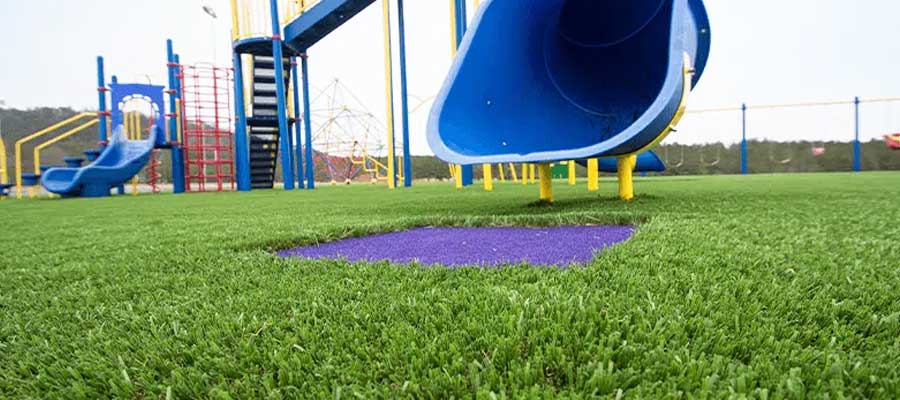
Græstæppe til legepladser kontra andre overflader til legepladser
Når man vurderer forskellige muligheder for belægning til legepladser, handler det ikke kun om, »hvilken der er billigst« — det handler om, hvilken der klarer sig bedst over tid under virkelige forhold.
Hver overfladetype har sine fordele og ulemper med hensyn til sikkerhed, vedligeholdelse, holdbarhed og livscyklusomkostninger. Her kan du se, hvordan kunstgræs til legepladser klarer sig i sammenligning med de mest almindelige alternativer:
| Overfladetype | Sikkerhed og ensartethed | Vedligeholdelsesniveau | Brugervenlighed efter regn | Levetid | Typiske problemer |
| Naturligt græs | Lav (kompakt, ujævn) | Høj | Dårlig (mudret) | I gang | Brug af plaster, udgifter til skylning |
| Træbarkflis | Mellem (ændrer sig over tid) | Høj | Medium | 1-2 år | Forskydning, forurening |
| Gummi-fliser | Høj (i starten) | Medium | God | 5-8 år | Hærdning, fugeafstande |
| Støbt gummi | Høj | Lav | Fremragende | 7-10 år | Revner, høje reparationsomkostninger |
| Kunstgræs til legepladser | Høj (teknisk system) | Lav | Fremragende | 8-12 år | Kræver korrekt installation |
Det, der især skiller sig ud, er konsistensen. Løst fyldmateriale som barkflis eller sand opfylder måske sikkerhedsstandarderne fra dag ét, men deres ydeevne falder hurtigt, når det flytter sig, komprimeres eller forskydes. Det betyder, at der skal fyldes op og udjævnes hyppigt blot for at opretholde overensstemmelsen med standarderne.
Derimod byder et veludviklet legepladsanlæg med kunstgræs på følgende fordele:
- Jævn stødabsorbering over hele området
- Minimal overfladeforskydning over tid
- Garanteret overholdelse af ASTM F1292 / EN 1177 ved korrekt installation
Derfor går flere skoler, kommuner og bygherrer over til kunstgræsbelægning – ikke fordi det er på mode, men fordi det mindsker usikkerheden.
Når kunstgræs er det rigtige valg til dit legepladsprojekt
Når man har fået indsigt i fordelene og begrænsningerne ved kunstgræs til legepladser, melder et mere praktisk spørgsmål sig: Under hvilke omstændigheder er det virkelig en »god investering«?
Ud fra erfaringer fra konkrete projekter er kunstgræs ikke det oplagte valg til alle anlæg; i visse typiske situationer viser det sig dog ofte at være en mere stabil og omkostningseffektiv løsning.
Områder med stor trafik
På skoler eller offentlige legepladser har naturgræs ofte svært ved at modstå konstant fodtrafik. Selv hvis græsset i starten er i fremragende stand, vil der gradvist opstå problemer som slitage, blotlagt jord eller endda mudrede pletter allerede efter blot et eller to skoleår. Derimod kan et veludviklet kunstgræssystem til legepladser bevare sin strukturelle integritet gennem mange års brug – og det er netop derfor, at et stigende antal skoler begynder at indføre denne løsning.
Projekter, der kræver høj sikkerhedskonsistens
Overflader med løst fyld — såsom træflis eller sand — kan opfylde sikkerhedsstandarderne umiddelbart efter anlæggelsen; men i takt med brugen ændrer deres dybde sig konstant. Derfor kræver de løbende vedligeholdelse for fortsat at overholde standarder som ASTM F1292 eller EN1177. Derimod opnår et legepladsgræssystem en stabil stødabsorberende ydeevne takket være dets strukturelle udformning, hvilket gør det langt nemmere at opretholde overensstemmelse med lovgivningen på lang sigt.
Desuden kommer fordelene ved kunstgræs endnu tydeligere til udtryk i områder, hvor vandressourcerne er knappe, eller hvor de klimatiske forhold er udfordrende.
Naturgræs kræver konstant vanding; i visse regioner medfører dette ikke blot øgede omkostninger, men kan også være underlagt lovgivningsmæssige begrænsninger. Til sammenligning kan kunstgræsbelægning reducere vandforbruget betydeligt og samtidig fjerne problemer såsom mudrede forhold eller uegnethed af området efter regn.
Hvis dit legepladsprojekt naturligvis har et meget begrænset budget – eller hvis dit primære fokus ligger på den indledende investering frem for de langsigtede omkostninger – er kunstgræs til legepladser måske ikke det optimale valg. Men når dit projekt prioriterer vedvarende brugbarhed, sikkerhedskontrol og langsigtede vedligeholdelsesomkostninger, viser kunstgræs sig ofte at være den mest fornuftige løsning.
Sådan vælger du det rigtige græssystem til legepladsen
Når man først har besluttet at anvende kunstgræs til en legeplads, er det ikke blot »hvilket specifikt græsprodukt man skal vælge«, der afgør projektets udfald, men snarere, hvordan man forstår og vælger *hele systemet*.
I konkrete projekter skyldes mange problemer ikke selve materialerne, men snarere den logik, der anvendes under udvælgelsesprocessen.
For eksempel begynder mange med at sammenligne faktorer som luvhøjde, farve eller pris; disse elementer har dog ikke direkte indflydelse på en legeplads’ sikkerhedsmæssige ydeevne. Når det drejer sig om kunstgræs til legepladser, er de afgørende faktorer den krævede kritiske faldhøjde og de tilhørende standarder for støddæmpning. Det er disse parametre, der direkte bestemmer udformningen af systemets stødabsorberende lag – ikke selve græsfibrene.
Et effektivt græssystem til legepladser består typisk af tre integrerede komponenter: græsset, det stødabsorberende lag og underlagskonstruktionen. Disse komponenter er udformet, så de passer sammen, i stedet for blot at være vilkårligt sammensat. Hvis man kun anskaffer kunstgræsset og forsømmer stødabsorberingslaget eller udformningen af underlaget, opstår der ofte problemer som dårlig dræning eller nedsat sikkerhed senere i projektet.
Desuden bør man ved valg af leverandør ikke overse certificeringer og produktionskapacitet. For skoler eller offentlige projekter har det ofte direkte indflydelse på projektgodkendelsen og den efterfølgende anvendelse, om det syntetiske legepladsgræs har bestået relevante test (f.eks. for tungmetaller, sikkerhedsstandarder osv.). Desuden er producenter med omfattende produktions- og testkapaciteter bedre rustet til at garantere produktets ensartethed.
Producenter som MightyGrass – der udnytter deres egne produktionssystemer og systematiske løsningsstøtte – kan give mere pålidelige garantier med hensyn til materialekompatibilitet, overholdelse af standarder og projektgennemførelse. Denne form for »leveringskapacitet på systemniveau« er ofte et mere afgørende hensyn end specifikationerne for en enkelt produktkomponent alene.
Konklusion
At vælge den rigtige belægning til din legeplads handler ikke kun om pris eller udseende – det handler om sikkerhed, brugervenlighed og pålidelighed på lang sigt.
Kunstgræs til legepladser har vist sig at være en yderst effektiv løsning, når det udformes og lægges korrekt.
Men så enkelt er det ofte ikke. For at udnytte den fulde værdi af højkvalitets kunstgræs til legepladser skal man kombinere det med et omhyggeligt udformet teknisk system.
Med MightyGrass får du mere end blot kunstgræs til legepladser – du får en samarbejdspartner, der ved, hvordan man leverer sikre, certificerede og holdbare kunstgræsløsninger, der er skræddersyet til netop dit projekt.
Er du klar til at bygge en mere sikker legeplads, der holder længere? Kontakt MightyGrass til et skræddersyet græssystem til legepladser, der er udformet efter netop dine behov.
FAQ
Hvad er kunstgræs?
Kunstgræs – også kendt som syntetisk græs – består af syntetiske, græslignende fibre eller tråde (undertiden benævnt »udendørs legepladsgræs«). Det er designet til at efterligne udseendet og fornemmelsen af legepladsbelægninger af naturgræs, men kræver absolut ingen vedligeholdelse. Mens kunstgræs længe har været anvendt på sportsarenaer, bliver det nu også stadig mere almindeligt på legepladser. Fibrene er typisk fremstillet af polypropylen eller polyethylen, og materialet har en flerlagsstruktur bestående af et underlag, et stødabsorberende lag og en dræningsbund; det stødabsorberende lag består typisk af gummigranulat, EVA-skum og polyurethan.
Er kunstgræs sikkert på legepladser?
Ja, kunstgræs til legepladser kan være meget sikkert, når det installeres som et komplet system. Et korrekt udformet system med kunstgræs til legepladser – herunder græstæppe, stødabsorberende underlag og undergrund – kan opfylde standarderne ASTM F1292 eller EN1177 og opretholde HIC ≤ 1000 og Gmax ≤ 200 for at reducere risikoen for skader. Sikkerheden afhænger dog af korrekt installation og vedligeholdelse på lang sigt, ikke kun af selve græstæppet.
Hvad er ulemperne ved kunstgræs til legepladser?
De største ulemper ved kunstgræs til legepladser omfatter højere startomkostninger, potentiel varmeudvikling i overfladen i varme klimaer samt afhængighed af korrekt installation. Materialer af dårlig kvalitet eller forkert systemudformning kan også påvirke sikkerheden og holdbarheden over tid.
Hvor længe holder legepladsens græs?
Kunstgræs af høj kvalitet til legepladser holder typisk 8–12 år, afhængigt af brug og vedligeholdelse. Stødabsorberende lag kan holde endnu længere, ofte 10–15 år, hvilket gør systemet til en langsigtet investering sammenlignet med overflader med løst fyld.
Er kunstgræs bedre end legepladsbelægninger af gummi?
Begge overflader opfylder sikkerhedsstandarderne, men de adskiller sig med hensyn til ydeevne. Legepladsanlæg med kunstgræs tilbyder generelt bedre dræning, en blødere og mere naturlig fornemmelse samt nemmere delreparationer, mens støbt gummi giver større designfleksibilitet, men kan hærde eller revne med tiden.
Hvad er den bedste belægning til en legeplads?
Valget af den bedste belægning til legepladsen afhænger af dine prioriteter. Hvis du har brug for lang holdbarhed, ensartet sikkerhed og mindre vedligeholdelse, er kunstgræs til legepladser ofte et godt valg. Til meget skræddersyede løsninger kan gummibelægninger også komme i betragtning.
Hvad skal jeg lægge mærke til, når jeg vælger et græssystem til en legeplads?
Du bør vurdere:
- Overholdelse af sikkerhedsstandarder (ASTM F1292 / EN 1177)
- Støddæmperens ydeevne
- Afløbskapacitet (≥ 60 l/min/m²)
- UV-bestandighed og holdbarhed
- Certificerede materialer (SGS, REACH)
Et komplet græssystem til legepladser er vigtigere end selve græsset.


