
 Dansk
Dansk  English
  العربية
  Español
  Deutsch
  Français
  Português
  Русский
  日本語
日本語  Italiano
  Nederlands
  Svenska
  Suomi
Suomi  ไทย
ไทย  Ελληνικά
  Bahasa Melayu
Hvis du i dag planlægger en legeplads, er det underlag, du vælger, ikke længere blot en baggrundsdetalje – det har direkte indflydelse på sikkerheden, vedligeholdelsesomkostningerne, tilgængeligheden og den langsigtede holdbarhed.
I hele Nordamerika og Europa har lovgivningsmæssige standarder som ASTM F1292 og EN1177 gjort én ting klart: Støddæmpning er ikke valgfrit. En overflade, der overholder kravene, skal reducere faldrelaterede skader ved at holde kritiske værdier som HIC (Head Injury Criterion ≤ 1000) og Gmax ≤ 200.
Der findes ikke én universel »bedste« løsning. Det afgørende er, hvor godt systemet passer til dit projekts anvendelsesformål, klima, budgetcyklus og lovgivningsmæssige krav.
Hvordan vælger man så den rigtige belægning til legepladsen for at sikre børnenes sikkerhed? Vi har inddelt gulvmaterialer i to hovedgrupper og giver yderligere oplysninger om hver enkelt samt spørgsmål, der kan hjælpe dig med at vælge den rigtige overflade til din legeplads. Hvis du ønsker at finde den rigtige gulvløsning til din legeplads på kortest mulig tid, bedes du straks kontakte MightyGrass’ ekspertrådgivere.
De vigtigste typer af belægninger til legepladser
Løst fyld: Gummimulch, træflis, sand og meget mere
Løst fyld: Gummimulch, træflis, sand og meget mere
Løst fyldmateriale har været anvendt på legepladser i årtier, hovedsageligt på grund af de lave anskaffelsesomkostninger og den enkle installation. Materialer som træfiber (EWF), gummimulch, sand og grus hældes ud og spredes for at danne et stødabsorberende lag.
Set ud fra et sikkerhedsmæssigt synspunkt kan løst fyld fungere godt – når det lægges i den rigtige dybde. For eksempel:
- For at opnå en faldhøjdeklassificering på op til 10–12 fod kræves der typisk 9–12 tommer (23–30 cm) af det bearbejdede træfibermateriale
- Gummimulch kan give en tilsvarende beskyttelse ved en tykkelse på 6–10 inches (15–25 cm) på grund af sin større elasticitet
- Sand og grus skal udjævnes regelmæssigt for at opretholde ydeevnen
Det afgørende her er dog udtrykket »når det er installeret og vedligeholdt korrekt«.
Under den faktiske brug forskydes, komprimeres og spredes løst fyldmateriale. Områder med stor trafik – under gynger og ved udgangen af rutsjebaner – kan hurtigt miste den nødvendige dybde, hvilket reducerer faldbeskyttelsen til under de lovmæssige grænseværdier. Undersøgelser viser, at op til 50% af legepladser med løst fyldmateriale med tiden ikke længere overholder kravene, hvis der ikke regelmæssigt fyldes op og udjævnes.
Derudover kan det være nødvendigt at tage højde for visse aspekter af den operationelle ledelse:
- Der skal regelmæssigt rives og genopfyldes
- Materielle skader som følge af vejrforhold og brug er uundgåelige
- Adgangen (i overensstemmelse med ADA-standarderne) kan være begrænset – især for kørestole og barnevogne.
- Glasskår, andre skarpe genstande eller dyreekskrementer kan sætte sig fast i løst materiale og udgøre en potentiel fare; derfor skal fyldmaterialerne jævnligt efterfyldes og/eller udskiftes
Når det er sagt, giver løsfyld stadig god mening i visse situationer. Hvis du arbejder med et stort areal, et begrænset startbudget eller en naturlig designæstetik, er det stadig et praktisk udgangspunkt.
Set ud fra et systemdesignperspektiv kan man anvende en »hybridtilgang«, der kombinerer løst fyldte belægningsmaterialer med faste kantafgrænsninger og et uigennemtrængeligt geotekstil-lag for at forbedre legepladsbelægningens samlede stabilitet. Selv med implementeringen af en sådan optimeret løsning forbliver rutinemæssig vedligeholdelse imidlertid en integreret del af anlæggets samlede livscyklusomkostninger.
Ensartede materialer: Gummimåtter, fliser, støbt belægning og kunstgræs
Ensartede belægningssystemer er udformet som sammenhængende, faste overflader. I stedet for løse materialer danner de et stabilt, konstrueret lag, der sikrer ensartet stødabsorbering over hele legeområdet. Typiske muligheder omfatter:
- Gummi-fliser
- Gummimåtter
- Gummisystemer til støbning på stedet (PIP)
- Kunstgræsanlæg med stødabsorberende underlag (bliver stadig mere populære)
Den største fordel her er ensartetheden. Når overfladen er lagt korrekt, bevarer den en ensartet tykkelse og stødabsorberingsevne, hvilket eliminerer risikoen for forskydning, som man ser i systemer med løst fyldmateriale. For eksempel:
- Gummisystemer, der støbes på stedet, kan udformes til at imødekomme bestemte faldhøjder (f.eks. 8–12 fod) med kontrolleret lagtykkelse
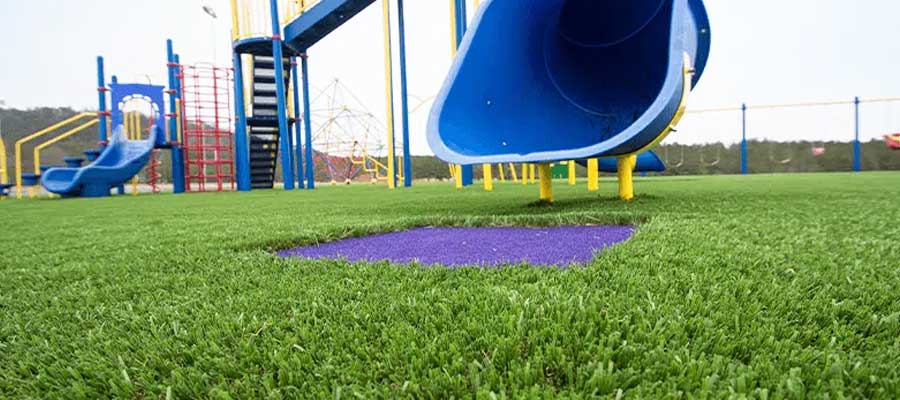
- Legepladsgræs af høj kvalitet Disse systemer kan, når de kombineres med stødabsorberende puder, opnå HIC-værdier, der ligger langt under 1000, selv efter langvarig brug
- Unitary-systemer kræver typisk langt mindre daglig vedligeholdelse sammenlignet med løsfyld
- I henhold til ADA-retningslinjerne sikrer ensartede overflader en stabil og fast gangflade, hvilket gør dem mere velegnede til inkluderende legepladsdesign.
Denne ydeevne har dog sine ulemper:
- Højere installationsomkostninger ved opstart
- Kræver professionel installation for at opnå optimale resultater
- Reparationer forekommer ganske vist sjældnere, men kan kræve specialiseret arbejde
Det er her, at specialudviklede systemer – som f.eks. MightyGrass’ græstæppeløsninger til legepladser – tilbyder en overbevisende balance.
Ved at kombinere kunstgræsfibre med høj tæthed med certificerede stødabsorberende lag får man:
- Pålidelig støddæmpning i overensstemmelse med ASTM- og EN-standarder
- En renere overflade, der kræver mindre vedligeholdelse, uden løse partikler
- Bedre dræningsevne (afgørende for, at produktet kan bruges i al slags vejr)
- Design, der kan tilpasses (farver, mønstre, brandingelementer)
I praksis går mange skoler, parker og kommercielle legepladsudbydere over til kunstgræsbaserede helhedsløsninger, fordi disse mindsker usikkerheden omkring vedligeholdelsen på lang sigt, samtidig med at de bevarer udseendet af naturligt græs.
Løst fyldt kontra monolitisk: Et kort overblik
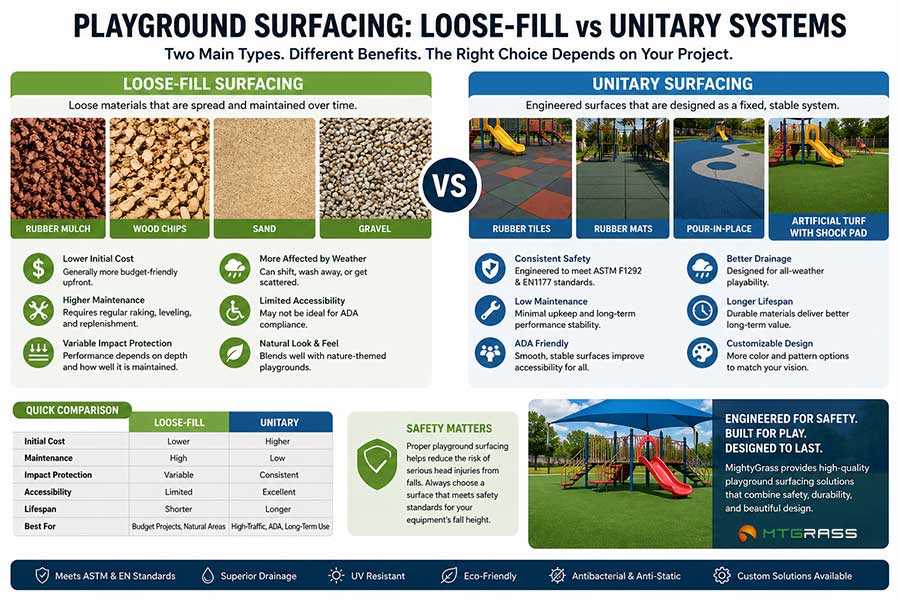
For at gøre sammenligningen mere overskuelig følger her en oversigt over, hvordan disse to systemer typisk klarer sig på tværs af de vigtigste beslutningsfaktorer:
| Kriterier | Systemer med løs fyld | Enhedssystemer |
| Oprindelige omkostninger | Lavere | Højere |
| Opretholdelse | Høj (regelmæssig udjævning og genopfyldning) | Lav |
| Konsistens i virkningen | Varierer over tid | Konsekvent |
| Tilgængelighed (ADA) | Begrænset | Fremragende |
| Levetidsstabilitet | Afhænger af vedligeholdelse | Resultater på lang sigt |
| Dræning | Moderat | Konstruerede dræningssystemer |
| Æstetisk kontrol | Dets eget udseende | Kan tilpasses fuldstændigt |
Ser man bort fra de umiddelbare omkostninger, kan vedligeholdelsesarbejde, genopfyldning af materiale og risici i forbindelse med overholdelse af lovkrav medføre, at løsfyldt materiale på sigt bliver dyrere, end det umiddelbart ser ud til.
Derfor spørger flere projektledere i dag ikke blot: »Hvad er billigst?«, men snarere: »Hvad vil stadig være sikkert, i overensstemmelse med gældende regler og omkostningseffektivt om fem år?«
Sådan vælger du det bedste belægningsmateriale til din legeplads
Når man når så langt, handler spørgsmålet ikke længere om, hvorvidt man skal vælge »løst fyld eller enhedsprodukt« i teorien – det handler i stedet om, hvilket system der rent faktisk vil fungere bedst under de konkrete projektbetingelser.
I konkrete projekter skyldes fejl eller problemer ofte, at der er uoverensstemmelse mellem belægningssystemet og brugsintensiteten, vedligeholdelsesmulighederne og forventningerne til overholdelse af kravene.
Spørgsmål, man bør stille sig, når man vælger belægning til en legeplads:
- Hvad er den krævede faldsikringshøjde (kritisk faldhøjde) for legepladsbelægninger?
- Hvilken aldersgruppe af børn er denne legeplads beregnet til?
- Udgør overfladematerialerne en kvælningsfare?
- Hvor mange besøgende vil legepladsen have hver dag?
- Hvor meget tid og penge har du til rådighed til rutinemæssig vedligeholdelse og pleje?
- Overholder belægningen kravene i ADA-standarderne?
- Hvad er dit egentlige budget – på kort sigt kontra på lang sigt?
- Hvordan er klima- og dræningsforholdene hos dig?
- Hvilken overordnet visuel æstetik og atmosfære ønsker du at skabe? Passer denne overfladebehandling ind i dit designtema?
……
Uanset om man skal vælge belægningsmaterialer til legepladser på skoler, i kommunale parker eller på børnehavelegepladser, afhænger det rigtige valg af flere faktorer: den oprindelige anskaffelsespris, installationsomkostningerne, de løbende vedligeholdelsesomkostninger, holdbarheden på lang sigt, det æstetiske udseende, sikkerhedsniveauet og i hvilken grad materialet overholder ADA-standarderne.
Hvor løsfyld fungerer bedst
Løst fyld har stadig sin plads i moderne legepladsdesign – især når projektforholdene passer til dets styrker. Det fungerer typisk godt i:
- Legepladser med begrænsede budgetter: Kommunale parker eller fællesarealer prioriterer ofte dækningsareal frem for tilpasning. Med løs fyld kan man dække et stort område til en lavere startomkostning.
- Miljøer med lav til moderat trafik: Hvor trafikken er mindre og mere jævnt fordelt, sker der en langsommere materialeforskydning, som er lettere at håndtere.
- Projekter med dedikerede vedligeholdelsesteams: Hvis rutinemæssig inspektion og genpåfyldning indgår i jeres driftsplan, kan løst fyld forblive i overensstemmelse med kravene og fungere korrekt over tid.
- Naturlige eller rustikke designkoncepter: Træfibre, sand eller grus passer bedre til visse landskabsæstetikker end syntetiske overflader.
- Når det er sagt, ser man dog i stigende grad hybridsystemer, selv i disse scenarier – for eksempel løs fyld i de ydre zoner kombineret med en sammenhængende belægning i områder med stor belastning, såsom gyngezoner og udgange fra rutsjebaner.
Hvor det giver mest mening at lægge en ensartet belægning
Hvis din prioritet er langsigtet ydeevne, sikkerhed, stabilitet og mindre driftsusikkerhed, er integrerede systemer det mest logiske valg. De er særligt effektive inden for:
- Legepladser med stor trafik: Skoler, byparker og kommercielle legeområder udsættes for koncentreret slitage. En fast overflade forhindrer forskydningsproblemer og sikrer en ensartet beskyttelse.
- Inkluderende og ADA-kompatible løsninger: Kørestole, barnevogne og ganghjælpemidler kræver glatte, stabile overflader. Integrerede systemer sikrer pålidelig tilgængelighed på hele legepladsen.
- Projekter med begrænset vedligeholdelse: Hvis du ikke kan garantere løbende vedligeholdelse, mindsker et system, der bevarer sin struktur uden indgriben, risikoen betydeligt.
- Krav til anvendelighed under alle vejrforhold: Specielt udviklede dræningslag muliggør integrerede systemer – især kunstgræsanlæg—så banen forbliver spilbar efter regn, hvilket minimerer driftsstop.
- Branding og designdrevne miljøer: Farveskemaer, logoer og temaopstillinger kan realiseres ved hjælp af helhedsmaterialer som støbt gummi eller kunstgræssystemer.
Det er her, at MightyGrass’ legepladsgræssystemer udgør en klar fordel. Ved at kombinere slidstærke syntetiske fibre med certificerede stødabsorberende lag vælger man ikke blot en overflade – man implementerer et komplet, specialudviklet sikkerhedssystem.
Hvorfor er belægningen på legepladser vigtig?
Det er nemt at fokusere på legepladsudstyret – rutsjebaner, gynger og klatrestativer – men statistisk set skyldes størstedelen af skaderne på legepladser faldulykker og ikke fejl på udstyret.
Ifølge oplysninger fra Den amerikanske forbrugerproduktsikkerhedskommission (CPSC):
- Over 200.000 børn behandles hvert år på skadestuerne for skader, der er opstået på legepladser
- Fald udgør ca. 70–80% af disse hændelser
Dette lægger ansvaret helt og holdent på belægningen. Et korrekt udformet belægningssystem til legepladser opfylder tre afgørende funktioner:
- Absorberer stødenergi: Den primære funktion er at mindske risikoen for hovedskader. Her er det afgørende, at standarder som ASTM F1292 og EN 1177 overholdes.
- Sikrer vedvarende beskyttelse over tid: En overflade, der opfylder standarderne fra første dag, men som forringes i løbet af få måneder, udgør en skjult risiko.
- Fremmer tilgængelighed og brugervenlighed: En sikker legeplads er også en legeplads, som alle børn kan benytte – uanset deres bevægelsesevne.
Sådan bidrager MightyGrass til mere sikre belægningssystemer til legepladser
At vælge det rigtige materiale er kun en del af ligningen. Det, der virkelig afgør ydeevnen, er, hvordan hele systemet er konstrueret og leveret.
Det er her, MightyGrass går et skridt videre end blot at være en leverandør af kunstgræs – du samarbejder nemlig med en producent, der leverer komplette kunstgræssystemer.
Systembaseret design, ikke blot produkter
I stedet for at sælge kunstgræs i løs vægt hjælper MightyGrass dig med at sammensætte et komplet system:
- Græstæppe (fiberhøjde, tæthed, garnstruktur)
- Stødpude valg baseret på krav til faldhøjde
- Grundlæggende anbefalinger vedrørende dræning og stabilitet
Dette mindsker usikkerheden og sikrer, at alle komponenter fungerer sammen, så sikkerhedsstandarderne overholdes.
Intern produktionskontrol
Fra garnekstrudering til fremstilling af underlag styres alt i ét system. Det betyder:
- Ensartet produktkvalitet
- Bedre kontrol over holdbarhed og ydeevne
- Pålidelig levering til store projekter
Udviklet til virkelige forhold
MightyGrass Græssystemerne er udformet med funktioner, der direkte imødegår de typiske udfordringer på legepladser:
- UV-bestandige fibre, der sikrer farvestabilitet på lang sigt
- Avancerede dræningsanlæg til hurtig afledning af vand
- Valgfri køleteknologier (f.eks. hule garnstrukturer) til at reducere overfladevarmen
- MightyGrass integrerer antimikrobielle og antistatiske egenskaber direkte i sit kunstgræssystem. Det giver dig mulighed for at skabe legepladsbelægninger til skoler, daginstitutioner og offentlige rekreative områder, der forbliver rene, behagelige og pålideligt højtydende på lang sigt.
Certificeret og klar til den globale marked
Da produkterne er testet og opfylder internationale sikkerheds- og miljøstandarder, kan du trygt anvende MightyGrass-systemerne på tværs af forskellige markeder og lovgivningsmæssige rammer.
Tilpasning, der understøtter dine projektmål
Uanset om dit projekt kræver et skræddersyet farveskema til en temalegeplads, branding under eget mærke til dine distributionskanaler eller forskåret eller modulært kunstgræs for at forenkle installationsprocessen, er MightyGrass altid dedikeret til at skræddersy vores systemløsninger, så de passer til dit projekts specifikke behov – i stedet for at tvinge dit projekt til at tilpasse sig vores produktspecifikationer.
Konklusion
Hvis dit mål er at reducere risikoen, minimere usikkerheden omkring vedligeholdelsen og levere en legeplads, der fungerer som forventet år efter år, bliver et velkonstrueret, samlet system – såsom en MightyGrass-løsning til legepladsgræs – en strategisk investering og ikke blot et valg af belægning.
For i sidste ende er det egentlige spørgsmål ikke:
»Hvad virker i dag?«
Det er:
»Hvad vil stadig være sikkert om fem år?«
FAQ
Hvilken type belægning er den sikreste til legepladser?
Den sikreste belægning til legepladser er en belægning, der konsekvent opfylder standarder for stødabsorbering, såsom ASTM F1292 eller EN 1177. Integrerede systemer – såsom støbt gummi eller kunstgræs med stødabsorberende underlag – giver som regel en mere ensartet beskyttelse over tid, da de ikke forskydes eller mister tykkelse på samme måde som løst fyldmateriale.
Hvad er forskellen mellem løst fyld og faste legepladsbelægninger?
Løst strøet belægning består af materialer som træflis, gummimulch, sand eller grus, der spredes ud over legepladsen. Disse systemer har typisk lavere startomkostninger, men kræver løbende vedligeholdelse.
Enhedsbelægning er derimod en fast, sammenhængende overflade, såsom gummifliser, støbt gummi eller kunstgræssystemer. Disse sikrer ensartet ydeevne, bedre tilgængelighed og lavere vedligeholdelsesomkostninger på lang sigt.
Hvilken belægning til legepladser er bedst til skoler?
For skoler er en helhedsbelægning ofte det bedste valg. Stor daglig trafik kan hurtigt forskyde løse fyldmaterialer, hvilket øger vedligeholdelsesbehovet og sikkerhedsrisiciene.
Ensartede systemer – især kunstgræs med stødabsorberende underlag – tilbyder ensartet stødbeskyttelse, forbedret tilgængelighed i henhold til ADA-standarderne og lavere vedligeholdelsesbehov, hvilket gør dem ideelle til langvarig brug i skoler.
Hvor tykt skal et løst fyldt underlag på en legeplads være?
Den nødvendige dybde afhænger af materialet og faldhøjden på legepladsudstyret. For eksempel:
- Forarbejdede træfibre kræver typisk 9–12 inches
- Der kan være behov for 6–10 inches gummimulch
Det er afgørende at opretholde denne dybde. Hvis materialet komprimeres eller forskydes, vil overfladen muligvis ikke længere opfylde sikkerhedsstandarderne.
Er kunstgræs sikkert til legepladser?
Ja – når det er udformet som et samlet system. Kunstgræs kombineret med et certificeret stødabsorberende underlag kan opfylde internationale sikkerhedsstandarder såsom ASTM F1292 og EN 1177.
Kunstgræssystemer af høj kvalitet byder også på yderligere fordele såsom dræning, holdbarhed og valgfri funktioner som f.eks. køleteknologi eller antibakterielle egenskaber, hvilket gør dem stadig mere populære i moderne legepladsdesign.
Hvad er ADA-godkendt belægning til legepladser?
Legepladsbelægning, der overholder ADA-kravene, skal være fast, stabil og skridsikker for at sikre adgang for kørestole og andre hjælpemidler.
Ensartede overflader – såsom gummibelægninger eller specialfremstillet kunstgræs – er typisk bedre egnet til at opfylde ADA-kravene sammenlignet med løst fyldmateriale, som kan flytte sig og skabe ujævnt underlag.
Hvorfor skifter flere legepladser til kunstgræsanlæg?
Flere legepladser går over til kunstgræsanlæg, fordi de tilbyder en god balance mellem sikkerhed, æstetik og vedligeholdelseseffektivitet.
Sammenlignet med traditionelle løsninger tilbyder kunstgræssystemer:
- Konstant ydeevne med hensyn til slagfasthed
- Bedre dræning til brug i al slags vejr
- Mindre vedligeholdelse
- Et naturligt græslignende udseende med indbygget holdbarhed
- Et fuldstændigt skræddersyet design, der er tilpasset forlystelsesparker


