Dansk
Dansk  English
  العربية
  Español
  Deutsch
  Français
  Português
  Русский
  日本語
日本語  Italiano
  Nederlands
  Svenska
  Suomi
Suomi  ไทย
ไทย  Ελληνικά
  Bahasa Melayu
Artificial turf wholesale prices can vary significantly depending on product specifications, raw materials, and purchasing conditions. When sourcing artificial grass for landscaping projects, sports fields, or distribution, buyers often notice that quotes from different suppliers may range anywhere from $1.5 to over $12 per square meter.
For distributors, contractors, and project developers, understanding the drivers of artificial turf wholesale prices is crucial for making informed purchasing decisions. Finding the right balance between quality, durability, and budget ensures long-term performance while controlling project costs.
In this guide, we break down the most important factors that affect artificial turf wholesale prices. Hopefully, this will help you better evaluate synthetic grass product specifications and compare supplier quotes.
1. Yarn Material and Fiber Quality
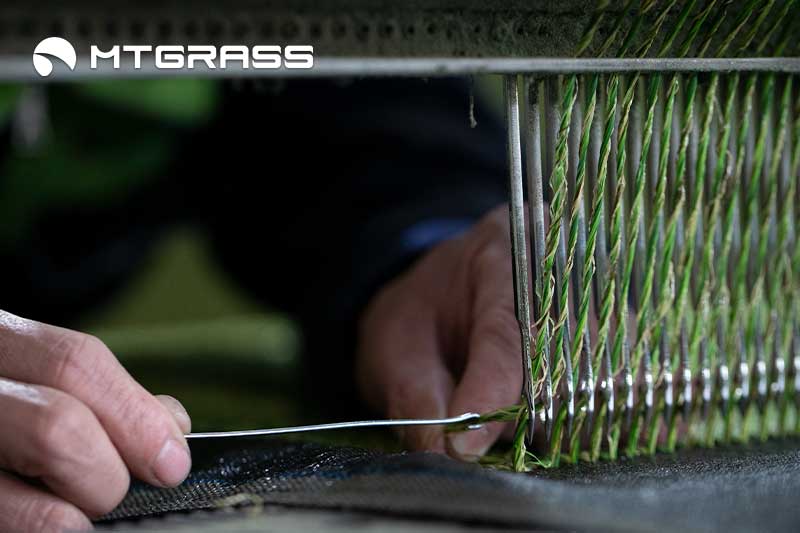
One of the most significant factors affecting artificial turf wholesale prices is the type and quality of yarn used to produce the grass fibers. Yarn typically represents the largest portion of the total manufacturing cost.
Artificial turf fibers are commonly made from three main materials:
- Polyethylene (PE) – The most widely used material for landscaping turf due to its softness, flexibility, and natural appearance.
- Polypropylene (PP) – A more economical option often used for lower-cost landscaping or decorative applications.
- Nylon (PA) – Extremely durable and resilient but significantly more expensive, typically used in specialized sports applications.
In addition to material type, fiber structure and technology also influence the cost. MightyGrass kunstgræs features advanced yarn designs such as S-shaped, U-shaped, Diamond-shaped, or Hollow fibers. These engineered structures improve durability, resilience, and temperature control.
MightyGrass high-quality lawn yarn also possesses the following properties:
- Stable UV resistance (passed ≥ 5000H test), suitable for long-term outdoor use
- enhanced tensile strength to prevent fiber breakage
- anti-static and cooling technologies
- Flame retardant and antibacterial/mildew resistant properties
The yarn quality directly affects turf lifespan, appearance, and performance, higher-grade fibers generally lead. Therefore, if you have a higher budget and require a higher-quality product, we recommend choosing a higher-grade fiber and accepting a slightly higher wholesale price for artificial turf.
2. Pile Height and Grass Density
Another major factor influencing artificial turf wholesale pricing is the combination of pile height and turf density.
Pælehøjde
Pile height refers to the length of the artificial grass blades, which typically ranges from 10mm to 50mm depending on the intended application.
Common pile height ranges include:
- 10-19 mm – Primarily used for backyard greens, golf, og padel courts
- 25-30 mm – Primarily used for pet-friendly fields
- 30-35 mm – Commonly used for residential lawns and garden landscaping
- 40-50 mm – High-end landscaping or sports fields (fodbold, rugby)
The longer the grass blades, the more yarn is needed per square meter, which naturally increases the overall production cost.
Turf Density
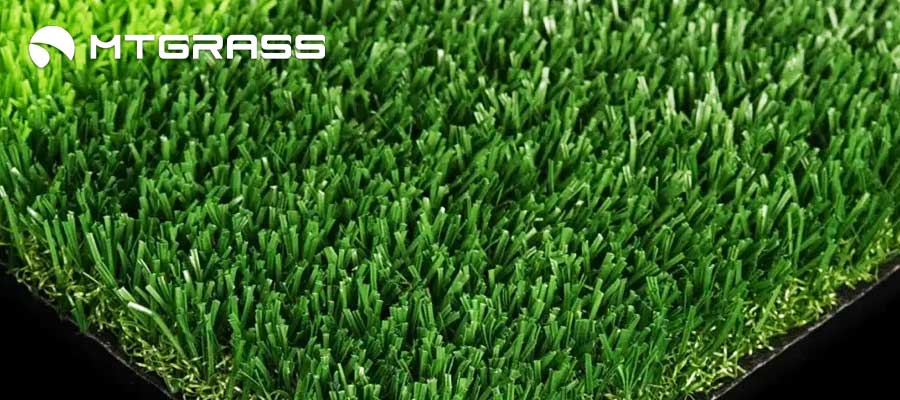
Turf density describes how closely the grass fibers are tufted together. Turf density describes the tightness of the grass fiber tufts. Its density depends on the needle pitch and row spacing, thus affecting the yarn density (fiber weight) of synthetic turf.
Higher-density turf typically offers several advantages:
- fuller and more natural appearance
- better resilience and recovery after foot traffic
- longer product lifespan
However, higher density also means more raw material consumption and longer tufting time, which increases manufacturing costs and therefore raises wholesale prices.
3. Backing Structure and Coating Technology
The backing system is another critical component that affects both the performance and cost of artificial turf. The backing holds the grass fibers in place and provides structural stability to the entire turf system.
Most artificial turf products use a multi-layer backing structure, which may include:
- primary backing fabric (usually PP material)
- reinforcement layers such as mesh or net backing
- coating materials that lock the fibers in place
The most common coating materials include:
- SBR latex backing – widely used and cost-effective
- PU (polyurethane) backing – stronger, more durable, and environmentally friendly
Higher-end backing technologies can improve several performance characteristics, including:
- turf durability and fiber retention
- drainage performance during rain
- resistance to heat and environmental stress
- dimensional stability during installation
For example, artificial turf with PU backing systems often provides superior strength and longevity, but it can increase production costs by 15–25% compared with traditional latex coatings.
As a result, the choice of backing structure and coating technology plays an important role in determining the final wholesale price of artificial turf.
4. Order Quantity and Minimum Order Requirements
Order volume is another important factor that directly affects artificial turf wholesale pricing. In most manufacturing industries, including artificial grass production, larger orders typically lead to lower unit costs.
Artificial turf manufacturers usually structure their pricing based on order quantity. Smaller orders often require the factory to adjust production lines or run short batches, which increases operational costs. As a result, the price per square meter is usually higher for small orders.
Typical pricing structures may look like this:
| Order Size | Price Level |
| Sample or trial orders | Highest unit price |
| Small bulk orders | Standard wholesale price |
| Full container orders | Most competitive price |
For international buyers, ordering by full container load (FCL) is often the most cost-effective option. This approach allows manufacturers to optimize production scheduling while reducing packaging and shipping costs per square meter.
MightyGrass factories set a minimum order quantity (MOQ) for specific products or custom specifications. The MOQ helps ensure efficient production and stable quality control. If you are a distributor or project contractor planning a long-term partnership, you can also negotiate annual purchase volumes or repeat orders, which may result in more favorable wholesale prices.
5. Customization and OEM Requirements
Customization is another factor that can influence the wholesale price of artificial turf. Many distributors and project developers request customized products to better match their market needs or branding strategies.
Common customization options include:
- custom pile height or turf density
- specific yarn colors or color combinations
- unique fiber shapes or yarn technologies
- custom roll widths or roll lengths
- OEM private labeling and branded packaging
While MightyGrass customization provides greater flexibility and helps your businesses differentiate their products, it often requires additional production adjustments.
Tips: For buyers seeking the lowest possible price, choosing standard factory models is usually more economical. However, for businesses building their own brand or product line, OEM customization can offer significant long-term advantages in market positioning.
6. Manufacturer vs Distributor Pricing
Another major factor affecting artificial turf wholesale prices is the type of supplier you purchase from.
Buying from a Manufacturer
Working directly with an artificial turf manufacturer offers several advantages:
- direkte priser fra fabrikken
- access to full product customization
- stable production capacity
- better control over specifications and quality
- OEM and private labeling options
Because there are fewer intermediaries involved, manufacturers can often offer more competitive wholesale prices for bulk orders.
Buying from a Distributor
Distributors or trading companies may provide benefits such as:
- local inventory availability
- smaller order quantities
- faster delivery in certain regions
- simplified purchasing processes
However, distributor pricing usually includes additional operational costs and profit margins. In many cases, the final price may be 20% to 40% higher than factory-direct sourcing.
For large-scale projects or long-term distribution businesses, working directly with a reliable manufacturer (MightyGrass) can provide greater cost efficiency and customization flexibility.

7. Certification and Product Quality Standards
Artificial turf products that meet international quality certifications and testing standards may also have higher wholesale prices. These certifications ensure that the turf meets specific requirements related to durability, safety, and environmental performance.
MightyGrass can provide you with common certifications and standards in the artificial turf industry, including:
- FIFA certification for professional football fields
- ISO quality management systems for manufacturing processes
- SGS testing for environmental safety and heavy metal content
- UV resistance and aging tests to ensure long-term outdoor durability
Achieving these certifications often requires additional laboratory testing, quality control procedures, and higher-grade raw materials. These processes may increase production costs, but they also better guarantee product reliability.
For sports facilities, public projects, and international markets with strict regulations, certified artificial turf products are often required. Although certified turf may come with a slightly higher price, it can significantly reduce risks related to product performance, safety compliance, and long-term maintenance.
Choosing artificial turf that meets recognized quality standards can ultimately provide better value by ensuring consistent performance and longer product lifespan.
8. Shipping, Logistics, and Import Costs
When purchasing artificial turf wholesale from international suppliers, buyers must also consider shipping, logistics, and import-related expenses. These costs can significantly affect the total landed price of artificial grass.
The main logistics cost factors include:
- Ocean freight rates
- container loading efficiency
- packaging methods (roll packaging or palletized)
- port handling fees
- customs clearance charges
- import duties and taxes
Artificial turf is typically packed in large rolls, and the roll size directly influences container loading capacity. Optimizing roll length and diameter can improve loading efficiency and reduce transportation costs per square meter.
Typical container loading capacities are approximately:
| Container Type | Approximate Turf Coverage |
| 20ft Container | 3,000 – 4,000 m² |
| 40ft High Cube Container | 7,000 – 10,000 m² |
Freight costs can vary depending on global shipping conditions, destination ports, and seasonal demand. For international buyers, working with suppliers experienced in global logistics can help ensure efficient container packing, accurate documentation, and smoother customs clearance.
If this is your first time wholesaling artificial turf overseas, shipping and customs clearance can be among the most complex parts of the import process. MightyGrass, an experienced global manufacturer, offers professional logistics support to help you streamline the entire process and control shipping costs. MightyGrass helps you maximize container space (by utilizing limited space to carry the most square meters of artificial turf, thus reducing your shipping costs) through careful planning of roll sizes, packaging methods, and loading layouts.
Typical Artificial Turf Wholesale Price Range
Artificial turf wholesale prices vary depending on specifications such as fiber material, pile height, turf density, backing structure, and certification requirements.
For most landscaping and sports applications, the typical factory wholesale price from large manufacturers like MightyGrass generally ranges between $1.5 and $12 per square meter.
Products with higher yarn density, specialized fiber technology, or sports-field certifications may reach higher price levels, while lower-density landscaping turf typically falls toward the lower end of the range.
It is also important to note that the factory price is only part of the total procurement cost when sourcing artificial turf internationally. The final landed price may also include ocean freight and container shipping costs, customs clearance and import duties, packaging and roll size optimization, certification or testing requirements.
For international buyers importing artificial turf, understanding these cost components helps create a more accurate project budget and avoid unexpected expenses.
If you are planning to import artificial turf from China, you can also read our detailed guide: What Should You Know Before Importing an Artificial Grass Roll from China?

How to Reduce Artificial Turf Wholesale Costs
For distributors, contractors, and project developers, controlling procurement costs is an important part of project planning. Fortunately, there are several practical strategies that can help reduce artificial turf wholesale costs without sacrificing product quality.
- Order Full Container Quantities: Ordering full container loads often provides the most competitive pricing. Larger orders allow manufacturers to optimize production efficiency while reducing packaging and logistics costs per square meter.
- Choose Balanced Product Specifications: Selecting the highest possible pile height or density is not always necessary. Choosing specifications that match the actual application can significantly reduce material usage and production cost.
- Limit Unnecessary Customization: While customization can add value, excessive customization may increase manufacturing complexity. Standard product models are usually more economical and readily available.
- Work Directly With Manufacturers: Purchasing directly from experienced artificial turf manufacturers can eliminate intermediary markups and provide better control over specifications, production timelines, and quality assurance.
- Plan Procurement in Advance: Allowing sufficient production time helps avoid rush manufacturing or expedited shipping costs, which can increase overall expenses.
By combining these strategies, you can achieve a more efficient purchasing process and obtain high-quality artificial turf at competitive wholesale prices.
If you are installing a large artificial turf field, be sure to measure your project area twice to avoid insufficient space at the end. And don’t be shy about negotiating; boldly ask your supplier if they have any seasonal promotions. Kontakt MightyGrass today for wholesale artificial turf prices with no hidden fees.
Konklusion
For buyers sourcing artificial grass for landscaping, sports facilities, or distribution, understanding these pricing factors can make it easier to compare supplier quotations and select the most suitable products for specific projects.
Rather than focusing solely on the lowest price, evaluating product specifications, durability, certification standards, and supplier reliability can help ensure better long-term value.
Partnering with a trusted artificial turf manufacturer not only gives you greater customization flexibility and more consistent product quality, but also more efficient global supply support.
FAQ
How much does artificial turf cost per m²?
The cost of artificial turf per square meter varies depending on factors such as fiber material, pile height, turf density, backing structure, and certification requirements.
For most landscaping and sports applications, the typical factory wholesale price ranges between $3.5 and $7.5 per m² when purchasing directly from manufacturers. Higher-density turf, advanced yarn technology, or sports-field specifications may increase the price.
It’s also important to remember that the total project cost may include additional expenses such as shipping, installation materials, base preparation, and labor.
Is artificial turf cheaper when buying wholesale?
Yes, artificial turf is usually significantly cheaper when purchased wholesale. Manufacturers typically offer lower prices for bulk orders because large quantities allow for more efficient production and packaging.
Wholesale buyers such as distributors, contractors, and project developers often receive better pricing when ordering full container loads or establishing long-term purchasing agreements with manufacturers.
Buying directly from a factory can also help reduce costs by eliminating distributor markups and providing more flexible customization options.
How many square meters fit in a container?
The amount of artificial turf that fits in a container depends on factors such as pile height, roll width, and packaging method.
Typical loading capacities are:
| Container Type | Approximate Turf Coverage |
| 20ft container | 3,000 – 4,000 m² |
| 40ft high cube container | 7,000 – 10,000 m² |
Optimizing roll size and packaging can improve container efficiency and reduce shipping costs per square meter. Experienced manufacturers often help buyers plan the most efficient loading method for international shipments.