Français
  English
  العربية
  Español
  Deutsch
  Português
  Русский
  日本語
日本語  Italiano
  Nederlands
  Svenska
  Suomi
Suomi  ไทย
ไทย  Dansk
Dansk  Ελληνικά
  Bahasa Melayu
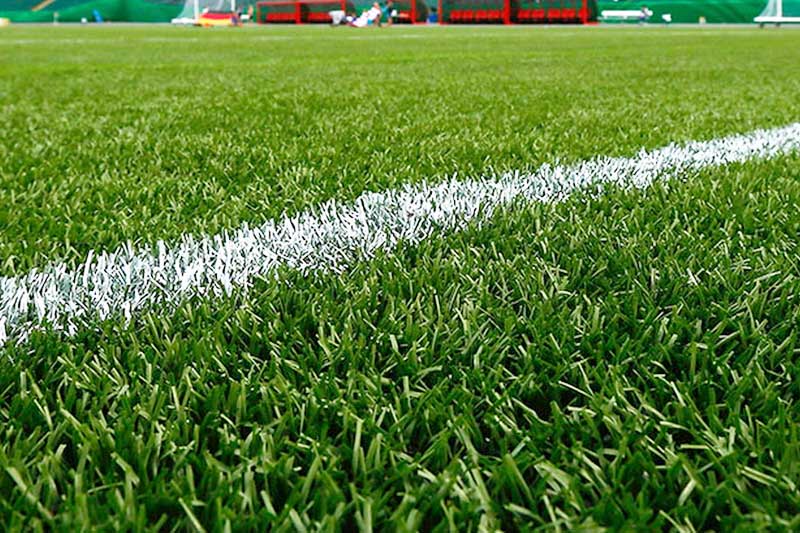
En football, les stades de la Coupe du monde représentent le summum de la qualité. Dans le passé, les stades de la Coupe du monde utilisaient principalement du gazon naturel ; cependant, le gazon naturel est coûteux à entretenir et très sensible aux conditions météorologiques. Lors d'un match disputé sous la pluie, certains joueurs se sont plaints d'avoir l'impression de jouer dans un bourbier.
Avec les progrès de la technologie du gazon artificiel, Pelouse certifiée par la FIFA est progressivement devenu le choix privilégié pour les grands événements mondiaux. Lors de la Coupe du monde de football 2022 au Qatar, cinq sites majeurs ont utilisé Terrain de football FIFA. Gazon artificiel FIFA peut supporter une moyenne de huit heures d'entraînement de haute intensité par jour - son écart de performance en matière de roulement de balle n'est que de 3,8%, ce qui surpasse les terrains en gazon naturel. Les terrains d'entraînement des 32 équipes qui participeront à la Coupe du monde de la FIFA 2026 à Mexico seront tous en 100%. Pelouse artificielle certifiée par la FIFA, Certains sites (comme le SoFi Stadium aux États-Unis) utilisent des systèmes de gazon mixte.
Pelouse de football FIFA offre une période de construction courte, des coûts d'entretien réduits et un drainage amélioré, ce qui permet d'économiser du temps et de l'argent tout en améliorant la durabilité et la sécurité des terrains de football. Un nombre croissant d'écoles, de communautés, de clubs et même de projets gouvernementaux intègrent des terrains de football en béton armé. Pelouse de la FIFA pour garantir l'utilisation efficace et à long terme de leurs terrains de sport et offrir aux athlètes une expérience sûre et confortable.
Qu'est-ce qui fait que Pelouse certifiée par la FIFA Le stade est-il si mondialement reconnu et constitue-t-il un élément standard des stades modernes ? Examinons de plus près les gazon artificiel approuvé par la FIFA.
Certifications FIFA pour le gazon
Qu'est-ce que Gazon artificiel FIFA?
FIFA Turf se réfère aux produits de gazon artificiel qui ont subi des tests rigoureux et ont été certifiés par la Fédération internationale de football (FIFA).
Gazon artificiel FIFA doivent offrir aux joueurs une expérience de jeu proche de celle du gazon naturel et garantir la sécurité des joueurs pendant les matchs et les entraînements. En outre, Pelouse de la FIFA doit offrir une durabilité à long terme et répondre aux normes internationales en vigueur. Pelouse de football FIFA normes.
Normes de la FIFA en matière de gazon
Quels sont donc les Normes de la FIFA en matière de gazon artificiel?
- Normes de sécurité des joueurs
- Absorption des chocs : En utilisant l'équipement de gazon artificiel AAA, l'impact Pelouse FIFA avec une énergie de 20J. Ce test est nécessaire pour réduire le risque de blessure des joueurs et la pression exercée sur leurs genoux et leurs chevilles.
- Déformation verticale : Assure Pelouse de la FIFA offre un amortissement adéquat, similaire à la sensation du gazon naturel. Les gazon artificiel Le terrain d'entraînement de la Coupe du monde au Qatar utilise une couche d'absorption des chocs en TPE pour stabiliser la déformation à 6,5 ± 0,3 mm.
- Résistance à la rotation : Haute qualité Pelouse FIFA offre un couple de serrage allant jusqu'à 38 Nm, assurant une friction optimale entre les crampons et le gazon artificiel, minimisant ainsi les glissades et les entorses.
- Normes relatives à la performance sportive
- Roulement de la balle : Contrôle la distance de roulement de la balle, simulant les effets d'une surface de jeu professionnelle. Les caractéristiques de Mighty Grass Gazon artificiel FIFA atteint une distance de roulement de balle de 6,3 mètres, soit seulement 0,5 mètre de différence avec le gazon naturel du stade de Wembley.
- Rebond du ballon : La hauteur de rebond standard d'une balle sur un gazon naturel est de 0,85 mètre. Pelouse artificielle FIFA peut obtenir une hauteur de rebond constante en ajustant la densité des fibres de l'herbe.
- Coefficient de friction (Friction) : Assure le confort de l'exercice et évite les abrasions. Le coefficient de friction de Mighty Grass gazon artificiel en forme de diamant maintient le coefficient de frottement stable à 78±5, ce qui est mieux que le gazon naturel (65-90).
- Durabilité et normes environnementales
- Résistance aux UV : Le fil de gazon à double revêtement PE+PU a un taux de blocage des UV allant jusqu'à 98,7%, ce qui garantit que la pelouse ne se décolore pas facilement et ne vieillit pas.
- Performance en matière de drainage : Le taux de drainage doit être ≥30mm/h, et la disponibilité du site doit être maintenue les jours de pluie.
- Normes écologiques : Garantit que les matières premières du gazon artificiel sont respectueuses de l'environnement et ne libèrent pas de substances nocives. Mighty Grass peut fournir 100% gazon artificiel recyclable.
Normes de la FIFA en matière de gazon synthétique
La FIFA divise gazon artificiel en deux catégories différentes, adaptées à différents types d'exigences sur le terrain.
- Qualité FIFA : Les terrains en gazon naturel doivent être rénovés au bout de trois ans, Gazon artificiel de qualité FIFA dure de six à huit ans. Et il peut être réutilisé 15 minutes seulement après une forte pluie. Pelouse artificielle de qualité FIFA est une option rentable et sûre.
- Application : Stades communautaires et écoles avec une utilisation quotidienne moyenne de ≤8 heures ; clubs amateurs avec une session d'entraînement annuelle moyenne de ≤150 matchs.
- FIFA Quality Pro (Gazon artificiel FIFA 2 étoiles) : Il protège les clubs professionnels et les sites des grands tournois internationaux, et constitue la norme désignée pour la protection de l'environnement. Gazon artificiel pour la Coupe du monde. Le gazon artificiel FIFA quality pro fonctionne aussi efficacement sous la pluie et la neige.
- Application : Clubs professionnels dont le temps d'entraînement quotidien moyen est ≥10 heures ; Sites accueillant des événements internationaux tels que les éliminatoires de la Coupe du monde.
Gazon de qualité FIFA vs gazon artificiel normal
| Normes | Gazon artificiel normal | Pelouse de football FIFA |
| Durée de vie | 3-5 ans (résistance aux UV 1500 heures) | 8-10 ans ou plus (test de vieillissement accéléré QUV ≥3000 heures) |
| Sécurité | Peu sûrs, sujets à des blessures sportives | Des tests stricts pour garantir la sécurité du sport |
| Expérience sportive | La balle roule de façon irrégulière et le frottement est désagréable. | Proche de l'herbe naturelle, il a une bonne expérience |
| Coûts de maintenance | Élevée, nécessitant des réparations fréquentes | Faible, économie d'argent à long terme |
| Valeur du site | Non reconnu et incapable d'organiser des événements de grande envergure | Conforme aux normes internationales, il peut être utilisé dans le cadre de concours professionnels et de projets gouvernementaux. |
Pelouse artificielle certifiée par la FIFA a une empreinte carbone réduite de 82% et ses granulés TPE ont une durée de vie de huit ans. Il est non seulement plus écologique et plus durable que le gazon artificiel normal et le gazon naturel, mais il est aussi plus facile à entretenir. Pelouse certifiée par la FIFA offre également un niveau de protection plus professionnel pour la sécurité des joueurs.
Une fois que vous avez compris le Normes de la FIFA en matière de gazon artificielVous pouvez ainsi choisir la qualité et le type de gazon synthétique appropriés en fonction des besoins de votre projet.
Pourquoi Pelouse certifiée par la FIFA est important pour votre projet?
Pendant la Coupe du monde 2022, les températures estivales du Qatar atteindront 50°C, et le taux de survie du gazon naturel sera inférieur à 30%. C'est pourquoi tous les terrains d'entraînement du Qatar sont des terrains de sport. Pelouse artificielle approuvée par la FIFAce qui permet d'économiser 60% sur les coûts de maintenance. En outre, le Pelouse de football FIFA peut prendre en charge les séances d'entraînement quotidiennes de haute intensité, d'une durée de 18 heures, ce qui permet d'atteindre un équilibre entre rentabilité et professionnalisme.
C'est pourquoi, Pelouse approuvée par la FIFA est non seulement synonyme de professionnalisme et de sécurité, mais aussi d'un projet rentable.
- Pour les constructeurs de terrains de football, Pelouse FIFA signifie le professionnalisme du terrain de sport, les athlètes professionnels préférant les terrains qui répondent aux normes nationales. En outre, les terrains de sport certifiés FIFA Quality ou FIFA Quality Pro peuvent être utilisés par des entrepreneurs pour organiser des matches professionnels et des tournois majeurs, ce qui leur permet d'élargir leur clientèle à un niveau plus élevé.
- Pour les écoles et les gouvernements, Pelouse de la FIFA est plus respectueux de l'environnement et subit des tests rigoureux d'absorption des chocs et de friction, ce qui réduit le risque de blessure lors des entraînements quotidiens et des compétitions. Au Moyen-Orient et en Amérique du Sud, de nombreux projets gouvernementaux exigent explicitement des entrepreneurs qu'ils utilisent des matériaux de construction de qualité. Pelouse certifiée par la FIFASinon, ils échoueront à l'acceptation.
- Pour les clubs professionnels, Pelouse de football FIFA est conçu pour résister à diverses conditions météorologiques et à des entraînements de haute intensité. Qu'il s'agisse des conséquences d'une tempête de pluie ou de séances d'entraînement intenses de 10 heures par jour, Pelouse artificielle FIFA offre aux joueurs un environnement de jeu sûr et professionnel.
- En termes d'investissement en capitalL'investissement initial dans un gazon artificiel ordinaire est de 15 à 20 % inférieur à celui d'un gazon synthétique. Pelouse de la FIFA. Cependant, Pelouse certifiée par la FIFA a une durée de vie de 8 à 10 ans. Pelouse de la FIFA ne s'abîme pas facilement et nécessite un entretien quotidien moins fréquent, ce qui permet de réduire les coûts de main-d'œuvre et de matériel à long terme.
Comment choisir une personne qualifiée Fabricants de gazon approuvés par la FIFA?
Si quelqu'un recommande FIFA 2 Star gazon artificiel pour une utilisation dans votre jardin, il s'agit certainement d'un menteur. Gazon artificiel FIFA Quality Pro est spécialement préparé pour les compétitions professionnelles de haute intensité.
Le choix d'un produit fiable Fournisseur de gazon homologué par la FIFA maximisera la valeur de votre terrain de sport.
Vérifier Certification du gazon par la FIFA les qualifications
Certains fournisseurs de gazon artificiel prétendent avoir Certification FIFAmais en réalité, ils fournissent de faux certificats ou ne passent que partiellement les tests. Certains fournisseurs de gazon synthétique proposent Pelouse FIFA individuellement, mais Pelouse de la FIFA doit répondre à l'ensemble des normes. Il convient donc de vérifier sur le site officiel de la FIFA que la certification officielle du fournisseur est conforme aux normes de la FIFA. Certification du gazon par la FIFA ou Pelouse artificielle certifiée par la FIFA est authentique et que le fournisseur et le produit figurent sur la liste certifiée.
Capacités de production et d'approvisionnement
Une forte Fabricant de gazon approuvé par la FIFA ne se contente pas de vendre gazon artificiel mais fournit également une chaîne de production complète, du fil à la production de gazon jusqu'à l'installation sur le terrain. Cela permet de mieux contrôler la qualité, de raccourcir les délais de livraison et d'éviter les retards dans les projets.
C'est pourquoi vous devez comprendre les Fournisseur de gazon artificiel approuvé par la FIFARenseignez-vous sur la taille de l'usine et l'équipement de production de l'entreprise, et demandez-lui si elle dispose de sa propre chaîne de production, ainsi que sur sa production mensuelle et annuelle, afin de vérifier si elle peut répondre aux besoins de votre projet.
Vérifier leur expérience en matière de projets internationaux, par exemple s'ils ont fourni Gazon artificiel pour la Coupe du monde ou Gazon artificiel pour la Coupe du Monde de la FIFA pour les grands événements mondiaux.
Service après-vente
Pelouse de football FIFA a une durée de vie de 8 à 10 ans, et pendant cette période, il est inévitable que des problèmes d'entretien et de réparation se posent. Si le Fournisseur de gazon artificiel ne fournit pas un service après-vente complet, l'entretien ultérieur deviendra difficile et coûteux. Vous devez donc vérifier si le fournisseur dispose d'une équipe de service après-vente spécialisée, capable de répondre rapidement à tout problème.
Pourquoi choisir Mighty Grass? ?
Mighty Grass, qui a plus de 20 ans d'expérience dans la fabrication de gazon artificiel, a exporté ses produits à l'étranger. gazon artificiel dans plus de 160 pays et régions. En tant que l'un des premiers fabricants de gazon artificiel recevoir Certification FIFAMighty Grass a non seulement construit plusieurs terrains de football conformes aux normes de la FIFA, mais a également fourni des solutions de gazon artificiel de haute qualité pour des événements internationaux majeurs, notamment le Championnat du monde de football de l'UE. Jeux olympiques de Pékin 2008.
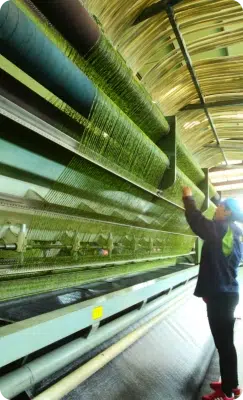
Mighty Grass dispose d'un système de production complet, du dessin du fil d'herbe → tufting→ tissage → bucking → support d'installation. Nous contrôlons de manière indépendante l'ensemble du processus afin de garantir la stabilité de la qualité du produit et la fiabilité de l'approvisionnement, et nous pouvons répondre aux besoins de personnalisation des projets de toutes tailles.
Pour mieux servir les clients du monde entier, Mighty Grass a établi des bases de production en Chine et en Arabie Saoudite, ainsi qu'un centre de stockage local aux États-Unis, ce qui permet un approvisionnement mondial rapide, flexible et rentable.
Que vous construisiez un stade professionnel, un terrain de sport scolaire ou un terrain de sport communautaire, Mighty Grass peut vous fournir des produits de haute qualité. Pelouse artificielle certifiée par la FIFAainsi qu'une assistance technique professionnelle et un service après-vente complet pour aider votre projet à maximiser sa valeur à long terme.
FAQ
Comment puis-je savoir si le gazon est réellement certifié par la FIFA ?
Tout d'abord, demandez à l Fabricants de gazon approuvés par la FIFA fournir un certificat de certification de la FIFA portant un numéro unique (valable 2 à 3 ans) et vérifier que le nom du laboratoire d'essai (par exemple, Labosport, Sports Labs) est correct.
Ensuite, visitez la plateforme de demande de certification de la FIFA, entrez le numéro de certificat ou le modèle de gazon artificiel et confirmez que le statut est "actif".
Quelle est la différence entre le gazon FIFA Quality et le gazon FIFA Quality Pro ?
Gazon artificiel de qualité FIFA et FIFA Quality Pro Turf sont tous deux des gazons artificiels de haute qualité qui ont passé les tests de la FIFA. Cependant, le FIFA Quality Pro Turf est plus durable et convient mieux aux surfaces de jeu professionnelles à haute intensité.
Quelle est la durée de vie d'un gazon certifié par la FIFA ?
8-12 ans (utilisation quotidienne moyenne ≤8 heures)