Italiano
  English
  العربية
  Español
  Deutsch
  Français
  Português
  Русский
  日本語
日本語  Nederlands
  Svenska
  Suomi
Suomi  ไทย
ไทย  Dansk
Dansk  Ελληνικά
  Bahasa Melayu
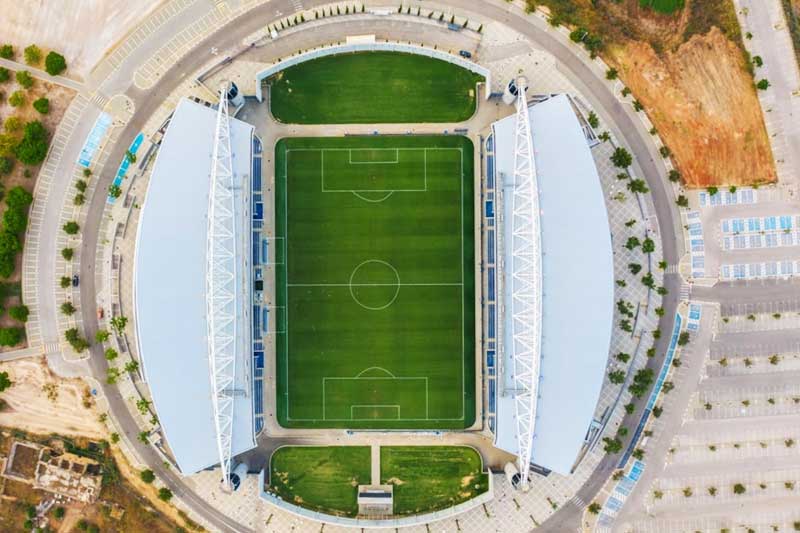
The upcoming 2026 World Cup is driving demand for FIFA-certified artificial turf. Co-hosted for the first time by the United States, Canada, and Mexico, it will be an unprecedented event. This year’s tournament will feature 48 participating teams, compared to the previous 32, with a total of 104 matches, posing significant challenges for the use and maintenance of football pitches. FIFA policy mandates that official competition pitches in the 16 host cities utilize natural turf. Some of these pitches will utilize hybrid grass systems, combining synthetic fibers with natural grass roots for enhanced durability and consistency. However, artificial turf systems will still be used at training bases and reserve sites for participating teams to withstand the intensive use.
Professional data indicates that a natural grass pitch, under intensive use, can withstand approximately 20–25 hours of wear per week, requiring rest and repair beyond this time. Manto erboso certificato FIFA, however, can withstand nearly continuous use, enduring over 1,500 hours of matches and training per year and boasting a lifespan of 8–10 years. This means that FIFA Football Turf provides teams with high performance amidst the intense World Cup schedule and frequent training sessions.
Passing FIFA’s professional testing system (FIFA Turf certification), these artificial turfs are virtually identical to natural grass in terms of turf feel, ball speed, ball bounce, and friction coefficient, ensuring a highly consistent player experience on the training field and on the playing field. According to data from the International Sports Field Research Institute, global installations of FIFA-certified artificial turf have grown by over 20% over the past five years, with strong growth momentum in the North American and African markets.
Why Does the World Cup Require Natural Grass?
Natural grass provides ball speed, friction, and rebound performance that most closely resembles natural conditions, ensuring that all matches are played under the same conditions. Therefore, all 16 main stadiums for the 2026 World Cup, even those originally covered with artificial turf, must be converted to natural grass or equipped with hybrid grass systems to meet World Cup football field requirements.
From a sports science perspective, natural grass offers better protection for players. Even the most advanced football turf, certified by FIFA and meeting FIFA turf standards, still exhibits subtle differences from natural grass in terms of shock absorption, energy return, and the friction felt when players slide. Fifa insists on using real grass at the World Cup to reduce the risk of joint injuries and superficial abrasions, ensuring that all top players can perform at their best.
Furthermore, the uniformity of natural grass helps maintain fairness in the competition. Excessive variations in the feel of the turf from one stadium to another would affect the tempo of play. Therefore, FIFA requires that all pitches be virtually identical in terms of ball speed, coefficient of friction, and rebound. This not only requires a deep sand foundation, supplementary lighting, and a sophisticated drainage system to maintain the health of natural grass, but also means that extremely high maintenance standards are placed on football field builders.
FIFA Natural Turf Key Technical Standards
| Technical Indicator | Required Range | Descrizione |
| Grass Height | 23–28 mm | Ensures consistency between ball speed and movement |
| Surface Hardness (Clegg Impact) | 80–100 gmax | Reduces player injury risk |
| Rimbalzo della palla | 0.6–0.85 m | Matches natural football performance |
| Rotolo di palline | 4-8 m | Ensures fair balance of passing speed and game play |
| Attrito della pelle | 0.35–0.75 | Prevents excessive sliding friction |
| Assorbimento degli urti | 55-70% | Reduces stress on joints and muscles |
| Tasso di drenaggio | ≥ 50 mm/h | Ensures uninterrupted play in rainy conditions |
Nota: The above indicators are derived from the FIFA Quality Programme for Football Turf, a key reference standard for World Cup turf construction and testing.
This does not mean that the value of FIFA artificial grass is being overlooked. In fact, training grounds, reserve stadiums, and community football pitches still rely heavily on artificial turf, as natural grass cannot withstand heavy use. The World Cup uses real grass to ensure fairness and safety at the highest levels of competition, while FIFA certified turf serves as the primary field and training ground. Together, they create the complete football ecosystem necessary for the World Cup.
Artificial Turf Applications in World Cup Venues: Natural Grass vs. FIFA Artificial Grass
The 2015 Women’s World Cup in Canada marked a turning point in propelling artificial turf into the mainstream of global football. For the first time in FIFA history, all six tournament venues—Vancouver, Edmonton, Ottawa, Moncton, Montreal, and Winnipeg—used FIFA-approved turf. This turf had passed FIFA Turf Certification testing and met FIFA Quality Pro Turf technical standards.
According to technical data released by FIFA, this FIFA artificial grass met FIFA artificial turf standards across key performance indicators. This not only ensured fair competition but also demonstrated to the world the viability of artificial football turf in international competitions.
2015 World Cup Artificial Turf Technical Specifications
| Performance Indicators | FIFA Standard Range | 2015 Actual Performance of Artificial Turf |
| Rotolo di palline | 4 – 8 m | Incontri |
| Rimbalzo della palla | 0.6 – 0.85 m | Incontri |
| Assorbimento degli urti | 55 – 70% | Incontri |
| Attrito della pelle | 0.35 – 0.75 | Incontri |
| Durability Test | ≥ 20,000 Simulation Cycles | Passes |
FIFA chose to fully utilize artificial turf for the Women’s World Cup to demonstrate the material’s advantages in durability, maintenance costs, and climate adaptability. For example, some Canadian host cities experience long winters and extremely low temperatures, making natural grass difficult to maintain year-round. FIFA Certified Turf ensures that the pitch remains viable in these harsh climates.
This historic event had far-reaching consequences. While FIFA still insists on using natural grass for World Cup finals, the Women’s World Cup demonstrated the feasibility of FIFA artificial turf for large-scale tournaments. This not only bolstered the subsequent widespread adoption of artificial turf by professional clubs, national training bases, and community pitches, but also boosted global market demand for FIFA grass. Today, FIFA Certified Turf is widely used in top-tier stadiums across Africa, Asia, North America, and the Middle East, serving as a valuable supplement and alternative to natural grass.
Natural Grass vs. FIFA-approved Turf
| Articolo | Erba naturale | Tappeto erboso certificato FIFA |
| Consistenza della superficie | Affected by weather and soil conditions, difficult to maintain uniformity. | FIFA artificial turf standards ensure consistent ball roll (4–8 m), ball rebound (0.60–0.85 m), shock absorption (55–70%), vertical deformation (4–10/11 mm), and rotational resistance (25–50 N·m). |
| Usage Duration | 20–25 hours per week. | 60+ hours per week, available all year round. |
| Costo di manutenzione | High: requires repair, watering, mowing, reseeding. Easily affected by climate and usage frequency. | Low: only requires basic cleaning and brushing. |
| Sostenibilità | Higher chemical and energy inputs; requires delicate maintenance to avoid damage. | Artificial grass increasingly uses non-infill or organic infill systems, recyclable and reusable. |
| Applicazione | Official international competitions (e.g., World Cup). | Training grounds, reserve fields, community football fields. |
FIFA Artificial Turf Development
FIFA Turf, used at the World Cup and other top-tier tournaments, is not just any artificial turf; it’s a professional system that has undergone rigorous design, testing, and certification. To ensure that training bases perform like world-class competition venues, FIFA has established comprehensive FIFA artificial turf standards, covering every aspect of the process, from raw materials and manufacturing to installation and post-production testing. These standards not only ensure that artificial turf matches natural grass in key performance areas such as ball speed, rebound, friction, and shock absorption, but also provide a unified quality benchmark for stadium contractors and operators.
Manufacturing Standards and Testing Process
Modern Tappeto erboso da calcio FIFA utilizes high-molecular synthetic fibers (such as polyethylene (PE) and polypropylene (PP)) for turf strands, which are UV-resistant and abrasion-resistant. The strands are typically kept between 40 and 60 mm tall to ensure a realistic feel during play. These strands are woven into a double or triple-layer base fabric using a precision tufting process. The adhesive backing is often made from environmentally friendly polyurethane (PU), ensuring durability and environmental performance. During the certification phase, products must first pass laboratory testing, covering over 30 indicators including ball bounce, friction coefficient, impact absorption, and durability. After installation, they must also complete field testing to ensure compliance with FIFA turf certification requirements under real-world conditions. This dual testing mechanism ensures the reliability and consistency of FIFA-approved turf.
4G Astroturf (Non-Infill Turf)
In recent years, environmental protection and sustainability have become key developments in the artificial turf industry. Traditional FIFA-approved artificial grass systems often use rubber granules as infill, but this infill poses a risk of leakage, raising environmental and health concerns. To this end, FIFA is actively promoting the development and application of 4G TURF (manto erboso da calcio non riempito). This type of turf, by optimizing the shape, density, and base fabric structure of the turf fibers, eliminates the need for rubber granules while maintaining excellent ball bounce and friction properties. According to the European Sports Flooring Association, the market share of 4G pitch (non-infill turf) systems has grown by over 15% over the past three years and has been widely used in futsal, youth training venues, and some professional club training grounds.
Recyclable Artificial Turf
In addition to the non-infill trend, FIFA artificial grass has also achieved breakthroughs in material recycling and low-carbon manufacturing. For example, some leading manufacturers have launched recyclable turf systems (5G grass), in which the grass fibers and base fabric can be recycled and reused at the end of their lifecycle, reducing landfill pressure. Research shows that artificial grass using recyclable materials can reduce carbon emissions by 20–30% over its entire lifecycle, aligning with the green development trend of the global sports industry.
Impact of Football Pitch
These technological innovations have enhanced the influence of FIFA artificial turf in the global market. Choosing FIFA-approved artificial grass means less maintenance, greater durability, and the assurance of compliance with international competition standards. For operators, this means year-round use, environmental friendliness, and a higher return on investment. As the Grass FIFA project progresses, FIFA quality pro turf will become an important foundation for promoting the popularization of football and event operations in the future, whether in World Cup training camps or community football fields.
How to Choose FIFA-Certified Turf?
For contractors, clubs, and tournament organizers, choosing the right FIFA-certified turf is more than just purchasing a piece of grass; it directly impacts project compliance, player safety, and long-term return on investment. The following are key considerations when making a purchase:
- Confirm FIFA certification level: Verify that the supplier’s product has passed FIFA turf certification and bears the FIFA Quality or FIFA Quality Pro logo. The former is suitable for community use and training grounds, while the latter is for use in professional clubs and international competition venues.
- Verify laboratory and field test data: Qualified FIFA football turf must meet FIFA artificial turf standards, including metrics such as ball roll (4–8m), impact absorption (55–70%), and coefficient of friction (0.35–0.75). Contractors can request complete test reports and on-site acceptance records from suppliers.
- Pay attention to service life and maintenance costs: FIFA artificial grass generally has a service life of 8–10 years, but differences in craftsmanship between brands can affect the wear resistance of the turf and the stability of the base fabric. High-quality FIFA-approved turf can significantly reduce ongoing maintenance costs.
- Sustainability and environmental friendliness: An increasing number of projects require the use of non-infill football turf or recyclable materials to reduce the release of infill particles and the resulting environmental impact. Purchasers should prioritize suppliers with established environmentally friendly product lines.
- Supplier’s global service and case experience: Selecting a football turf supplier with experience in major international events and cross-regional supply capabilities ensures on-time project delivery and long-term technical support.
Top FIFA Approved Artificial Turf Suppliers in the World
| Azienda | Founded | Certificazione FIFA | Presenza globale | Representative Projects | Vantaggi |
| MightyGrass (China / Saudi Arabia / USA) | 2003 | Qualità FIFA e Qualità FIFA Pro | Factories in China and Saudi Arabia + warehouse in California, USA | 2008 Beijing Olympics, African professional stadiums | 20+ years of manufacturing experience, independent R&D, fast delivery, supports 4G turf & 5G turf, projects in over 166 countries |
| Greenfields (Netherlands) | 1981 | Certificato FIFA | Europe / Middle East | Multiple European football stadiums | Strong presence in European market, mature technology |
| TenCate Grass (USA / Netherlands) | 1704 | Certificato FIFA | North America / Europe | English Premier League training grounds | Strong material R&D, long-standing history |
| Condor Grass (Paesi Bassi) | 1992 | Certificato FIFA | Europe / Africa | Multi-purpose sports venues | Strong in sustainable development solutions, focus on eco-friendliness |
Why Choose MightyGrass as Your Artificial Turf Supplier?
Among global fornitori di manti erbosi per il calcio, MightyGrass offers one-stop football field solutions for global sports builders, leveraging its advantages of two FIFA-certified factories worldwide, its Olympic project supply, and localized delivery in the United States.
- Over 20 Years of Manufacturing Experience: As one of the earliest manufacturers in China to engage in artificial turf fiber research and development, MightyGrass has mastered the turf fiber formula and core production technologies, ensuring product consistency compared to brands that rely on OEMs.
- Official FIFA Certification: Our products have achieved FIFA turf certification, meeting FIFA Quality and FIFA Quality Pro standards, and complying with all FIFA artificial turf standards.
- Global Presence: With two factories in China and Saudi Arabia, plus a local warehouse in California, we can deliver quickly to the European, American, Middle Eastern, and African markets, shortening lead times and reducing project risks for contractors.
- International Event Project Experience: From serving as the official supplier for the 2008 Beijing Olympics to stadiums for African professional leagues and training grounds for South American football clubs, mightygrass has extensive experience in constructing international event venues.
- Environmental Protection and Innovation: We are the first factory in China to launch our recyclable artificial grass series (5G turf). With a cumulative investment exceeding RMB 20 million and a R&D cycle of over 200 days, we hold over 60 core technology patents. We are also one of the first manufacturers to launch the non-infill football turf (4G turf) system. By optimizing the grass fiber geometry and high-density tufting design, we maintain stable ball speed, friction, and rebound performance without the need for traditional rubber granules, thus meeting global environmental regulations.
- One-Stop Solutions: From design consultation and sample delivery to production and manufacturing to on-site acceptance, we provide full-process support, saving contractors and operators time, effort, and costs.
Contact MightyGrass Today & Get Free Quote
FIFA Artificial Grass FAQ
How much does FIFA certified turf cost per square meter?
The price of fifa certified turf varies depending on the system type, fiber quality, and whether it is infill or manto erboso da calcio non infill. On average, contractors can expect USD $20–35 per square meter (FOB China factory), with installation bringing the total cost to USD $40–65/m². Large stadium projects may receive discounted bulk pricing.
What is the installation cost of a turf soccer field with FIFA certification?
Installazione di un campo da calcio in erba that meets fifa turf certification standards involves more than laying artificial grass. Costs include ground preparation, shockpad, drainage systems, and professional installation. For a standard 11-a-side FIFA Quality Pro pitch, the full installation budget is usually USD $600,000–1,200,000, depending on region and material choices.
What factors affect the price of fifa football turf projects?
Il costo di tappeto erboso per calcio fifa projects is influenced by:
- Dimensione del campo (5-a-side, 7-a-side, or 11-a-side)
- System type (infill vs manto erboso da calcio non infill)
- Fornitore (choosing a certified fornitore di manti erbosi per il calcio ensures compliance)
- Logistics (import duties, shipping, local labor costs)
- Maintenance plan (annual brushing, cleaning, and occasional infill top-up)
How long does FIFA artificial turf last, and is it cost-effective?
A well-installed fifa artificial turf pitch has a lifespan of 8-10 anni with proper maintenance. Compared with natural grass, it saves 50–70% in annual maintenance costs (no watering, mowing, or chemical treatments). For clubs and schools in regions with heavy usage, fifa certified turf is often the most cost-effective option.
Who are the best football turf suppliers in Africa?
In Africa, demand for football turf supplier Africa is growing due to climate and water limitations. Contractors should select partners that provide fifa certified turf, such as international brands with local distributors. MightyGrass offers direct supply from China and Saudi Arabia factories, ensuring competitive pricing and faster delivery for African stadium and training projects.
What is the difference in cost between FIFA Quality and FIFA Quality Pro turf?
- Qualità FIFA: Designed for community fields and schools, with lower system cost (USD $20–30/m²).
- Qualità FIFA Pro: Certified for professional and stadium use, with higher fiber resilience and stricter testing (USD $30–45/m²).
While fifa quality pro turf is more expensive, it provides superior playability and durability for elite competitions.
How do I know if my artificial grass is FIFA approved?
Always check the fifa grass database on the official FIFA Quality Programme website. A genuine manto erboso approvato dalla fifa product will have certification numbers, laboratory test results, and valid field test reports. Working with a Fornitore di manti erbosi certificato FIFA like MightyGrass ensures your project meets international compliance standards.
Is non infill football turf more expensive than infill turf?
Yes, manto erboso da calcio non infill usually costs more per square meter because of its higher fiber density and advanced tufting technology. However, it saves money long-term by eliminating the need for rubber or sand infill, reducing maintenance, and meeting stricter environmental regulations.