
 Nederlands
  English
  العربية
  Español
  Deutsch
  Français
  Português
  Русский
  日本語
日本語  Italiano
  Svenska
  Suomi
Suomi  ไทย
ไทย  Dansk
Dansk  Ελληνικά
  Bahasa Melayu
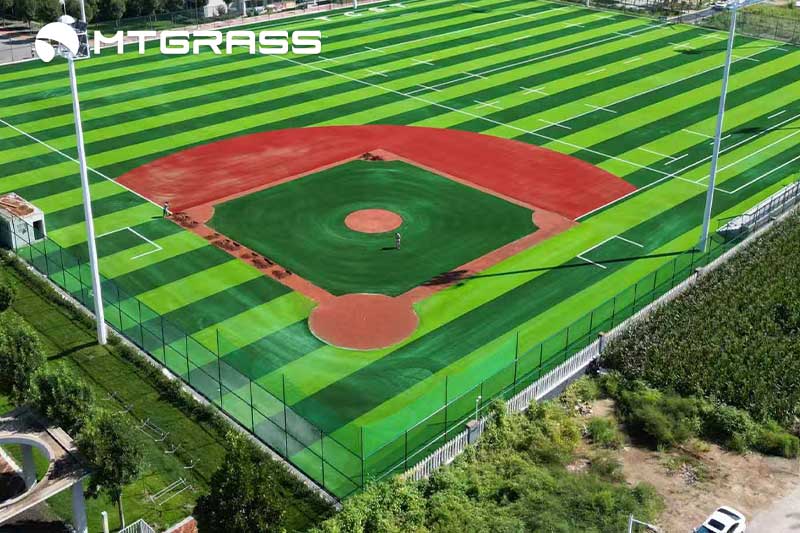
Kunstgrasgras wordt niet alleen veel gebruikt op voetbalvelden, maar groeit ook sterk op de markt voor grasmatten voor honkbalvelden. Als we de VS als voorbeeld nemen, dan zijn er volgens de statistieken van de industrie vanaf 2024 ongeveer 12.000 tot 13.000 synthetische velden (waaronder voetbal-, rugby- en multifunctionele velden) in gebruik genomen in de Verenigde Staten en worden er elk jaar ongeveer 1.200 tot 1.500 nieuwe velden omgevormd tot of aangelegd met kunstgrasvelden.
Hoewel MLB (Major League Baseball) als geheel nog steeds voornamelijk natuurgras gebruikt, zijn er volgens openbare informatie van de laatste jaren 5 stadions die kunstgras gebruiken (of gedeeltelijk gebruiken). Over alle 30 MLB-balparken samen is dit ongeveer 16-20%. Hoewel kunstgras de professionele topvelden nog niet volledig heeft gedomineerd, komen de voordelen ervan naar voren in college/league omgevingen met een hoog klimaat, onderhoudskosten en hoge gebruiksfrequentie, en is het steeds meer de voorkeurskeuze geworden voor grondmaterialen voor honkbalvelden.
De wereldwijde markt voor kunstgras voor honkbal zal van 2025 tot 2035 groeien met een CAGR van ~5,2%. Tegen de achtergrond van deze belangrijke markttrend heeft kunstgras voor honkbalvelden een groter potentieel, vooral in Latijns-Amerika, Oost-Azië, het Midden-Oosten en gebieden met hoge temperaturen, droogte of geconcentreerde regenval. Er zijn steeds meer projecten om natuurlijke gras- of gemengde grasvelden om te vormen tot kunstgras honkbalvelden.
Voor de aannemer van een honkbalveld, sportbouwer, schooldistrict of atletiekdirecteur is de belangrijkste vraag ongetwijfeld: Wat zijn de totale kosten voor de installatie van kunstgras op het honkbalveld? In dit artikel gaan we dieper in op de installatiekosten van kunstgras voor honkbalvelden en bespreken we in detail de belangrijkste factoren die de kosten beïnvloeden.
Installatieveld honkbalkosten belangrijke factoren:
Vanaf het begin van het ontwerpen van een gloednieuw honkbalgrasveld betekent dat de tijd en energie die je besteedt groter is dan je geld. Van het voorwerk van het inhuren van een professionele ontwerpadviseur, de grondvergunning tot het uitschrijven van een aanbesteding, er zijn veel schakels bij betrokken. Neem de aanleg van honkbalvelden in Amerikaanse scholen als voorbeeld. We gaan ervan uit dat we alleen rekening hoeven te houden met de aanlegkosten van het honkbalveld, die kunnen worden onderverdeeld in veld materiaalkosten, funderingsbehandelingskosten (inclusief drainagesystemen of irrigatiesystemen), arbeidskosten en onderhoudskosten. Hier zijn de kostenfactoren waarmee je rekening moet houden:
Kosten ondergrond honkbalveld materialen
Bij het berekenen van de kosten van een honkbalveld is de keuze van het oppervlaktemateriaal een van de belangrijkste beslissingen over kosten en prestaties. Traditioneel werden de meeste honkbalvelden aangelegd met natuurgras en infields van rode klei, maar het afgelopen decennium is synthetisch honkbalgras steeds populairder geworden bij scholen, universiteiten en gemeentelijke parken - meestal goed voor 35-45% van de totale veldinvestering. Verschillende soorten honkbalvelden en drainagesystemen hebben een directe invloed op zowel de prestaties als de prijs.
1. Natuurlijk gras honkbalveld
Samenstelling:
- Buitenveld: Natuurlijk gras (bijv. Bermuda, Kentucky Bluegrass)
- Infield: Rode klei / gemalen baksteen
- Honkpaden en heuvel: Speciale honkbalmix klei
| Factor | Details |
| Gemiddelde installatiekosten | $12-20 per m² (ongeveer $140.000-$240.000 voor een veld van 12.000 m²) |
| Jaarlijkse onderhoudskosten | $20.000-$35.000/jaar (maaien, irrigatie, bemesting) |
| Levensduur | 5-7 jaar voor grote vernieuwing |
| Vereiste drainage | Hoog (regelmatige beluchting + zanddressing) |
| Voordelen | - Natuurlijke uitstraling en traditioneel gevoel - Koelere oppervlaktetemperatuur - Verkozen door sommige MLB-werpers voor grondwrijving |
| Nadelen | - Vereist zwaar onderhoud - Weersafhankelijk (kans op regen hoog) - Ongelijkmatig oppervlak na verloop van tijd - Niet geschikt voor velden voor meervoudig gebruik |
Voor professionele stadions met fulltime onderhoudsteams biedt natuurgras nog steeds een esthetische en historische aantrekkingskracht. Voor scholen of gemeentelijke velden zijn de onderhoudskosten echter vaak te hoog.
2. Klei/vuil infield systeem
Samenstelling:
- Infield zone volledig gemaakt van rode klei, baksteenstof of zand-klei mengsel
- Gecombineerd met een natuurgrasveld
| Factor | Details |
| Installatiekosten | $8-12 per m² (ca. $90.000-$130.000 per veld) |
| Onderhoudskosten | $10.000-$18.000/jaar (herstraten, besproeien, rollen) |
| Levensduur | 3-5 jaar voor hernivellering of vervanging |
| Voordelen | - Traditionele honkbalesthetiek - Voorspelbare balstuit voor infielders - Eenvoudig kleine oppervlakken repareren |
| Nadelen | - Stof- en modderproblemen na regen - Dagelijks slepen en water geven - Beperkte afvoer, afgelastingen komen vaak voor |
| Beste gebruik | Amateurvelden of hybride velden met grasveld |
Veel scholen vervangen nu klei infields door kunstgrassystemen die de kleikleur nabootsen (Clay-Red turf) - waardoor ze er hetzelfde uitzien met minder onderhoud.
3. Honkbal Kunstgras
- Volledig synthetisch veldoppervlak (PE of Nylon grasmat)
- Infill (zand + rubber / organisch / of niet-infill 4G)
- Schokdemper + drainagesysteem
| Factor | Details |
| Installatiekosten | $18-30 per m² (ongeveer $220.000-$360.000 voor een veld van 12.000 m²) |
| Onderhoudskosten | $4.000-$8.000/jaar (borstelen, infill controleren) |
| Levensduur | 8-12 jaar |
| Vereiste drainage | Geïntegreerd systeem; bespeelbaar na zware regenval |
| Voordelen | - Gebruik onder alle weersomstandigheden (geen regen) - Consistente bounce & snelheid - Minimaal onderhoud - Multi-sport gebruik is mogelijk - Lange levensduur en snellere ROI |
| Nadelen | - Hogere investering vooraf - Iets warmer oppervlak in de zomer |
| Beste gebruik | Scholen, universiteiten, professionele academies, complexen voor meervoudig gebruik |
Kunstgrasvelden zijn sinds 2015 met 500% gegroeid in Noord-Amerika. De recyclebare 4G/5G honkbalgrassystemen van MightyGrass worden nu op grote schaal gebruikt in college- en semi-profields vanwege hun duurzaamheid en kostenefficiëntie.
Kosten en prestaties van grasvelden
| Parameter | Natuurlijk gras | Klei / Vuil Infield | Kunstgras |
| Initiële kosten (per m²) | $12-20 | $8-12 | $18-30 |
| Volledig veld (12.000 m²) | $140K-$240K | $90K-$130K | $220K-$360K |
| Jaarlijks onderhoud | $20K-$35K | $10K-$18K | $4K-$8K |
| Bruikbaarheid na regen | Slecht | Slecht | Uitstekend |
| Oppervlakte Levensduur | 5-7 jaar | 3-5 jaar | 8-12 jaar |
| Consistentie balstuit | Matig | Goed (alleen infield) | Uitstekend |
| Veiligheid van spelers | Goed | Variabele | Zeer goed |
| Multi-sport compatibiliteit | Beperkt | Geen | Hoog |
| ROI op lange termijn (10 jaar) | ★★ | ★ | ★★★★★ |
| Milieu-impact | Hoog water- en kunstmestgebruik | Stofvervuiling | Recyclebaar, laag waterverbruik |
Voor aannemers en eigenaars van faciliteiten is de lange termijn kosten-prestatieverhouding is duidelijk voorstander van synthetisch honkbalgras - vooral in school-, college- en gemeenschapsparkprojecten.
Terwijl natuurgras en klei een traditionele esthetiek bieden, is de kunstgras honkbalveld levert ongeëvenaarde duurzaamheid, consistente bespeelbaarheid en minimaal onderhoud in alle klimaten.
Basis bouwkosten
De basisconstructie vormt de structurele basis van elk honkbalveld. Het bepaalt hoe goed het oppervlak draineert, hoe vlak het speeloppervlak na verloop van tijd blijft en hoe lang het veld meegaat voor er een grote renovatie nodig is. Verschillende materialen voor het veldoppervlak-natuurgras, klei, En kunstgras-vereisen zeer verschillende basisontwerpen, dieptes en materialen.
Vereisten voor basisconstructie
| Type oppervlak | Typische basisstructuur | Diepte | Gemiddelde kosten (per m²) | Belangrijke opmerkingen |
| Natuurgrasveld | Bovengrond + zandmengsel over verdichte inheemse grond | 150-200 mm | $5-8 | Heeft voedselrijke laag nodig voor wortels; verdichting en helling kritisch |
| Klei / Vuil Infield | Gesorteerde klei + stabilisatie van de ondergrond | 120-150 mm | $4-6 | Nauwkeurig nivelleren vereist om plassen te voorkomen; regelmatig herstraten |
| Kunstgrasveld | Steenslagbodem + geotextiel + betonnen stoeprand | 200-300 mm | $6-10 | Moet perfect waterpas zijn met geïntegreerde drainage; eenmalige constructie |
Inzicht: Kunstgrasvelden vereisen een dichtere en dikkere onderbouwomdat er geen grond of wortelstructuur is om het oppervlak te stabiliseren. Eenmaal geïnstalleerd kan deze fundering echter 20+ jaarwaardoor de levenscycluskosten aanzienlijk dalen.
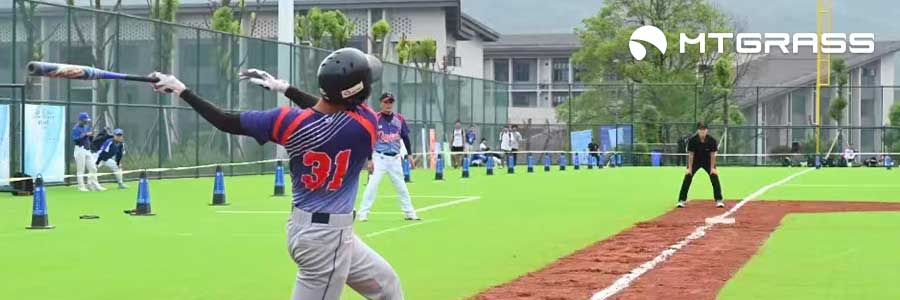
Arbeidskosten
Het installatiewerk varieert enorm afhankelijk van het type ondergrond en de complexiteit van het basiswerk.
| Type oppervlak | Installatie Stappen | Gem. Arbeidsuren (per 1.000 m²) | Typische kosten (per m²) | Totale duur van het project | Complexiteit |
| Natuurlijk gras | Nivellering → Irrigatie → Zoden leggen → Walsen | 180-220 | $4-6 | 30-45 dagen + 3 maanden groei | Medium |
| Klei/vuil | Afgraven → Klei plaatsen → Verdichten → Bekleden | 120-160 | $3-5 | 20-30 dagen | Laag |
| Kunstgras | Basis voorbereiden → Graszoden leggen → Afwerken → Infill → Verzorging | 250-300 | $5-8 | 25-40 dagen | Hoge precisie vereist |
Observatie:
Eisen voor kunstgrasinstallatie meer geschoolde arbeid en precisievooral in naadlijmen, hellingtolerantie (<0,5%) en vullinguniformiteit. De eenmalige installatie De velden hoeven niet meer jaarlijks opnieuw geëgaliseerd, opnieuw besproeid of geïrrigeerd te worden, zoals bij natuurlijke velden wel het geval is.
Kosten voor accessoires en benodigdheden
Naast de grasmat en het basissysteem dragen verschillende hulpmaterialen bij aan de totale kosten. Deze onderdelen verschillen per veldtype en hebben een directe invloed op de duurzaamheid op lange termijn.
| Categorie | Natuurlijk gras | Klei/vuil | Kunstgras |
| Irrigatiesysteem | Vereist | Optioneel | Niet vereist |
| Randbeperkingen / Stoepranden | $3-5/m | $2-3/m | $5-7/m (met betonnen opstand) |
| Veldmarkering / Lijnen | Verf ($2K/jaar) | Kalk ($500/jaar) | Ingelegde graszoden (eenmalig $5K-10K) |
| Omheiningen en basisankers | Gelijksoortig voor alle typen | Vergelijkbare | Vergelijkbare |
| Lijm & Tape | n.v.t. | n.v.t. | $1-2/m² |
| Schokdemper (optioneel) | n.v.t. | n.v.t. | $2-3/m² |
Inzicht van experts: Kunstgrassystemen belasten de kosten vooraf met accessoires (stoepranden, lijm, naaigaren), maar deze zijn eenmalige investeringen die twee levenscycli van grasmatten kan doorstaan.
Onderhoudskosten
Onderhoud is waar kunstgras het grootste kostenvoordeel heeft ten opzichte van natuurlijke en kleisystemen. Hieronder vindt u een gedetailleerde vergelijking van de kosten over 10 jaar.
| Kosten Categorie | Natuurlijk gras | Klei / Vuil veld | Kunstgras |
| Jaarlijkse arbeid (maaien/rollen) | $8K-12K | $4K-6K | $1K-2K |
| Bewatering / Irrigatie | $5K-8K | $1K | — |
| Meststof / Bodembehandeling | $2K-3K | — | — |
| Herstraten / Beluchting | $3K-4K | $2K-3K | — |
| Infill / Borstelonderhoud | — | — | $500-1K |
| Gemiddelde jaarlijkse kosten | $20K-30K | $8K-12K | $3K-6K |
| Totale onderhoudskosten over 10 jaar | $200K-300K | $90K-120K | $30K-60K |
Voorbeeld: Een typisch honkbalveld voor middelbare scholen bespaart ongeveer $150,000–$200,000 in onderhoud na 10 jaar overstappen op een kunstgrassysteem - genoeg om het grootste deel van de initiële installatiekosten te compenseren.
Vergelijking van bouw- en onderhoudskosten
| Categorie | Natuurlijk gras | Klei/vuil | Kunstgras |
| Basisconstructie | $5-8/m² | $4-6/m² | $6-10/m² |
| Afvoersysteem | $3-5/m² | $2-3/m² | $4-6/m² |
| Installatie Arbeid | $4-6/m² | $3-5/m² | $5-8/m² |
| Accessoires & benodigdheden | $3-5/m² | $2-3/m² | $4-7/m² |
| Jaarlijks onderhoud | $20K-30K | $8K-12K | $3K-6K |
| Eigendomskosten over 10 jaar (schatting) | $400K-550K | $250K-350K | $260K-380K |
Professionele conclusie: Hoewel kunstgras honkbalvelden een hogere installatiekosten voorafhun duurzaamheid van de basis, superieure drainage, En gering onderhoud resulteren in de laagste levenscycluskosten. Voor aannemers en facilitair managers maakt dit synthetisch gras de meest kosteneffectieve langetermijninvestering - vooral voor scholen, hogescholen en gemeenschapsvelden waar stilstand en weersverstoringen een directe invloed hebben op de bruikbaarheid.
Hoe kies je een professionele honkbalveldbouwer en graszodenfabrikant?
Een honkbalveld aanleggen - vooral een veld dat gebruik maakt van kunstgras-is een langetermijninvestering die van invloed is op de prestaties, de veiligheid en de reputatie van de school. Of u nu een atletiekdirecteur aan een universiteit, een facilitair manager aan een middelbare school of een aannemer aan een gemeenschap bent, het kiezen van de juiste bouwer honkbalveld En fabrikant honkbalkunstgras kan het verschil maken tussen een veld dat 10 jaar meegaat en een veld dat het na 2 jaar begeeft.
Dit is waar je op moet letten bij het kiezen van een professionele partner.
Bewezen ervaring in de aanleg van honkbalvelden
Een betrouwbare bouwbedrijf voor honkbalvelden moet een portfolio met afgeronde projecten hebben, idealiter inclusief:
- Honkbalvelden voor middelbare scholen en universiteiten
- Multisportgrascomplexen
- Overdekte oefenfaciliteiten
Vraag om projectreferenties, CAD-tekeningen en drainagelay-outs van eerdere installaties.
MightyGrass heeft meer dan 200+ sportveldontwerpsystemen wereldwijd, inclusief honkbal-, softbal- en voetbalvelden, die turnkey ontwerp op maat, levering van materialen en technische supervisie voor internationale aannemers.
Technische mogelijkheden voor funderings- en drainagesystemen
Een echte professional legt niet zomaar graszoden - hij of zij bouw de fundering. Zoek bouwers die het begrijpen:
- Bodemonderzoek en nivellering
- Ontwerp afwateringshelling (0,5-1%)
- Verdichtingsnormen voor grindlaag (≥95%)
- Installatiemethoden voor geotextiel en stoepranden
Tip: Scholen zien drainage vaak over het hoofd. Een slecht drainageontwerp zal uw onderhoudskosten in de toekomst verdubbelen.
Bijvoorbeeld: Door het onredelijke ontwerp van het drainagesysteem van een honkbalveld in de Verenigde Staten verzamelde het veld het hele jaar door water tijdens het gebruik, waardoor het onbruikbaar werd en er secundaire reparaties en reconstructies nodig waren, met onherstelbare verliezen tot gevolg.
MightyGrass werkt rechtstreeks samen met architecten en ingenieurs voor het leveren van aangepaste basistekeningen, aanbevelingen voor hellingen, En materiaaldoorsneden geschikt voor plaatselijke klimaten - voor stabiele prestaties gedurende meer dan 10 jaar.
Fabrikant met gecertificeerde honkbalgrassystemen
Je kunstgrasfabrikant zou dit moeten aanbieden:
- ASTM- en FIFA-certificeringen
- Bewezen duurzaamheidstests van vezels (UV, Gmax, drainagesnelheid)
- Specifieke grasmatmodellen voor infield en outfield
- Niet-invulbare en recyclebare opties (voor duurzaamheid)
Waarom het belangrijk is: De certificering zorgt voor een consistente balsnelheid, een veilige glijweerstand en comfort voor de speler - essentieel voor wedstrijdniveaus op school en college.
MightyGrass Honkbalgras Serie omvat:
- MT-Infield klei rood gras (35 mm) - Laagpolig, dicht oppervlak voor snel infieldspel.
- MT-grasveldgroen (45-50 mm) - monofilament PE-vezels voor een realistische balstuit.
- MT-5G recyclebaar grassysteem - Volledig milieuvriendelijk, afvalvrij, duurzaam op lange termijn.
- MT-4G niet-ingestrooid gras - Snellere installatie, geen rubbergranulaat, ideaal voor scholen.
Elk product wordt geleverd met volledige ASTM-, SGS- en FIFA-documentatieDit maakt het bieden en goedkeuren van overheidsprojecten eenvoudig.
End-to-end technische ondersteuning
Een professionele honkbalveldbouwer verkoopt niet alleen graszoden - ze leveren ook doorlopende begeleiding voor, tijdens en na de bouw:
- CAD-lay-outplanning en afwateringstekeningen
- Toezicht op installatie ter plaatse of via video
- Richtlijnen voor het naaien en opvullen van grasmatten
- Borstelen na installatie en onderhoudstraining
Voor scholen en sportafdelingen: Zoek een grasmatleverancier die training en onderhoudshandleidingen levert voor het personeel van uw faciliteit.
MightyGrass biedt een complete turnkey service-van veldontwerp → graszodenproductie → verzending → technische ondersteuning → inspectie na verkoopen zorgt voor een soepele uitvoering en kwaliteitsborging voor elk project.
Wereldwijde leveringscapaciteit en lokale logistiek
De beste graszodenfabrikant moet een snelle levering en regionale ondersteuning garanderen. MightyGrass is actief:
- Twee belangrijke productiebases (China & Saoedi-Arabië)
- Amerikaans magazijn in Californië voor lokale distributie (1,500 sq.ft per rol)
- Servicecentra overzee in Noord-Amerika, MENA en LATAM
Dit tweeledige ketenmodel verkort de doorlooptijd, verlaagt de logistieke kosten en maakt een snelle levering mogelijk voor schoolrenovatieprojecten met strikte tijdschema's.
Transparante garantie en after-sales service
Gerenommeerde fabrikanten van honkbalgras leveren:
- Duidelijk 8-10 jaar productgarantie
- Technische inspectie op aanvraag
- Beschikbaarheid van onderhoudsgereedschap en reserveonderdelen
Voorbeeld: MightyGrass garandeert ondersteuning op lange termijn, zelfs na de oplevering van het project, met optionele jaarlijkse controles van de prestaties van het oppervlak (Gmax, drainage en vezelslijtagetests).
Professionele vs. niet-professionele honkbal grasmattenbouwer
| Criteria | Professionele bouwer | Niet-professionele bouwer |
| Projectontwerp | Levert CAD- en drainagetekeningen | Alleen basisofferte |
| Certificering | ASTM / FIFA gecertificeerd gras | Niet-gecontroleerd materiaal |
| Installatie-ondersteuning | Training op locatie/op afstand | Geen ondersteuning |
| Levertijd | 3-4 weken | Onvoorspelbaar |
| Garantie | 8-10 jaar | 2-3 jaar of geen |
| Richtlijnen voor onderhoud | Inbegrepen | Niet verstrekt |
| ROI op lange termijn | Hoog | Laag (frequente reparaties) |
Professioneel inzicht
Een goed gekwalificeerde fabrikant honkbalkunstgras En ervaren veldbouwer ervoor zorgen dat je veld bespeelbaar, veilig en visueel aantrekkelijk blijft voor een decennium of langer. De combinatie van ontworpen drainage, gecertificeerde grasmat, En vakkundige installatie bespaart niet alleen geld, maar ook tijd, reputatie en betrouwbaarheid op de lange termijn.
Waarom scholen MightyGrass kiezen voor honkbalveldgras
- Fabrieksgerichte prijzen - Bespaar 20-30% door rechtstreeks bij de fabrikant te kopen.
- Gecertificeerde kwaliteit - FIFA, ASTM, SGS, ISO geverifieerd voor sportveiligheid en prestaties
- Aangepast ontwerp - Klei-rood + veld-groen tweekleurensysteem voor realistisch honkbalspel.
- Laag MOQ & Snelle Levering - Vanaf 1.100 m²; magazijn in de VS voor snelle verzending.
- Turnkey ondersteuning - CAD-ontwerp, afwateringslay-out, installatiegids, dienst na verkoop.
- Eco-innovatie - Recyclebare 5G Turf & Non-Infill 4G systemen voor duurzame campussen.
Van ontwerp tot levering, MachtigGras is uw vertrouwde fabriekspartner voor de aanleg van kunstgras honkbalvelden en helpt scholen, universiteiten en aannemers om veiligere, slimmere en meer kostenefficiënte sportvelden te bouwen.
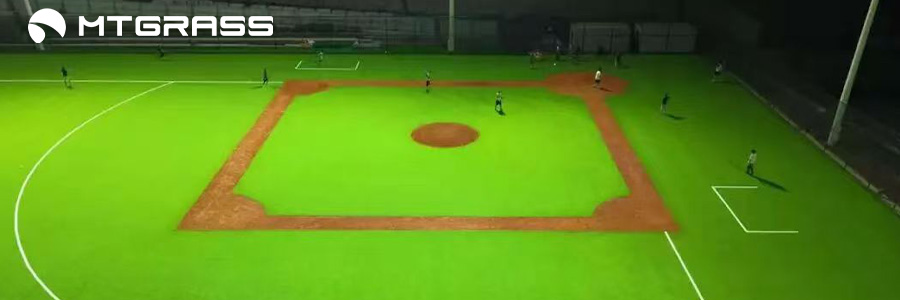
Hoeveel kost het om een honkbalveld te turven?
Over het algemeen is A standaard kunstgras honkbalveld (rond 12,000 m²) kosten tussen $220.000 en $360.000afhankelijk van de grasmat en het drainageontwerp.
A natuurgras en kleiveld is in eerste instantie goedkoper om te bouwen, maar vereist $20.000-30.000 per jaar in onderhoud, irrigatie en arbeid, wat al snel opweegt tegen de besparingen.
A synthetisch honkbalgras systeem biedt op lange termijn het beste rendement op investering: bruikbaarheid bij alle weersomstandigheden, minder onderhoud en een levensduur van 8-12 jaar.
Of u nu een facilitaire afdeling van een schooldistrict of een lokale onderwijsraad/districtsbestuur of een sportbouwbedrijf bent, u moet alle belangrijke factoren begrijpen die van invloed zijn op de kosten, hoe u de kosten kunt beheersen, hoe u materialen selecteert, projectcyclus, productcertificering en acceptatienormen, constructiedetails, enz. om het budget optimaal te benutten en het algehele effect van de locatie te verbeteren.
Contact MightyGrass vandaag nog voor een offerte voor uw honkbalveld - rechtstreeks van de fabriek, FIFA-gecertificeerd, wereldwijd geleverd.
Honkbalgrasveld FAQ
Welke ondergrond gebruik je voor kunstgras?
Voor een professional honkbalgrasveldgebruik een meerlaagse steenslagbasis met:
- 150-200 mm van verdicht grind
- Geotextiel weefsel voor stabiliteit
- PVC-afvoerbuizen onder
Dit zorgt voor een goede waterdoorstroming en een vlak oppervlak.
MightyGrass levert CAD-basistekeningen en ontwerpen voor afwateringshellingen voor elk project, wat een levensduur van meer dan 10 jaar garandeert.
Hoe gebruik je kunstgras voor honkbalvelden?
Kies verschillende soorten gras voor elk gebied:
- Infield: kortpolige (30-35 mm), strak gestikte, kleirode grasmat voor een consistente balstuit.
- Buitenveld: Groen PE-monofilamentgras met hogere pool (45-50 mm) voor realistische rebound.
MightyGrass biedt een tweekleurig honkbalgras-systeem beide combineren - Klei Rood + Veld Groen - aangepast voor school en werk.
Welke honkbalstadions hebben kunstgras?
Verschillende grote stadions hebben synthetisch honkbalgrasmet inbegrip van:
- Rogers Centre (Toronto Blue Jays, MLB)
- Tropicana Field (Tampa Bay Rays, MLB)
- Globe Life Field (Texas Rangers, MLB)
- Tokyo Dome (Japan)
- Doosan Bears Stadion (Korea)
Meer dan 70% van NCAA Eerste Divisie Hogescholen gebruik nu kunstgras honkbalveldenwaaruit blijkt dat er wereldwijd een verschuiving plaatsvindt naar spelen in alle weersomstandigheden met weinig onderhoud.
Hoe installeer je kunstgras?
- Verdicht en egaliseer de basis
- Geotextiel en drainagerooster leggen
- Grasrollen uitrollen en richting uitlijnen
- Lijmen en naaien met turftape
- Verspreiden kiezelzand + rubbervulling gelijkmatig
- Borstel vezels rechtop met een grooming machine
MightyGrass biedt installatiebegeleiding op locatie of via video voor aannemers en scholen over de hele wereld.
Hoe maak je een basis voor kunstgras?
Maak een draineerbare en stabiele fundering:
- 100-150 mm steenslag (5-20 mm aggregaat)
- Geotextiel onderlaag
- Afwateringshelling (0,5-1%)
- Optionele schokdemper voor de veiligheid van de speler
Kosten: $5-8/m²afhankelijk van het materiaal.
MightyGrass honkbalgrassystemen zijn ontworpen voor een drainage van 500-800 mm/u - bespeelbaar binnen 30 minuten na hevige regenval.
Hoe installeer je kunstgras op een honkbalveld?
De installatie verloopt in vijf stappen:
| Stap | Beschrijving |
| 1. Ontwerp en lay-out | CAD-tekeningen, helling- en drainageontwerp door MightyGrass. |
| 2. Voorbereiding basis | Fundatie van steenslag, verdichting en stoepranden. |
| 3. Gras Installatie | Rollen uitlijnen, naaien en lijm aanbrengen. |
| 4. Toepassing infill | Voeg zand + rubber toe (of gebruik een 4G-systeem zonder opvulling). |
| 5. Laatste verzorging | Borstel de vezels rechtop en test de reactie van de bal. |
Bouwtijd:
- Opleidingsgebied: 10-15 dagen
- Honkbalveld op ware grootte: 25-30 dagen
MightyGrass 4G non-infill grassysteem vereenvoudigt de installatie - geen rubbergranulaat, snellere installatie en geen onderhoudsproblemen met opvullen.


