
 Nederlands
  English
  العربية
  Español
  Deutsch
  Français
  Português
  Русский
  日本語
日本語  Italiano
  Svenska
  Suomi
Suomi  ไทย
ไทย  Dansk
Dansk  Ελληνικά
  Bahasa Melayu
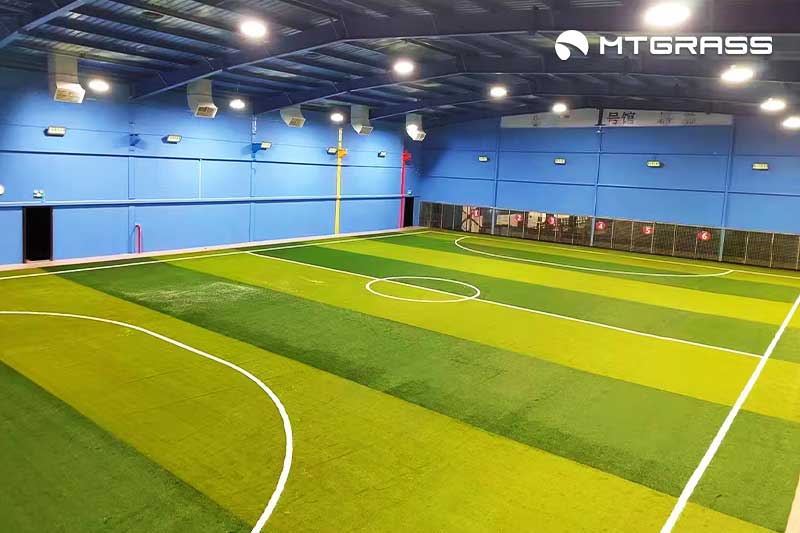
Wat? Een minivoetbalveld? Waar precies in scholen, achtertuinen, sportacademies of commerciële locaties wordt het aangelegd? Zit je vol vragen over dit kleine voetbalveld? We analyseren de factoren die de ontwikkeling van een minivoetbalveld beïnvloeden, van het eerste ontwerp tot de uiteindelijke exploitatie, in de hoop je te helpen bij je toekomstige investeringskeuzes.
Wat is een minivoetbalveld?
Zoals bekend is de standaard FIFA-voetbalveld is 105m x 68m. Als je school, woonproject, indoorfaciliteit of commercieel sportcentrum echter weinig ruimte heeft en je hebt dringend een veld nodig voor voetbaltraining, dan is een minivoetbalveld je beste keuze.
Een minivoetbalveld, ook wel minivoetbalveld, microvoetbalveld of klein voetbalveld genoemd, is een verkleinde versie van een standaard voetbalveld, speciaal ontworpen voor kleine trainingswedstrijden van 3 tegen 3 tot 6 tegen 6.
Minivoetbalvelden worden steeds populairder om de volgende redenen:
- Maximaliseren van het gebruik van beperkte ruimte
- Lagere bouw- en onderhoudsbudgetten
- Het hele jaar door training en recreatie
- Sneller en intensiever spelen voor kleinere groepen
Dit miniveldsysteem kan LED-sportverlichting, gaashekwerk, doelen, banken en afsluitbare lockers vereisen, afhankelijk van je behoeften. Gebaseerd op Machtig gras Hoewel de grootte van het veld en de voorzieningen kunnen variëren, kunnen de meeste veldinstallaties binnen een paar weken worden voltooid, waardoor je onnodige kosten bespaart. Dit is echt een kant-en-klare oplossing voor je club, school of commerciële locatie. Als je van plan bent om een minivoetbalveld aan te leggen, hangt de uiteindelijke investering direct af van je locatie en de materialen die je kiest. Maar in de meeste delen van de VS liggen de kosten van een minivoetbalveld tussen de $43.000 en $123.000.
Afmetingen Minivoetbalveld
Of je nu een minivoetbalveld voor binnen of buiten ontwerpt, de grootte hangt af van het type spel, het aantal spelers en de beschikbare speelruimte. Hoewel er niet één standaardgrootte is, hebben lokale voorkeuren en gewoonten de standaard voor kleine voetbalvelden in verschillende regio's subtiel gevormd. We hebben enkele belangrijke ontwerpoverwegingen en veldvoorbeelden voor je verzameld.
Minivoetbalveld: Belangrijke ontwerpopmerkingen
- Beeldverhouding: Aanbevolen minivoetbalvelden hebben een lengte-breedteverhouding van 1,5 : 1 om een evenwichtig spel en effectieve balcirculatie te garanderen.
- Doel plaatsen: Doelen zijn meestal gecentreerd op de korte zijden, met breedtes tussen 2 m en 3 m en hoogtes tussen 1 m en 2 m, afhankelijk van het spelformaat.
- Veiligheidsmarges: Een vrije zone van minstens 1 m rond de omtrek wordt aanbevolen voor veilig spelen en toegang voor onderhoud.
- Indeling oppervlak: Velden kunnen noord-zuid georiënteerd worden om verblinding tijdens het spelen te minimaliseren, vooral voor buitenopstellingen.
- Lijnmarkeringen: Standaardmarkeringen zijn de middenlijn, middencirkel (straal ≤3 m), penaltystip (≤8 m van de doellijn), hoekbogen (straal 0,25 m) en wit gras (breedte: 8 cm).
Minivoetbalveld Voorbeelden
- 3v3 (15 x 10 meter): Dit is een populaire maat voor plaatsen met beperkte ruimte, geschikt voor mobiele activiteiten.
- 4v4 (22 x 16 meter): De Wereldkampioenschappen voor daklozen wordt bijvoorbeeld regelmatig opgevoerd op velden van dit formaat. Deze afmetingen zijn ideaal voor mobiele evenementen.
- 4v4 (24 x 15 meter): Dit formaat is vooral populair in Denemarken. De Kollegabold sportarena's van de Dansk Firmaidraets Forbund (Deense Bedrijfssportvereniging) werden bijvoorbeeld op deze afmetingen gebouwd.
- 5v5 (≈36 x 27 meter): Volgens de Voetbalbond (FA)Een 5-a-side veld is ongeveer 40 yards lang x 30 yards breed.
- 6v6 (≈46 x 36 meter): In de US Jeugdvoetbal 6v6-formaatDe aanbevolen veldgrootte is 50 meter lang x 40 meter breed.
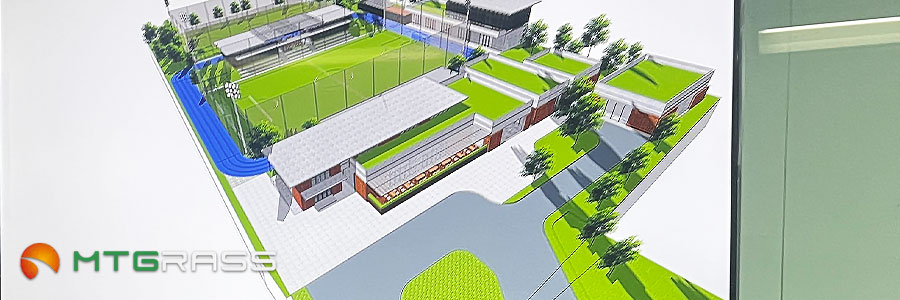
Overwegingen bij het ontwerp van een minivoetbalveld (ontwerp en materiaalkeuze)
Wanneer u van plan bent een minivoetbalveld aan te leggen, moet u zich concentreren op het kiezen van het juiste grassysteem en de juiste funderingsstructuur om de prestaties, veiligheid, duurzaamheid en kosteneffectiviteit van het veld op lange termijn te garanderen. Mighty Grass, een betrouwbaar FIFA-goedgekeurde kunstgrasleverancier en -fabrikant, ontwerpt velden die zorgen voor een soepele balrol, uitstekende schokabsorptie en een veilige speelomgeving voor spelers van alle leeftijden.
Hier zijn enkele factoren om te overwegen bij het ontwerpen van je pitch:
Keuze van het grassysteem
| Specificatie | Aanbevolen bereik | Waarom het belangrijk is |
| Stapelhoogte | 30-50 mm | Uitgebalanceerde balcontrole & voetstabiliteit |
| Type garen | PE monofilament + PP krul | Duurzaamheid + zachtere aanraking + hogere veerkracht |
| Dtex | 8,000-12,000 | Sterkere vezels voor langere levensduur |
| Gauge & Steeksnelheid | Sport-dichtheid (10500/12600) | Zorgt voor kogelwalsconsistentie en slijtvastheid |
| UV-bestendigheid | Minimaal 4.000-6.000 uur | Voorkomt vervagen en vezelbroosheid buitenshuis |
Mighty Grass kan professionele kunstgrassystemen van sportkwaliteit met geconstrueerde schokabsorptie en garensterkte op maat maken om aan uw behoeften te voldoen. Onze FIFA MT-DIAMOND En FIFA MT-UBEST zijn FIFA-gecertificeerde grassen en hebben UV 5000h, DIN milieu- en vuurbestendigheidstests doorstaan.
Infill vs. Non-Infill graszoden
| Type | Ideaal voor | Voordelen |
| 3G infill (zand + rubber) | Buiten 5-a-side & trainingsvelden | Pro balprestaties & demping |
| Niet-infill graszoden | Scholen, thuisvelden, overdekte faciliteiten | Schoner oppervlak & weinig onderhoud |
Vriendelijke herinnering: Als je miniveld wordt gebruikt voor jongere kinderen of indoorsportfaciliteiten, niet-ingevuld kunstgras (MT-Non-infill-Surf) is je ideale keuze.
Schokdemper
De schokpad zorgt voor betere gewrichtsbescherming en comfort, vooral voor kinderen en commerciële velden voor intensief gebruik.
| Dikte | Sollicitatie |
| 8-10 mm | Overdekte faciliteiten, eigen staanplaatsen |
| 10-12 mm | Scholen & jeugdopleidingscentra |
| 15mm+ | Professionele trainingsomgevingen, zones met hoge impact |
Opties voor basisconstructie
| Type basis | Beste toepassingen | Belangrijkste voordelen |
| Stichting van steenslag | Openluchtparken, scholen, gemeenschapsvelden | Uitstekende drainage; geschikt voor natuurlijke bodems; kosteneffectief |
| Betonnen basis | Daken, stedelijke faciliteiten met beperkte ruimte, overdekte miniveldjes | Zeer stabiel en vlak oppervlak; schone en duurzame lay-out; ideaal voor modulaire grassystemen |
| Asfalt | Professionele sportlocaties, commerciële trainingscentra, drukbezochte faciliteiten | Hoge structurele stabiliteit; lange levensduur; consistente balstuit en voetafwikkeling voor de speler. |
Kies je basis afhankelijk van de omstandigheden ter plaatse en voeg een afwateringshelling van 0,4%-0,7% toe om een efficiënte waterafvoer te garanderen.
Perimeter & veiligheid
| Element | Doel |
| Hekwerk / balstopnet | Voorkom balverlies en verhoog de veiligheid |
| LED-verlichting | Mogelijkheid tot 's nachts spelen |
| Veiligheidszone | Risico op botsingen verminderen |
Hoeveel kost een minivoetbalveld?
De prijs van een minivoetbalveld hangt af van de grootte van het veld, de basisstructuur, het grassysteem en de accessoires. Hieronder vind je een gestructureerde uitsplitsing om je te helpen je budget nauwkeurig te plannen. Budgetformule: Totale kosten = grassysteem + basisconstructie + installatie + accessoires (optioneel) + onderhoud
Bouwkosten
| Kostenpost | Typisch bereik |
| Kunstgras | $5 - $12 / m² |
| Schokdemper (optioneel) | $4 - $10 / m² |
| Basisconstructie | $20 - $50 / m² |
| Installatiewerk | $10 - $25 / m² |
| Lijnmarkering & lijm | $1 - $3 / m² |
| Omheining / verlichting (optioneel) | $5.000 - $35.000 totaal |
Je uiteindelijke budget hangt voornamelijk af van de grootte van het veld, de voorbereiding van het terrein, de kwaliteit van de grasmat en of je verlichting en omheining meerekent.
Onderhoudskosten
Het onderhoud van een minivoetbalveld is minimaal in vergelijking met natuurgras.
| Onderhoudspost | Frequentie | Kostenraming |
| Borstelen/egaliseren | Maandelijks | Minimale arbeidskosten |
| Aanvulling infill (indien 3G) | Elke 1-2 jaar | $300 - $1.200 afhankelijk van veldgrootte |
| Naad- en lijncontroles | Driemaandelijks | Slijtage voorkomen |
| Water schoonmaken / vuil verwijderen | Naar behoefte | Lage kosten |
Kiezen hoogwaardig kunstgras vermindert het onderhoud en verlengt de levensduur.
Renovatiekosten
Veldrenovatie omvat meestal:
| Renovatie Punt | Geschatte kosten |
| Gras vervangen | $5 - $12 / m² |
| Hergebruik schokdempers | Ja (indien in goede staat) - bespaart tot 40% |
| Inbreiding vernieuwen (3G) | $300 - $2.000 afhankelijk van de grootte |
Typische levensduur van graszoden: 8-12 jaar afhankelijk van het gebruik. Als je je veld plant met de juiste materialen en techniek, krijg je een veld dat beter presteert, langer meegaat en na verloop van tijd geld bespaart.
Installatieproces minivoetbalveld
Het aanleggen van een minivoetbalveld lijkt misschien eenvoudig, maar een professionele, stapsgewijze aanpak zorgt ervoor dat je veld goed presteert, langer meegaat en voldoet aan de veiligheidsnormen. Dit is hoe je de installatie kunt aanpakken:
Stap 1: Voorbereiding van de grond en basisconstructie
- Locatie opruimen: Verwijder bestaand gras, puin en stenen. Zorg ervoor dat het gebied vrij is van grote wortels of oneffen grond.
- Uitgraven en egaliseren: Graaf af tot de vereiste diepte (meestal 15-25 cm afhankelijk van het basissysteem). Gebruik een laserwaterpas of een touwsysteem om een vlak oppervlak te garanderen.
- Afvoerinstallatie: Leg indien nodig draineerbuizen of grindlagen aan. Een goede drainage voorkomt waterverzadiging en verlengt de levensduur van de grasmat.
- Basislaag:
- Buiten staanplaatsen: In lagen samengeperste steenslag of aggregaat.
- Beton / dakhellingen: Zorg voor een goede helling (0,4-0,7%) voor drainage.
- Eindverdichting: Gebruik een wals of plaatverdichter voor een stevige, stabiele ondergrond.
Stap 2: Schokdemper installeren (optioneel)
- Leg schokkussenvellen over de basis als je ontwerp deze bevat.
- Sluit de randen goed op elkaar aan om kieren te voorkomen.
- Maak vast met lijm of bevestigingsmiddelen volgens de instructies van de fabrikant.
Stap 3: Graszoden leggen en voegen
- Uitrolbaar gras: Plaats de rollen over het veld. Laat de graszoden 12-24 uur acclimatiseren als ze buiten liggen.
- Naden uitlijnen: Zorg ervoor dat de vezels in dezelfde richting wijzen voor een uniform uiterlijk en een uniforme balrol.
- Word lid van secties: Breng turflijm of naadtape aan om de rollen te verbinden. Druk stevig aan en zorg ervoor dat er geen openingen zijn.
- Trim Randen: Snijd overtollige graszoden af langs de grenzen, zodat er een schone omtrek overblijft voor omheiningen of randen.
Stap 4: Infill aanbrengen (alleen 3G Turf)
- Verdeel zand en/of rubbergranulaat gelijkmatig over het oppervlak.
- Borstel de vezels rechtop zodat de infill zich tussen de grassprieten kan nestelen.
- Controleer de verdeling regelmatig om een consistente balstuit en schokabsorptie te garanderen.
Stap 5: Eindinspectie en kwaliteitscontroles
- Controleer de richting van de grasvezels, de hechting van de naden en de verdeling van de vulling.
- Loop over het veld om oneffenheden, hobbels of drainageproblemen op te sporen.
- Test het rollen en stuiteren van de bal en de veiligheid van de speler op drukke plekken.
Optionele toevoegingen
| Functie | Doel |
| Omheining / balstopnetten | Kogels insluiten en de veiligheid verbeteren |
| LED-verlichting | Verleng de speeluren, vooral voor commerciële locaties |
| Doelpalen & banken | Gebruiksvriendelijkheid en professionaliteit verbeteren |
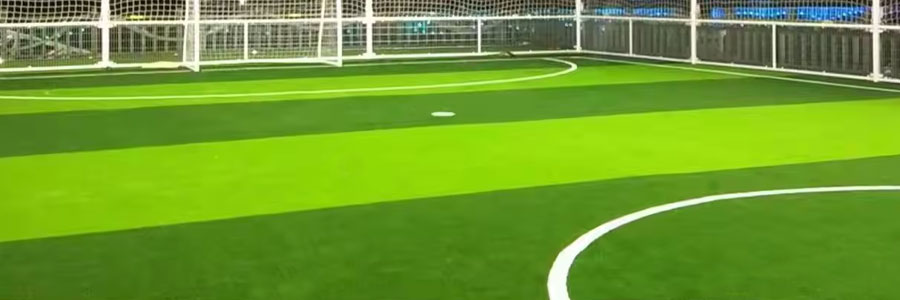
Andere overwegingen voor uw minivoetbalveld
Bij het plannen en bouwen van je minivoetbalveld kunnen verschillende extra factoren van invloed zijn op bruikbaarheid, veiligheid en levensduur. Als je hier aandacht aan besteedt, haal je de beste waarde uit je investering.
1. Verlichting
- Installeer LED-schijnwerpers om de speeluren te verlengen voor avondtraining of commerciële verhuur.
- Overweeg energiezuinige armaturen met minimaal 200 lux voor kleine zaalspellen.
- Zorg voor een gelijkmatige lichtdekking zonder verblinding.
2. Schermen & Balcontrole
- Gebruik omheiningen van 2-3 meter hoog of ball-stopnetten om ballen binnen te houden.
- Bescherm nabijgelegen structuren en voetgangers tegen verdwaalde kogels.
- Zorg voor hekken voor gemakkelijke toegang met behoud van veiligheid.
3. Veiligheid & schokabsorptie
- Zorg voor de juiste dikte van de schokdempers onder de grasmat om de gewrichten van de spelers te beschermen.
- Controleer de naden en vulling regelmatig om oneffen oppervlakken te voorkomen.
- Zorg voor een veilige uitloop rond het veld om het risico op botsingen te verkleinen.
4. Doelpalen en accessoires
- Kies doelpalen die passen bij de grootte van het veld (3 tegen 3 of 5 tegen 1).
- Overweeg verplaatsbare of intrekbare doelen voor flexibiliteit.
- Voeg banken of schaduwrijke zitplaatsen toe voor spelers en toeschouwers.
5. Weer- en UV-bescherming
- Buitenvelden hebben UV-bestendige graszoden nodig om te voorkomen dat de vezels verbleken en broos worden.
- Overweeg voor extreme klimaten graszoden met hittebestendig garen of reflecterende infill.
6. Onderhoudsplanning
- Zelfs graszoden die weinig onderhoud nodig hebben, moeten geborsteld worden, het vuil moet verwijderd worden en af en toe moet de grasmat bijgevuld worden.
- Stel een routineschema op om de levensduur te maximaliseren en de prestaties van de bal constant te houden.
Door vooraf rekening te houden met deze factoren, zorg je ervoor dat je minivoetbalveld niet alleen bespeelbaar is, maar ook veilig, duurzaam en plezierig voor de komende jaren.
Conclusie
Het aanleggen van een minivoetbalveld is een slimme manier om beperkte ruimte te maximaliseren en tegelijkertijd professioneel spel te leveren voor scholen, gemeenschappen of privéfaciliteiten. Met het juiste ontwerp, de keuze van de grasmat, het installatieproces en aandacht voor veiligheidsvoorzieningen kun je een duurzaam veld creëren dat geschikt is voor alle weersomstandigheden en uitstekende prestaties levert en weinig onderhoud vergt.
Ben je klaar om je minivoetbalveld te bouwen? Vraag vandaag nog een gratis CAD-lay-out en kostenraming aan, Mighty Grass ontwerpt uw ideale minivoetbalveld met professionele grassystemen. Met de juiste planning zal uw veld jarenlang een veilige, hoogwaardige speelervaring bieden.
Veelgestelde vragen
Wat is de ideale grootte voor een minivoetbalveld?
De grootte varieert afhankelijk van het doel van het veld (training, verhuur, school, familie) en het aantal spelers (bijv. 5v5, 6v6). Bijvoorbeeld, volgens de richtlijnen van de Football Association (FA) is de aanbevolen lengte voor een 5v5 of 6v6 veld ongeveer 25-50 meter, en de breedte ongeveer 16,5-35 meter.
Bij het plannen moet je de uiteindelijke grootte bepalen op basis van gebruiksfrequentie, veldruimte, budget en spelvereisten.
Kan een minivoetbalveld op een dak of binnenruimte worden gebouwd?
Ja. Veel minivoetbalvelden kunnen worden gebouwd op daken, oude basketbalvelden of binnenvelden. Je moet echter wel rekening houden met extra factoren zoals de structurele draagkracht van het dak, het drainagesysteem, de ventilatie en verlichting binnen en het niveau van de grond.
Wat zijn de onderhoudsvereisten voor kunstgras gebruikt in minivoetbalvelden?
Hoewel kunstgras minder onderhoud vergt dan natuurlijk gras, moet het toch regelmatig worden onderhouden: borstelen van de grasvezels, verwijderen van vuil, controleren van naden en bijvullen van infill (als het een infill systeem is). Bovendien moeten de drainage van de basis en het niveau van het terrein regelmatig worden gecontroleerd.
Hoe lang gaat een minivoetbalveld mee voordat het moet worden gerenoveerd?
De levensduur wordt beïnvloed door het type grasmat, de gebruiksfrequentie, de basisconstructie en het onderhoudsniveau. Over het algemeen kan kunstgras van hoge kwaliteit bij normaal gebruik en onderhoud 8-12 jaar meegaan, waarna vervanging of grote reparaties nodig kunnen zijn.
Welke soorten ondergrond en basisopties moet ik overwegen voor een minivoetbalveld?
Tot de opties van je grassysteem behoren: kunstgras met infill (zand en rubbergranulaat), kunstgras zonder infill en systemen met shock pads. Basisopties zijn grind, asfalt en beton. Verschillende combinaties passen bij verschillende omgevingen (buiten/binnen/dak), budgetten en speelstijlen.


