Nederlands
  English
  العربية
  Español
  Deutsch
  Français
  Português
  Русский
  日本語
日本語  Italiano
  Svenska
  Suomi
Suomi  ไทย
ไทย  Dansk
Dansk  Ελληνικά
  Bahasa Melayu
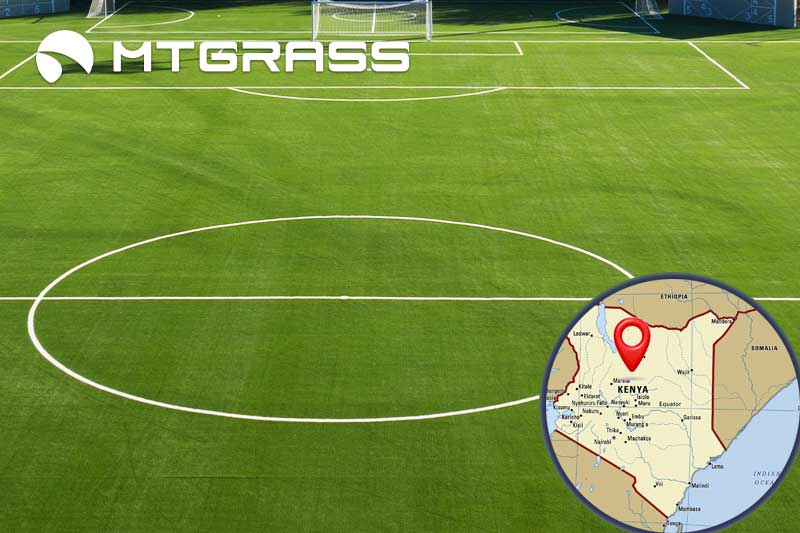
Worldwide, the demand for artificial turf has surged: in 2024, the global artificial turf market was valued at nearly USD 3.92 billion. And as more regions seek water-efficient, low-maintenance and high-durability alternatives to natural grass, the market is projected to grow to over USD 5.2 billion by 2029.
If you’re planning to build a football pitch in Kenya, whether communities, schools, and private clubs aspire to upgrade these sports infrastructure, discovering this investment trend presents a real opportunity.
Why Artificial Football Turf Is Popular in Kenya?
In recent years the Kenyan government has significantly increased its investment in sports infrastructure. For example, the national ‘Sports, Arts and Social Development Fund’ saw its allocation jump from KSh 6.4 billion in 2023/24 to KSh 16.5 billion in 2024/25, and continued at similar levels in 2025/26. This surge in funding, much of which is earmarked for stadium renovation and construction, highlights a national push to upgrade sporting venues across the country. Meanwhile football remains the most popular sport in Kenya, with nearly half the population self-identifying as fans. These developments have created a growing demand for high-quality, all-weather football pitches, making artificial football turf a practical, strategic choice for clubs, schools and community projects.
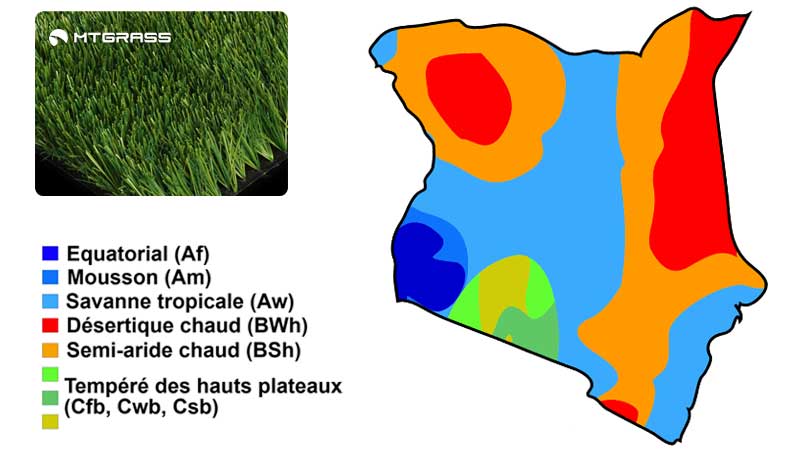
In addition, considering climatic factors, artificial turf in Kenya offers advantages for football stadiums:
- Reduced long-term maintenance costs
- Stable year-round usability despite heavy rains, dry seasons, and intense UV radiation
- The surface will not be damaged by high-frequency training
- If you are renting out artificial turf soccer fields, you can maximize their lifespan, thereby increasing your revenue.
Types of Artificial Football Turf Used in Kenya
5-a-side Turf
5-a-side pitches are extremely popular in Nairobi, Mombasa, Kisumu, and Eldoret. If you’re building this kind of pitch, you’ll typically use 40–50 mm monofilament 3G or non-infill 4G football turf.
It offers excellent ball control in small-sided games and fits compact commercial spaces.
You’ll also benefit from lower construction costs compared to larger fields.
7-a-side Turf
A 7-a-side pitch is ideal for schools, academies, and mid-sized sports centers.
You’ll generally need the same 40–50 mm football turf, but the pitch area is larger, so the total cost is higher.
You can use them in recreational and semi-professional training soccer fields.
11-a-side Turf
If you’re planning a full-size community or professional football field, recommend you use FIFA-certified 45–60 mm monofilament artificial grass with higher density.
This system usually includes advanced sub-base preparation and sometimes a shockpad for improved safety and sports performance.
Infill vs No-Infill Turf
When choosing a football turf in Kenya, you may need to choose between infilled and non-infilled artificial turf systems. Here is a brief explanation based on their respective characteristics:
Graszoden
- Uses sand + SBR rubber or sand + TPE/EPDM
- Offers better energy return and shock absorption
- Recommended for 7-a-side and 11-a-side pitches
- Most FIFA systems fall into this category, and FIFA has specific standards and requirements for it.
No-Infill Artificial Grass
- No rubber granules; only small amount of sand or fully non-infill
- Easier maintenance and cleaner surface
- Popular for schools or indoor mini-pitches
- Works well in areas where rubber infill is restricted
If you want a high-performance training football pitch, infilled artificial turf (3G Turf) is generally a better choice. For situations where installation is simple or for small five-a-side football pitches with limited space, unfilled artificial turf (4G Turf) is the ideal option.
Artificial Football Turf Price in Kenya (2025)
Before you decide on a supplier, it’s important to understand how football turf prices are structured in Kenya. The total cost depends on the turf grade, pitch size, and construction requirements.
Football Turf Price per Square Meter
The cost of artificial football turf varies depending on yarn quality, Dtex, density, backing type, and whether it meets FIFA performance standards.
In the Kenyan market, you will typically see different price tiers:
- Budget turf: suitable for small community fields
- Mid-range turf: ideal for schools and academies
- FIFA-quality turf: designed for professional performance
MightyGrass High-quality football turf usually includes 45–60 mm PE monofilament yarn, strong UV protection for Kenya’s climate, and durable latex or PU backing.
Full Pitch Construction Cost
When calculating your total project budget, you need to consider the entire system, not just the turf.
Construction costs include:
- Earthwork and sub-base preparation
- Drainage layers
- Geotextile
- Opvulmaterialen
- Labor and machinery
- Turf installation
A complete 5-a-side or 7-a-side pitch requires significantly less ground preparation than an 11-a-side field, which is why the overall cost can vary widely.
Extra Costs to Consider
When planning your project, don’t forget to include the following additional expenses:
- Shockpad (optional for higher safety)
- Perimeter fencing
- LED lighting systems
- Goals and nets
- Line marking
- Maintenance equipment
You can refer to the following information on football turf prices:
- Basic artificial turf in Kenya (thinner grass fibers, possibly suitable for light use/garden), such as that listed by some sellers on jiji.co.ke, is priced at approximately ~ KSh 1000 per square meter.
- Thicker turf, more suitable for sports/football use: Sports turf, as mentioned on the Shabbirihardware.com website, is priced between KSh 2,000 and KSh 3,500 per square meter.
- A Kenyan supplier website (floorbliss.co.ke) lists “premium football turf” (50mm grass fibers) at KSh 2,900 per square meter.
Best Football Turf Suppliers in Kenya
There are several local artificial turf suppliers and installers operating in Kenya (especially around Nairobi and Mombasa) as shown by active local firms such as TurfMasters, Turfken and other retailers serving nationwide deliveries. While no single public database lists the exact number of installers, these company listings and industry directories indicate an active domestic supply chain.
The following lists different types of suppliers in the Kenyan market:
1. Local Kenyan Distributors & Installers
Kenya has a growing number of turf distributors and installation companies, especially in Nairobi and Mombasa. Choosing a local partner is convenient if you need:
GreenSpot Turf Ltd
- GreenSpot Turf describes itself as “Kenya’s leading provider of artificial turf solutions,” specializing in the import, sales, and professional installation of artificial turf.
- Project types handled include: garden landscaping, small school/community sports fields, private clubs, and multi-purpose courts (football/padel/tennis), especially for fields requiring a one-time installation with minimal long-term maintenance.
- Address: Green Spot Enterprises Nairobi 00100, Kenya
TurfMasters
- TurfMasters, located in Nairobi, specializes in the supply and installation of artificial grass. They offer a wide range of products—from short landscaping grass suitable for gardens, balconies, and rooftops, to taller grass/sports grass.
- Project types handled: Residential (balconies/rooftops/backyards), commercial real estate (offices/shops/hotels), landscaping (residential areas/public spaces), indoor sports stadiums/gyms/multi-purpose halls/schools, and small to medium-sized sports/recreational venues that balance aesthetics and functionality.
- Address: TurfMasters HQ Embakasi Nairobi, Kenya
Turfken Ltd
- Turfken Ltd is also a local Kenyan supplier, offering “premium quality artificial grass turf and related products.” They claim to provide FIFA Grade high-performance football turf suitable for high-intensity, multi-use fields such as football fields.
- Project types handled: From home backyard/balcony/apartment landscaping to community children’s playgrounds, school playgrounds, mini-football fields, commercial landscaping, and small to medium-sized projects requiring rapid delivery and installation.
- Address: Sapphire Business Park, Nairobi, Kenya
However, local suppliers usually source from international manufacturers, so the quality depends on the specific brand they represent. Always verify the turf specs before committing.
2. MightyGrass (MTG) – FIFA-approved Turf Manufacturers
If you’re looking for a reliable manufacturer with strong international credentials, MightyGrass (MTG) is one of the top choices. As a FIFA-certified manufacturer with over 20+ years of experience, MTG provides high-performance football turf systems designed for Africa’s UV exposure and heavy play intensity.
With MightyGrass , you benefit from:
- FIFA Quality & FIFA Quality Pro artificial turf systems
- High UV-resistant yarn developed for hot climates (LABOSPORT ≥ 5,000 h UV testing)
- Consistent quality from in-house yarn extrusion to backing
- Free samples and customized specifications for your specific needs
- Fast shipping to Kenya and support for you installers
If you want performance, durability, and long-term value for your project, MightyGrass gives you the kind of professional support most local suppliers cannot match.
3. European Brands
If you’re working on a premium facility—such as a top academy, university stadium, or government-funded sports complex—you may come across European brands. These suppliers typically offer:
- FIFA-gecertificeerde systemen
- TPE infill options
- Premium shockpads
- Long warranties
The downside is the cost. These European brands are significantly more expensive, making them suitable mainly for high-budget projects.
MachtigGras Recommended Artificial Football Turf Specifications for Kenya
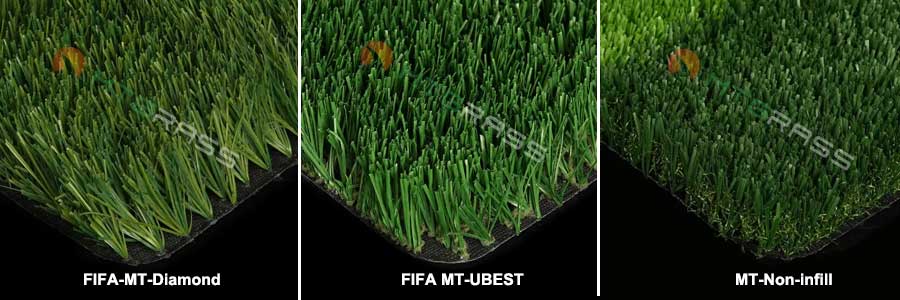
Choosing the reliable and right supplier ensures you avoid premature wear, fading, seam failures, and poor play performance. If you want a balance of durability, affordability, and professional performance, the following specs work best in Kenyan climate conditions:
- Poolhoogte: 50 mm
- Dtex: 10,000 – 12,000 Dtex PE monofilament
- Gauge: 5/8″ or 3/4″
- Stitch Rate: 14–18 stitches/10 cm
- Yarn Shape: U-shape, Diamond, StemXL
- UV Stabilization: ≥ 5,000 h; For strong sun exposure
- Steun: Double-layer PP + Latex or PU
- MightyGrass Optional Models: FIFA MT-Diamond 50, FIFA MT-Ubest 50, MT-StemXL
- Optional: 10–12 mm shockpad for schools or pro pitches
These specs ensure good ball roll, long-term resilience, and reliable performance, even under heavy use.
Conclusie
Whether you’re building a 5-a-side court in Nairobi, a community field in Kisumu, or a full-size stadium in Mombasa, choosing the right artificial football turf is key to long-term success. By understanding the different turf types, comparing supplier options, and checking essential specifications, you can confidently build a field that performs well, lasts long, and delivers real value.
If you want expert guidance or need a FIFA-quality turf system for your upcoming project, MightyGrass (MTG) can support you with samples, specifications, and professional one-on-one consultation.
Ready to start your project? Neem nu contact met ons op – I can help you plan the next steps.
Veelgestelde vragen
What factors should I check when selecting artificial turf for a football field in Kenya?
When selecting artificial turf for a football field in Kenya, it’s recommended to focus on the following factors:
- Pile height, stitch density, yarn material (PE monofilament recommended), and Dtex: these determine the turf’s durability and feel.
- Backing quality: good backing and drainage systems ensure the turf’s durability and long-term stability.
- Drainage system and subgrade preparation: a proper subgrade and drainage system are crucial, especially in areas with frequent rainfall or high drainage requirements.
- Whether to use an infill system: depending on the field’s purpose (amateur/school/professional) and budget, decide whether to use sand + rubber or other infill systems.
By carefully verifying the turf specifications and installation standards across these dimensions, you’ll more easily obtain a turf that is both durable and suitable for Kenya’s climate and usage frequency.
Is artificial turf a better choice than natural grass for Kenya’s climate and usage needs?
For most parts of Kenya, artificial football turf does indeed have significant advantages over natural grass:
- Reduced water consumption: especially important in areas with limited water resources or where water conservation is necessary.
- Lower maintenance costs and complexity: less frequent mowing, irrigation, and fertilization, suitable for schools, communities, or clubs with limited resources/manpower.
- Increased field usage frequency and stability: maintaining field usability and consistent performance even under conditions of rainfall, drought, and strong UV radiation.
- More suitable for high-frequency use scenarios: training, matches, rentals, community events, etc.
Of course, this is contingent on the turf and its construction quality being up to standard, and on a good foundation and maintenance practices.