Nederlands
 English
 العربية
 Español
 Deutsch
 Français
 Português
 Русский
 日本語
 Italiano
 Svenska
 Suomi
 ไทย
 Dansk
 Ελληνικά
 Bahasa Melayu


When winter arrives, freezing temperatures, snowfall, and icy conditions can raise concerns about the durability and performance of artificial grass. Whether you manage a sports facility, landscape project, or commercial property, understanding how synthetic turf responds to winter weather is important for protecting your investment.
Artificial grass generally performs well in cold climates because its synthetic fibers do not become dormant or turn brown like natural grass. However, frost, accumulated snow, frozen infill, and repeated freeze-thaw cycles can affect surface conditions and the performance of the overall turf system. Understanding these risks helps you maintain artificial grass properly and select suitable products and installation systems for cold-weather environments.
How Does Artificial Grass Perform in Winter?
Artificial grass can remain outdoors throughout winter, but its surface conditions and performance may change depending on temperature, moisture, snow accumulation, and the construction of the turf system.
- Frost and low temperatures: Synthetic fibers do not undergo the same biological changes as natural grass. However, frost can form when moisture freezes on the turf surface, making it slippery. The fibers and backing may also become less flexible depending on their material formulation and temperature.
- Snow accumulation: Snow can cover artificial grass without causing the fibers to lose their color or structure. Light snowfall can generally be left to melt naturally. However, deep or compacted snow may restrict access and require careful removal when the area needs to remain operational.
- Ice formation: Ice can develop when water freezes on the surface or within moisture-retaining areas of the turf system. On infilled sports fields, frozen moisture may affect infill movement, cushioning, and traction. These conditions can temporarily change how the surface performs, even when the synthetic fibers remain intact.
Furthermore, the specific impact of winter weather on artificial turf depends on the turf materials, the composition of the infill, the drainage design, and the condition of the base layer.
Does Snow or Ice Damage Artificial Grass?
Snow and ice do not directly cause permanent damage to properly manufactured and installed artificial grass. The main risks are associated with mechanical stress, frozen moisture, and the condition of the underlying base.
Snow and Synthetic Fibers
Artificial grass fibers are made from synthetic materials such as polyethylene (PE) and polypropylene (PP). Unlike natural grass, they do not depend on biological growth and remain green throughout winter. Although low temperatures can affect fiber flexibility, ordinary snowfall is unlikely to cause permanent damage.
Problems are more likely when you drag heavy equipment across frozen turf, use sharp snow removal tools, or expose stiffened fibers to excessive mechanical stress.
Frozen Infill and Surface Conditions
For infilled sportgras, moisture between infill particles can freeze and cause the surface to become harder. This may affect:
- Shock absorption and cushioning.
- Fiber support and upright performance.
- Traction and playing consistency.
If your sports field has frozen infill, avoid normal play until the surface has thawed and its safety and performance have been checked.
Freeze-Thaw Cycles and the Underlying Base
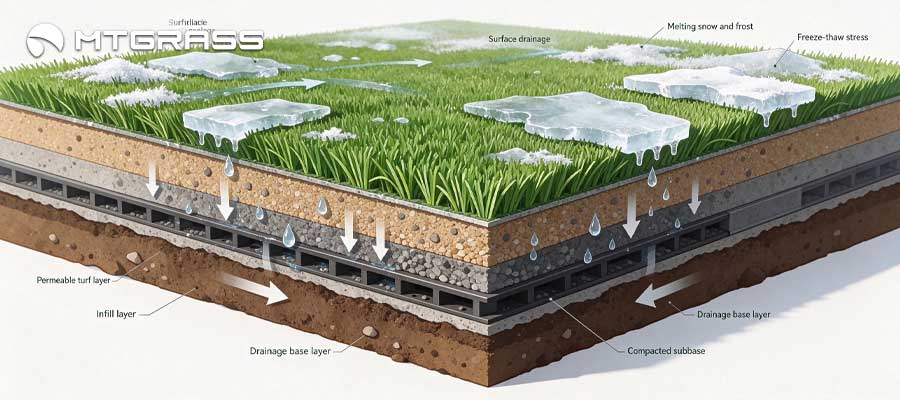
When water in the underlying soil freezes, it expands. As temperatures rise, the ground thaws and may settle. In areas with frost-susceptible soil or poor drainage, this process can cause uneven surfaces, seam stress, or localized movement. A properly prepared aggregate base, effective drainage, and suitable subgrade preparation help reduce these risks.
How to Remove Snow from Artificial Grass?
For most landschap kunstgras installations that are not needed immediately, allowing snow to melt naturally is the safest option. This is especially true when snow is light or when removing it could put unnecessary mechanical stress on the turf.
However, when it becomes necessary to clear snow from sports facilities or commercial areas to ensure access, please select equipment or snow-clearing tools that will not cut or pull at the grass fibers.
- Plastic snow shovels: Suitable for smaller areas. Avoid sharp edges and direct contact with the turf.
- Soft-bristle brooms: Useful for removing light, powdery snow.
- Snow blowers: May be suitable for larger areas when approved for the specific turf system.
Specialized snow removal equipment: Sports fields may require dedicated machinery with appropriate tire types and blade clearance.
For mechanical snow removal, keep blades above the turf surface and avoid disturbing the infill. The Synthetic Turf Council also provides guidance on suitable equipment and snow removal practices.
What to Avoid When Removing Snow: Avoid metal shovels, unprotected plow blades, aggressive brushing, and heavy machinery with unsuitable tires or tracks. Furthermore, never use ordinary industrial salt (rock salt), chemical de-icing agents, or harsh chemical substances; these can cause the artificial turf to become discolored, lead to fiber breakage, and impair drainage performance.

How to Maintain Artificial Grass During Winter?
Proper winter maintenance helps keep artificial grass clean, maintain its appearance, and protect the surface from unnecessary wear. Although kunstgras can withstand cold temperatures, frost, and snow, a few simple maintenance practices can help prevent avoidable problems.
- Remove Leaves and Debris Regularly: Use a leaf blower, soft-bristled brush, or suitable cleaning tools to remove fallen leaves, twigs, and other debris.
- Keep Drainage Systems Clear: Proper drainage allows melting snow and rainwater to flow away, reducing the risk of standing water freezing again.
- Remove Snow Carefully When Necessary: For light snowfall, allow the snow to melt naturally whenever possible.
- Avoid Walking on Frozen Turf: Frozen fibers can become less flexible and more susceptible to breakage under pressure.
- Check Seams and Edges After Winter Weather: Inspect joints, seams, and perimeter edges for signs of lifting or separation, particularly after heavy snowfall or repeated freeze-thaw cycles.
- Avoid Excessive Use of De-Icing Chemicals: Do not apply rock salt, harsh chemical de-icers, or other aggressive products unless they are specifically approved for your artificial turf system.
How to Inspect Artificial Grass After Winter?
Once the turf has fully thawed, inspect the installation to identify any problems caused by winter weather. Pay attention to four areas:
- Fiber condition: Look for flattened, broken, or frayed fibers, especially in high-traffic areas.
- Infill distribution: Check for uneven levels, compacted areas, or exposed backing.
- Seams and backing: Inspect joints, perimeter edges, and visible backing for separation or damage.
- Drainage and base: Look for standing water, uneven surfaces, or localized settlement after snowmelt.
If you identify recurring drainage problems, surface deformation, or seam separation, investigate the underlying cause rather than simply repairing the visible surface. Problems involving the subgrade or drainage system may require professional inspection and corrective work.
Does Artificial Grass Need Special Winter Specifications?
Artificial grass does not necessarily require completely different specifications for winter use. For projects in regions with harsh, cold, and low-temperature climates, please consider the following technical specification requirements:
- Cold-Resistant Turf Fibers: Choose high-quality PE fibers with good flexibility at low temperatures. Fibers should be able to withstand repeated temperature changes without becoming excessively brittle or cracking.
- Durable Backing: High-quality PU backing can help secure the yarns and maintain tuft bind.
- Effective Drainage Performance: Efficient drainage allows rainwater and melting snow to pass through, reducing standing water and the risk of ice formation.
- Strong Seam and Joint Construction: Use suitable joint tape and adhesives designed to maintain bonding performance across the expected temperature range.
- Infill Selection for Sports Turf: If you are sourcing infilled sports turf, consider the infill material’s moisture retention, particle size, compaction behavior, and compatibility with the turf system.
- UV and Weather Resistance: Turf should retain adequate UV resistance to withstand seasonal weather changes and long-term outdoor exposure.
An important consideration: The overall turf system matters more than any single specification. Repeated freezing and thawing can put additional stress on turf fibers, backing, seams, and the underlying base. If not handled properly, even high-quality artificial turf can develop various issues during the winter.
Laatste gedachten
Artificial grass can withstand ordinary winter conditions, including frost, snow, and freezing temperatures.
MightyGrass is a reliable fabrikant van kunstgras in China. We understand that artificial grass used in cold climates must do more than maintain its appearance. It needs to withstand seasonal temperature changes, retain its structural integrity, and provide reliable drainage throughout the year.
At MightyGrass, we have been R&D and manufacturing artificial turf since 2003, with integrated production covering yarn extrusion, tufting, and backing. We provide sports and landscape turf solutions for distributors, contractors, and project buyers worldwide.
If you are planning an artificial turf project in a cold climate, Neem contact op met MightyGrass to discuss suitable products, technical specifications, and project requirements.
Veelgestelde vragen
How can you properly install artificial turf to prevent winter damage?
Whether you live in a colder area like San Ramon or a windier spot like Pleasanton, a secure installation is the key to winter durability. A resilient system should include the following elements:
- A compacted base to prevent heaving
- Proper grading to avoid water accumulation
- A high-quality drainage layer
- High-performance permeable turf system
- Strong, reinforced seams
- The correct depth of infill
Can artificial turf crack in freezing weather?
No. MightyGrass’s high-quality artificial turf systems—specifically designed for cold climates—are tested against extreme temperatures and UV exposure. The backing and grass blades remain flexible even when temperatures drop below freezing. Cracking in artificial turf is only a risk if:
- Low-quality plastic turf is used
- The base shifts due to a faulty drainage system
- Heavy equipment is moved across the turf while it is frozen
What are the benefits of having artificial turf in regions with cold climates?
- Low maintenance: Artificial turf requires no watering, mowing, or fertilizing. Simply use a broom or leaf blower to clear away debris and keep your yard tidy.
- Durability: High-quality artificial turf is designed to withstand extreme weather. The grass blades will not break or sustain damage, even in freezing temperatures.
- Rapid drainage: Moisture from heavy rain, frost, or melting snow drains quickly through the turf backing, which helps minimize standing water and reduces the risk of the lawn freezing over.
- No mud: Unlike natural grass, artificial turf contains no soil. Pets and children can enjoy the lawn to their heart’s content without the risk of tracking mud indoors.
- Consistent appearance: While natural grass often suffers from issues like fading or brown patches during the winter, artificial turf remains vibrant and attractive all year round.
Does artificial grass stay green in winter?
Yes. Artificial grass maintains its green appearance throughout the year because its synthetic fibers do not become dormant or turn brown in cold weather.
Does artificial grass freeze in winter?
The synthetic fibers themselves do not freeze like natural grass. However, moisture in the infill, drainage layer, and underlying soil can freeze, temporarily affecting surface conditions.