
 Nederlands
  English
  العربية
  Español
  Deutsch
  Français
  Português
  Русский
  日本語
日本語  Italiano
  Svenska
  Suomi
Suomi  ไทย
ไทย  Dansk
Dansk  Ελληνικά
  Bahasa Melayu
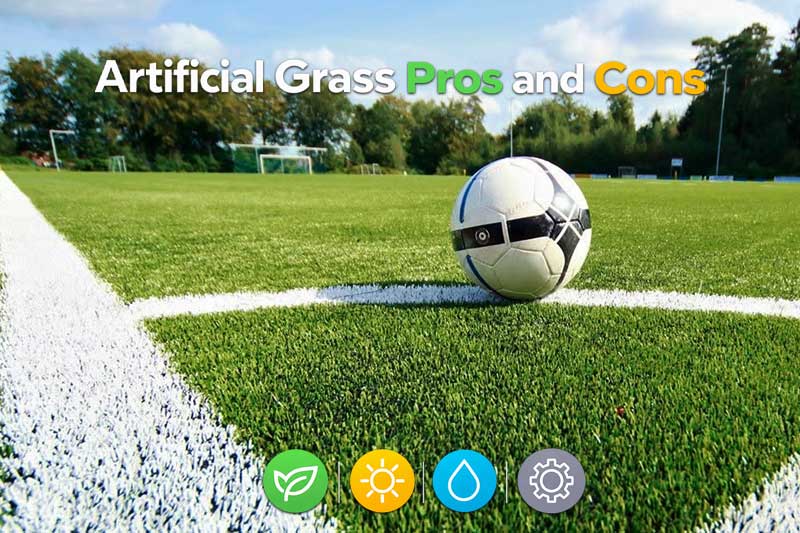
If you are comparing artificial grass for a residential landscape, commercial development, sports facility, or distribution business, you’ve probably heard both sides: “it saves so much time” and “it looks fake.” Both arguments actually have merit, but it ultimately depends on the type of turf you choose and where it is being installed.
This guide gives you the honest picture: what artificial grass pros and cons, what it really costs over time, and how to tell a good supplier from a risky one.
Here’s the brief overview:
| Voordelen | Nadelen |
| Less routine maintenance than most traditional lawns | Higher upfront material and installation costs |
| Reduces the need for regular lawn watering | Can get hot under direct sunlight in warm weather |
| Stays green through the year with proper care | Still needs periodic cleaning, brushing and occasional repairs |
| Widely used in backyards, gardens, rooftops, balconies, landscaping, and sports field projects. | Worn or damaged turf can be costly to replace |
| Available in many pile heights, colors and textures | Lower-quality products can look or feel less natural |
| Can be specified for particular drainage and traffic needs | Heat, UV and wear performance vary widely between products |
What Are the Main Advantages of Artificial Grass?
- You skip most of the routine work: There’s no mowing, and you generally won’t need to fertilize, aerate or reseed. You’ll still brush the fibers now and then, clear leaves and debris, and keep an eye on seams and edges. It’s “low maintenance,” not “no maintenance.”
- You use far less water: The U.S. EPA estimates that landscape irrigation accounts for nearly one-third of residential water use nationwide, roughly 9 billion gallons a day. In dry regions, that share can be higher. Turf removes the need for regular lawn watering, though you may still rinse pet areas or cool the surface on a hot afternoon.
- It looks consistent through the seasons: Natural lawns brown in winter, scorch in summer and thin out under shade or heavy foot traffic. A well-made turf keeps an even color and surface throughout the year. Products that blend several green tones, add a thatch layer and use varied fiber shapes tend to look the most natural.
- Wide Range of Applications: Shaded side yards, rooftops, balconies, slopes, commercial entrances, and sports facilities such as voetbal fields, multi-sport courts, and school playgrounds are all practical applications. The key is choosing a product suited to the intended use and installation conditions.
It is important to note that lightweight decorative turf may be ideal for a balcony, while dense, durable turf designed for intensive use is better suited to sports fields, pet runs, and busy commercial spaces. Treating these different applications as interchangeable can lead to premature wear, poor performance, and unnecessary maintenance.
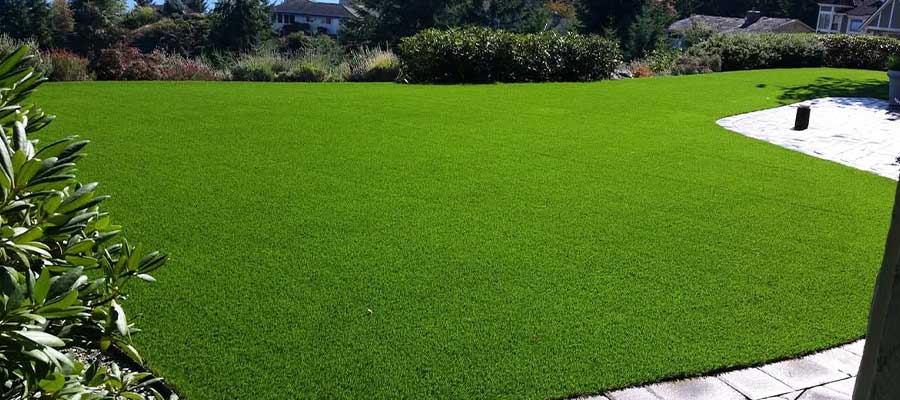
What Are the Disadvantages of Artificial Grass?
This is the section many suppliers skip. We think you’re better off knowing.
- The upfront cost is higher: In the U.S., installed prices are commonly cited in the range of roughly $8 to $20 per square foot, depending on region, product grade, site conditions and labor. The turf itself is only part of that. Excavation, a compacted aggregate base, drainage preparation, edging, infill and transport can make up a large share of the total. If you’re comparing quotes, make sure they cover the same scope.
- It can get hot: Synthetic fibers absorb and hold heat. Studies from U.S. universities have recorded surface temperatures well above 130°F, and in some tests above 150°F, in full summer sun, while natural grass stayed close to air temperature. How bad it gets depends on weather, shade, fiber color, infill type and system design. Lighter-toned yarns and heat-reducing technologies can help, shade helps more, and a quick rinse brings the temperature down fast. Reflected sunlight from windows or glass can also cause localized heating in specific setups, so check how your site is oriented before installing next to large glass surfaces.
- It still needs cleaning: Dust, leaves, pet waste and spills don’t disappear. Heavily used areas may need regular brushing so the fibers stay upright, and infill may need topping up over time.
- Wear, fading and replacement are real: UV exposure, heavy traffic and poor installation all shorten a turf’s life. When it does reach the end, you’ll pay to remove the old surface, dispose of it and install a new one.
- The environmental picture is mixed: Turf saves water during use, but it’s made from plastics such as polyethylene, polypropylene or nylon, and recycling options for end-of-life turf are still limited in many regions. If sustainability matters to your project, ask suppliers about material composition, recyclability and any available testing.
Bij MachtigGras, we address common artificial grass challenges through integrated manufacturing, product innovation and application-specific solutions. From heat-reducing artificial turf technology and durable backing systems to huisdiervriendelijk kunstgras and recyclable ERET options, we help distributors and project buyers find products suited to their performance, maintenance and sustainability requirements. Contact MightyGrass to discuss your project needs and request a tailored artificial turf solution.
Is Artificial Grass Worth It? Cost and Long-Term ROI
Artificial grass can be a worthwhile investment, but its value depends on how the space is used, the maintaining costs, and how long the turf remains in service. Rather than comparing upfront prices alone, consider the total cost of ownership over the expected lifespan of the installation.
- Initial costs vs. ongoing expenses. Artificial grass typically requires a higher initial investment, including the turf, site preparation, base materials, drainage and installation labor. Over time, however, it can reduce expenses associated with watering, mowing, fertilizing and other routine lawn care. The actual savings depend on local water rates, maintenance costs, climate and the condition of your existing lawn.
- Long-term value depends on durability. Artificial grass is not maintenance-free, and eventual repairs or replacement must be included in any realistic cost estimate. Turf quality, UV resistance, backing construction, installation methods and traffic levels all affect long-term performance. Choosing a product designed for its intended application can help reduce premature wear and avoidable replacement costs.
When is artificial grass worth it? For properties with high irrigation costs, areas where natural grass struggles to grow, and landscapes or frequently used sports facilities where surface consistency and reduced routine maintenance are desired, artificial turf is often a worthwhile option to consider.
For distributors, contractors and project developers, the best investment is not necessarily the cheapest turf, but the product that balances purchase price, performance requirements and expected service life. MightyGrass manufactures artificial turf for sports, landscaping and commercial applications, offering customized specifications to suit different project conditions. Contact our team to discuss your requirements and compare suitable turf solutions for your next project.
What Affects the Performance and Lifespan of Artificial Grass?
Most of the problems people associate with artificial grass, from heat to fading to ripples, trace back to a handful of product and installation factors.
- Fiber material and structure. Fiber type, thickness, cross-section shape and stitch density all affect feel, resilience and wear. Face weight, measured in ounces per square yard, tells you how much yarn is in the product. Residential landscape turf often sits somewhere between 50 and 80 oz/yd², and higher density generally helps the surface hold up under traffic.
- UV stability and color retention. Sunlight is turf’s biggest long-term enemy. MightyGrass kunstgras products have passed Labosport’s 5,000-hour UV resistance test and are suitable for the vast majority of regions with intense UV exposure.
- Backing and drainage. The backing holds the fibers in place, and its construction affects tuft bind, dimensional stability and water flow. Perforated backings allow water to pass through, but real-world drainage also depends on the base beneath it. A well-built turf over a poorly drained base will still pool and smell.
- Traffic and maintenance. Pets, play areas, furniture and frequent walking all increase wear. Regular brushing and rinsing keep fibers standing and reduce odor, especially in pet areas.
- Installation quality. A compacted aggregate base, correct grading, secure edging and properly joined seams matter as much as the turf itself. Uneven bases and weak seams are leading causes of wrinkles, lifting edges and early failure.
If you want a deeper look at fiber types and turf construction, see our guide to soorten kunstgras.
How to Choose an Artificial Grass Manufacturer for Your Project
If you’re buying for one backyard, a local installer or distributor may be all you need. If you’re a contractor, distributor, importer or developer, the supplier becomes part of your project risk. A few checks separate reliable partners from risky ones.
- Verify the specifications, not just the price: carefully compare detailed parameters—such as fiber material, pile height, face weight (fiber weight), backing type, and drainage performance—across artificial grass samples to ensure an apples-to-apples comparison.
- Ask for test documentation: Depending on your project, relevant documents might cover UV resistance, tuft bind, colorfastness, heavy metal content, fire performance or, for sports and play areas, impact attenuation.
- Confirm customization and supply capacity: For bulk and repeat orders, batch-to-batch color consistency, lead times, roll sizes, packaging and export experience all matter. So does the ability to adjust yarn, density or backing to meet a project spec.
- Look at long-term support: A clear written warranty, a defined process for handling defects, and access to technical advice tell you how a company will behave after the invoice is paid. Always request physical samples and check them against your site conditions before placing a large order.
This is the kind of buyer MightyGrass is set up to work with. We’re a FIFA turf manufacturer, so we can discuss yarn, density and backing specifications directly, support customized requirements and provide samples so you can evaluate a product before committing. Our range covers landscape, pet, commercial and sports applications, and our team can help you narrow the options based on your climate, traffic level and budget.
Is Artificial Grass Right for Your Project?
Artificial grass is worth considering when you need a consistent surface, reduced routine maintenance or greater flexibility in how an area is used. Whether it is the right choice depends on your climate, budget, expected traffic and long-term maintenance plan.
For landscape projects, pay particular attention to heat, drainage and appearance. For sports facilities, evaluate the complete playing-surface system and its relevant performance requirements. For distributors and contractors, consider manufacturing capability, technical documentation, customization and supply consistency.
If you’re evaluating turf for a commercial site, a contracting job or a bulk order, the MightyGrass team can help you match the right specification to your project.
Request Samples or Project Quote
Veelgestelde vragen
Is artificial grass completely maintenance-free?
No. It needs far less work than a natural lawn, but you’ll still need to clear debris, brush the fibers, rinse pet areas, check drainage and seams, and occasionally repair or top up infill.
Does artificial grass get too hot in summer?
It can. Surface temperatures in direct sun can climb well above air temperature, and the effect depends on shade, fiber color, infill and local weather. Planning for shade, choosing a heat-reducing product and rinsing the surface before use all help.
Hoe lang gaat kunstgras mee?
Commonly cite 10 to 25 years for premium artificial grass, but real lifespan depends on UV exposure, traffic, installation quality, maintenance and the product itself.
Is artificial grass worth the initial cost?
It can be, particularly where water is expensive, mowing is impractical , high-frequency use, or you need a consistent surface. The value depends on the quality of the product, the installation and how long it lasts, so compare total cost over the expected lifespan rather than the sticker price.


