Nederlands
  English
  العربية
  Español
  Deutsch
  Français
  Português
  Русский
  日本語
日本語  Italiano
  Svenska
  Suomi
Suomi  ไทย
ไทย  Dansk
Dansk  Ελληνικά
  Bahasa Melayu
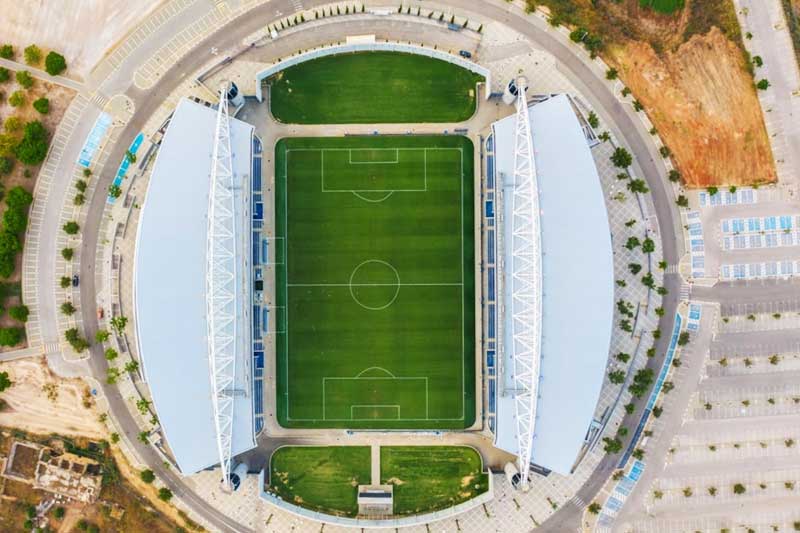
Het komende WK 2026 doet de vraag naar FIFA-gecertificeerd kunstgras toenemen. Het WK wordt voor het eerst gezamenlijk georganiseerd door de Verenigde Staten, Canada en Mexico. Aan het toernooi van dit jaar zullen 48 teams deelnemen, in vergelijking met de vorige 32, met in totaal 104 wedstrijden, wat aanzienlijke uitdagingen met zich meebrengt voor het gebruik en onderhoud van voetbalvelden. Volgens het FIFA-beleid moeten de officiële wedstrijdvelden in de 16 gaststeden natuurgras gebruiken. Sommige van deze velden zullen hybride grassystemen gebruiken, waarbij synthetische vezels worden gecombineerd met natuurlijke graswortels voor een grotere duurzaamheid en consistentie. Er zullen echter nog steeds kunstgrassystemen worden gebruikt op trainingsbases en reservelocaties voor deelnemende teams om het intensieve gebruik te weerstaan.
Professionele gegevens geven aan dat een natuurgrasveld, bij intensief gebruik, ongeveer 20-25 uur slijtage per week aankan en dat er daarna rust en herstel nodig is. FIFA-gecertificeerde grasmatFIFA voetbalgras is echter bestand tegen bijna continu gebruik, verdraagt meer dan 1500 wedstrijd- en trainingsuren per jaar en heeft een levensduur van 8-10 jaar. Dit betekent dat FIFA voetbalgras teams voorziet van hoge prestaties tijdens het intensieve WK-schema en frequente trainingssessies.
Deze kunstgrasmatten, die het professionele testsysteem van FIFA (FIFA Turf Certification) hebben doorstaan, zijn qua balgevoel, balsnelheid, balstuit en wrijvingscoëfficiënt vrijwel identiek aan natuurgras, wat zorgt voor een uiterst consistente spelerservaring op het trainingsveld en op het speelveld. Volgens gegevens van het International Sports Field Research Institute zijn de installaties van FIFA-gecertificeerd kunstgras wereldwijd de afgelopen vijf jaar met meer dan 20% gegroeid, met een sterke groei in de Noord-Amerikaanse en Afrikaanse markten.
Waarom heeft het WK natuurgras nodig?
Natuurgras biedt balsnelheid, wrijving en reboundprestaties die het meest lijken op natuurlijke omstandigheden, zodat alle wedstrijden onder dezelfde omstandigheden worden gespeeld. Daarom moeten alle 16 belangrijkste stadions voor het WK 2026, zelfs diegene die oorspronkelijk bedekt waren met kunstgras, omgebouwd worden naar natuurgras of uitgerust worden met hybride grassystemen om te voldoen aan de vereisten voor WK-voetbalvelden.
Vanuit sportwetenschappelijk oogpunt biedt natuurgras een betere bescherming voor spelers. Zelfs de meest geavanceerde voetbalgrasmatten, die gecertificeerd zijn door FIFA en voldoen aan de FIFA grasmatnormen, vertonen nog steeds subtiele verschillen met natuurgras op het vlak van schokabsorptie, energieteruggave en de wrijving die spelers voelen wanneer ze uitglijden. FIFA dringt aan op het gebruik van echt gras op de Wereldbeker om het risico op gewrichtsblessures en oppervlakkige schaafwonden te verminderen, zodat alle topspelers op hun best kunnen presteren.
Bovendien helpt de uniformiteit van natuurgras om de competitie eerlijk te houden. Te grote verschillen in het gevoel van de grasmat van het ene stadion naar het andere zou het speltempo beïnvloeden. Daarom eist de FIFA dat alle velden zo goed als identiek zijn wat betreft balsnelheid, wrijvingscoëfficiënt en rebound. Dit vereist niet alleen een diepe zandfundering, extra verlichting en een geavanceerd drainagesysteem om het natuurgras gezond te houden, maar betekent ook dat er extreem hoge onderhoudseisen worden gesteld aan de bouwers van voetbalvelden.
FIFA Natuurlijke grasmat Technische standaarden
| Technische indicator | Vereist Bereik | Beschrijving |
| Grashoogte | 23-28 mm | Zorgt voor consistentie tussen balsnelheid en beweging |
| Oppervlaktehardheid (Clegg Impact) | 80-100 gmax | Vermindert het risico op letsel bij spelers |
| Bal terugkaatsen | 0.6-0.85 m | Komt overeen met de natuurlijke voetbalprestaties |
| Kogelrol | 4-8 m | Zorgt voor een eerlijke balans tussen passeersnelheid en spelverloop |
| Huidwrijving | 0.35-0.75 | Voorkomt overmatige schuifwrijving |
| Schokabsorptie | 55-70% | Vermindert stress op gewrichten en spieren |
| Afvoersnelheid | ≥ 50 mm/u | Zorgt voor ononderbroken spel in regenachtige omstandigheden |
Opmerking: De bovenstaande indicatoren zijn afgeleid van het FIFA Quality Programme for Football Turf, een belangrijke referentiestandaard voor de constructie en het testen van grasmatten op wereldkampioenschappen.
Dit betekent niet dat de waarde van FIFA kunstgras over het hoofd wordt gezien. Sterker nog, trainingsvelden, reservestadions en gemeenschapsvoetbalvelden vertrouwen nog steeds sterk op kunstgras omdat natuurgras niet bestand is tegen intensief gebruik. Het wereldkampioenschap voetbal gebruikt echt gras om de eerlijkheid en veiligheid op de hoogste competitieniveaus te garanderen, terwijl FIFA gecertificeerd kunstgras dient als primair veld en trainingsveld. Samen vormen ze het complete voetbalecosysteem dat nodig is voor het WK.
Kunstgras toepassingen in WK locaties: Natuurlijk gras vs FIFA kunstgras
Het wereldkampioenschap voetbal voor vrouwen van 2015 in Canada betekende een keerpunt in de populariteit van kunstgras in het mondiale voetbal. Voor het eerst in de geschiedenis van FIFA werd op alle zes toernooivelden (Vancouver, Edmonton, Ottawa, Moncton, Montreal en Winnipeg) FIFA-goedgekeurd kunstgras gebruikt. Deze grasmat had de FIFA Turf Certification-test doorstaan en voldeed aan de technische FIFA Quality Pro Turf-normen.
Volgens de technische gegevens van de FIFA voldeed dit FIFA kunstgras aan de FIFA kunstgrasstandaarden voor de belangrijkste prestatie-indicatoren. Dit zorgde niet alleen voor een eerlijke competitie, maar toonde de wereld ook de levensvatbaarheid van kunstgrasvoetbal in internationale competities.
Technische specificaties wereldkampioenschap kunstgras 2015
| Prestatie-indicatoren | FIFA standaard assortiment | 2015 Werkelijke prestaties van kunstgras |
| Kogelrol | 4 - 8 m | Voldoet aan |
| Bal terugkaatsen | 0.6 - 0.85 m | Voldoet aan |
| Schokabsorptie | 55 - 70% | Voldoet aan |
| Huidwrijving | 0.35 - 0.75 | Voldoet aan |
| Duurzaamheidstest | ≥ 20.000 simulatiecycli | Passen |
FIFA koos ervoor om kunstgras volledig te gebruiken voor de Women's World Cup om de voordelen van het materiaal aan te tonen op het vlak van duurzaamheid, onderhoudskosten en aanpasbaarheid aan het klimaat. Sommige Canadese gaststeden hebben bijvoorbeeld lange winters en extreem lage temperaturen, waardoor natuurgras moeilijk het hele jaar door te onderhouden is. FIFA Certified Turf zorgt ervoor dat het veld levensvatbaar blijft in deze barre klimaten.
Deze historische gebeurtenis had verstrekkende gevolgen. Terwijl FIFA nog steeds aandringt op het gebruik van natuurgras voor WK-finales, toonde de Women's World Cup de haalbaarheid aan van FIFA kunstgras voor grootschalige toernooien. Dit ondersteunde niet alleen de daaropvolgende wijdverspreide adoptie van kunstgras door professionele clubs, nationale trainingscentra en gemeenschapsvelden, maar stimuleerde ook de wereldwijde marktvraag naar FIFA-gras. Vandaag wordt FIFA Certified Turf op grote schaal gebruikt in topstadions in Afrika, Azië, Noord-Amerika en het Midden-Oosten, als waardevolle aanvulling op en alternatief voor natuurgras.
Natuurgras vs. FIFA-goedgekeurd gras
| Item | Natuurlijk gras | FIFA gecertificeerd gras |
| Consistentie van het oppervlak | Beïnvloed door weers- en bodemomstandigheden, moeilijk om uniformiteit te behouden. | FIFA kunstgrasstandaarden garanderen een consistente balrol (4-8 m), balrebound (0,60-0,85 m), schokabsorptie (55-70%), verticale vervorming (4-10/11 mm) en rotatieweerstand (25-50 N-m). |
| Gebruiksduur | 20-25 uur per week. | 60+ uur per week, het hele jaar beschikbaar. |
| Onderhoudskosten | Hoog: vereist reparatie, water geven, maaien, opnieuw inzaaien. Gemakkelijk beïnvloed door klimaat en gebruiksfrequentie. | Laag: vereist alleen basisreiniging en borstelen. |
| Duurzaamheid | Hogere chemische en energie-input; vereist delicaat onderhoud om schade te voorkomen. | Kunstgras maakt steeds meer gebruik van non-infill of organische infill systemen, recyclebaar en herbruikbaar. |
| Sollicitatie | Officiële internationale wedstrijden (bijv. Wereldbeker). | Trainingsvelden, reservevelden, gemeenschappelijke voetbalvelden. |
FIFA Kunstgras Ontwikkeling
FIFA Turf, gebruikt op de Wereldbeker en andere toernooien van topniveau, is niet zomaar een kunstgrasveld; het is een professioneel systeem dat rigoureus is ontworpen, getest en gecertificeerd. Om ervoor te zorgen dat trainingsvelden presteren als wedstrijdvelden van wereldklasse, heeft FIFA uitgebreide FIFA kunstgrasstandaarden opgesteld die elk aspect van het proces omvatten, van grondstoffen en productie tot installatie en tests na productie. Deze standaarden zorgen er niet alleen voor dat kunstgras natuurgras evenaart op belangrijke prestatiegebieden zoals balsnelheid, rebound, frictie en schokabsorptie, maar bieden ook een uniforme kwaliteitsstandaard voor stadionaannemers en -exploitanten.
Productienormen en testproces
Modern FIFA voetbalgras gebruikt hoogmoleculaire synthetische vezels (zoals polyethyleen (PE) en polypropyleen (PP)) voor graszoden, die UV-bestendig en slijtvast zijn. De strengen zijn meestal tussen 40 en 60 mm hoog voor een realistisch gevoel tijdens het spelen. Deze strengen worden in een basisweefsel met dubbele of driedubbele lagen geweven met behulp van een precisie tufting proces. De zelfklevende achterkant is vaak gemaakt van milieuvriendelijk polyurethaan (PU), wat duurzaamheid en milieuprestaties garandeert. Tijdens de certificeringsfase moeten de producten eerst laboratoriumtests doorstaan, waarbij meer dan 30 indicatoren worden getest, waaronder balstuit, wrijvingscoëfficiënt, schokabsorptie en duurzaamheid. Na installatie moeten ze ook veldtesten doorstaan om te garanderen dat ze voldoen aan de FIFA-certificeringsvereisten voor grasmatten onder reële omstandigheden. Dit dubbele testmechanisme garandeert de betrouwbaarheid en consistentie van FIFA-goedgekeurde grasmatten.
4G Astroturf (Niet-opgevuld gras)
De afgelopen jaren zijn milieubescherming en duurzaamheid belangrijke ontwikkelingen geworden in de kunstgrasindustrie. Traditionele FIFA-goedgekeurde kunstgrassystemen maken vaak gebruik van rubbergranulaat als infill, maar dit infill brengt een risico op lekkage met zich mee, wat zorgen baart voor het milieu en de gezondheid. Daarom stimuleert FIFA actief de ontwikkeling en toepassing van 4G TURF (non-infill voetbalgras). Door de vorm, dichtheid en basisweefselstructuur van de grasvezels te optimaliseren, maakt dit type grasmat rubbergranulaat overbodig en behoudt het uitstekende balstuit- en wrijvingseigenschappen. Volgens de European Sports Flooring Association is het marktaandeel van 4G veld (non-infill turf) systemen de voorbije drie jaar met meer dan 15% gegroeid en wordt het op grote schaal gebruikt in futsal, jeugdtrainingslocaties en sommige professionele clubtrainingsvelden.
Recyclebaar kunstgras
Naast de non-infill trend heeft FIFA kunstgras ook doorbraken bereikt op het gebied van materiaalrecycling en koolstofarme productie. Enkele toonaangevende fabrikanten hebben bijvoorbeeld recyclebare grassystemen (5G gras), waarbij de grasvezels en het basisweefsel aan het einde van hun levenscyclus kunnen worden gerecycled en hergebruikt, waardoor de druk op stortplaatsen afneemt. Onderzoek toont aan dat kunstgras met recyclebare materialen de koolstofuitstoot met 20-30% kan verminderen over de hele levenscyclus, wat aansluit bij de groene ontwikkelingstrend van de wereldwijde sportindustrie.
Invloed van voetbalveld
Deze technologische innovaties hebben de invloed van FIFA kunstgras op de wereldmarkt vergroot. Kiezen voor FIFA-goedgekeurd kunstgras betekent minder onderhoud, een grotere duurzaamheid en de zekerheid dat ze voldoen aan internationale concurrentienormen. Voor uitbaters betekent dit het hele jaar door gebruik, milieuvriendelijkheid en een hoger rendement op investering. Naarmate het Grass FIFA-project vordert, zal het kwaliteitsvol profturf van FIFA een belangrijke basis worden voor het promoten van de popularisering van voetbal en evenementen in de toekomst, of het nu gaat om trainingskampen voor de Wereldbeker of voetbalvelden in de gemeenschap.
Hoe kies je FIFA-gecertificeerd gras?
Voor aannemers, clubs en toernooiorganisatoren is het kiezen van de juiste FIFA-gecertificeerde grasmat meer dan gewoon een stuk gras kopen; het heeft een directe invloed op de naleving van het project, de veiligheid van de spelers en het rendement op investering op lange termijn. Hieronder volgen de belangrijkste overwegingen bij de aankoop:
- Bevestig het FIFA-certificeringsniveau: Controleer of het product van de leverancier FIFA grasmatcertificering heeft doorstaan en het FIFA Quality of FIFA Quality Pro logo draagt. Het eerste is geschikt voor gebruik in de gemeenschap en op trainingsvelden, terwijl het tweede geschikt is voor gebruik in professionele clubs en internationale wedstrijdlocaties.
- Controleer laboratorium- en veldtestgegevens: Gekwalificeerd FIFA-voetbalgras moet voldoen aan de FIFA-standaarden voor kunstgras, zoals balrol (4-8 m), impactabsorptie (55-70%) en wrijvingscoëfficiënt (0,35-0,75). Aannemers kunnen volledige testrapporten en on-site acceptatierapporten opvragen bij leveranciers.
- Let op de levensduur en onderhoudskosten: FIFA kunstgras heeft over het algemeen een levensduur van 8-10 jaar, maar verschillen in vakmanschap tussen merken kunnen de slijtvastheid van het gras en de stabiliteit van het basisweefsel beïnvloeden. FIFA-goedgekeurde grasmatten van hoge kwaliteit kunnen de lopende onderhoudskosten aanzienlijk verlagen.
- Duurzaamheid en milieuvriendelijkheid: Steeds meer projecten vereisen het gebruik van niet-ingevulde voetbalgrasmatten of recyclebare materialen om het vrijkomen van invuldeeltjes en de daaruit voortvloeiende impact op het milieu te verminderen. Aankopers moeten de voorkeur geven aan leveranciers met een gevestigde milieuvriendelijke productlijn.
- Wereldwijde service en case-ervaring van leverancier: Door een leverancier van voetbalgras te kiezen die ervaring heeft met grote internationale evenementen en die regio-overschrijdend kan leveren, bent u verzekerd van tijdige projectoplevering en technische ondersteuning op lange termijn.
Top FIFA goedgekeurde kunstgrasleveranciers in de wereld
| Bedrijf | Opgericht | FIFA-certificering | Wereldwijde aanwezigheid | Representatieve projecten | Voordelen |
| MightyGrass (China / Saoedi-Arabië / VS) | 2003 | FIFA-kwaliteit & FIFA-kwaliteit Pro | Fabrieken in China en Saoedi-Arabië + magazijn in Californië, VS | Olympische Spelen 2008 in Peking, Afrikaanse professionele stadions | 20+ jaar productie-ervaring, onafhankelijke R&D, snelle levering, ondersteunt 4G turf & 5G turf, projecten in meer dan 166 landen |
| Greenfields (Nederland) | 1981 | FIFA gecertificeerd | Europa / Midden-Oosten | Meerdere Europese voetbalstadions | Sterke aanwezigheid op Europese markt, volwassen technologie |
| TenCate Grass (VS/Nederland) | 1704 | FIFA gecertificeerd | Noord-Amerika / Europa | Engelse Premier League-trainingsvelden | Sterk materiaal R&D, lange geschiedenis |
| Condor Grass (Nederland) | 1992 | FIFA gecertificeerd | Europa / Afrika | Multifunctionele sportlocaties | Sterk in duurzame ontwikkelingsoplossingen, focus op milieuvriendelijkheid |
Waarom kiezen voor MightyGrass als uw kunstgrasleverancier?
Onder wereldwijde leveranciers van voetbalgrasMightyGrass biedt one-stop voetbalveldoplossingen voor internationale sportbouwers en maakt daarbij gebruik van de voordelen van twee FIFA-gecertificeerde fabrieken wereldwijd, de levering van olympische projecten en de lokale levering in de Verenigde Staten.
- Meer dan 20 jaar productie-ervaring: Als een van de eerste fabrikanten in China die zich bezighield met onderzoek en ontwikkeling van kunstgrasvezels, heeft MightyGrass de kunstgrasvezelformule en de belangrijkste productietechnologieën onder de knie, waardoor de productconsistentie groter is dan bij merken die afhankelijk zijn van OEM's.
- Officiële FIFA-certificering: Onze producten zijn FIFA grasmat gecertificeerd, voldoen aan de FIFA Quality en FIFA Quality Pro standaarden en voldoen aan alle FIFA kunstgrasstandaarden.
- Wereldwijde aanwezigheid: Met twee fabrieken in China en Saoedi-Arabië, plus een lokaal magazijn in Californië, kunnen we snel leveren aan de Europese, Amerikaanse, Midden-Oosterse en Afrikaanse markten, waardoor de doorlooptijden korter worden en de projectrisico's voor aannemers kleiner.
- Ervaring met internationale evenementenprojecten: Van het fungeren als officiële leverancier voor de Olympische Spelen van Beijing in 2008 tot stadions voor Afrikaanse professionele competities en trainingsvelden voor Zuid-Amerikaanse voetbalclubs, mightygrass heeft uitgebreide ervaring in het bouwen van internationale evenementenlocaties.
- Milieubescherming en innovatie: Wij zijn de eerste fabriek in China die onze recyclebare kunstgrasserie (5G turf) lanceert. Met een cumulatieve investering van meer dan 20 miljoen RMB en een R&D-cyclus van meer dan 200 dagen, hebben we meer dan 60 kerntechnologieoctrooien. We zijn ook één van de eerste fabrikanten die het non-infill voetbalgrassysteem (4G turf) lanceert. Door de grasvezelgeometrie en het tufting-ontwerp met hoge dichtheid te optimaliseren, behouden we een stabiele balsnelheid, wrijving en reboundprestatie zonder dat er traditionele rubbergranulaat nodig is, waardoor we voldoen aan de wereldwijde milieuvoorschriften.
- One-Stop-oplossingen: Van ontwerpadvies en levering van monsters tot productie en fabricage tot acceptatie op locatie, we bieden volledige procesondersteuning, waardoor aannemers en operators tijd, moeite en kosten besparen.
Neem vandaag nog contact op met MightyGrass en vraag een gratis offerte aan
FIFA Kunstgras FAQ
Hoeveel kost FIFA gecertificeerd gras per vierkante meter?
De prijs van fifa gecertificeerde grasmat varieert afhankelijk van het systeemtype, de vezelkwaliteit en of het infill of non infill voetbalgras. Gemiddeld kunnen aannemers het volgende verwachten USD $20-35 per vierkante meter (FOB fabriek in China)en de installatie brengt de totale kosten op USD $40-65/m². Grote stadionprojecten kunnen korting krijgen op bulkprijzen.
Wat zijn de installatiekosten van een voetbalgrasveld met FIFA-certificaat?
Een gras voetbalveld die voldoet aan fifa grasmat certificering Bij standaarden komt meer kijken dan alleen het leggen van kunstgras. De kosten omvatten de voorbereiding van de grond, shockpad, drainagesystemen en professionele installatie. Voor een standaard 11-a-side FIFA Quality Pro veld bedraagt het volledige installatiebudget doorgaans USD $600.000-1.200.000afhankelijk van de regio en materiaalkeuze.
Welke factoren beïnvloeden de prijs van fifa voetbalgrasprojecten?
De kosten van fifa voetbalgras projecten wordt beïnvloed door:
- Veldgrootte (5-tegen-1, 7-tegen-1 of 11-tegen-1)
- Type systeem (inbreiding vs non infill voetbalgras)
- Leverancier (kiezen van een gecertificeerde leverancier voetbalgras zorgt voor naleving)
- Logistiek (invoerrechten, verzendkosten, lokale arbeidskosten)
- Maintenance plan (annual brushing, cleaning, and occasional infill top-up)
Hoe lang gaat FIFA kunstgras mee en is het rendabel?
A well-installed fifa artificial turf pitch has a lifespan of 8-10 jaar with proper maintenance. Compared with natural grass, it saves 50–70% in annual maintenance costs (no watering, mowing, or chemical treatments). For clubs and schools in regions with heavy usage, fifa gecertificeerde grasmat is often the most cost-effective option.
Wie zijn de beste voetbalgraszodenleveranciers in Afrika?
In Africa, demand for football turf supplier Africa is growing due to climate and water limitations. Contractors should select partners that provide fifa gecertificeerde grasmat, such as international brands with local distributors. MightyGrass offers direct supply from China and Saudi Arabia factories, ensuring competitive pricing and faster delivery for African stadium and training projects.
Wat is het verschil in kosten tussen FIFA Quality en FIFA Quality Pro graszoden?
- FIFA-kwaliteit: Designed for community fields and schools, with lower system cost (USD $20–30/m²).
- FIFA Kwaliteit Pro: Certified for professional and stadium use, with higher fiber resilience and stricter testing (USD $30–45/m²).
While fifa quality pro turf is more expensive, it provides superior playability and durability for elite competitions.
Hoe weet ik of mijn kunstgras FIFA goedgekeurd is?
Always check the fifa grass database on the official FIFA Quality Programme website. A genuine door de fifa goedgekeurde grasmat product will have certification numbers, laboratory test results, and valid field test reports. Working with a FIFA gecertificeerde graszodenleverancier like MightyGrass ensures your project meets international compliance standards.
Is voetbalgras zonder infill duurder dan voetbalgras met infill?
Yes, non infill voetbalgras usually costs more per square meter because of its higher fiber density and advanced tufting technology. However, it saves money long-term by eliminating the need for rubber or sand infill, reducing maintenance, and meeting stricter environmental regulations.