Nederlands
  English
  العربية
  Español
  Deutsch
  Français
  Português
  Русский
  日本語
日本語  Italiano
  Svenska
  Suomi
Suomi  ไทย
ไทย  Dansk
Dansk  Ελληνικά
  Bahasa Melayu

The global demand for artificial grass has grown rapidly over the past decade. From football fields and sports facilities to residential landscaping and commercial projects, artificial turf is now widely used in many industries.
As a result, more distributors, contractors, and landscaping companies are searching for wholesale artificial grass suppliers that can provide stable quality and competitive pricing for bulk orders.
However, not all suppliers are the same. Some are direct manufacturers, while others are trading companies or resellers. Their pricing, production capacity, customization options, and delivery reliability can vary significantly.
If you are planning to import artificial turf in bulk, choosing the right supplier can directly impact your project costs, product quality, and long-term business growth.
In deze gids leer je het volgende:
- What wholesale artificial grass suppliers actually do
- Where to find reliable suppliers
- How to evaluate a supplier before placing bulk orders
- What to expect in terms of pricing and production capacity
What Is a Wholesale Artificial Grass Supplier?
A wholesale artificial grass supplier is a company that sells artificial turf in bulk quantities, typically to distributors, contractors, sports facility builders, and large landscaping companies.
Unlike retail sellers that focus on small residential orders, wholesale suppliers specialize in large-volume production and international supply.
Common types of artificial grass suppliers include:
- Artificial Turf Manufacturers: These are factories that produce artificial grass directly. They usually control the entire production process, including yarn extrusion, tufting, and backing.
- Export Trading Companies: Trading companies do not manufacture turf themselves. Instead, they source products from different factories and resell them to overseas buyers.
- Regional Distributors: Some companies purchase artificial turf in bulk from manufacturers and distribute it within a specific country or region.
If you working directly with synthetic grass manufacturers typically offers several advantages:
- More competitive factory pricing
- Stable product quality
- Customization options for pile height, density, and colors
- Private label and OEM branding support
If you are planning long-term distribution or large projects, factory suppliers are usually the most reliable option.
Where to Find Reliable Wholesale Artificial Grass Suppliers?
Finding an leverancier van kunstgras isn’t difficult, but what often frustrates you is finding a reliable and experienced one can be quite challenging. Below, we’ve summarized some methods to help you conduct further research. Most buyers typically start their search through several main channels.
Direct Artificial Grass Manufacturers
Artificial grass factories also tend to provide better technical support because they understand the manufacturing process in detail. Working directly with a factory is one of the most common ways to source artificial turf wholesale. Manufacturers typically offer:
- directe fabrieksprijzen
- consistent production quality
- customization options
- large-scale production capacity
- Consistent color with no color difference
If you meet the following criteria, we recommend that you choose to partner with a synthetic grass factory: distributors building long-term supply partnerships; sports field contractors handling large projects; landscaping companies with regular bulk demand; or you have a large enough backyard to install artificial turf.
B2B Platforms
Online B2B marketplaces are another popular way to find suppliers. Well-known B2B platforms (in China) include: Alibaba, Made-in-China, Global Sources.
These platforms allow you to quickly compare multiple suppliers, product specifications, and price ranges. However, you should also be cautious. Not all suppliers listed on these platforms are actual manufacturers. Some may be trading companies or intermediaries, which can affect pricing and production quality and transparency.
Before making a decision, it’s always recommended to verify factory capabilities and request samples.
International Trade Shows
Trade shows remain one of the best ways to connect directly with artificial turf manufacturers.
Major building material, landscaping, and sports surface exhibitions often feature artificial grass suppliers from different countries.
Attending trade shows allows you to personally inspect product quality, quickly compare multiple suppliers, discuss technical specifications face-to-face, and establish direct business relationships.
If you plan to establish a long-term purchasing partnership, face-to-face communication with manufacturers helps build trust between you.
Professional Artificial Turf Brands
Another option is to partner with established artificial turf brands that have global export experience. These companies, which develop their own artificial turf, typically offer products from mature production lines, stable production systems, international certifications, and professional import/export support.
If you are a distributor entering the artificial turf market for the first time, partnering with a reputable synthetic grass brand can reduce procurement risks and streamline the supply process.
How to Evaluate Wholesale Artificial Grass Suppliers?
After identifying several potential suppliers, the next step is evaluating whether they can actually support your bulk orders. The difference between a reliable supplier and an inexperienced one can significantly impact your project timelines and costs. Here are several key factors you should always verify.
Productiecapaciteit
Production capacity determines whether a supplier can deliver large orders on time.
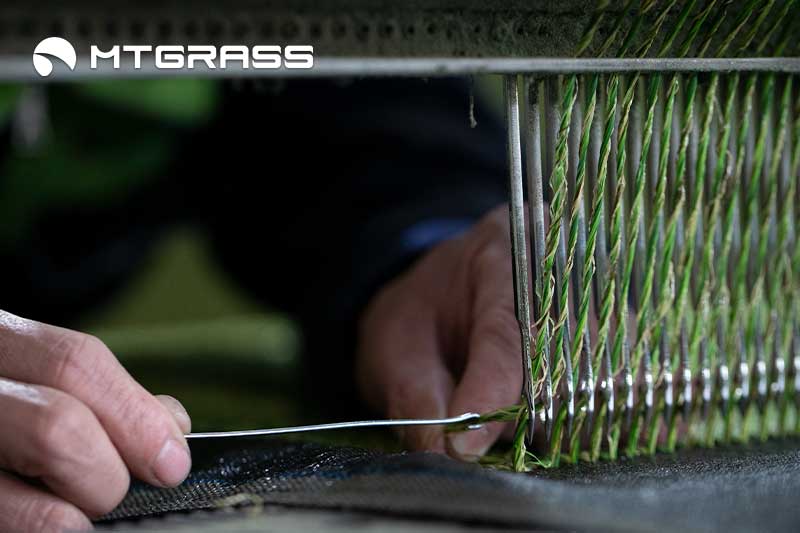
Artificial grass manufacturing involves multiple stages, including yarn production, tufting, coating, drying, and finishing. Factories with integrated production systems generally provide better consistency and shorter lead times. When evaluating a supplier, you may want to ask:
- How many tufting machines are in the factory?
- Do they produce yarn in-house or purchase it from external suppliers?
- What is their monthly production capacity?
Certifications and Quality Standards
Artificial grass used in sports or public environments often requires internationally recognized certifications. These certifications help ensure that the artificial turf meets durability, safety, and environmental requirements. Common certifications include:
- FIFA certification for football turf systems
- SGS testing for safety and heavy metal compliance
- ISO quality management standards
- CE certification for certain export markets
Customization Options
For those who purchase artificial turf in bulk, it’s rare to buy only standard-sized synthetic turf. Many projects require customized specifications depending on the application. Reliable suppliers should be able to customize pile height, yarn shape and material, turf density, color combinations, backing structure, roll width and packaging etc.
Export Experience
Export experience is another critical factor that many buyers overlook. Take MightyGrass, a supplier that frequently exports artificial turf internationally, for example. They typically have a deeper understanding of container loading optimization, export documentation, packaging protection, and transportation time. We can also help you estimate shipping volume, container capacity, and logistics costs more accurately.
How Much Does Wholesale Artificial Grass Cost?
In the global market, wholesale artificial grass prices typically range from about $2 to $12 per square meter, depending on the specifications and order volume.
However, artificial turf pricing is not fixed. We have listed several key factors that will affect the final cost:
- Pile height: Taller grass usually requires more yarn material. For example, a 35mm landscaping turf generally costs more than a 20mm turf used for decorative areas.
- Density: Density refers to the number of stitches per square meter. Higher density turf looks fuller and lasts longer, but it also increases production cost.
- Yarn material and structure: Artificial grass can be made with different yarn types such as PE, PP, or blended materials. Synthetic turf made from different yarn materials has varying resilience and durability, and its price will also differ.
- Backing system: The backing structure affects both durability and installation performance. Latex backing and PU backing have different costs and performance characteristics.
- Order volume: Bulk orders usually receive better pricing. Full-container orders often have significantly lower unit costs compared with small batch purchases.
Because artificial turf specifications vary widely, we will provide a customized quote based on the specific needs of your project, offering you the most favorable ex-factory price while ensuring high-quality products.
What Is the MOQ for Wholesale Artificial Grass?
The minimum order quantity (MOQ) for artificial grass varies depending on the supplier and product type. For most manufacturers, the typical MOQ is around 1,000 to 3,000 square meters per order.
- Standard products: If you are purchasing common specifications that the factory already produces regularly, the MOQ may be relatively low.
- Customized specifications: Customizing pile height, color combinations, or backing structures may increase the MOQ because the factory needs to adjust production settings or prepare new materials.
- Private label packaging: If you plan to add your own brand packaging or retail labels, manufacturers may require a higher order quantity to make the packaging production economical.
We recommend discussing minimum order quantity flexibility with suppliers early in the negotiations. If you are a first-time buyer in the artificial turf market, we can also arrange for mixed shipments of different specifications of products in one container to help you reduce shipping costs and initial inventory risk.
How Much Artificial Grass Fits in a Container?
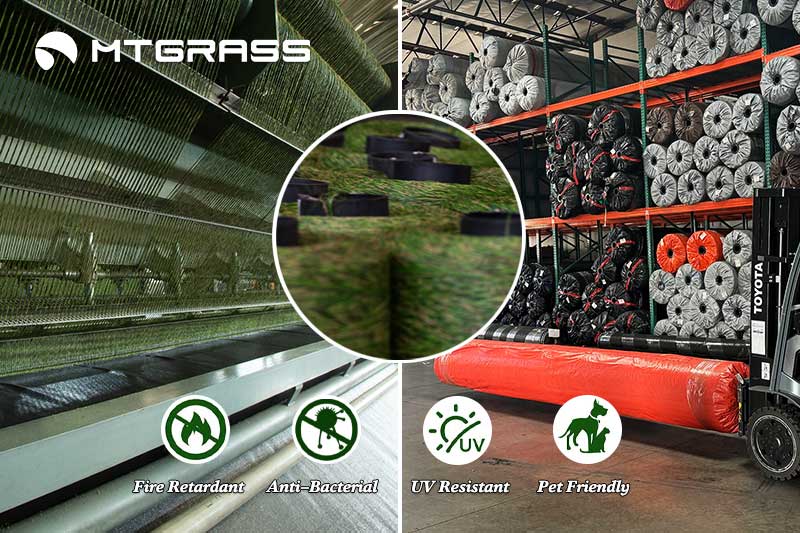
Artificial grass is typically packed in large rolls. The most common roll size is 4 meters wide, with roll lengths usually between 20 and 25 meters, depending on the turf specification.
The number of square meters that fit in a container depends mainly on the pile height and packing method.
- 20ft container: ≈ 4,000 m²
- 40HQ container: ≈ 8,000 m²
Shorter pile turf can be packed more densely, which increases the total loading quantity. Taller landscaping turf or sportgras may require more space.
As an experienced lawn supplier, MightyGrass can typically help you optimize your container loading solutions to maximize available space and reduce shipping costs per square meter.
When requesting a quote, it is recommended that you ask the supplier for information such as the expected container load, roll size and weight, and packaging method. This information will help you estimate logistics costs before placing an order.
Why Many Global Buyers Import Artificial Grass from China?
Over the past two decades, China has become one of the world’s largest manufacturing bases for artificial turf. Many distributors, contractors, and landscaping companies choose to import artificial grass from Chinese manufacturers for several practical reasons:
- Competitive manufacturing costs: Large-scale production and a mature supply chain (labor and raw materials) enable Chinese factories to offer highly competitive prices for bulk orders while ensuring stable product quality.
- Large production capacity: Many artificial turf factories in China operate multiple tufting lines and integrated production systems, enabling them to handle large international orders efficiently.
- Product customization: Chinese manufacturers commonly support OEM and ODM services. Buyers can customize specifications such as pile height, yarn structure, density, color combinations, and packaging.
- Export experience: Because artificial turf is widely exported to North America, Europe, the Middle East, South Africa and other markets, many Chinese suppliers have extensive experience with international shipping and documentation.
For distributors and project contractors, sourcing directly from a manufacturer in China often provides a balance between cost efficiency, customization flexibility, and stable supply capacity.

Why Choose MightyGrass as Your Wholesale Artificial Grass Supplier?
When it comes to sourcing artificial grass in bulk, choosing the right supplier can save you both time and money. MachtigGras, a FIFA-approved artificial turf manufacturer, has been a trusted provider of reliable solutions for distributors, contractors, and landscaping companies worldwide since 2003.
Integrated Production System
From yarn extrusion to tufting and backing, all processes are handled in-house. This ensures consistent product quality and allows for fast response to bulk order demands.
FIFA-certified Turf
Whether you are building a football field, rugby pitch, or multi-sport surface, our turf meets international standards for performance and safety.
OEM / ODM Support
MightyGrass provides full customization for pile height, yarn type, density, color combinations, and backing structures. We also offer private label packaging, helping distributors differentiate their products in the market.
Global Export Experience
With over 20 years of international trade, we understand logistics, container loading, and shipping documentation. Our team ensures smooth delivery to North America, Europe, Middle East, Southeast Asia, and beyond.
California Warehouse
For buyers in North America, our California warehouse allows faster local shipping, reducing lead time and minimizing freight costs.
With MightyGrass, you are not just purchasing artificial grass, you are partnering with a supplier who can support your business growth with quality, reliability, and customization.
Conclusie
Choosing the right wholesale artificial turf supplier is crucial to your business success. Partnering with a professional and experienced manufacturer allows you to reduce costs through factory-direct pricing, ensure consistent product quality for large projects, and expand your distribution business with reliable supply and customization options.
If you are looking for a reliable artificial turf manufacturer for bulk orders, MightyGrass offers factory-direct pricing, customizable products, and global shipping support. Partnering with us means you can focus on expanding your business while leaving production, quality, and logistics to a trusted manufacturer. Neem contact met ons op now for the best quote!
Veelgestelde vragen
What is the best wholesale artificial grass supplier?
MightyGrass is a top choice for global buyers, with over 20 years of manufacturing experience, California local warehouses covering North America, integrated production, FIFA-certified products, and strong export capabilities.
How much does wholesale artificial grass cost per square meter?
Prices typically range from $2 to $12 per m², depending on pile height, density, yarn material, backing, and order volume.
What is the MOQ for artificial grass wholesale orders?
Most manufacturers require an MOQ of 1,000–3,000 m², but customized products or private-label packaging may require higher quantities. At MightyGrass, we accept trial orders. The minimum order quantity varies depending on your specific needs, but the total FOB amount for each order must be no less than $3,000.
Can artificial grass be customized for distributors?
Yes. MightyGrass provides full customization for pile height, density, color, backing, and packaging to support distributors’ branding needs.
How long does it take to produce artificial grass in bulk?
Production time depends on order volume and specifications, typically 2–4 weeks for standard orders, longer for custom designs or large volumes.
How much artificial grass fits in a 20ft container?
A 20ft container can hold approximately 3,000–5,000 m², depending on roll size, pile height, and packing method.
Is Chinese artificial grass good quality?
Yes. Reputable Chinese manufacturers like MightyGrass produce FIFA-certified and SGS-tested artificial turf with high durability and safety standards.
Do artificial grass suppliers provide OEM branding?
Experienced suppliers, including MightyGrass, offer OEM and private-label solutions, allowing distributors to sell products under their own brand.