
 Português
  English
  العربية
  Español
  Deutsch
  Français
  Русский
  日本語
日本語  Italiano
  Nederlands
  Svenska
  Suomi
Suomi  ไทย
ไทย  Dansk
Dansk  Ελληνικά
  Bahasa Melayu
A maioria das pessoas pensa que a Disneyland utiliza relva natural, mas, na realidade, muitas áreas de grande tráfego na Disneyland Resort e no Walt Disney World já utilizam relva sintética.
Porquê?
Porque os relvados naturais falham em condições reais:
- O tráfego pedonal intenso danifica rapidamente a relva
- Os custos de irrigação e manutenção continuam a aumentar
- As alterações sazonais afectam a coerência visual
Para os parques temáticos e paisagens comerciais, estas questões têm um impacto direto nos custos operacionais e na experiência dos visitantes.
É por isso que cada vez mais criadores estão a recorrer à relva sintética para parques temáticos - para obter durabilidade, poupança de água e estética durante todo o ano.
Neste guia, vais ficar a saber como a Disneyland aplica relva artificiale esperamos ajudá-lo a aplicar os princípios de sucesso dos parques temáticos da Disney aos seus próprios projectos.
Rede global de parques temáticos e padrões paisagísticos da Disney
Quando se avalia a relva artificial para um projeto comercial, poucas referências são mais convincentes do que a Disney.
Em todo o mundo, a Disney opera um dos sistemas de parques temáticos mais complexos e de alto padrão do mundo - abrangendo os Estados Unidos, a Europa e a Ásia. Do Walt Disney World ao Disneyland Resort, e do Tokyo Disney Resort ao Shanghai Disney Resort, todos os parques foram concebidos para proporcionar uma experiência impecável e envolvente aos visitantes - 365 dias por ano.
Por detrás desta consistência está uma organização fundamental: Walt Disney Imagineering.
Esta equipa é responsável por tudo, desde a narrativa e a arquitetura até à seleção do material paisagístico. E para eles, a "relva" não é apenas decoração - faz parte do design da experiência.
Isto significa que cada superfície paisagística deve cumprir três normas não negociáveis:
- Perfeição visual - os relvados devem estar "prontos para as câmaras" todos os dias
- Durabilidade sob pressão - milhões de visitantes anuais, tráfego pedonal constante
- Eficiência operacional - interrupções mínimas de manutenção em áreas de elevado rendimento
É exatamente por isso que a relva natural tradicional fica muitas vezes aquém das expectativas.
Em zonas de tráfego intenso e de grande visibilidade, mesmo a relva natural mais bem conservada não consegue cumprir estes requisitos de forma consistente. O acastanhamento sazonal, as manchas de lama, o tempo de paragem da irrigação e o encerramento de reparações entram em conflito com o modelo operacional da Disney.
E é aqui que a relva artificial começa a tornar-se não apenas uma opção, mas uma escolha estratégica.
Estrutura operacional dos parques temáticos da Disney
A Disney opera atualmente complexos de estâncias em seis regiões do mundo: Disneyland Resort na Califórnia (EUA), Walt Disney World Resort na Flórida (EUA), Disneyland Paris (França), Tokyo Disney Resort (Japão), Hong Kong Disneyland e Shanghai Disney Resort - totalizando 12 parques temáticos.
O sétimo resort está atualmente em construção: Em maio de 2025, a The Walt Disney Company assinou um acordo com o Miral Group de Abu Dhabi para construir o sétimo complexo de resorts da Disney na Ilha Yas em Abu Dhabi, EAU. Este projeto marca o primeiro parque temático da Disney no Médio Oriente, estando a sua abertura atualmente prevista para 2030 a 2033.
| Estância | Localização | Número de parques temáticos | Entidade operadora |
| Walt Disney World | Orlando, Flórida, EUA | 4 (Magic Kingdom, EPCOT, Animal Kingdom, Hollywood Studios) | Operado diretamente pela Disney |
| Disneyland Resort | Anaheim, Califórnia, EUA | 2 (Disneyland, California Adventure) | Operado diretamente pela Disney |
| Tokyo Disney Resort | Chiba, Japão | 2 (Tokyo Disneyland, Tokyo DisneySea) | Operado sob licença pela Oriental Land Company |
| Disneyland Paris | Paris, França | 2 (Parque Disneyland, Parque Walt Disney Studios) | Operado diretamente pela Disney |
| Disneylandia de Hong Kong | Hong Kong, China | 1 | Empresa comum: Disney (48%) + Governo de Hong Kong (52%) |
| Estância Disney de Xangai | Xangai, China | 1 | Empresa comum: Disney (43%) + Shanghai Shendi Group (57%) |
| Abu Dhabi Disney (em desenvolvimento) | Ilha de Yas, EAU | Planeado | Operado sob licença pelo Miral Group |
Entidade principal de conceção e construção: A Walt Disney Imagineering é a divisão de investigação e desenvolvimento da Disney responsável pela conceção criativa e construção dos parques temáticos da empresa em todo o mundo. Com sede em Glendale, Califórnia, é composta por uma equipa de profissionais que inclui arquitectos, engenheiros, designers de iluminação e escritores criativos.
Onde é que a Disneyland utiliza relva artificial?
A adoção da relva artificial pela Disney não é teórica - já está implementada em algumas das áreas mais exigentes dos seus parques.
Caso 1: Disneyland Califórnia - Maior escala, expansão contínua (2012-presente)
Na Disneyland Resort, a relva artificial tem sido gradualmente introduzida e expandida desde 2012 - começando por uma das áreas temáticas mais movimentadas do parque: Cars Land.
As principais áreas de aplicação incluem:
- Zonas de fila (por exemplo, Luigi's Rollickin' Roadsters) onde o tráfego pedonal constante destrói a relva natural
- Frentes comerciais e de restauração, como o Sarge's Surplus Hut e o Flo's V8 Cafe
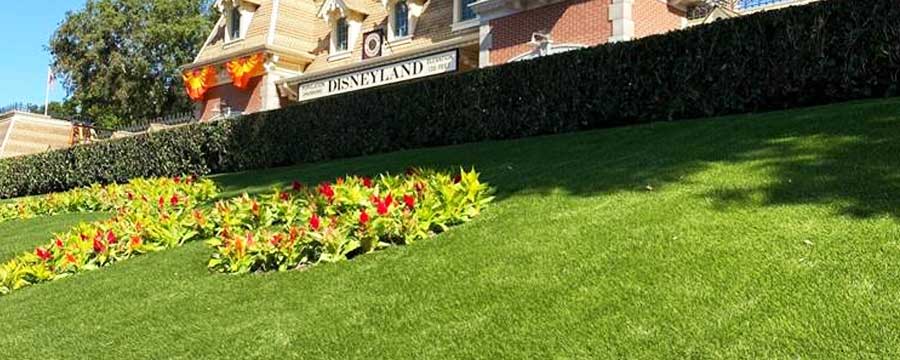
- Marcos visuais icónicos, incluindo a exposição de flores do Mickey à entrada do parque
- O relvado da Mansão Assombrada, uma área muito fotografada pelos hóspedes
Uma das actualizações mais notáveis teve lugar em 2022, quando a Disney - como parte de uma iniciativa de conservação da água - substituiu a relva natural por relva artificial em várias áreas proeminentes.
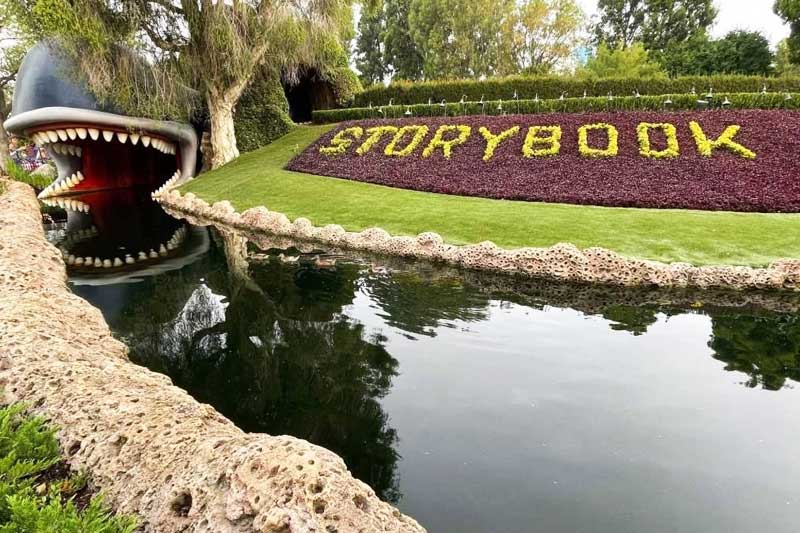
Um exemplo de destaque é a área do Storybook Land Canal:
- Substituição da relva concluída em apenas 3 dias
- Estimativa de 81.000 galões de água poupados anualmente
Ainda mais importante do que a velocidade ou a sustentabilidade é o pormenor do design:
A Disney não utilizou um único relvado "verde".
Em vez disso, aplicaram relva artificial misturada à medida, misturando:
- Fibras verdes
- Tons castanhos
- Tons de bege e cinzento
O resultado: um aspeto mais natural, ligeiramente "imperfeito", que corresponde às paisagens do mundo real, mantendo ao mesmo tempo o desempenho total.
Caso 2: Walt Disney World, Florida - Magic Kingdom: Praça Central
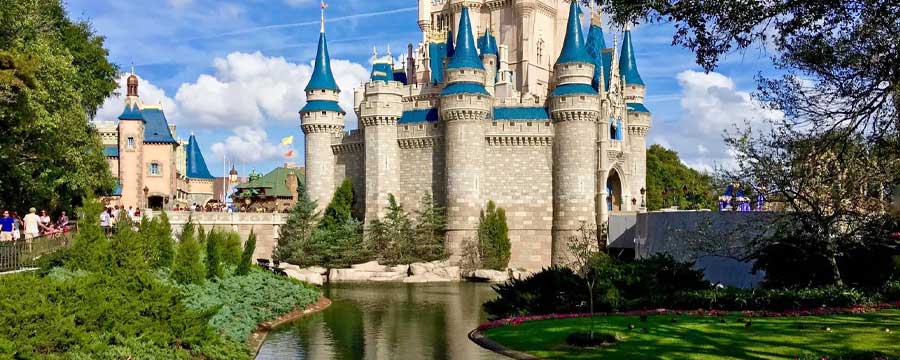
No Magic Kingdom, a relva artificial foi instalada num dos locais mais críticos de todo o ecossistema Disney: a Central Plaza (o principal centro em frente ao Castelo da Cinderela).
Esta não é apenas uma área de paisagem - é sim:
- A zona de primeira impressão para os visitantes
- Uma localização principal da fotografia
- Uma das zonas de maior tráfego pedonal em qualquer parque temático a nível mundial
A instalação incluía:
- Cerca de 13.000 pés quadrados de relva artificial
- Integração com 350 arbustos artificiais e 55 árvores artificiais
Esta decisão envia um sinal forte aos compradores comerciais: Se a relva artificial pode ser utilizada na área mais visível, mais exigente e mais fotografada da Disney-
é mais do que capaz de realizar qualquer projeto paisagístico comercial.
A relva artificial é utilizada não em áreas secundárias, mas em zonas de missão crítica. Não é escolhida apenas pela economia de custos, mas pelo desempenho, consistência e controlo. "Para o seu projeto específico, selecionou o tipo de relva artificial mais apropriado e adequado?" No entanto, a relva artificial premium MightyGrass não é um produto genérico e pronto a usar, mas sim uma solução concebida à medida do seu parque temático ou projeto paisagístico.
Porque é que a Disney substituiu a relva natural por relva artificial?
Se olharmos para além da superfície, a decisão da Disney não tem a ver com estética - tem a ver com a resolução de desafios operacionais que a relva natural simplesmente não consegue resolver à escala.
1. Conservação da água em regiões de seca
Em locais como a Califórnia, a água não é apenas um recurso - é um custo regulamentado.
Ao substituir a relva natural por relva artificial em áreas-chave, a Disney reduziu significativamente as necessidades de rega.
Só uma pequena área (Storybook Land) poupa mais de 81 000 galões de água por ano.
Para projectos comerciais, isto traduz-se diretamente em:
- Custos de serviços públicos mais baixos
- Redução da dependência dos sistemas de irrigação
- Cumprimento das restrições de água locais
Se o seu projeto estiver localizado numa região propensa à seca - ou onde a utilização de água é estritamente regulada por políticas - a relva artificial evoluiu de uma "escolha opcional" para um "padrão essencial".
2. Durabilidade extrema do tráfego pedonal
Os parques temáticos representam um dos ambientes mais adversos para qualquer superfície paisagística:
- Tráfego pedonal constante
- Congestionamento das filas de espera
- Picos de tensão sazonais
A relva natural não consegue recuperar suficientemente depressa sob esta pressão.
O resultado?
Manchas de calvície e manchas nuas no relvado, condições de solo lamacento e potenciais riscos de segurança - a relva artificial põe um fim definitivo a este ciclo vicioso.
3. 365 dias de aparência perfeita
A Disney não funciona com base no "suficientemente bom".
Todos os relvados, todos os cantos, todos os elementos visuais devem apoiar uma experiência totalmente envolvente - todos os dias do ano.
A relva natural introduz variabilidade:
- Mudanças de cor sazonais
- Danos causados pelas intempéries
- Crescimento desigual
A relva artificial cumpre:
- Cor consistente
- Textura uniforme
- Nenhum tempo de inatividade sazonal
Para os ambientes comerciais de parques temáticos ou estâncias de luxo, a "consistência" não é um extra opcional - é, por si só, uma parte integrante do "produto" que fornece.
Que tipo de relva artificial cumpre as normas dos parques temáticos?
Nem toda a relva artificial é adequada para parques temáticos.
As aplicações ao nível da Disney requerem um nível de engenharia relva para parques infantis soluções. Deve possuir:
- Matérias-primas de primeira qualidade → Materiais novos, garantem um desempenho duradouro e a integridade das fibras
- Fios misturados multicoloridos → Aspeto natural (verde + castanho + tons de bege, etc.)
- Alta densidade e taxa de pontos → Maior durabilidade em áreas de tráfego intenso
- Materiais resistentes aos raios UV → Evitam o desvanecimento sob luz solar intensa
- Sistemas de drenagem avançados → Evitar a acumulação de água nas zonas de utilização intensiva
- Conformidade ambiental e de segurança → Não tóxico, seguro para interação com o público
Por que escolher a MightyGrass para projetos de grama de parques temáticos
Se está a planear um parque temático, uma estância turística ou um grande projeto paisagístico comercial, as suas necessidades vão muito além da relva normal.
Precisa de uma solução que funcione sob pressão - e que seja escalável a nível global.
É aqui que a relva para parques infantis MightyGrass se enquadra. Como líder fabricante de relva artificial ChinaA MightyGrass pode fornecer o seguinte para seus projetos de paisagismo comercial:
- Soluções topo de gama para relvados personalizados → Sistemas paisagísticos multi-tom e altamente realistas
- Durabilidade comprovada para tráfego intenso → Concebida para ambientes comerciais e públicos
- Capacidade de fornecimento global → Incluindo Armazém nos EUA para uma entrega mais rápida
- Adaptabilidade a climas extremos → Ideal para CA, Médio Oriente, Sudeste Asiático e regiões com elevada incidência de UV
- OEM e personalização de projectos → Especificações, embalagens e marcas à medida
Escolha a MightyGrass e faça com que cada projeto - do design à realização - seja completamente livre de preocupações. Fornecemos aos arquitectos um apoio abrangente ao design, asseguramos um fornecimento fiável aos empreiteiros e criamos soluções duradouras, seguras e de baixa manutenção a longo prazo para os gestores de instalações. Deixe que as suas visões de espaços verdes ganhem verdadeiramente vida - actue agora para embarcar numa experiência de excelência!
Conclusão
Quando os parques temáticos mais experientes do mundo escolhem a relva sintética para as suas áreas mais críticas e de elevado tráfego, a razão não é a conveniência - é o desempenho, a consistência e o controlo a longo prazo.
A verdadeira diferença não está no facto de se utilizar ou não relva artificial.
é o facto de escolher um sistema concebido para exigências de nível comercial.
Pronto para atualizar o seu desempenho paisagístico? Explore a MightyGrass relva para parques infantis comerciais oferecem durabilidade, eficiência e impacto visual durante todo o ano - tal como os principais parques temáticos do mundo.
Perguntas frequentes
A relva artificial é melhor para os parques temáticos?
Sim, na maioria dos casos. A relva artificial tem um desempenho melhor do que a relva natural em parques temáticos devido à sua durabilidade, baixa necessidade de manutenção e capacidade de manter um aspeto uniforme sob utilização intensa. É especialmente adequada para entradas, áreas de filas de espera e praças centrais.
Que tipo de relva artificial é utilizada nos parques da Disney?
Os parques da Disney utilizam sistemas de relva artificial concebidos à medida, normalmente com fibras misturadas de várias cores, alta densidade e forte resistência aos raios UV. Estes sistemas foram concebidos para reproduzir a relva natural, proporcionando uma durabilidade e um desempenho superiores.
Quanto tempo dura a relva artificial em espaços comerciais com muito tráfego?
A relva artificial comercial de alta qualidade dura normalmente 8 a 10 anos ou mais, dependendo da intensidade do tráfego pedonal, da qualidade da instalação e das práticas de manutenção. Nos parques temáticos, a relva de qualidade superior é especificamente selecionada para maximizar a vida útil em condições de utilização extremas.
A relva artificial fica demasiado quente em climas ensolarados?
A relva artificial pode tornar-se mais quente do que a relva natural sob luz solar direta. No entanto, as soluções MightyGrass utilizam fios resistentes ao calor, enchimento de arrefecimento ou estruturas de fibras especializadas para reduzir significativamente a temperatura da superfície - tornando-as adequadas mesmo para regiões quentes como o Médio Oriente.
A relva artificial pode ajudar a reduzir o consumo de água?
Sim. Uma das maiores vantagens da relva artificial é a eliminação da necessidade de rega. Isto pode levar a uma poupança significativa de água, especialmente em regiões propensas à seca ou em áreas com regulamentos rigorosos em matéria de água.
A relva artificial é segura para espaços públicos como parques temáticos?
Sim, a relva artificial de alta qualidade da MightyGrass foi concebida para cumprir rigorosas normas de segurança e ambientais. Não é tóxica, não contém chumbo e é segura para crianças, animais de estimação e para a interação com o público, quando provém de fabricantes certificados.
Onde é que a relva artificial é mais utilizada nos parques temáticos?
A relva artificial é normalmente utilizada em:
- Passadeiras e zonas de espera com muito movimento
- Paisagens de entrada e zonas de fotografias icónicas
- Zonas comerciais e de restauração
- Zonas de proteção dos animais de estimação e espaços funcionais
Estas são áreas onde a durabilidade e a aparência são fundamentais.
O que é que os compradores devem procurar quando escolhem relva artificial para um projeto de parque temático?
Os compradores devem concentrar-se em:
- Durabilidade e resistência ao desgaste
- Estabilidade UV e retenção da cor
- Aspeto realista (fibras multi-tom)
- Desempenho da drenagem
- Fiabilidade do fornecedor e capacidade de personalização
A relva artificial é adequada para climas extremos como os desertos?
Sim. Os produtos de relva artificial MightyGrass Specialized são concebidos para calor extremo, forte exposição aos raios UV e condições secas, tornando-os ideais para projectos em regiões como o Médio Oriente.
Como escolher um fornecedor de relva artificial fiável para grandes projectos?
Procurar fornecedores com:
- Experiência comprovada em projectos de grande escala
- Capacidades de fabrico interno
- Opções de personalização
- Certificações internacionais
- Fornecimento global estável e apoio logístico


