
 Português
  English
  العربية
  Español
  Deutsch
  Français
  Русский
  日本語
日本語  Italiano
  Nederlands
  Svenska
  Suomi
Suomi  ไทย
ไทย  Dansk
Dansk  Ελληνικά
  Bahasa Melayu
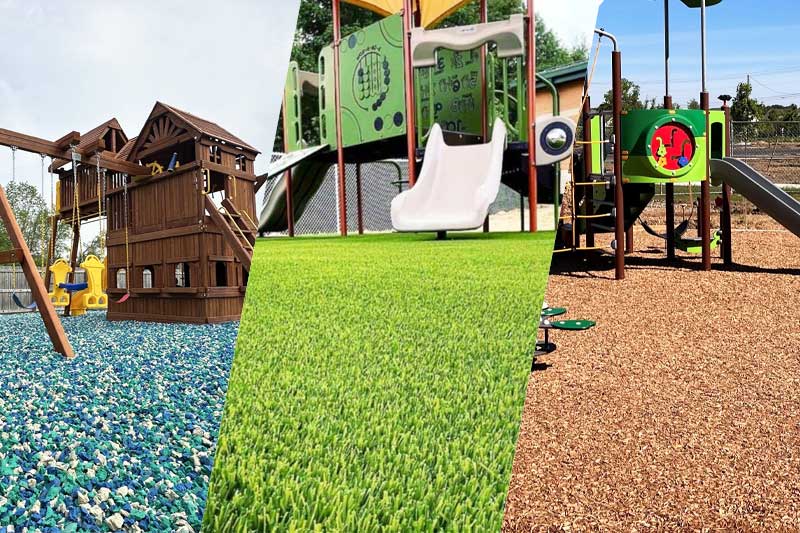
Hoje em dia, quando se planeia um parque infantil, a superfície já não é uma decisão secundária — é a base da segurança, da facilidade de utilização e do controlo de custos a longo prazo.
A maioria dos projetos continua a começar com as mesmas três opções: relva sintética para parques infantis, cobertura de borracha e lascas de madeira. Em teoria, todas parecem cumprir os requisitos básicos. Podem amortecer as quedas, preencher o espaço e passar nas inspeções iniciais.
Os dados do setor demonstram consistentemente que as superfícies de enchimento solto, como lascas de madeira e cobertura de borracha, podem perder 20–50% do seu volume de material anualmente em áreas de tráfego intenso. Essa perda afeta diretamente tanto o cumprimento das normas de segurança como os custos de manutenção. Em contrapartida, relva artificial para parques infantis foi concebido como um sistema fixo, o que significa que o desempenho se mantém estável.
Este guia irá explicar-lhe como se comparam o relvado sintético para parques infantis, a cobertura de borracha e as aparas de madeira — não apenas no que diz respeito à instalação, mas também no que realmente importa: a segurança ao longo do tempo, a realidade da manutenção e o custo total de propriedade.
Qual é o melhor revestimento para um parque infantil?
Antes de procedermos a uma análise detalhada, vamos primeiro examinar o desempenho destes materiais quando utilizados em conjunto em projetos reais.
| Tipo de superfície | Consistência em matéria de segurança | Nível de manutenção | Vida útil | Acessibilidade | Valor a longo prazo |
| Sistema de relva sintética para parques infantis | Elevado e estável | Baixo | 8–10+ anos | Excelente (adaptado às normas da ADA) | Melhor em geral |
| Cobertura de borracha | Moderado, varia ao longo do tempo | Médio | 5-8 anos | Limitada | Médio |
| Lascas de madeira | Diminui rapidamente | Alto | 1–3 anos | Pobres | Baixo |
Esta comparação reflete um padrão observado em escolas, parques e áreas de recreio comerciais.
Os materiais de enchimento a granel, como a cobertura de borracha e as lascas de madeira, podem cumprir as normas de segurança no momento da instalação, mas o seu desempenho depende em grande medida da forma como são mantidos. Em contrapartida, os sistemas de relva artificial para parques infantis são concebidos para proporcionar resultados consistentes, razão pela qual são cada vez mais utilizados no revestimento de parques infantis modernos.
Que material protege realmente as crianças?
A segurança é o fator mais importante na escolha de qualquer superfície para parques infantis. Normas como a ASTM F1292 nos EUA e a EN1177 na Europa definem o grau de absorção de impacto que uma superfície deve ter para reduzir o risco de lesões graves.
Estas normas baseiam-se em limiares mensuráveis, por exemplo:
- Criterio de Lesão na Cabeça (HIC) ≤ 1000
- Gmax ≤ 200
Mas não basta cumprir estas normas uma única vez. A verdadeira questão é saber se a superfície consegue manter esse nível de proteção ao longo do tempo.
Sistemas de parques infantis com relva artificial
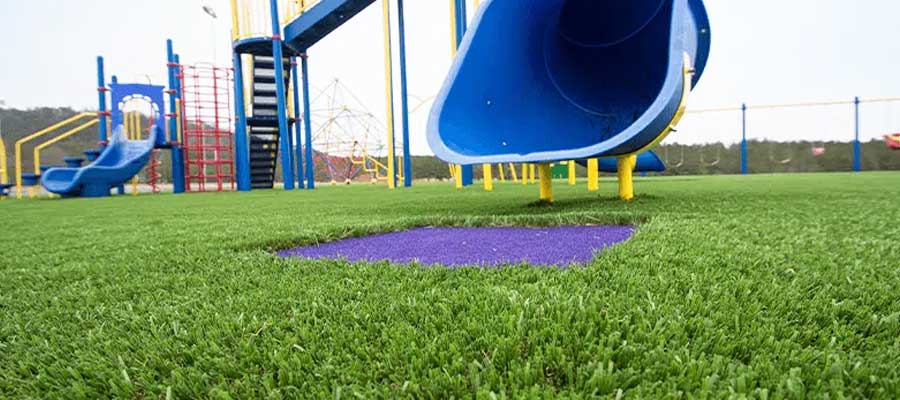
Uma superfície de relva artificial de alta qualidade para parques infantis é concebida como um sistema e não como uma única camada.
- fibras de relva sintética que garantem durabilidade e suavidade
- uma almofada amortecedora por baixo
- uma camada de base compactada para garantir a estabilidade
Esta estrutura permite relva sintética pavimento de segurança que proporciona uma atenuação consistente do impacto em toda a área de recreio. Dependendo da conceção do sistema, as alturas críticas de queda podem atingir 10–15 pés, o que cumpre ou excede a maioria dos requisitos de segurança para parques infantis.
Como a superfície é fixa, não se desloca nem fica mais fina nas zonas de maior tráfego. Especialmente nas áreas por baixo de baloiços, escorregas e equipamentos semelhantes, onde o risco de lesões por quedas é mais elevado.
Se o seu projeto envolver a instalação de relva artificial numa área de recreio, este desempenho consistente deve ser uma das suas principais opções.
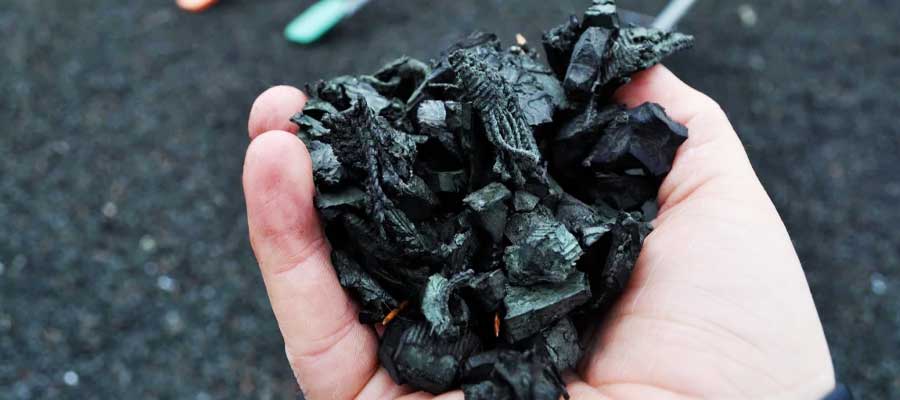
Cobertura de borracha
O revestimento de borracha oferece uma boa absorção inicial de impactos e pode cumprir as normas ASTM quando instalado à profundidade correta.
No entanto, por se tratar de um material a granel, este desloca-se naturalmente com o passar do tempo. Em áreas de grande utilização, o deslocamento do material pode levar a uma proteção desigual. Sem uma redistribuição regular, certas zonas podem ficar abaixo dos níveis de segurança exigidos.
Além disso, uma parte significativa da cobertura de borracha é fabricada a partir de borracha reciclada, e a sua segurança a longo prazo, bem como os seus efeitos toxicológicos, continuam em grande parte desconhecidos. A cobertura vegetal de borracha reciclada liberta compostos orgânicos voláteis (COV) quando exposta a altas temperaturas. Os COV podem causar vários problemas de saúde — tais como náuseas, danos no fígado e nos rins e irritação dos seios nasais — e são também suspeitos de serem cancerígenos.
Na prática, isto significa que o seu desempenho em termos de segurança depende das propriedades inerentes ao próprio material, bem como da regularidade e da correta execução da manutenção de rotina.
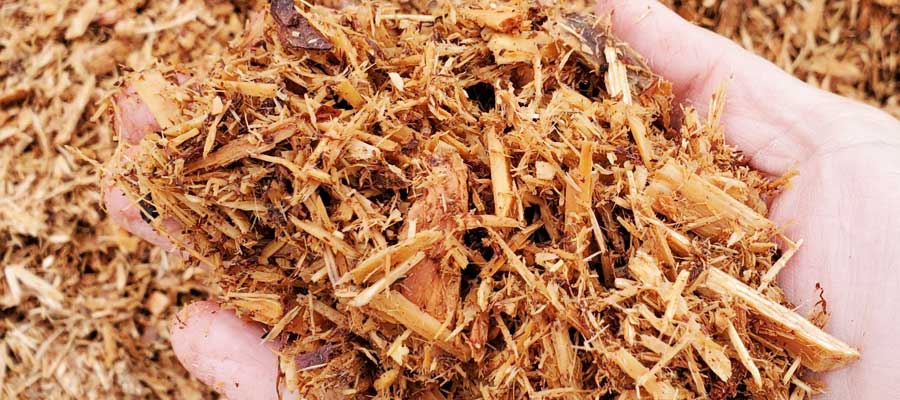
Lascas de madeira
As aparas de madeira são frequentemente escolhidas devido ao seu baixo custo inicial, mas é difícil manter o seu desempenho em termos de segurança nas condições reais de um parque infantil.
Para cumprir as normas de impacto, exigem normalmente uma profundidade de 200–300 mm (8–12 polegadas). No entanto, esta profundidade é rapidamente reduzida devido ao deslocamento, o que enfraquece a absorção de choques ao longo do tempo.
No uso diário, as aparas de madeira também apresentam vários riscos práticos. Entram facilmente nos sapatos das crianças, podem ser apanhadas e engolidas acidentalmente ou constituir um risco de asfixia e, muitas vezes, criam superfícies irregulares que aumentam o risco de tropeçar. À medida que o material se desgasta, algumas peças podem também ficar afiadas ou lascadas, causando ferimentos ligeiros.
Aliado à perda e degradação contínuas do material, as aparas de madeira têm dificuldade em garantir uma segurança consistente e fiável sem uma manutenção frequente.
Se o seu objetivo é criar um ambiente de recreio mais seguro, mais limpo e mais fiável, ao optar pela MightyGrass, está a fazer mais do que simplesmente escolher relva artificial para o seu parque infantil; está a investir num sistema de segurança abrangente — concebido para mitigar riscos a longo prazo e simplificar as operações de gestão.
Custo dos materiais para pavimentos de parques infantis: relva artificial vs. granulado de borracha vs. lascas de madeira
No início de um projeto, as comparações de custos centram-se normalmente no preço por pé quadrado.
- As aparas de madeira parecem ser as mais baratas.
- A cobertura de borracha fica no meio.
- Os sistemas de relva sintética para parques infantis têm o custo inicial mais elevado.
Mas esta comparação reflete apenas a instalação — e não a propriedade.
Custo inicial vs. custo real
Na prática, nas operações dos parques infantis, a instalação inicial representa, normalmente, apenas uma parte do investimento total.
Os materiais de enchimento a granel estão sujeitos a requisitos contínuos:
- reabastecimento regular
- nivelamento da superfície
- mão-de-obra para manutenção
Os dados do setor sugerem que os materiais de enchimento a granel utilizados em parques infantis podem perder entre 20% e 50% do seu volume anualmente em áreas de elevado tráfego. Esta perda traduz-se diretamente em custos recorrentes com materiais e mão-de-obra.
Perspetiva dos custos a longo prazo
Ao longo de um período de 5 a 8 anos, a estrutura de custos sofre alterações significativas:
| Categoria de custos | Gramado de playground | Cobertura de borracha | Lascas de madeira |
| Instalação inicial | Mais alto | Médio | Baixo |
| Manutenção anual | Baixo | Médio | Alto |
| Substituição de material | Nenhum | Periódico | Frequente |
| Custo do trabalho | Baixo | Médio | Alto |
| Custo total (5–8 anos) | Estável | Variável | Frequentemente o mais elevado |
O que muitos compradores percebem após a instalação é que: o custo inicial representa, muitas vezes, apenas 30–40% do custo total do ciclo de vida. A manutenção e a substituição constituem o restante.
Para os compradores que estão a ponderar as vantagens e desvantagens entre «relva sintética para parques infantis versus cobertura de borracha» ou «relva sintética versus lascas de madeira», a longo prazo preços de relva artificial para parques infantis são significativamente mais previsíveis. A principal consideração não deve limitar-se apenas a qual das opções é mais barata no momento, mas sim centrar-se em qual das soluções continuará a oferecer uma excelente relação qualidade-preço após anos de utilização.
Manutenção e conservação: Relva sintética para parques infantis vs. cobertura de borracha vs. lascas de madeira
A instalação é apenas o começo. O que realmente define o revestimento de um parque infantil é o seu desempenho após meses — e anos — de utilização diária.
No caso das escolas, parques e áreas de recreio comerciais, a manutenção não é apenas uma questão técnica. Afeta diretamente os custos operacionais, a segurança e a experiência dos utilizadores.
Relva artificial para parques infantis
No caso do relvado para parques infantis ao ar livre, a manutenção é relativamente simples e previsível.
Como a superfície está fixa no local, não há deslocamento do material. Não se depara com áreas que se desgastam, expondo o solo duro, nem que exijam reabastecimento constante. Basta realizar as tarefas diárias de manutenção habituais.
- escovar ocasionalmente para manter as fibras na vertical
- limpeza básica para remover detritos
- inspeção periódica das zonas de maior utilização
Isto torna a instalação de relva artificial em parques infantis especialmente atraente para projetos com pessoal de manutenção limitado. A superfície mantém-se plana, limpa e utilizável sem necessidade de intervenções frequentes.
Para muitos gestores de instalações, esta é uma das principais razões pelas quais as superfícies de relva artificial nos parques infantis estão a substituir os materiais tradicionais de enchimento solto.
Cobertura de borracha na operação diária
A cobertura de borracha implica um tipo diferente de trabalho.
Embora não se decomponha como a madeira, continua a deslocar-se com o uso. As zonas de tráfego intenso — especialmente debaixo de baloiços e escorregas — exigem uma redistribuição regular para manter uma profundidade uniforme.
Com o tempo, poderá também ser necessário:
- repor material devido a perda ou deslocamento
- remover os detritos que se misturam com a superfície
- monitorizar a profundidade para garantir o cumprimento das normas de segurança
Isto cria um ciclo de manutenção recorrente, em vez de uma configuração única.
Aparas de madeira na operação diária
As aparas de madeira são as que exigem mais atenção.
São fortemente afetados pelas condições meteorológicas e pela utilização. O vento, a chuva e as atividades lúdicas intensas contribuem para a deterioração do material. Para manter a superfície funcional e segura, os operadores têm frequentemente de:
- repor o material com frequência
- nivelar novamente a superfície
- gerir problemas relacionados com a humidade, tais como bolor ou deterioração
Em muitos casos, o que começa por ser uma solução de baixo custo acaba por se tornar trabalhosa e difícil de gerir com o passar do tempo.
Acessibilidade e Conformidade (ADA, ASTM, EN 1177)
Espera-se que os parques infantis modernos cumpram não só as normas de segurança, mas também os requisitos de acessibilidade.
É aqui que a estabilidade da superfície se torna fundamental.
Sistemas de relva artificial
Uma superfície de relva artificial para parques infantis, devidamente concebida, pode cumprir simultaneamente várias normas internacionais, incluindo:
- ASTM F1292 (atenuação de impacto)
- EN1177 (segurança em caso de queda de altura crítica)
- Requisitos de acessibilidade da ADA
Graças ao solo firme e plano, vários dispositivos de apoio — tais como cadeiras de rodas, carrinhos de bebé e andadores — podem circular sem dificuldades.
Isto torna o pavimento de segurança em relva sintética uma solução prática para a conceção de parques infantis inclusivos.
Cobertura de borracha
A cobertura de borracha pode cumprir certas normas de segurança quando instalada corretamente, mas a sua natureza solta cria dificuldades em termos de acessibilidade.
À medida que o material se desloca, a superfície torna-se irregular, dificultando o movimento consistente dos dispositivos de mobilidade. Em condições reais, isto pode limitar a usabilidade, mesmo que se consiga a conformidade inicial.
Lascas de madeira
As aparas de madeira representam, geralmente, as maiores limitações.
A sua estrutura pouco estável cria resistência às rodas e dificulta o movimento. Na maioria dos casos, não cumprem os requisitos de acessibilidade da ADA na prática, especialmente em ambientes com elevado tráfego.
Por que razão cada vez mais projetos estão a optar por sistemas de relva sintética
Nas escolas, nos municípios e nos empreendimentos comerciais, a tendência para a adoção de sistemas de relva sintética nos parques infantis está a tornar-se cada vez mais visível.
Esta tendência não se deve apenas à aparência. É o resultado de mudanças nas expectativas em matéria de segurança, manutenção e desempenho a longo prazo.
Desempenho consistente ao longo do tempo
Ao contrário dos materiais de enchimento solto, os sistemas de relva artificial são concebidos para manter a sua estrutura. Isto significa que a proteção contra impactos, o nível da superfície e a facilidade de utilização permanecem constantes, sem necessidade de ajustes contínuos.
Pressão operacional reduzida
As equipas de manutenção enfrentam desafios cada vez maiores:
- custos laborais mais elevados
- falta de pessoal
- aumento das cargas de trabalho
Uma superfície que reduz as necessidades de manutenção diária torna-se uma solução prática, e não apenas uma melhoria técnica.
Ambientes mais limpos e mais controlados
Em comparação com as aparas de madeira e a cobertura de borracha, a relva artificial para áreas de lazer ao ar livre oferece uma superfície mais limpa:
- Menos pó e detritos soltos
- Melhoria da drenagem após a chuva
- Reduz eficazmente a dispersão de poluentes e bolor no interior do local
Isto melhora tanto a facilidade de utilização como a perceção geral, especialmente nas escolas e nos espaços públicos.
Da escolha dos materiais ao pensamento sistémico
Cada vez mais compradores estão a deixar de optar por materiais individuais e a concentrar-se, em vez disso, em soluções completas.
Eles perguntam:
- Como é que esta superfície se comportará ao longo do tempo?
- Quanta manutenção será necessária?
- Continuará a estar em conformidade?
Esta mudança conduz naturalmente à utilização de relva artificial como revestimento para parques infantis, onde vários fatores de desempenho são considerados em conjunto.
Por que escolher o relvado para parques infantis MightyGrass
Se está a pensar em instalar relva sintética num parque infantil para o seu projeto, a qualidade do sistema — e do fornecedor responsável pelo mesmo — desempenha um papel fundamental nos resultados a longo prazo.
Poderosa grama concentra-se em fornecer não só relva artificial, mas também uma solução completa e fiável para parques infantis.
Concebido como um sistema completo
Não está a adquirir componentes isolados.
A MightyGrass disponibiliza um sistema integrado que inclui:
- fibras de relva sintética resistentes, concebidas para zonas de tráfego intenso
- suporte reforçado para garantir estabilidade a longo prazo
- compatibilidade com almofadas amortecedoras para um desempenho de segurança certificado
Isto garante que o relvado por baixo do parque infantil funcione como uma estrutura única, e não como camadas separadas.
Fabrico integral nas nossas instalações
Desde a extrusão do fio até ao revestimento final, a produção é controlada nas instalações da MightyGrass.
Este nível de integração permite:
- qualidade consistente entre lotes
- controlo preciso das especificações do produto
- flexibilidade para responder aos requisitos específicos de cada projeto
Quer esteja à procura de um armazém de relva sintética para parques infantis, de uma rede de distribuidores ou de um projeto específico, esta consistência reduz o risco.
Concebido de acordo com as normas internacionais
Os sistemas MightyGrass são desenvolvidos de forma a cumprir os requisitos internacionais, incluindo as normas ASTM e EN.
Isto ajuda a garantir que o seu projeto cumpra os requisitos locais de conformidade, mantendo simultaneamente o desempenho a longo prazo.
Adaptado às condições do mundo real
Os parques infantis funcionam em ambientes diversos — desde temperaturas elevadas até chuvas intensas.
Os produtos MightyGrass foram concebidos para suportar:
- Exposição aos raios UV
- variação de temperatura
- tráfego pedonal contínuo
Além disso, oferecem propriedades de refrigeração, proteção contra incêndios, prevenção do aparecimento de bolor e propriedades antibacterianas. Isto torna-os adequados para uma vasta gama de aplicações, desde escolas até grandes áreas de lazer públicas.
Apoio ao seu projeto para além do fornecimento
Para além do fabrico de produtos, a MightyGrass presta apoio aos clientes nas seguintes áreas:
- recomendações de sistema
- personalização específica do projeto
- orientações para a instalação de relva sintética em parques infantis
Isto garante que a superfície do seu parque infantil em relva artificial tenha o desempenho esperado, desde a instalação até à utilização a longo prazo.
Conclusão
Escolher entre relva sintética para parques infantis, cobertura de borracha e lascas de madeira não é apenas uma questão de comparar materiais — é uma decisão que diz respeito ao desempenho a longo prazo.
As aparas de madeira e a cobertura de borracha podem apresentar o custo inicial mais baixo, mas exigem manutenção contínua e perdem eficácia com o tempo.
Os sistemas de relva sintética para parques infantis exigem um investimento inicial mais elevado, mas proporcionam um desempenho consistente, menores necessidades de manutenção e custos de ciclo de vida mais previsíveis.
Contacte a MightyGrass para descobrir uma solução personalizada de relva sintética para parques infantis, adaptada aos requisitos do seu projeto, ao seu orçamento e às normas de segurança.
Perguntas frequentes
Qual é o material mais seguro para o pavimento de um parque infantil?
A superfície mais segura para um parque infantil é aquela que consegue cumprir de forma consistente, ao longo do tempo, normas de impacto como a ASTM F1292. Embora a cobertura de borracha e as lascas de madeira possam cumprir os requisitos de segurança inicialmente, tendem a deslocar-se e a perder espessura.
Uma superfície de relva artificial para parques infantis, devidamente instalada e equipada com uma camada amortecedora, proporciona uma proteção contra impactos mais estável e consistente, tornando-a uma das soluções mais seguras a longo prazo para escolas e áreas de recreio públicas.
A relva artificial é segura para parques infantis?
Sim, a relva artificial para parques infantis é segura quando instalada como um sistema completo com uma camada amortecedora. Estes sistemas foram concebidos para cumprir normas de segurança como a ASTM F1292 e a EN1177.
Ao contrário dos materiais de enchimento a granel, a relva sintética não se desloca nem cria superfícies irregulares, o que ajuda a manter uma proteção consistente e a reduzir os riscos de lesões relacionadas com quedas.
Relva sintética para parques infantis vs. cobertura de borracha: qual é a melhor opção?
A principal diferença reside na consistência. O revestimento de borracha pode proporcionar uma boa absorção de impactos, mas desloca-se com o tempo e requer manutenção regular para se manter seguro.
Por outro lado, os sistemas de relva sintética para parques infantis são fixos e oferecem um desempenho mais previsível com menor necessidade de manutenção, o que os torna uma melhor opção a longo prazo para a maioria das escolas e parques.
Relva artificial ou lascas de madeira para o parque infantil: qual deve escolher?
As aparas de madeira são mais baratas inicialmente, mas exigem reposição frequente e podem perder rapidamente as suas características de segurança. Além disso, suscitam problemas como lascas, superfícies irregulares e questões de higiene.
A relva artificial para parques infantis oferece uma superfície mais limpa e estável, com menor necessidade de manutenção e maior durabilidade, tornando-a uma opção mais fiável a longo prazo.
Quanto tempo dura a relva artificial num parque infantil?
Um sistema de relva sintética de alta qualidade para parques infantis ao ar livre tem, normalmente, uma duração de 8 a 10 anos ou mais, dependendo da utilização e da manutenção.
Os sistemas com fibras resistentes e um suporte robusto — como os utilizados pela MightyGrass — são concebidos para suportar tráfego pedonal intenso, exposição aos raios UV e condições climáticas variáveis, mantendo sempre o seu desempenho.
O relvado dos parques infantis requer manutenção?
Sim, mas significativamente menos do que os materiais de enchimento a granel. As superfícies de relva artificial em parques infantis requerem uma manutenção básica, como escovagem, limpeza e inspeção ocasional.
Ao contrário do mulch de borracha ou das aparas de madeira, não é necessário reabastecer nem nivelar, o que reduz os custos de mão-de-obra e manutenção a longo prazo.
O mulch de borracha é tóxico para utilização em parques infantis?
A cobertura de borracha é frequentemente fabricada a partir de materiais reciclados, e alguns estudos sugerem que pode libertar compostos orgânicos voláteis (COV), especialmente a altas temperaturas.
Embora seja amplamente utilizada, persistem as preocupações quanto à exposição a longo prazo e ao impacto ambiental. Esta é uma das razões pelas quais muitos projetos estão a optar por sistemas de revestimento de segurança em relva sintética.
As aparas de madeira continuam a ser uma boa opção para parques infantis?
As aparas de madeira podem ser uma solução de baixo custo a curto prazo, mas exigem manutenção frequente e perdem a sua eficácia em termos de segurança com o passar do tempo.
Podem também causar problemas como lascas, superfícies irregulares e limitações de acessibilidade. No caso de projetos a longo prazo, não são geralmente consideradas a opção mais eficiente ou fiável.
É possível utilizar relva artificial por baixo dos equipamentos de parques infantis?
Sim, a relva artificial sob os equipamentos de recreio é frequentemente utilizada em combinação com um sistema de amortecimento de impactos. Ajuda a cumprir os requisitos de segurança relativos à altura de queda, proporcionando simultaneamente uma superfície estável e limpa.
A relva artificial é adequada para áreas de lazer ao ar livre?
Sim, a relva artificial para áreas de lazer ao ar livre oferece uma superfície durável, de baixa manutenção e resistente às intempéries. Tem boa drenagem, mantém-se limpa e continua a poder ser utilizada em diversas condições, tornando-a ideal para escolas e parques.


