
 Español
  English
  العربية
  Deutsch
  Français
  Português
  Русский
  日本語
日本語  Italiano
  Nederlands
  Svenska
  Suomi
Suomi  ไทย
ไทย  Dansk
Dansk  Ελληνικά
  Bahasa Melayu
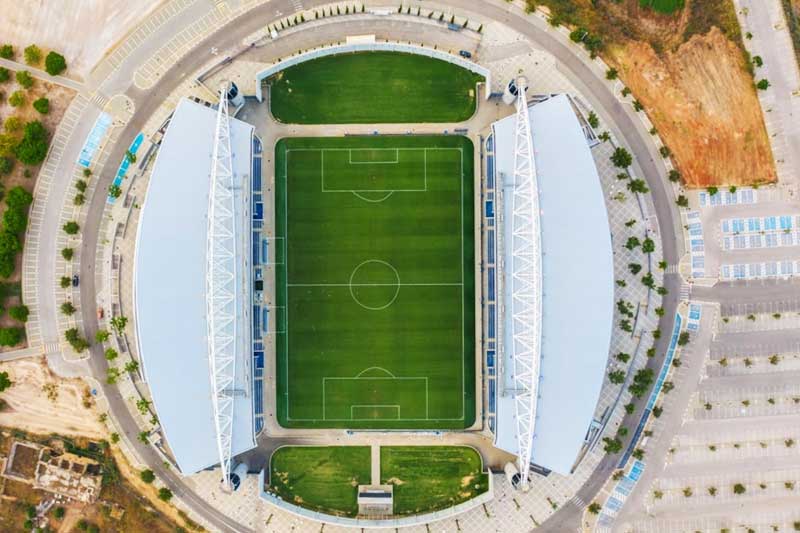
La próxima Copa del Mundo de 2026 está impulsando la demanda de césped artificial certificado por la FIFA. Organizado por primera vez conjuntamente por Estados Unidos, Canadá y México, será un evento sin precedentes. El torneo de este año contará con 48 selecciones participantes, frente a las 32 anteriores, con un total de 104 partidos, lo que plantea importantes retos para el uso y el mantenimiento de los campos de fútbol. La normativa de la FIFA exige que los campos oficiales de competición de las 16 ciudades sede utilicen césped natural. Algunos de estos campos utilizarán sistemas de césped híbrido, que combinan fibras sintéticas con raíces de césped natural para mejorar la durabilidad y la uniformidad. Sin embargo, se seguirán utilizando sistemas de césped artificial en las bases de entrenamiento y en las sedes de reserva de los equipos participantes para soportar el uso intensivo.
Los datos técnicos indican que un campo de césped natural, sometido a un uso intensivo, puede soportar aproximadamente entre 20 y 25 horas de uso semanal, tras lo cual requiere un periodo de descanso y reparación. Césped certificado por la FIFA, sin embargo, puede soportar un uso casi continuo, aguantando más de 1.500 horas de partidos y entrenamientos al año y con una vida útil de entre 8 y 10 años. Esto significa que FIFA Football Turf ofrece a los equipos un alto rendimiento en medio del intenso calendario de la Copa del Mundo y las frecuentes sesiones de entrenamiento.
Al haber superado el sistema de pruebas profesionales de la FIFA (certificación FIFA Turf), estos céspedes artificiales son prácticamente idénticos al césped natural en cuanto a tacto, velocidad del balón, rebote y coeficiente de fricción, lo que garantiza una experiencia muy homogénea para los jugadores tanto en el campo de entrenamiento como en el de competición. Según datos del Instituto Internacional de Investigación sobre Campos Deportivos, las instalaciones mundiales de césped artificial certificado por la FIFA han crecido más de un 20% en los últimos cinco años, con un fuerte impulso de crecimiento en los mercados de América del Norte y África.
¿Por qué se exige que la Copa del Mundo se dispute sobre césped natural?
El césped natural ofrece una velocidad del balón, una fricción y un rebote que se asemejan mucho más a las condiciones naturales, lo que garantiza que todos los partidos se disputen en las mismas condiciones. Por lo tanto, los 16 estadios principales de la Copa del Mundo de 2026, incluso aquellos que originalmente estaban cubiertos de césped artificial, deben convertirse a césped natural o equiparse con sistemas de césped híbrido para cumplir con los requisitos de los campos de fútbol de la Copa del Mundo.
Desde el punto de vista de la ciencia del deporte, el césped natural ofrece una mayor protección a los jugadores. Incluso el césped artificial para fútbol más avanzado, certificado por la FIFA y que cumple con las normas de la FIFA, sigue presentando sutiles diferencias con respecto al césped natural en cuanto a la absorción de impactos, la devolución de energía y la fricción que se percibe cuando los jugadores se deslizan. FIFA insiste en utilizar césped natural en el Mundial para reducir el riesgo de lesiones articulares y abrasiones superficiales, garantizando así que todos los mejores jugadores puedan rendir al máximo.
Además, la uniformidad del césped natural contribuye a mantener la equidad en la competición. Las variaciones excesivas en las características del terreno de juego de un estadio a otro afectarían al ritmo del partido. Por ello, la FIFA exige que todos los campos sean prácticamente idénticos en cuanto a la velocidad del balón, el coeficiente de fricción y el rebote. Esto no solo requiere una base de arena profunda, iluminación adicional y un sofisticado sistema de drenaje para mantener el buen estado del césped natural, sino que también implica que se imponen unos estándares de mantenimiento extremadamente elevados a los constructores de campos de fútbol.
Normas técnicas fundamentales de la FIFA para el césped natural
| Indicador técnico | Rango requerido | Descripción |
| Altura de la hierba | 23–28 mm | Garantiza la coherencia entre la velocidad y el movimiento de la pelota |
| Dureza superficial (impacto de Clegg) | 80–100 g como máximo | Reduce el riesgo de lesiones de los jugadores |
| Rebote del balón | 0,6–0,85 m | Se adapta al rendimiento natural en el fútbol |
| Rollo de Bola | 4-8 m | Garantiza un equilibrio adecuado entre la velocidad de los pases y el desarrollo del juego |
| Fricción cutánea | 0,35–0,75 | Evita la fricción por deslizamiento excesiva |
| Absorción de impactos | 55-70% | Reduce la tensión en las articulaciones y los músculos |
| Índice de drenaje | ≥ 50 mm/h | Garantiza que el juego no se vea interrumpido en caso de lluvia |
Nota: Los indicadores anteriores se han extraído del Programa de Calidad de la FIFA para el césped de fútbol, una norma de referencia clave para la construcción y las pruebas del césped de la Copa del Mundo.
Esto no significa que se esté pasando por alto el valor del césped artificial de la FIFA. De hecho, los campos de entrenamiento, los estadios de reserva y los campos de fútbol comunitarios siguen dependiendo en gran medida del césped artificial, ya que el césped natural no puede soportar un uso intensivo. La Copa del Mundo utiliza césped natural para garantizar la equidad y la seguridad en los niveles más altos de competición, mientras que el césped certificado por la FIFA sirve como campo principal y campo de entrenamiento. Juntos, crean el ecosistema futbolístico completo necesario para la Copa del Mundo.
Aplicaciones del césped artificial en los estadios de la Copa del Mundo: césped natural frente a césped artificial de la FIFA
La Copa Mundial Femenina de 2015 celebrada en Canadá supuso un punto de inflexión que impulsó el césped artificial hasta convertirlo en una opción habitual en el fútbol mundial. Por primera vez en la historia de la FIFA, las seis sedes del torneo —Vancouver, Edmonton, Ottawa, Moncton, Montreal y Winnipeg— utilizaron césped homologado por la FIFA. Este césped había superado las pruebas de certificación de la FIFA y cumplía con las normas técnicas del programa «FIFA Quality Pro Turf».
Según los datos técnicos publicados por la FIFA, este césped artificial de la FIFA cumplía con las normas de la FIFA en materia de césped artificial en todos los indicadores clave de rendimiento. Esto no solo garantizó una competición justa, sino que también demostró al mundo la viabilidad del césped artificial para el fútbol en competiciones internacionales.
Especificaciones técnicas del césped artificial de la Copa del Mundo de 2015
| Indicadores de rendimiento | Gama estándar de la FIFA | Rendimiento real del césped artificial en 2015 |
| Rollo de Bola | 4 – 8 m | Cumple |
| Rebote del balón | 0,6 – 0,85 m | Cumple |
| Absorción de impactos | 55 – 70% | Cumple |
| Fricción cutánea | 0,35 – 0,75 | Cumple |
| Prueba de durabilidad | ≥ 20 000 ciclos de simulación | Pases |
La FIFA decidió utilizar exclusivamente césped artificial para la Copa del Mundo Femenina con el fin de demostrar las ventajas de este material en cuanto a durabilidad, costes de mantenimiento y adaptabilidad climática. Por ejemplo, algunas ciudades canadienses anfitrionas sufren inviernos largos y temperaturas extremadamente bajas, lo que dificulta el mantenimiento del césped natural durante todo el año. El césped certificado por la FIFA garantiza que el terreno de juego se mantenga en condiciones óptimas en estos climas adversos.
Este acontecimiento histórico tuvo consecuencias de gran alcance. Aunque la FIFA sigue insistiendo en utilizar césped natural para las finales de la Copa del Mundo, la Copa del Mundo Femenina demostró la viabilidad del césped artificial de la FIFA para torneos a gran escala. Esto no solo impulsó la posterior adopción generalizada del césped artificial por parte de clubes profesionales, centros de entrenamiento nacionales y campos comunitarios, sino que también potenció la demanda del mercado mundial de césped de la FIFA. Hoy en día, el césped certificado por la FIFA se utiliza ampliamente en estadios de primer nivel de África, Asia, Norteamérica y Oriente Medio, donde constituye un valioso complemento y una alternativa al césped natural.
Césped natural frente a césped sintético homologado por la FIFA
| Artículo | Césped natural | Césped certificado por la FIFA |
| Consistencia superficial | Depende de las condiciones meteorológicas y del suelo, por lo que resulta difícil mantener la uniformidad. | Las normas de la FIFA sobre césped artificial garantizan un rodamiento uniforme del balón (4–8 m), el rebote del balón (0,60–0,85 m), la absorción de impactos (55–70%), la deformación vertical (4–10/11 mm) y la resistencia a la rotación (25–50 N·m). |
| Duración del uso | Entre 20 y 25 horas a la semana. | Más de 60 horas a la semana, disponible todo el año. |
| Coste de mantenimiento | Alto: requiere reparación, riego, siega y resiembra. Se ve fácilmente afectado por el clima y la frecuencia de uso. | Bajo: solo requiere una limpieza y un cepillado básicos. |
| Sostenibilidad | Mayor consumo de productos químicos y energía; requiere un mantenimiento minucioso para evitar daños. | El césped artificial utiliza cada vez más sistemas sin relleno o con relleno orgánico, reciclables y reutilizables. |
| Solicitud | Competiciones internacionales oficiales (por ejemplo, la Copa del Mundo). | Campos de entrenamiento, campos de reserva, campos de fútbol comunitarios. |
Desarrollo del césped artificial de la FIFA
FIFA Turf, utilizado en el Mundial y en otros torneos de primer nivel, no es un césped artificial cualquiera, sino un sistema profesional que ha sido sometido a rigurosos procesos de diseño, pruebas y certificación. Para garantizar que las instalaciones de entrenamiento ofrezcan un rendimiento similar al de los recintos de competición de talla mundial, la FIFA ha establecido unas normas exhaustivas sobre césped artificial, que abarcan todos los aspectos del proceso, desde las materias primas y la fabricación hasta la instalación y las pruebas posteriores a la producción. Estas normas no solo garantizan que el césped artificial iguale al natural en aspectos clave de rendimiento, como la velocidad del balón, el rebote, la fricción y la absorción de impactos, sino que también proporcionan un punto de referencia de calidad unificado para los contratistas y operadores de estadios.
Normas de fabricación y proceso de ensayo
Moderno Césped de fútbol FIFA Utiliza fibras sintéticas de alto peso molecular (como el polietileno (PE) y el polipropileno (PP)) para las fibras del césped, que son resistentes a los rayos UV y a la abrasión. La altura de las fibras suele mantenerse entre 40 y 60 mm para garantizar una sensación realista durante el juego. Estas fibras se tejen en un tejido base de doble o triple capa mediante un proceso de tufting de precisión. El revestimiento adhesivo suele estar fabricado con poliuretano (PU) respetuoso con el medio ambiente, lo que garantiza la durabilidad y el rendimiento medioambiental. Durante la fase de certificación, los productos deben superar primero unas pruebas de laboratorio que abarcan más de 30 indicadores, entre los que se incluyen el rebote del balón, el coeficiente de fricción, la absorción de impactos y la durabilidad. Tras la instalación, también deben superar pruebas de campo para garantizar el cumplimiento de los requisitos de certificación de césped de la FIFA en condiciones reales. Este doble mecanismo de pruebas garantiza la fiabilidad y la uniformidad del césped homologado por la FIFA.
Césped artificial 4G (sin relleno)
En los últimos años, la protección del medio ambiente y la sostenibilidad se han convertido en aspectos clave en el sector del césped artificial. Los sistemas tradicionales de césped artificial homologados por la FIFA suelen utilizar gránulos de caucho como relleno, pero este relleno presenta un riesgo de fugas, lo que suscita preocupaciones medioambientales y sanitarias. Por ello, la FIFA está promoviendo activamente el desarrollo y la aplicación de 4G TURF (césped de fútbol sin relleno). Este tipo de césped, al optimizar la forma, la densidad y la estructura del tejido base de las fibras, elimina la necesidad de utilizar gránulos de caucho, al tiempo que mantiene unas excelentes propiedades de rebote y fricción del balón. Según la Asociación Europea de Suelos Deportivos, la cuota de mercado de los sistemas de campos 4G (césped sin relleno) ha crecido más de un 15% en los últimos tres años y se ha utilizado ampliamente en el fútbol sala, en instalaciones de entrenamiento juvenil y en algunos campos de entrenamiento de clubes profesionales.
Césped artificial reciclable
Además de la tendencia hacia el uso sin relleno, el césped artificial FIFA también ha logrado avances significativos en el reciclaje de materiales y la fabricación con bajas emisiones de carbono. Por ejemplo, algunos fabricantes líderes han lanzado sistemas de césped reciclables (césped 5G), en el que las fibras de césped y el tejido base pueden reciclarse y reutilizarse al final de su ciclo de vida, lo que reduce la presión sobre los vertederos. Las investigaciones demuestran que el césped artificial fabricado con materiales reciclables puede reducir las emisiones de carbono entre un 20 % y un 30 % a lo largo de todo su ciclo de vida, lo que se ajusta a la tendencia de desarrollo sostenible de la industria deportiva mundial.
Repercusiones del campo de fútbol
Estas innovaciones tecnológicas han potenciado la influencia del césped artificial de la FIFA en el mercado mundial. Elegir Césped artificial homologado por la FIFA Esto se traduce en un menor mantenimiento, una mayor durabilidad y la garantía de cumplimiento de las normas internacionales de competición. Para los operadores, esto se traduce en un uso durante todo el año, respeto por el medio ambiente y una mayor rentabilidad de la inversión. A medida que avance el proyecto «Grass FIFA», el césped artificial de calidad FIFA se convertirá en una base importante para promover la popularización del fútbol y la organización de eventos en el futuro, ya sea en los campos de entrenamiento de la Copa del Mundo o en los campos de fútbol comunitarios.
¿Cómo elegir un césped artificial certificado por la FIFA?
Para los contratistas, clubes y organizadores de torneos, elegir el césped artificial certificado por la FIFA adecuado es algo más que comprar simplemente una pieza de césped; influye directamente en el cumplimiento de los requisitos del proyecto, la seguridad de los jugadores y la rentabilidad a largo plazo de la inversión. A continuación se indican los aspectos clave que hay que tener en cuenta a la hora de realizar una compra:
- Confirmar el nivel de certificación de la FIFA: Comprueba que el producto del proveedor haya superado la certificación de la FIFA para césped artificial y que lleve el logotipo «FIFA Quality» o «FIFA Quality Pro». El primero es adecuado para uso comunitario y campos de entrenamiento, mientras que el segundo está destinado a clubes profesionales y recintos de competiciones internacionales.
- Verificar los datos de los ensayos de laboratorio y de campo: El césped artificial homologado por la FIFA debe cumplir las normas de la FIFA para el césped artificial, incluyendo parámetros como el rodamiento del balón (4–8 m), la absorción de impactos (55–70%) y el coeficiente de fricción (0,35–0,75). Los contratistas pueden solicitar a los proveedores los informes completos de las pruebas y los registros de aceptación in situ.
- Presta atención a la vida útil y a los costes de mantenimiento: El césped artificial homologado por la FIFA suele tener una vida útil de entre 8 y 10 años, pero las diferencias en la calidad de fabricación entre las distintas marcas pueden afectar a la resistencia al desgaste del césped y a la estabilidad del tejido de base. Un césped de alta calidad homologado por la FIFA puede reducir significativamente los costes de mantenimiento continuado.
- Sostenibilidad y respeto por el medio ambiente: Cada vez son más los proyectos que exigen el uso de césped artificial para fútbol sin relleno o de materiales reciclables, con el fin de reducir la liberación de partículas de relleno y el consiguiente impacto medioambiental. Los compradores deberían dar prioridad a los proveedores que cuenten con líneas de productos respetuosas con el medio ambiente ya consolidadas.
- Servicio global y experiencia en casos del proveedor: Elegir un proveedor de césped artificial para fútbol con experiencia en grandes eventos internacionales y capacidad para realizar suministros a nivel interregional garantiza la entrega puntual del proyecto y un soporte técnico a largo plazo.
Los principales proveedores de césped artificial homologados por la FIFA en el mundo
| Compañía | Fundada | Certificación FIFA | Presencia mundial | Proyectos destacados | Ventajas |
| MightyGrass (China / Arabia Saudí / EE. UU.) | 2003 | Calidad FIFA y Calidad FIFA Pro | Fábricas en China y Arabia Saudí + almacén en California, EE. UU. | Juegos Olímpicos de Pekín 2008, estadios profesionales africanos | Más de 20 años de experiencia en fabricación, I+D independiente, entrega rápida, compatible con césped 4G y 5G, proyectos en más de 166 países |
| Greenfields (Países Bajos) | 1981 | Certificado FIFA | Europa / Oriente Medio | Varios estadios de fútbol europeos | Sólida presencia en el mercado europeo, tecnología consolidada |
| TenCate Grass (EE. UU. / Países Bajos) | 1704 | Certificado FIFA | América del Norte / Europa | Campos de entrenamiento de la Premier League inglesa | Sólida investigación y desarrollo en el ámbito de los materiales, una larga trayectoria |
| Condor Grass (Países Bajos) | 1992 | Certificado FIFA | Europa / África | Instalaciones deportivas polivalentes | Destaca por sus soluciones de desarrollo sostenible y se centra en el respeto al medio ambiente |
¿Por qué elegir MightyGrass como proveedor de césped artificial?
Entre las empresas de todo el mundo proveedores de césped de fútbol, MightyGrass ofrece soluciones integrales para campos de fútbol a constructores deportivos de todo el mundo, aprovechando las ventajas que le brindan sus dos fábricas certificadas por la FIFA en todo el mundo, su experiencia en el suministro para proyectos olímpicos y la entrega localizada en Estados Unidos.
- Más de 20 años de experiencia en la fabricación: Como uno de los primeros fabricantes de China en dedicarse a la investigación y el desarrollo de fibras para césped artificial, MightyGrass ha perfeccionado la fórmula de las fibras y las tecnologías de producción fundamentales, lo que garantiza la uniformidad del producto frente a otras marcas que dependen de fabricantes de equipos originales (OEM).
- Certificación oficial de la FIFA: Nuestros productos han obtenido la certificación de la FIFA para césped artificial, cumplen con las normas «FIFA Quality» y «FIFA Quality Pro», y se ajustan a todas las normas de la FIFA relativas al césped artificial.
- Presencia global: Gracias a nuestras dos fábricas en China y Arabia Saudí, además de un almacén local en California, podemos realizar entregas rápidas a los mercados de Europa, América, Oriente Medio y África, lo que acorta los plazos de entrega y reduce los riesgos de los proyectos para los contratistas.
- Experiencia en proyectos de eventos internacionales: Desde su participación como proveedor oficial de los Juegos Olímpicos de Pekín 2008 hasta los estadios de las ligas profesionales africanas y los campos de entrenamiento de los clubes de fútbol sudamericanos, Mightygrass cuenta con una amplia experiencia en la construcción de recintos para eventos internacionales.
- Protección del medio ambiente e innovación: Somos la primera fábrica de China en lanzar nuestra serie de césped artificial reciclable (césped 5G). Con una inversión acumulada que supera los 20 millones de RMB y un ciclo de I+D de más de 200 días, contamos con más de 60 patentes de tecnología clave. También somos uno de los primeros fabricantes en lanzar el sistema de césped para fútbol sin relleno (césped 4G). Mediante la optimización de la geometría de las fibras de césped y un diseño de tufting de alta densidad, mantenemos una velocidad del balón, una fricción y un rebote estables sin necesidad de utilizar los gránulos de caucho tradicionales, cumpliendo así con la normativa medioambiental internacional.
- Soluciones integrales: Desde el asesoramiento en materia de diseño y la entrega de muestras hasta la producción y la fabricación, pasando por la recepción in situ, ofrecemos un apoyo integral en todo el proceso, lo que permite a los contratistas y operadores ahorrar tiempo, esfuerzo y costes.
Ponte en contacto con MightyGrass hoy mismo y obtén un presupuesto gratuito
Preguntas frecuentes sobre el césped artificial de la FIFA
¿Cuánto cuesta el césped certificado por la FIFA por metro cuadrado?
El precio de césped certificado por la FIFA varía en función del tipo de sistema, la calidad de la fibra y de si se trata de relleno o césped de fútbol sin relleno. Por término medio, los contratistas pueden esperar 1 TP4T20–35 USD por metro cuadrado (FOB fábrica en China), y la instalación eleva el coste total a 1 USD TP4T40–65/m². Los proyectos de estadios de gran envergadura pueden beneficiarse de precios al por mayor con descuento.
¿Cuál es el coste de instalación de un campo de fútbol de césped artificial con certificación de la FIFA?
Instalación de un campo de fútbol de césped que cumpla con Certificación FIFA para césped artificial El cumplimiento de las normas implica mucho más que la simple colocación de césped artificial. Los costes incluyen la preparación del terreno, la capa amortiguadora, los sistemas de drenaje y la instalación profesional. Para un campo estándar de fútbol 11 con certificación FIFA Quality Pro, el presupuesto total de instalación suele ser de USD $600 000–1 200 000, dependiendo de la región y de los materiales elegidos.
¿Qué factores influyen en el precio de los proyectos de césped artificial para fútbol de la FIFA?
El coste de césped de fútbol fifa Los proyectos se ven influidos por:
- Tamaño del campo (fútbol 5, fútbol 7 o fútbol 11)
- Tipo de sistema (relleno frente a césped de fútbol sin relleno)
- Proveedor (elegir un certificado proveedor de césped para fútbol garantiza el cumplimiento)
- Logística (derechos de importación, gastos de envío, costes laborales locales)
- Plan de mantenimiento (cepillado anual, limpieza y relleno ocasional)
¿Cuánto tiempo dura el césped artificial de la FIFA? ¿Es rentable?
Un sistema bien instalado Césped artificial de la FIFA El asfalto tiene una vida útil de 8-10 años con un mantenimiento adecuado. En comparación con el césped natural, permite ahorrar 50–70% en costes de mantenimiento anuales (sin riego, sin corte de césped ni tratamientos químicos). Para clubes y escuelas situados en regiones con un uso intensivo, césped certificado por la FIFA suele ser la opción más rentable.
¿Quiénes son los mejores proveedores de césped artificial para fútbol de África?
En África, la demanda de Proveedor de césped para fútbol en África está aumentando debido a las limitaciones climáticas y hídricas. Los contratistas deberían elegir socios que ofrezcan césped certificado por la FIFA, como marcas internacionales con distribuidores locales. MightyGrass ofrece suministro directo desde fábricas de China y Arabia Saudí, lo que garantiza precios competitivos y entregas más rápidas para los proyectos de estadios y campos de entrenamiento en África.
¿Cuál es la diferencia de precio entre el césped «FIFA Quality» y el «FIFA Quality Pro»?
- Calidad FIFA: Diseñado para campos comunitarios y colegios, con un coste del sistema más bajo (entre $20 y 30 USD/m²).
- Calidad FIFA Pro: Certificado para uso profesional y en estadios, con una mayor resistencia de las fibras y pruebas más rigurosas (USD $30–45/m²).
Aunque Césped artificial «FIFA Quality Pro» Aunque es más cara, ofrece una jugabilidad y una durabilidad superiores para las competiciones de élite.
¿Cómo puedo saber si mi césped artificial cuenta con la homologación de la FIFA?
Comprueba siempre el césped de la FIFA base de datos de la página web oficial del Programa de Calidad de la FIFA. Un auténtico césped homologado por la fifa El producto contará con números de certificación, resultados de ensayos de laboratorio e informes válidos de ensayos de campo. Trabajar con un Proveedor de césped certificado por la FIFA MightyGrass, por ejemplo, garantiza que tu proyecto cumpla con las normas internacionales de conformidad.
¿El césped artificial para fútbol sin relleno es más caro que el que lleva relleno?
Sí, césped de fútbol sin relleno Suele ser más caro por metro cuadrado debido a su mayor densidad de fibras y a su avanzada tecnología de tufting. Sin embargo, a largo plazo supone un ahorro, ya que elimina la necesidad de relleno de caucho o arena, reduce el mantenimiento y cumple con normativas medioambientales más estrictas.


