Español
  English
  العربية
  Deutsch
  Français
  Português
  Русский
  日本語
日本語  Italiano
  Nederlands
  Svenska
  Suomi
Suomi  ไทย
ไทย  Dansk
Dansk  Ελληνικά
  Bahasa Melayu
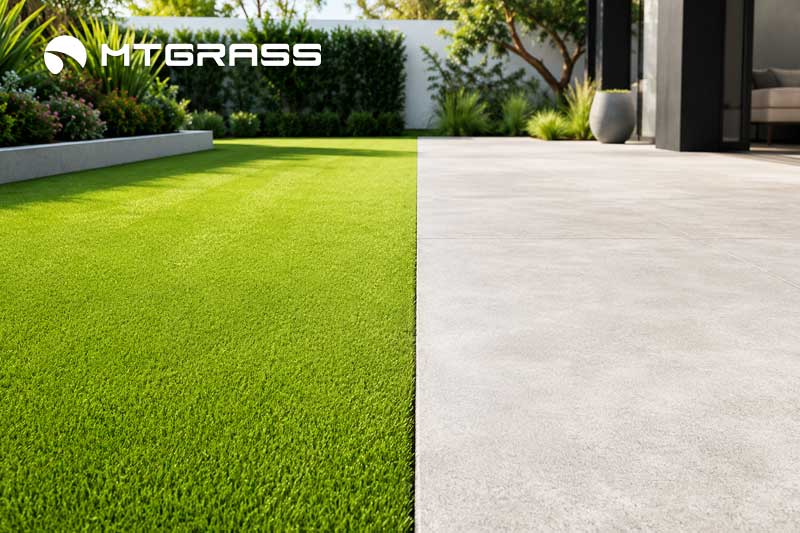
Es bien sabido que el césped artificial y el hormigón difieren significativamente: el hormigón transmite una sensación de solidez, durabilidad y practicidad, mientras que el césped artificial parece exuberante, verde y acogedoramente suave. Sin embargo, ambos materiales tienen en común que se utilizan ampliamente en proyectos de paisajismo, zonas recreativas e instalaciones deportivas. Sin embargo, a la hora de diseñar un paisaje, una instalación deportiva o un proyecto comercial concreto, el entorno exterior ideal suele ser el resultado de una evaluación exhaustiva en la que se sopesan factores como los requisitos funcionales, la comodidad, las expectativas de mantenimiento, las condiciones climáticas y los costes operativos a largo plazo.
En este artículo analizaremos juntos: ¿en qué situaciones ofrece el césped artificial sus mejores prestaciones? ¿Y en qué situaciones sigue siendo el hormigón la opción más sensata?
El mercado mundial de césped artificial alcanzando USD 7,27 mil millones en 2025, más contratistas, distribuidores, instalaciones deportivas, y los desarrolladores de paisaje están buscando socios confiables de fabricación de césped. MightyGrass Como líder fabricante y proveedor de césped artificialapoya proyectos en todo el mundo con sistemas profesionales de césped artificial adaptados al deporte y el paisajismo, césped para mascotasy aplicaciones comerciales. Póngase en contacto con nosotros hoy mismo para recibir las mejores muestras de césped sintético y los precios directos de fábrica más rentables.
Diferencia entre césped artificial y hormigón
El césped artificial y el hormigón están diseñados para fines completamente distintos. El hormigón es un material estructural. Se utiliza principalmente por su resistencia, capacidad de carga y durabilidad bajo el tráfico. El césped artificial, en cambio, está diseñado para crear una superficie más suave, verde y cómoda.
| Característica | Césped artificial (MightyGrass) | Hormigón |
| Superficie | Suave y acolchado | Duro y rígido |
| Efecto visual | Natural y verde | Minimalista e industrial |
| Retención del calor | Más bajo con tecnologías de hilo refrigerante | Efecto isla de calor; calor superficial elevado en verano |
| Drenaje | Sistemas de alta permeabilidad disponibles | Depende de la pendiente y del diseño del drenaje |
| Mantenimiento | Bajo mantenimiento | Bajo mantenimiento pero puede agrietarse |
| Comodidad para niños y mascotas | Alto | Bajo |
| Apoyo a vehículos pesados | Limitado | Excelente |
| Costo de instalación | Moderado a alto | Moderado |
| Aspecto a largo plazo | Aspecto verde uniforme | Puede mancharse o decolorarse |
Por qué el césped artificial se ha hecho tan popular
El auge del césped sintético está estrechamente relacionado con el ahorro de agua y los costes de mano de obra.
En regiones propensas a la sequía como California, Arizona, Oriente Medio y Australia, mantener el césped natural es cada vez más caro. La EPA de EE.UU. sigue haciendo hincapié en las prácticas de paisajismo inteligentes desde el punto de vista hídrico porque el riego de exteriores representa una parte importante del consumo de agua residencial.
En comparación, el césped artificial elimina la necesidad de segar, abonar, resembrar y regar abundantemente, al tiempo que reduce eficazmente problemas como el barro y el polvo en suspensión.
Los sistemas de césped modernos también tienen un aspecto mucho más realista que las generaciones anteriores. Las mejoras en la tecnología del hilo de polietileno, la resistencia a los rayos UV, las estructuras de refrigeración y los sistemas de soporte han hecho que el césped artificial sea adecuado para proyectos residenciales y comerciales de primera calidad.
Por ejemplo MightyGrass, muchos proyectos de paisajismo combinan ahora estructuras de hilo de varios tonos, sistemas de soporte duraderos y bases de alto drenaje para crear superficies de césped que siguen siendo visualmente atractivas durante todo el año, al tiempo que reducen la presión de mantenimiento para los propietarios.
Césped artificial mejor que hormigón
Patios traseros residenciales y espacios familiares
Tomemos como ejemplo un hogar estadounidense medio: durante la temporada alta de césped natural, pasaría de 4 a 5 horas a la semana manteniendo su césped delantero o trasero: cortando, bordeando, regando y desherbando. Piense en el tiempo que más le importa -los fines de semana de verano, las vacaciones escolares y las tardes- en comparación con la instalación de césped artificial, que sólo requiere un simple cepillado semanal y un aclarado con agua.
Para los hogares con perros, las superficies de hormigón presentan retos específicos: suponen una carga excesiva para las articulaciones de los perros mayores, las altas temperaturas del verano pueden quemar las almohadillas de las patas de los perros y no evitan eficazmente las manchas en las zonas de actividad de las mascotas. Sin embargo, el césped artificial equipado con un soporte adecuado y altamente permeable absorbe eficazmente los derrames de líquidos, facilita la limpieza de los residuos sólidos y, gracias al soporte antimicrobiano de alta calidad (una característica estándar de MightyGrass), evita eficazmente la acumulación de olores, un problema que los productos más baratos a menudo no consiguen resolver.
En las zonas de juego infantiles, la amortiguación de caídas es un parámetro de seguridad fundamental. El hormigón no ofrece ninguna capacidad de absorción de impactos. Cuando el césped artificial se instala sobre una capa de espuma amortiguadora (normalmente de 10 a 50 mm de grosor, dependiendo de la altura crítica de caída del equipo), puede cumplir ambos requisitos. Normas de seguridad para parques infantiles EN 1177 y ASTM F1292.
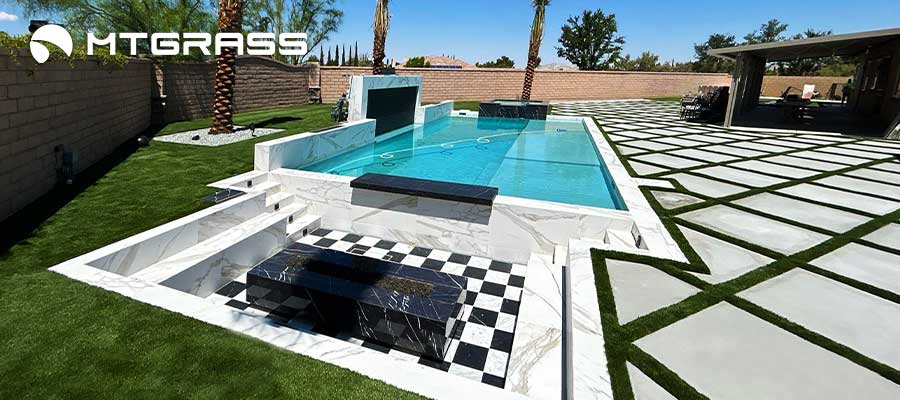
Alrededor de su piscina, la combinación de agua y hormigón crea un importante riesgo de resbalones. El hormigón mojado -incluso con textura o acabado de escoba- puede convertirse rápidamente en una fuente de ansiedad para los padres con niños pequeños. El césped artificial sigue siendo antideslizante incluso cuando está mojado, drena el agua rápidamente y se mantiene cómodo bajo los pies, incluso en condiciones en las que las temperaturas del hormigón alcanzan niveles que harían extremadamente doloroso caminar descalzo. Puede obtener más información sobre cómo mantener fresco el césped artificial durante los meses de verano.
Según los profesionales del paisajismo entrevistados por Better Homes & GardensLas instalaciones residenciales de césped artificial son cada vez más populares porque los propietarios de viviendas desean tener verde todo el año sin necesidad de un mantenimiento continuo del césped.
Zonas deportivas y recreativas
Las aplicaciones deportivas siguen siendo uno de los mayores sectores del césped artificial en todo el mundo. A diferencia del hormigón, los sistemas de césped deportivo proporcionan absorción de impactos y amortiguación, reduciendo eficazmente el riesgo de lesiones de los atletas. Para el fútbol, las pistas polideportivas, las instalaciones de entrenamiento y los patios de recreo de los colegios, el hormigón simplemente no puede proporcionar el mismo confort ni las mismas prestaciones de seguridad a los jugadores.
El césped artificial es la opción preferida en lugares donde se corra mucho, se salte o se practiquen deportes de competición:
- Campos de fútbol
- Fútbol
- Pista de pádel
- Lacrosse
- Hockey sobre hierba
- Béisbol
- Pistas polideportivas
- Instalaciones de formación
MightyGrass está especializada en la fabricación de una amplia gama de sistemas de césped deportivo. Su Césped artificial certificado por la FIFA están diseñadas con estructuras de hilo duraderas y sistemas de soporte reforzados para resistir un uso intensivo manteniendo la consistencia de la superficie.
Otras opciones mejores para instalar césped artificial
En el ámbito del diseño paisajístico tradicional, el césped ofrece siempre la estética clásica y natural de una vegetación exuberante y verde. Gracias a su excepcional durabilidad, versatilidad y consistencia visual, el césped puede incorporarse sin esfuerzo a una amplia gama de diseños paisajísticos creativos. Usted puede personalizar la altura de la pila y el color del césped para satisfacer sus necesidades específicas; MightyGrass ofrece opciones personalizadas que van desde varios tonos de verde a una amplia paleta que incluye azul, púrpura, gris, rojo, amarillo, y mucho más. Además, el césped se puede instalar en áreas donde la hierba natural no puede prosperar, tales como:
- Pasarelas y lugares de mucho tránsito peatonal
- Superficies verticales como paredes o esculturas
- En zonas sombreadas y junto a árboles
- Con elementos acuáticos como piscinas y estanques
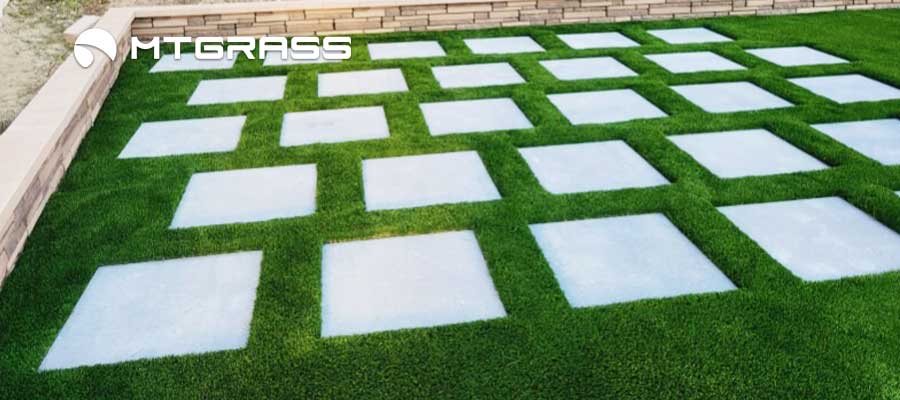
- Adoquines decorativos
- Zonas de descanso al aire libre
El césped artificial tiene una gama excepcionalmente amplia de aplicaciones; incluso puede instalarse directamente sobre tejados de hormigón para crear un efecto visual único y estéticamente agradable, al tiempo que proporciona beneficios prácticos en términos de conservación de la energía y aislamiento térmico.
Donde el hormigón sigue teniendo más sentido
El césped artificial tiene ventajas, pero no es la elección adecuada para todos los proyectos. El hormigón sigue siendo esencial en zonas que requieren una gran resistencia estructural o un tráfico constante de vehículos.
- Los accesos y las zonas de tránsito de vehículos deben pavimentarse con hormigón. Ni siquiera el césped artificial comercial de alta densidad puede soportar el peso y la presión repetidos del tráfico de vehículos. La fuerza de compresión y el movimiento lateral generados por un vehículo de 4.000 libras pueden dañar el soporte del césped, desplazar el material de relleno y aplastar permanentemente las fibras sintéticas. Cualquier superficie que vaya a soportar el peso de coches, camiones o maquinaria pesada debe construirse con hormigón reforzado con barras de acero si las condiciones del suelo o los requisitos de carga así lo exigen.
- Las zonas de cocción al aire libre y las áreas adyacentes a las llamas abiertas deben estar pavimentadas con superficies incombustibles. Las fibras termoplásticas se funden en contacto con brasas calientes, colillas de cigarrillos desechadas o grasa quemada. La mejor práctica consiste en instalar una plataforma de hormigón alrededor de las parrillas, fogones u hornos para pizzas. Aunque se puede instalar césped artificial para bordear el perímetro de hormigón -mejorando la estética general del espacio-, se debe pavimentar con hormigón o piedra una zona de seguridad de al menos 60 cm alrededor de cualquier fuente de llama abierta. Aunque el césped artificial MightyGrass está diseñado para ser resistente al fuego, la exposición a llamas abiertas puede comprometer la integridad visual de su césped.
- Las zonas industriales, las áreas de servicios públicos y los espacios propensos a la exposición a productos químicos se benefician del hormigón por diversas razones. Factores como la resistencia química, la durabilidad en lavados a alta presión y la capacidad de carga hacen del hormigón la opción ideal para garajes, talleres, muelles de carga comerciales y cualquier superficie expuesta con frecuencia a disolventes, grasa o maquinaria pesada. El hormigón -especialmente cuando está sellado con un revestimiento adecuado- puede limpiarse fácilmente en profundidad, mientras que el césped artificial no.
La verdadera tendencia: Combinar césped artificial y hormigón
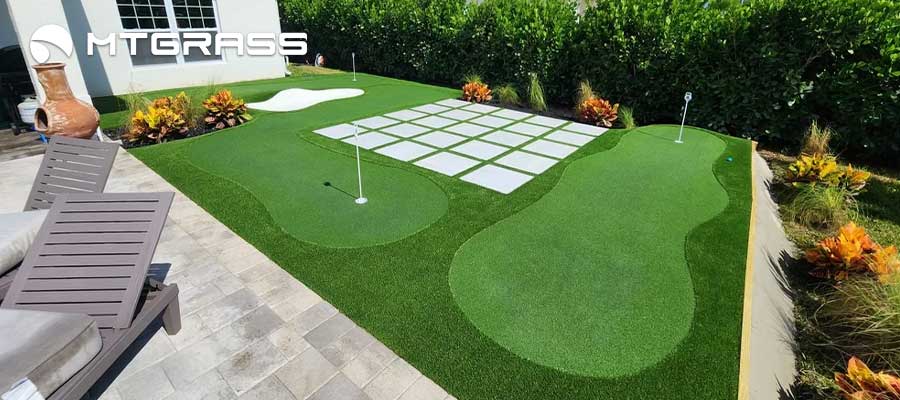
Una superficie de hormigón plana, lisa y limpia constituye una base excelente para celebrar reuniones al aire libre a gran escala. El césped sintético ofrece una textura suave, lo que lo hace cómodo para caminar descalzo o sentarse directamente en el suelo, al tiempo que presenta una estética bella y acogedora. Tanto el césped artificial como el hormigón comparten características clave: durabilidad, facilidad de limpieza, bajo mantenimiento y versatilidad de aplicación. Aunque estos dos materiales son distintos por naturaleza -y sus aplicaciones potenciales a menudo se solapan-, yuxtaponerlos y combinarlos hábilmente permite crear un espacio exterior ideal. Este espacio es perfecto para recibir invitados, realizar actividades con niños y mascotas y mejorar significativamente el atractivo visual general de su proyecto.
También puede instalar césped sintético directamente sobre una base de hormigón; este método es especialmente adecuado para instalaciones deportivas interiores y exteriores, gimnasios y zonas de juego infantiles.
En términos de diseño visual, las superficies de césped artificial armonizan a la perfección con una amplia variedad de materiales de paisajismo, como el mantillo de corteza, la piedra, las flores, los árboles, los arbustos, la madera y el hormigón. Gracias a la excepcional flexibilidad que ofrecen tanto el césped como el hormigón, tiene a su disposición una gran variedad de opciones de diseño, que le permitirán adaptar el trazado a las condiciones iniciales de su proyecto y al resultado final deseado:
- Instalación de césped directamente sobre superficies pavimentadas existentes
- Combinar una calzada de hormigón con bordes de césped artificial
- Combinar una cubierta de piscina de hormigón con una zona de relax cubierta de césped
- Integración de césped paisajístico con pavimento de hormigón en plazas comerciales
- Establecer un sistema de drenaje integral o nivelar toda la zona antes de verter una base de hormigón y, posteriormente, instalar césped sintético en toda la superficie.
Esto es especialmente habitual en proyectos residenciales de lujo, hoteles, escuelas, desarrollos comerciales, instalaciones deportivas cubiertas y al aire libre, donde los diseñadores buscan a la vez practicidad, seguridad y calidez visual.
Al instalar un trazado mixto, hay que tener en cuenta varios puntos. Las juntas de dilatación del hormigón no deben colocarse directamente en el borde del césped; como el hormigón se desplaza con el tiempo, el hueco resultante en el punto de transición resulta antiestético y supone un peligro de tropiezo para los peatones. Independientemente del estado del hormigón circundante, la capa de base bajo el césped debe estar bien compactada y nivelada. Además, teniendo en cuenta el drenaje, asegúrese de que la capa base bajo el césped proporciona un camino despejado para que el agua fluya hacia un canal de drenaje o un borde permeable.
¿Qué es más rentable? ¿Césped artificial u hormigón?
El césped artificial suele ser más económico que el hormigón. El coste del césped en sí suele oscilar entre $2 y $8 por pie cuadrado, mientras que el coste total de instalación del césped artificial -incluidos materiales y mano de obra- se sitúa entre $4 y $20 por pie cuadrado.
El coste medio del hormigón oscila entre $4 y $8 por pie cuadrado, dependiendo del grosor del vertido y del tipo específico de hormigón utilizado. Sin embargo, los costes de los proyectos de paisajismo con hormigón pueden dispararse rápidamente, sobre todo cuando el diseño incluye elementos creativos o el uso de mezclas de hormigón de alta calidad.
En términos de vida útil, el césped artificial utilizado en campos deportivos y zonas muy transitadas suele durar entre 5 y 10 años. Sin embargo, en jardines residenciales, donde la frecuencia de uso es menor y el desgaste es mínimo, el césped artificial puede durar entre 8 y 12 años. El hormigón es uno de los materiales de construcción más duraderos. Las superficies planas de hormigón utilizadas para patios, pasarelas y calzadas suelen durar entre 20 y 40 años o más, siempre que no estén sometidas a fluctuaciones extremas de temperatura (como ciclos de hielo-deshielo), infiltraciones de agua, asentamientos de los cimientos que provoquen grietas o corrosión química (como la provocada por las sales de deshielo). La limpieza y el resellado periódicos cada 2 o 3 años pueden prolongar considerablemente la vida útil del material.
La preparación del terreno, la mano de obra y el equipamiento son factores adicionales que influyen en el coste global de las instalaciones de césped artificial y hormigón; estos costes varían en función de la planitud y la preparación de la superficie donde se realizará la instalación.
Qué tienen en común el césped artificial y el hormigón
- Conservación del agua / Cero necesidades de riego: Ninguno de los dos materiales requiere riego para su mantenimiento. Esto constituye un importante argumento de venta en regiones propensas a la sequía o en mercados con elevadas tarifas de agua (como California y Nevada), especialmente si se compara con el césped natural, que requiere decenas de miles de litros de agua de riego al año, lo que agrava las condiciones de sequía.
- Mantenimiento rutinario reducido: No es necesario cortar el césped, fertilizar ni desherbar. Una vez instalados, ambos materiales requieren una intervención rutinaria mínima: el hormigón puede necesitar ocasionalmente una limpieza y un sellado de las juntas, mientras que el césped artificial puede requerir un aclarado y un cepillado periódicos de las fibras.
- Durabilidad y longevidad: El hormigón tiene una vida útil de 20 a más de 40 años, mientras que césped artificial de alta calidad suele durar entre 10 y 20 años. A diferencia del césped natural, que requiere un mantenimiento anual y una resiembra periódica, ambas opciones son soluciones de instalación única diseñadas para un uso a largo plazo.
- Uso en cualquier condición meteorológica: Tampoco retiene el barro después de la lluvia, y el césped artificial permanece verde durante todo el invierno, sin verse afectado por los cambios estacionales.
- Sin pesticidas ni fertilizantes: Ninguna de las opciones recurre a herbicidas, insecticidas o fertilizantes químicos, una ventaja de seguridad compartida que resulta especialmente beneficiosa para los hogares con niños y mascotas.
- Flexibilidad de diseño: Ambos materiales pueden cortarse y moldearse para adaptarse a espacios irregulares; además, pueden combinarse para crear diseños de superficies mixtas, una práctica habitual tanto en entornos comerciales como residenciales.
Cómo elegir la superficie adecuada para su proyecto
La mejor opción depende de cómo se vaya a utilizar realmente el espacio.
Si su prioridad es el rendimiento estructural o el tráfico de vehículos, el hormigón suele ser la mejor opción.
Si su prioridad es el atractivo visual, la comodidad, el mantenimiento reducido o el uso recreativo, el césped artificial suele ofrecer un mayor valor a largo plazo.
Sin embargo, para la mayoría de los proyectos modernos, la mejor solución suele ser una combinación equilibrada de ambos materiales.
| Necesidad del proyecto | Solución recomendada |
| Patio trasero apto para mascotas | Césped artificial |
| Zona de aparcamiento | Hormigón |
| Zona de ocio en la azotea | Césped artificial + hormigón |
| Jardinería del hotel | Diseño híbrido |
| Campo de deportes | Césped artificial + hormigón/asfalto |
| Zona de acceso industrial | Hormigón |
| Jardín residencial moderno | Diseño combinado |
Conclusión
El césped artificial y el hormigón no son enemigos en el diseño paisajístico. Resuelven problemas diferentes.
El hormigón ofrece resistencia, estabilidad y soporte estructural a largo plazo. El césped artificial ofrece comodidad, estética y un menor mantenimiento del paisaje.
A medida que más ciudades dan prioridad a la conservación del agua y a los paisajes de menor mantenimiento, el papel del césped artificial sigue ampliándose en aplicaciones residenciales, comerciales y deportivas.
Tanto si está diseñando un refugio en el patio trasero, un salón en la azotea, una instalación deportiva o un paisaje comercial, Hierba poderosa trabaja con distribuidores, contratistas, constructores de campos deportivos y promotores comerciales de todo el mundo para ofrecer soluciones personalizadas de césped artificial para aplicaciones paisajísticas y deportivas.
Preguntas frecuentes
¿Es mejor el césped artificial que el hormigón para el paisajismo residencial?
El césped artificial es a menudo una mejor opción para paisajes residenciales donde la comodidad, la apariencia y el bajo mantenimiento son prioridades. A diferencia del hormigón, el césped sintético ofrece una superficie más suave para niños y mascotas, al tiempo que mantiene un aspecto verde durante todo el año. Muchos propietarios también eligen el césped artificial para reducir los costes de riego, siega y mantenimiento del césped. El hormigón, sin embargo, sigue siendo más adecuado para zonas de carga pesada, como entradas y zonas de acceso de vehículos.
¿El césped artificial se calienta más que el hormigón?
Tanto el césped artificial como el hormigón pueden calentarse bajo la luz solar directa, pero el comportamiento térmico depende de la calidad del producto, el color, el clima y el método de instalación. El hormigón tradicional absorbe e irradia calor durante largos periodos, mientras que los sistemas de césped artificial más recientes utilizan tecnologías de hilos refrigerantes, mezclas de colores más claros y materiales de relleno mejorados para ayudar a reducir la temperatura de la superficie. En climas cálidos, combinar el césped con zonas de sombra o sistemas de refrigeración por riego puede mejorar notablemente el confort.
Si desea más información sobre cómo evitar que el césped artificial se recaliente bajo el sol abrasador, haga clic: Consejos para mantener fresco el césped artificial cuando hace calor.
¿Se puede instalar césped artificial sobre hormigón?
Sí. El césped artificial puede instalarse directamente sobre superficies de hormigón como patios, balcones, azoteas y antiguas zonas pavimentadas. Sin embargo, un drenaje adecuado es fundamental. Dado que el hormigón no es poroso, los instaladores suelen añadir esteras de drenaje, ajustes de pendiente o agujeros de drenaje para evitar la acumulación de agua bajo el césped.
¿El césped artificial es seguro para los niños y las mascotas?
Los productos modernos de césped artificial están diseñados para ser no tóxicos, duraderos y cómodos bajo los pies. Muchos sistemas de césped residencial y para parques infantiles incluyen capas amortiguadoras que mejoran la absorción de impactos en comparación con las superficies de hormigón. El césped artificial también es resistente al barro, a las excavaciones y a las manchas causadas por los animales domésticos.
¿Cuáles son los requisitos de mantenimiento del césped artificial?
El césped artificial requiere mucho menos mantenimiento que el natural. La mayoría de las instalaciones sólo necesitan aclarados ocasionales, retirada de residuos y cepillados ligeros para mantener las fibras erguidas y los sistemas de drenaje despejados. A diferencia del césped natural, el césped artificial no requiere siega, fertilización ni resiembra.
¿Es mejor el hormigón para las superficies deportivas?
Depende del deporte. El hormigón es preferible para actividades que requieren una superficie de rebote dura y consistente, como el baloncesto y el monopatín. El césped artificial es más adecuado para el fútbol, los parques infantiles y las zonas recreativas, donde la amortiguación, la tracción y la comodidad del jugador son importantes.