Español
  English
  العربية
  Deutsch
  Français
  Português
  Русский
  日本語
日本語  Italiano
  Nederlands
  Svenska
  Suomi
Suomi  ไทย
ไทย  Dansk
Dansk  Ελληνικά
  Bahasa Melayu
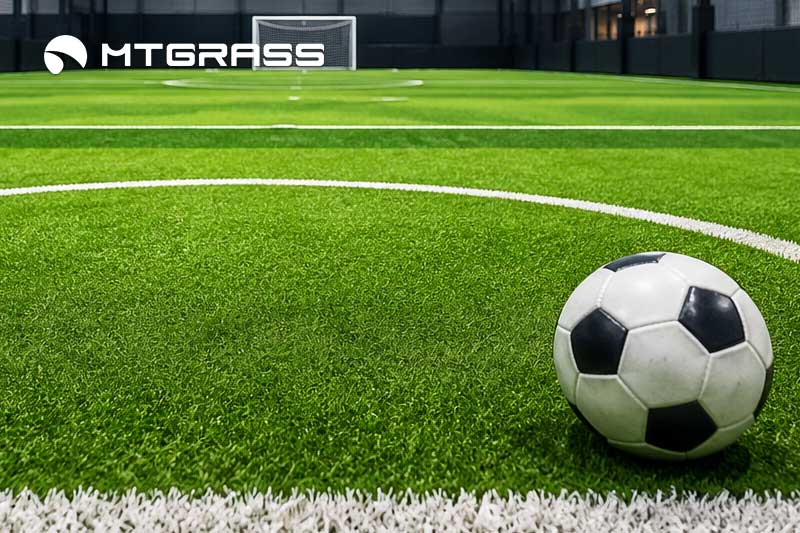
Tanto si gestionas un centro comercial de fútbol 5, una academia de entrenamiento en pista cubierta o un complejo polideportivo, la calidad del césped artificial de tu pista de fútbol sala influye directamente en la seguridad de los jugadores, la satisfacción de los clientes, los costes de explotación y la rentabilidad de tus instalaciones.
Sin embargo, con tantos sistemas de césped artificial para interior disponibles en el mercado, elegir el mejor césped para fútbol sala puede resultar abrumador en poco tiempo.
Algunos productos dan prioridad a la suavidad, pero se desgastan demasiado rápido con un tráfico intenso. Otros se centran en la durabilidad, pero sacrifican la respuesta realista del balón y la comodidad del jugador. En MightyGrass, el mejor césped artificial para interiores logra un equilibrio entre todos estos factores de rendimiento.
Esta guía explica qué es lo que realmente define un césped deportivo de interior de alta calidad, qué especificaciones técnicas son las más importantes y cómo los propietarios de instalaciones deportivas de todo el mundo evalúan los sistemas profesionales de césped para fútbol de interior antes de invertir. Esperamos que te resulte útil para tu próxima inversión en un proyecto de campo de fútbol.
¿Qué caracteriza al mejor césped artificial para fútbol sala?
El mejor césped para fútbol sala no es simplemente el que tiene mayor grosor ni la opción más barata del mercado. Los sistemas de césped para fútbol sala de alta calidad se evalúan en función de su rendimiento a largo plazo en condiciones reales de juego.
Resistencia de la superficie ante un tráfico peatonal intenso
Las instalaciones de fútbol sala suelen registrar índices de uso considerablemente más elevados que los campos al aire libre.
Por ejemplo, es posible que un césped artificial para fútbol sala comercial deba soportar entre 8 y 14 horas de actividad diaria —incluidos varios partidos al día, giros bruscos frecuentes, aceleraciones y entradas deslizantes de los jugadores— o incluso un uso continuo durante todo el año; todo ello somete las fibras del césped, el soporte y la estructura de las costuras a una enorme tensión estructural.
Por lo tanto, te recomendamos que elegir césped artificial para fútbol con las siguientes especificaciones técnicas:
| Especificación | Recomendación profesional |
| Material de fibra | Césped artificial de monofilamento de PE o de PE sin relleno |
| Peso facial | 40–70 onzas |
| Tasa de puntadas | 16-22 puntos por cada 10 cm |
| Densidad | 45 000–75 000 puntadas/m² |
| Apoyo | PP de doble capa + soporte de PU |
En Hierba poderosa, muchos sistemas de césped artificial para fútbol sala están diseñados específicamente para un uso deportivo intensivo, combinando estructuras de fibras resistentes con una base reforzada que garantiza la estabilidad, con el fin de prolongar su vida útil en condiciones de uso comercial.
Rodamiento y respuesta uniformes de la bola
Aunque a simple vista la superficie de una pista de fútbol sala pueda parecer prácticamente idéntica, los jugadores percibirán de inmediato cualquier irregularidad en el movimiento del balón. Un césped artificial para fútbol sala inadecuado o de mala calidad puede provocar velocidades de rodadura del balón desiguales o la aparición de «zonas muertas» en las que el balón reacciona con lentitud.
Para campos de fútbol sala y recintos cubiertos césped de fútbol En lo que respecta a los sistemas e instalaciones, suelen centrarse en:
| Indicador de rendimiento | Rango preferido |
| Distancia de rodadura de la bola | 4-8 m |
| Rebote vertical del balón | 60-100 cm |
| Fricción superficial | Moderado |
| Resistencia a la rotación | Estabilidad controlada |
Amortiguadores y comodidad del jugador
A la hora de elegir césped artificial para interiores, la seguridad y la comodidad de los jugadores son factores que no se pueden pasar por alto.
Los campos de fútbol artificiales suelen someter a los tobillos, las rodillas, la zona lumbar y los tendones de Aquiles a un estrés por impactos repetitivos. Según las normas de calidad de la FIFA, el índice de absorción de impactos de los sistemas de césped artificial para fútbol suele oscilar entre 55% y 70%.
Se recomienda que selecciones un sistema de césped artificial para tu instalación deportiva cubierta, con fibras de polietileno más suaves, combinadas con un Amortiguadores de 10 mm una capa base —o un sistema de césped artificial con una capa amortiguadora integrada—. Esto resulta especialmente importante en los programas de formación de jóvenes y en los entornos de entrenamiento profesional, donde la prevención de lesiones está directamente relacionada con la evolución de la carrera de un deportista.
Eficiencia en el mantenimiento
Una de las razones por las que muchas instalaciones optan por el césped sintético para interiores es que requiere menos mantenimiento que el césped natural.
Sin embargo, no todos los productos de césped artificial para interiores son igual de fáciles de mantener. Un sistema de césped artificial para fútbol sala, diseñado e instalado por profesionales, solo debería requerir:
- Cepillado diario
- Desinfección de superficies
- Nivelación del relleno (si procede)
- Inspección periódica de las juntas
El sistema de césped sintético para fútbol sala sin relleno de MightyGrass mejora la limpieza de la superficie en las instalaciones deportivas cubiertas, al tiempo que reduce de forma eficaz la carga que supone el mantenimiento diario, lo que le ha valido el reconocimiento unánime de los clientes.
Rentabilidad de la inversión a largo plazo
El césped artificial para fútbol sala más barato que se encuentra a la venta rara vez es la solución más rentable a largo plazo.
Hoy en día, los propietarios de instalaciones valoran cada vez más el césped en función de su valor a lo largo de su ciclo de vida, en lugar de basarse únicamente en el coste inicial de instalación.
Un sistema más económico que hay que sustituir al cabo de 3-4 años puede acabar costando mucho más que un sistema de gama alta que dure entre 8 y 10 años y que requiera menos tiempo de inactividad por mantenimiento.
En el caso de las instalaciones comerciales cubiertas, las interrupciones en el funcionamiento pueden llegar a resultar rápidamente más costosas que el propio césped artificial.
Por qué el «mejor césped» depende del tipo de instalación que tengas
Las distintas instalaciones tienen requisitos diferentes en cuanto a las características del césped artificial.
Academias de entrenamiento en interior
Las academias de formación juvenil y profesional suelen dar prioridad a factores como el control realista del balón, las superficies de juego de bajo impacto, la eficacia del entrenamiento técnico y la seguridad de los jugadores.
En estas instalaciones, el césped sintético para fútbol sala de pelo medio con capa amortiguadora suele ofrecer los mejores resultados. La altura habitual del pelo oscila entre 30 y 40 mm.
Centros comerciales de fútbol 5
Los centros comerciales de fútbol sala dan prioridad a la durabilidad y a la eficiencia operativa. Las instalaciones de este tipo suelen enfrentarse a condiciones caracterizadas por una frecuencia de reservas extremadamente alta, una rápida rotación de jugadores y un desgaste intenso. Por lo general, se prefieren los sistemas de campos de fútbol sala con césped sintético de mayor densidad, con costuras reforzadas y un soporte de alta resistencia.
Complejos polideportivos
Muchas instalaciones cubiertas acogen actividades como partidos de fútbol o clases de entrenamiento deportivo. Para este tipo de entornos, un césped deportivo multiusos para interior es la opción ideal, ya que presenta una altura de pelo moderada y ofrece unas características de tracción adecuadas para una amplia variedad de disciplinas deportivas. Algunas instalaciones incluso combinan zonas de césped para jaulas de bateo en interior con instalaciones de césped para fútbol sala, con el fin de aprovechar al máximo el espacio.
Instalaciones para actuaciones profesionales
Los centros de formación de élite suelen exigir especificaciones de rendimiento acordes con los criterios de la FIFA. Estas instalaciones dan prioridad a:
- Comportamiento profesional en el campo
- Restitución controlada de energía
- Equilibrio de tracción rotacional
- Biomecánica del deportista
Los sistemas de césped sintético de alta gama para campos de fútbol sala pueden incluir capas amortiguadoras avanzadas y estructuras de tufting de precisión para satisfacer las exigencias de los entrenamientos profesionales.
¿Qué otros factores hay que tener en cuenta a la hora de elegir el césped para fútbol sala?
Al realizar una compra césped deportivo, muchos compradores tienden a centrarse en exceso en su aspecto. Sin embargo, también hay que prestar atención a los detalles técnicos clave que determinan su rendimiento a largo plazo.
Resistencia del respaldo
El sistema de soporte es, en esencia, la base del césped artificial. Una estructura de soporte débil puede provocar problemas como la pérdida de mechones, arrugas en la superficie o incluso el aflojamiento de las uniones.
El césped artificial para interiores MightyGrass suele utilizar un soporte de poliuretano (PU), ya que ofrece una estabilidad dimensional y una resistencia a la humedad superiores en comparación con las alternativas de látex, más económicas.
Acumulación de electricidad estática en interiores
La electricidad estática es un problema real en el interior de las instalaciones deportivas cerradas, sobre todo en climas secos.
Los sistemas avanzados de césped sintético para interiores de MightyGrass incorporan en ocasiones tecnologías de fibras antiestáticas para reducir las molestias y la acumulación de polvo.
¿Con relleno o sin relleno? ¿Cuál ofrece mejores resultados en interiores?
| Tipo de césped para interiores | Ventajas | Desventajas | Mejores aplicaciones |
| Césped artificial para interiores con relleno | Interacción más natural con el balón. Amortiguación mejorada. Mejor absorción de la energía. | Mayor mantenimiento. Migración del relleno. Mayores requisitos de limpieza. | Campos de fútbol sala profesionales. Centros de entrenamiento de fútbol de alto rendimiento. Instalaciones que dan prioridad a la comodidad de los jugadores y a un juego realista. |
| Césped de interior sin relleno | Aspecto más limpio. Menor mantenimiento. Desinfección más sencilla. Más adecuado para instalaciones de uso múltiple. | Sensación ligeramente más firme. Características de velocidad de la pelota diferentes. | Sistemas de césped para fútbol sala; complejos polideportivos cubiertos; instalaciones deportivas cubiertas de uso comercial con un uso diario intensivo |
Hoy en día, muchos sistemas modernos de césped deportivo para recintos cubiertos están adoptando diseños con poco relleno o sin relleno, ya que los gestores de instalaciones deportivas dan cada vez más prioridad a la eficiencia en el mantenimiento, a unos entornos interiores más limpios y a la reducción de los costes operativos a largo plazo.
¿Cuánto tiempo debería durar un césped artificial de fútbol sala de calidad?
Un sistema de césped artificial para interiores instalado por profesionales suele durar:
| Nivel de uso de las instalaciones | Vida útil prevista |
| Uso para entrenamiento ligero | 8-10 años |
| Uso comercial moderado | 6-8 años |
| Uso comercial intensivo | 4-6 años |
Entre los principales factores que influyen en la vida útil se encuentran la intensidad de uso de la pista deportiva, la calidad de la instalación, la calidad del mantenimiento periódico y los materiales utilizados para las fibras y la base. Tomando como ejemplo las fibras de césped, en comparación con el PP, el césped artificial de PE suele conservar la elasticidad y la resistencia de sus fibras durante más tiempo.
Por qué las instalaciones deportivas de todo el mundo confían en MightyGrass
Elegir al proveedor adecuado de césped sintético es mucho más que simplemente comprar césped sintético.
En el caso de las instalaciones deportivas cubiertas, el éxito a largo plazo depende de la calidad constante de los productos, la experiencia en ingeniería, la capacidad de suministro fiable y la asistencia técnica continua.
MightyGrass cuenta con más de 20 años de experiencia en la fabricación de césped artificial y está especializada en sistemas de césped deportivo profesional para fútbol, fútbol americano, fútbol sala y aplicaciones multideportivas en todo el mundo. Desde academias de entrenamiento en recintos cubiertos hasta campos de fútbol de césped artificial en recintos cubiertos de uso comercial, MightyGrass se centra en ofrecer superficies diseñadas para garantizar la durabilidad, la comodidad de los jugadores y un rendimiento a largo plazo.
Para los compradores internacionales, una ventaja importante es que MightyGrass es una Fabricante de césped artificial homologado por la FIFA, fabricando productos que cumplen estrictamente con las normas de la FIFA, incluidos los requisitos de rendimiento relativos al rodamiento del balón, la absorción de impactos y la estabilidad del terreno de juego. Esto ayuda a los propietarios de instalaciones deportivas a garantizar unas condiciones de juego más uniformes, al tiempo que mejora la seguridad de los deportistas y prolonga la vida útil del terreno de juego.
Para ofrecer un mejor servicio a los clientes norteamericanos, MightyGrass también cuenta con un almacén en EE. UU., lo que contribuye a reducir los plazos de entrega y a mejorar la flexibilidad de suministro para determinados productos de césped artificial de interior y para las necesidades de los proyectos.
| Hierba poderosa | Ventajas para las instalaciones deportivas |
| Más de 20 años de experiencia en fabricación | Calidad constante de los productos y experiencia contrastada en el sector |
| Producción de césped deportivo conforme a las normas de la FIFA | Rendimiento fiable de la pelota y seguridad de los jugadores |
| Tecnología avanzada de hilos de PE | Mayor suavidad, elasticidad y durabilidad |
| Sistemas de soporte reforzado | Mayor resistencia de las costuras y estabilidad dimensional |
| Diversas especificaciones para césped artificial de interior | Apto para fútbol sala, fútbol y uso polideportivo |
| Servicio de almacén en EE. UU. | Entrega más rápida y opciones de suministro más flexibles |
| Experiencia en proyectos globales | Una mejor comprensión de las necesidades de instalación y de las instalaciones |
¿Estás listo para renovar tus instalaciones deportivas cubiertas con césped artificial de calidad profesional? Contactar con MightyGrass Ponte en contacto con nosotros hoy mismo para solicitar las especificaciones del producto, los precios o muestras gratuitas de césped artificial para tu próximo proyecto.
Sistemas de césped sintético recomendados para campos de fútbol y fútbol americano
- FIFA MT-Diamante: Diseñado específicamente para ofrecer resistencia y durabilidad, este producto presenta un perfil clásico de fibra en forma de rombo y una estructura de hilo reforzado que mejora considerablemente su resistencia a la abrasión. Este diseño prolonga su vida útil —incluso en entornos deportivos de alta frecuencia—, lo que lo hace ideal para recintos con mucho tránsito en los que la durabilidad es un requisito fundamental.
- FIFA MT-Ubest: Diseñado para imitar fielmente el césped natural, este producto cuenta con una estructura de hilo en forma de U que logra un equilibrio óptimo entre durabilidad, resistencia y comodidad para los jugadores. Al ofrecer una estética más natural y una interacción superior entre la superficie y los jugadores, es la opción perfecta para instalaciones deportivas de alta gama que dan prioridad tanto a la jugabilidad natural como al atractivo visual.
- Césped artificial sin relleno: La superficie de este césped artificial está compuesta por monofilamentos de PE combinados con una capa de soporte de hilo rizado. Este diseño reduce al mínimo la necesidad de mantenimiento posterior del relleno y garantiza un entorno más limpio, especialmente en instalaciones cubiertas. Incluso con un relleno reducido u omitido, el sistema mantiene un agarre excepcional, la estabilidad de la base y una gran durabilidad general durante los partidos de alta intensidad.

Conclusión
El mejor césped para fútbol sala es aquel que logra un equilibrio constante entre la durabilidad, la comodidad de los jugadores, el rendimiento del balón, la eficiencia en el mantenimiento y la rentabilidad a largo plazo.
En el caso de las instalaciones deportivas, el césped artificial no es solo un revestimiento para el suelo. Influye directamente en la experiencia de los deportistas, la fidelización de los usuarios, la reputación de las instalaciones y la rentabilidad operativa.
Tanto si estás construyendo un centro comercial de fútbol sala, renovando unas instalaciones de fútbol sala o planificando un complejo de entrenamiento profesional en pista cubierta, invertir en el sistema de césped artificial adecuado es una de las decisiones más importantes que tomará tu centro.
Preguntas frecuentes
¿Cuál es la altura de pelo más adecuada para el césped artificial de fútbol sala?
La altura ideal del césped depende del uso que se le vaya a dar a la instalación. En la mayoría de los campos de fútbol sala, una altura de pelo de entre 30 mm y 40 mm ofrece el mejor equilibrio entre control del balón, agarre de los jugadores y comodidad. Los sistemas de césped más cortos suelen ser los preferidos para el fútbol sala, ya que permiten un movimiento más rápido del balón y requieren menos relleno, mientras que los sistemas ligeramente más altos pueden proporcionar una mayor amortiguación para entornos de entrenamiento de alto impacto.
¿Qué tipo de instalación de césped artificial ofrece mejores resultados en interiores?
En el caso de las instalaciones deportivas cubiertas, el césped sintético de monofilamento de polietileno con una base reforzada de poliuretano (PU) se considera, en general, una de las estructuras con mejor rendimiento. Este tipo de césped sintético para interiores ofrece una mayor suavidad, una mejor recuperación de las fibras y una mayor durabilidad ante un tráfico intenso. Además, la estructura de costura de alta densidad contribuye a mantener un rodamiento constante del balón y el aspecto de la superficie a lo largo del tiempo.
¿Es mejor el césped sin relleno para el fútbol sala?
En muchas aplicaciones en recintos cerrados, sí. El césped de fútbol sala sin relleno o con poco relleno se ha vuelto cada vez más popular porque reduce el mantenimiento, mantiene las instalaciones más limpias y simplifica el cuidado diario. Es especialmente habitual en los sistemas de césped de fútbol sala y en los complejos polideportivos cubiertos. Sin embargo, algunas instalaciones de entrenamiento profesional siguen prefiriendo los sistemas con relleno porque proporcionan una sensación más tradicional de fútbol y una mayor absorción de impactos.
¿Cuánto cuesta la póliza premium? coste del césped artificial para fútbol sala?
El coste del césped artificial para interiores puede variar considerablemente en función de la calidad de la fibra, la densidad del césped, la estructura del soporte, la altura del pelo y si se incluye un sistema de amortiguación. En general, el césped de fútbol de interior de alta gama para instalaciones deportivas puede oscilar entre aproximadamente $3 y $8+ por pie cuadrado solo por el material del césped, mientras que los costes del sistema completo instalado suelen ser más elevados, dependiendo del tamaño del proyecto y de los requisitos del subsuelo.
¿Con qué frecuencia hay que cambiar el césped artificial de interior?
Un campo de césped artificial para interior de alta calidad suele durar entre 6 y 10 años con un mantenimiento adecuado. Las instalaciones con un uso comercial extremadamente intenso pueden tener ciclos de sustitución más cercanos a los 4-6 años, mientras que las academias de entrenamiento y las instalaciones con menor frecuencia de uso suelen alcanzar una vida útil más larga. Factores como las rutinas de mantenimiento, el tráfico de jugadores y la calidad de la instalación influyen en la vida útil del césped.
¿Qué certificaciones debe tener el césped artificial para interiores?
En el ámbito de los deportes profesionales, los compradores suelen buscar sistemas de césped artificial fabricados según las normas de rendimiento de la FIFA en lo que respecta al rodamiento del balón, la absorción de impactos, la tracción y la durabilidad. Además, los fabricantes de césped artificial para recintos cubiertos de prestigio deben contar con certificaciones de producción reconocidas internacionalmente, como los sistemas de gestión de la calidad ISO. Trabajar con un fabricante con experiencia como MightyGrass también puede ayudar a garantizar una calidad del producto más estable y un soporte técnico a largo plazo para los proyectos de instalaciones deportivas.