Français
  English
  العربية
  Español
  Deutsch
  Português
  Русский
  日本語
日本語  Italiano
  Nederlands
  Svenska
  Suomi
Suomi  ไทย
ไทย  Dansk
Dansk  Ελληνικά
  Bahasa Melayu
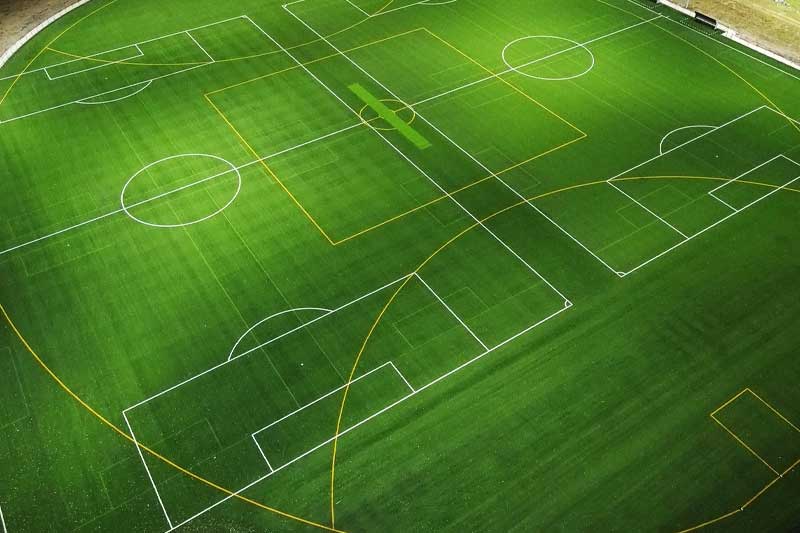
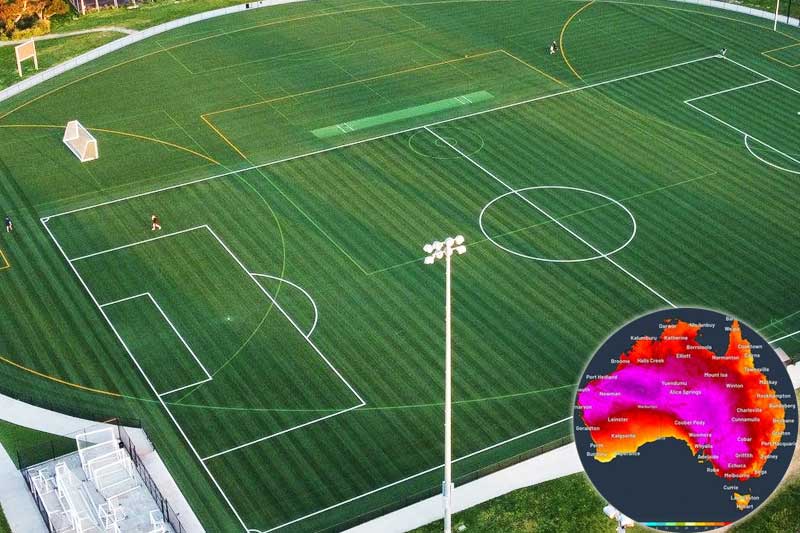
Un terrain d'AFL typique nécessite une grande surface de jeu, des performances de surface constantes, une bonne adhérence pour les joueurs et la capacité de supporter des milliers d'heures d'utilisation chaque année. Partout en Australie, que ce soit dans les écoles, les universités, les clubs d’AFL ou chez les exploitants d’installations sportives, l’entretien d’un terrain ovale en gazon naturel est devenu de plus en plus difficile. Les restrictions d’eau, les conditions de sécheresse, les températures estivales extrêmes et la demande croissante en installations sportives communautaires exercent une pression sur la gestion traditionnelle des pelouses.
Comme gazon synthétique À mesure que la technologie ne cesse de progresser, le gazon synthétique AFL s'impose comme une solution pratique pour les organismes qui souhaitent créer des installations sportives durables, fiables et nécessitant peu d'entretien. Dans ce guide, vous découvrirez comment le gazon synthétique AFL est conçu, quelles sont les caractéristiques techniques les plus importantes et comment choisir le fournisseur de gazon synthétique le mieux adapté à votre projet.
Qu'est-ce que le gazon synthétique AFL ?
Le gazon synthétique AFL est un système de gazon artificiel spécialisé, conçu pour répondre aux exigences de performance propres au football australien. Le gazon AFL doit en effet supporter une activité sportive de haute intensité. Les joueurs effectuent des sprints, changent de direction, sautent, plaquent et s'affrontent sur de vastes surfaces ; la surface doit donc offrir une adhérence constante, une grande résistance et un confort optimal.
Selon les directives de l'AFL relatives aux terrains, les surfaces de jeu peuvent varier considérablement, leurs dimensions typiques allant approximativement de 135 mètres à 185 mètres de longueur et de 110 mètres à 155 mètres de largeur. Bien que les terrains de l'AFL couvrent une vaste surface de jeu, l'usure se concentre généralement dans des zones spécifiques très fréquentées, où les joueurs accélèrent, changent de direction et se disputent la possession du ballon. Ces zones comprennent :
- zones de rebond centrales
- zones de but
- couloirs de course à pied
- zones d'entraînement à forte fréquentation
Un système de gazon synthétique AFL correctement conçu se compose généralement de plusieurs couches qui fonctionnent en synergie :
| Composant du système de gazon synthétique | But |
| Fil synthétique | Assure la durabilité, l'esthétique et l'interaction avec les joueurs |
| Support principal | Assure la fixation des fibres du gazon synthétique pendant la fabrication |
| Support secondaire | Améliore la stabilité dimensionnelle |
| Amortisseur (en option) | Améliore l'absorption des chocs et le confort du joueur |
| Système de remplissage | Favorise la récupération des fibres et améliore les performances de surface |
| Ouvrage de drainage | Permet une évacuation rapide de l'eau après une averse |
MightyGrass possède plus de 20 ans d'expérience dans la fabrication de gazon synthétique et produit gazon sportif des solutions destinées aux marchés internationaux, notamment l'Australie. Grâce à ses capacités de pointe en matière d'extrusion de fils, de tuftage et de fabrication de sous-couches, MightyGrass propose des systèmes de gazon synthétique sur mesure pour les projets sportifs professionnels, les équipements collectifs et les applications commerciales.
Pourquoi le football australien a besoin d'un gazon aux caractéristiques différentes
L'AFL se joue sur de vastes terrains de forme ovale où les joueurs doivent parcourir de longues distances, changer de direction à grande vitesse, disputer des ballons aériens et résister à des chocs répétés dans des zones spécifiques. Ces exigences de performance étant particulières, le gazon ne peut pas se contenter d'être une version agrandie d'un gazon sportif standard. La structure des fibres, la hauteur des poils, le système de remplissage, l'absorption des chocs et la construction de la base doivent tous être méticuleusement conçus pour garantir des performances constantes sur l’ensemble du terrain. Plusieurs facteurs expliquent cela :
- Le comportement du ballon doit être le même dans toutes les directions : le football australien se joue avec un ballon ovale que l'on fait rebondir, que l'on laisse tomber et que l'on frappe au pied sur de longues distances sur un terrain de forme ovale ; la surface doit donc offrir un rebond prévisible et régulier, quelle que soit la direction dans laquelle le ballon se déplace — une propriété bien plus difficile à obtenir qu'un roulement régulier le long d'un ensemble de lignes fixes.
- La sollicitation physique des joueurs est plus intense et plus répétitive : les joueurs de l'AFL parcourent nettement plus de distance par match que la plupart des athlètes pratiquant des sports de terrain, et les duels aériens les obligent à atterrir régulièrement avec violence sur les mêmes zones du gazon. L'absorption des chocs et la récupération des fibres revêtent donc une importance plus grande dans les spécifications techniques que ce ne serait le cas pour un sport impliquant moins de contacts.
- Le partage des installations est la norme, et non l'exception : la plupart des stades de l'AFL en Australie servent également de terrains de cricket en été. Le gazon de la zone de jeu et du champ doit donc répondre aux exigences de deux sports très différents sur une même surface, tandis que le terrain de cricket proprement dit est généralement aménagé comme une surface distincte, synthétique ou hybride, spécialement conçue à cet effet au sein du stade.
C’est précisément pour cette raison que l’AFL et Cricket Australia ne se sont pas contentés d’emprunter une norme de la FIFA ou de World Rugby relative aux terrains synthétiques pour la rebaptiser. Ils ont commandé une étude spécifique visant à déterminer les caractéristiques réelles qu’un terrain ovale synthétique doit présenter.
Comprendre les normes de certification de l'AFL/CA
Lorsque vous recherchez du gazon synthétique conforme aux normes de l'AFL, vous vous demandez peut-être s'il existe des normes de certification spécifiques à l'AFL, similaires à celles qui s'appliquent à Pelouse de football FIFA. La réponse est que l'AFL ne gère actuellement aucun programme mondial de certification des gazons synthétiques équivalent au Programme de qualité de la FIFA.
Au contraire, les responsables des installations de l'AFL évaluent généralement les surfaces de jeu en fonction des attentes en matière de performances, des exigences de sécurité des joueurs et de l'adéquation à la pratique du football australien. Pour les installations partagées entre l'AFL et le cricket, les directives de Cricket Australia et les exigences sportives locales peuvent également influencer les choix de conception.
Lorsque vous choisissez un fournisseur de gazon synthétique pour l'AFL, ne vous fiez pas uniquement à l'aspect esthétique. Une surface d'aspect réaliste n'offre pas toujours les performances requises pour la pratique du sport de compétition.
| Facteur de performance | Importance |
| Absorption des chocs | Contribue à réduire les forces d'impact pendant le jeu |
| Déformation verticale | Mesure la réponse de la surface sous charge |
| Résistance à la rotation | Évalue la sécurité des déplacements des joueurs |
| Résistance des fibres | Détermine les performances à long terme |
| Capacité de drainage | Conserve sa facilité d'utilisation après la pluie |
| Uniformité de la surface | Permet un gameplay prévisible |
MightyGrass allie son expertise dans la fabrication de gazons sportifs à des systèmes de qualité reconnus à l'échelle internationale, notamment la norme ISO relative à la gestion de la qualité, les capacités de contrôle de SGS et son expérience en matière de gazons de football certifiés par la FIFA. Fort de ce savoir-faire, MightyGrass est en mesure de développer des revêtements sportifs répondant aux différentes exigences des projets, qu'il s'agisse de terrains de football, d'espaces d'entraînement de type AFL ou d'installations multisports.
Qu'est-ce qui caractérise un système de gazon synthétique AFL de haute qualité ?
Tous les produits en gazon synthétique ne sont pas adaptés aux environnements de l'AFL. La fiabilité d'un système de gazon synthétique destiné à l'AFL repose sur la combinaison de la technologie des fibres, de la qualité de fabrication et de la conception de la pose.
Hauteur des poils, forme et densité du fil
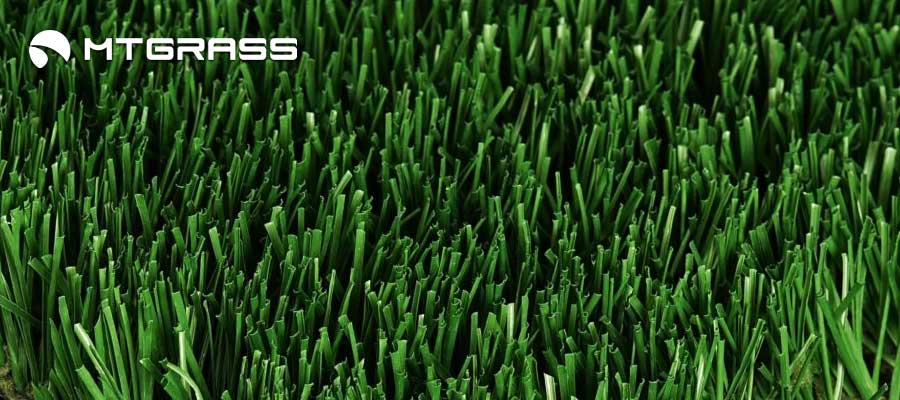
La hauteur des poils influe directement sur le toucher et les performances du gazon synthétique. Pour l’AFL et les installations multisports, la hauteur des poils des systèmes de gazon synthétique se situe généralement entre 40 mm et 60 mm, en fonction des caractéristiques de performance requises. Un gazon synthétique à poils longs peut offrir :
- un contact plus doux avec le joueur
- amélioration de l'aspect visuel
une plus grande mobilité des fibres
Cependant, la hauteur des poils ne suffit pas à elle seule à déterminer la qualité ; il faut également tenir compte de la forme et de la densité des brins d’herbe. Des profils de fibres avancés, tels que les fibres en forme de S, de U ou de losange, sont conçus pour améliorer la reprise des fibres, l’aspect droit du gazon et sa résistance à un passage répété.
Grâce à une structure de fil de meilleure qualité, le gazon synthétique conserve ses performances même après des années d'utilisation intensive.
Résistance aux UV adaptée au climat australien
Le climat australien rend indispensable la résistance aux rayons UV. Les fabricants disposant de capacités de production intégrées ont un meilleur contrôle sur la qualité et l'uniformité des fils. Lorsque vous choisissez un gazon synthétique AFL, vous devez vous assurer que :
- si des stabilisateurs UV sont ajoutés lors de la fabrication du fil
- si le gazon a fait l'objet de tests de résistance en extérieur
- si le fabricant assure lui-même l'extrusion des fils
MightyGrass dispose de ses propres installations pour l'extrusion des fibres de gazon, le tufting et la fabrication des sous-couches, ce qui lui permet d'exercer un contrôle efficace sur les matières premières, les normes de fabrication et la R&D en matière de gazon sportif sur mesure. L'entreprise a également passé avec succès les tests de résistance aux UV de Labosport.
Système de drainage garantissant la praticabilité du terrain par temps pluvieux
Le drainage est souvent sous-estimé lors du choix d'un gazon synthétique. Les terrains de l'AFL sont de vastes surfaces en plein air, et une conception inadéquate du drainage peut entraîner une accumulation d'eau, ralentir la remise en état du terrain et réduire son utilisation après des précipitations. Un système de gazon synthétique hautement performant doit allier :
- support perforé
- canaux de drainage efficaces
- préparation adéquate de la couche de fondation
Pour projets de gazon synthétique en Australie, une capacité de drainage d'environ 60 litres par minute et par mètre carré est généralement considérée comme un excellent niveau de performance pour les systèmes de gazon sportif en extérieur.
Système de renfort garantissant une longue durée de vie dans des conditions de forte fréquentation
Le système de support assure la stabilité structurelle et influe directement sur la durée de vie du gazon synthétique. Parmi les options de support courantes, on trouve :
| Type de support | Avantages |
| Support en latex | • Rentable • Largement utilisé dans les applications liées au gazon synthétique • Convient à de nombreuses applications standard en matière d'aménagement paysager et de gazon sportif |
| Support en PU (support en polyuréthane) | • Absorption d'humidité réduite • Meilleure stabilité dimensionnelle • Meilleures performances dans les environnements humides ou mouillés • Offre une durabilité accrue et des performances à long terme |
Dans le cas d'installations de l'AFL à forte fréquentation ou dans les conditions climatiques australiennes en extérieur, le choix d'un système de support adapté peut avoir une influence considérable sur la durabilité à long terme.
Combien coûte un gazon synthétique AFL ?
Le coût du gazon synthétique AFL varie considérablement en fonction des exigences du projet. Pour les grands projets d'ovales AFL, la fourniture du gazon ne représente qu'une partie de l'investissement total. Le budget type d'un projet peut inclure :
| Élément de coût | Incidence sur le budget |
| Matériau pour gazon synthétique | Cela dépend de la qualité et des caractéristiques du fil |
| Préparation du sol | Cela dépend de l'état actuel du site |
| Système de drainage | Plus élevé dans les zones où le drainage naturel est insuffisant |
| Installation | Cela dépend de l'ampleur du projet et de son emplacement |
| Matériel d'entretien | Indispensable pour garantir des performances à long terme |
Pour les acheteurs, l'option de gazon synthétique la moins chère est rarement le choix le plus économique sur l'ensemble du cycle de vie. Un système de gazon synthétique haut de gamme conforme aux normes de l'AFL peut présenter un coût initial plus élevé, mais offre une meilleure durabilité, nécessite moins de réparations et garantit des performances plus stables sur de nombreuses années.
MightyGrass propose différents modèles d'approvisionnement, notamment la fourniture pour des projets de grande envergure, des partenariats avec des distributeurs, des solutions OEM et la fabrication de gazon synthétique sur mesure. Contactez-nous dès aujourd'hui : notre équipe vous soumettra un devis compétitif pour votre projet dans les plus brefs délais.
Où utilise-t-on le gazon synthétique AFL ?
Terrains de sport communautaires et appartenant à la municipalité
Les terrains de sport communautaires comptent parmi les domaines d'application du gazon synthétique qui connaissent la plus forte croissance. De nombreuses collectivités locales subissent une pression croissante pour offrir davantage d'opportunités de pratique sportive tout en réduisant la consommation d'eau et les besoins d'entretien. Pour les collectivités locales chargées de la gestion des programmes sportifs, le gazon synthétique AFL peut constituer une solution fiable tout au long de l'année. Le gazon synthétique peut aider vos installations communautaires à atteindre les objectifs suivants :
- améliorer la disponibilité sur le terrain
- privilégier un plus grand nombre d'heures de formation
- réduire les annulations dues aux conditions météorologiques
Terrains de sport des écoles et des universités
Les écoles et les universités sont souvent soumises à une intensité d'utilisation extrêmement élevée. Pour les établissements d'enseignement, la durabilité et la sécurité constituent généralement les critères d'achat prioritaires. Un terrain ovale en gazon naturel peut avoir du mal à se régénérer lorsque des centaines d'étudiants l'utilisent chaque semaine. Le gazon synthétique offre les avantages suivants :
- des conditions de jeu constantes
- réduction des interruptions liées à la maintenance
- une plus grande souplesse dans la planification
Installations d'entraînement des clubs de l'AFL
Les clubs professionnels et semi-professionnels de l'AFL ont besoin de revêtements capables de résister à des séances d'entraînement fréquentes. Afin de réduire l'usure des terrains en gazon naturel, on envisage de plus en plus souvent d'utiliser du gazon synthétique comme revêtement pour les zones suivantes :
- zones d'échauffement
- zones d'entraînement
- espaces de réadaptation
- zones soumises à une forte usure
Terrains multisports et à usage partagé
De nombreuses installations sportives australiennes ont besoin de revêtements polyvalents permettant la pratique de multiples activités. Un système de gazon synthétique bien conçu peut accueillir des matchs d’AFL, des entraînements de cricket, des sports collectifs et des activités de loisirs. Cela en fait une solution particulièrement intéressante pour les collectivités locales et les promoteurs immobiliers qui cherchent à tirer le meilleur parti de ressources foncières limitées.
Comment choisir un fournisseur de gazon synthétique AFL
Le choix d'un fournisseur de gazon synthétique AFL est une décision à long terme, car la qualité du système de gazon peut avoir une incidence directe sur les performances du terrain, les besoins en entretien et la durée de vie globale du projet. En Australie, où les surfaces sportives sont exposées à un fort rayonnement UV, à des conditions météorologiques changeantes et à une utilisation intensive par la population, il est essentiel de choisir un fournisseur disposant de capacités de fabrication éprouvées et d'une expérience avérée dans le domaine du gazon synthétique sportif.
Avant de vous engager avec un fournisseur, vous devriez vous poser quelques questions importantes :
- Peuvent-ils proposer un système de gazon synthétique adapté aux conditions extérieures australiennes ?
- Ont-ils de l'expérience dans l'accompagnement de projets sportifs de grande envergure, et pas seulement dans la fourniture de gazon d'aménagement paysager ?
- Sont-ils en mesure de démontrer qu'ils maîtrisent l'ensemble du processus de fabrication, y compris la production de fils, le tufting et la fabrication du support, afin de garantir une qualité constante d'un lot à l'autre ?
Forte d'une expérience dans la fabrication de gazon synthétique remontant à 2003, Herbe puissante exploite un système de production intégré couvrant l'extrusion de fils, le tufting, la fabrication du support et le contrôle qualité. Cette capacité de fabrication nous permet de développer des solutions sur mesure de gazon synthétique sportif, avec des fils résistants aux UV, des structures de fibres durables et des systèmes de drainage efficaces, destinés à des applications exigeantes. En alliant son expérience internationale dans le domaine des gazons sportifs à un accompagnement flexible des fabricants OEM et des projets, MightyGrass aide ses partenaires à fournir des solutions de gazon fiables pour les installations dédiées à l'AFL, au cricket et aux sports multiples.
Conclusion
Le gazon synthétique AFL s'impose de plus en plus comme une solution incontournable pour les installations sportives australiennes à la recherche de surfaces de jeu durables, nécessitant peu d'entretien et fiables.
Cependant, la réussite des projets dépend du choix des caractéristiques techniques adaptées du gazon synthétique et d’un partenaire de fabrication adéquat. De la technologie des fils résistants aux UV aux systèmes de drainage efficaces, en passant par les structures de support durables et les solutions sportives sur mesure, chaque composant contribue à garantir des performances à long terme.
Que vous construisiez un terrain ovale communautaire, rénoviez les installations d'une école ou fournissiez des projets liés à l'AFL dans toute l'Australie, faire appel à MightyGrass, un fabricant expérimenté de gazon synthétique, vous permettra de vous assurer que votre terrain offrira des performances constantes pendant de nombreuses années.
FAQ
Le gazon synthétique AFL nécessite-t-il un entretien ?
Oui, même si le gazon synthétique nécessite nettement moins d'entretien que le gazon naturel, il est tout de même important de lui apporter des soins réguliers pour préserver ses performances à long terme. L'entretien habituel peut notamment comprendre :
- enlèvement des débris
- vérification des niveaux de remplissage (le cas échéant)
- brossage des fibres pour les maintenir en position verticale
- vérification de l'efficacité du système de drainage
- réparer les zones endommagées si nécessaire
Par rapport au gazon naturel, les systèmes synthétiques réduisent les besoins en tonte, en arrosage, en fertilisation et en périodes de régénération saisonnières.
Le gazon synthétique peut-il être utilisé pour les terrains d'AFL ?
Oui, le gazon synthétique peut être utilisé pour des applications liées à l'AFL, notamment les terrains d'entraînement, les terrains communautaires, les écoles, les universités et les complexes multisports. L'adéquation du gazon synthétique dépend des caractéristiques techniques du gazon, du système de pose et des exigences du projet. Dans le cadre de l’AFL, des facteurs tels que la durabilité des fibres, la résistance aux UV, les performances de drainage et l’uniformité de la surface sont plus importants que l’aspect esthétique seul.
Le gazon synthétique AFL est-il adapté aux conditions climatiques australiennes ?
Oui, à condition qu'il soit conçu avec des matériaux et des méthodes de construction adaptés. Les terrains de sport australiens sont exposés à un fort rayonnement UV, à des températures élevées, à de fortes précipitations et aux variations climatiques saisonnières. Un système de gazon synthétique adapté à l'AFL doit comporter des fibres stabilisées aux UV, un système de drainage efficace et une technologie de support durable afin de garantir des performances optimales en extérieur.
Le gazon synthétique AFL peut-il également être utilisé pour le cricket ?
Oui, les installations dédiées à l'AFL et au cricket partagent souvent le même terrain ovale, notamment dans les écoles, les communes et les complexes sportifs communautaires australiens. Cependant, l'AFL et le cricket ont des exigences différentes en matière de revêtement. Pour qu'une solution hybride AFL/cricket soit réussie, il faut prendre soigneusement en compte la conception du gazon, les zones de jeu, le comportement de la balle et les habitudes d'utilisation.