Português
 English
 العربية
 Español
 Deutsch
 Français
 Русский
 日本語
 Italiano
 Nederlands
 Svenska
 Suomi
 ไทย
 Dansk
 Ελληνικά
 Bahasa Melayu

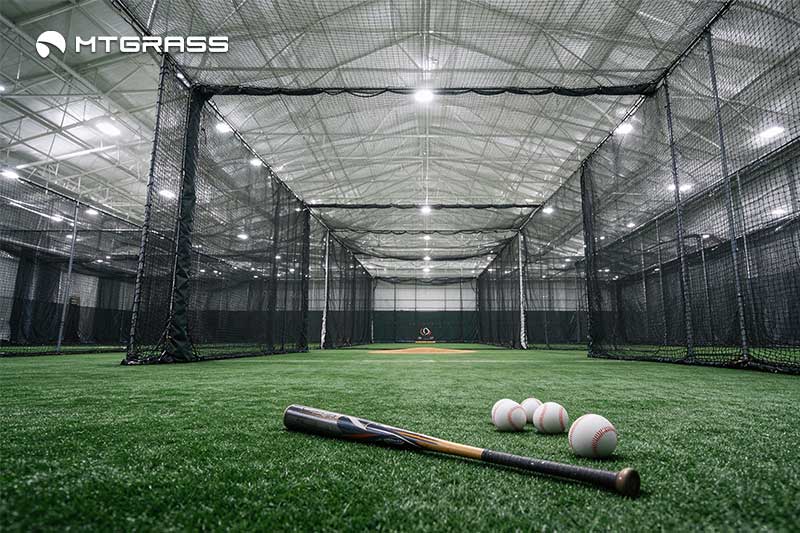
Building an indoor baseball facility gives you a dedicated space for year-round batting, pitching, and fielding practice. However, your investment depends on more than the number of batting cages you install. Building size, renovation requirements, training equipment, lighting, HVAC, and flooring all affect the total cost.
Whether you plan to build a new commercial training center or upgrade an existing facility, understanding these expenses helps you establish a realistic budget before construction begins.
Indoor Baseball Facility Cost by Size: Quick Estimates
| Custo | Typical range | For a 10,000 sq ft facility |
| Industrial lease | About $7.79 to $28.26 per sq ft a year; $10.55 US average | About $78,000 to $283,000 a year |
| Construction and build-out | $150 to $250 per sq ft | $1.5M to $2.5M |
| Permitting and compliance | $0.15 to $0.50 per sq ft | $1,500 to $5,000 |
| Relva artificial | From $3.50 / m² (MightyGrass) | From $3,251.61 |
| Pitching machines | $1,500 to $15,000 each | Entry-level around $3,000 |
The above-mentioned MightyGrass relva artificial de basebol is the ex-factory price, all other data points are estimated based on industry information. As these costs are variable, they should not be considered the total project cost. If you purchase or construct new buildings or large-scale structural works may also significantly increase your investment.
How Much Does an Indoor Baseball Facility Cost?
The cost of building an indoor baseball facility varies according to its size, location, building condition, and training functions. For a facility built inside an existing indoor sports facility or commercial building, an initial fit-out budget may range from approximately $90,000 to over $420,000.
Small Indoor Baseball Training Facility
A small facility typically accommodates three or four batting cages, basic pitching equipment, and a limited practice area. With approximately 3,500–5,000 square feet, you can establish a training space for private coaching, local baseball clubs, or school programs.
Medium-Sized Baseball Training Center
A medium-sized center may include five to eight batting cages, pitching stations, and additional areas for hitting and fielding drills. A space of 6,000–10,000 square feet gives you more flexibility to accommodate multiple training activities and customers simultaneously.
Large Commercial Baseball Facility
If you plan to operate a commercial baseball academy, you may need 10,000–20,000 square feet or more. This allows you to include multiple batting tunnels, an indoor infield, bullpen areas, and strength and conditioning spaces. More specialized equipment and building systems will increase your initial investment.
New Construction vs. Existing Facility Conversion
You can either construct a new building or convert an existing warehouse. New construction gives you greater control over ceiling height, layout, insulation, and utilities, but requires additional spending on the building structure, foundation, and site preparation.
Conversion can reduce structural construction costs if the existing building already has sufficient clear height, suitable floor conditions, and adequate utilities. However, upgrades to HVAC, electrical systems, fire protection, and accessibility can add significant renovation expenses.
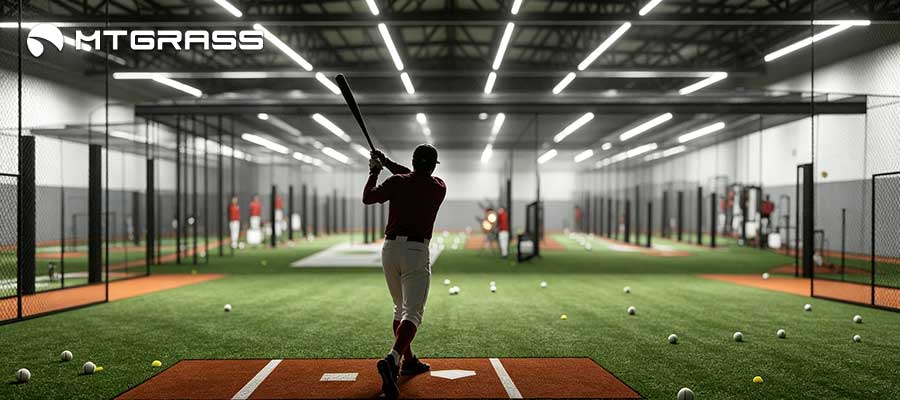
What Are the Major Costs of Building an Indoor Baseball Facility?
Building Construction and Warehouse Renovation
For a new facility, you need to budget for the foundation, structural frame, roofing, insulation, exterior walls, and site preparation. When converting a warehouse, inspect the existing floor slab, ceiling height, column spacing, and electrical capacity before committing to the property.
Batting Cages and Netting Systems
Batting cages are essential for most indoor baseball facilities. Your costs depend on the number and dimensions of the tunnels, netting quality, support structures, and installation requirements.
Fixed netting provides dedicated training lanes, while retractable systems allow you to open up the space for other activities. For a commercial facility, choose durable netting and properly designed support structures that can withstand repeated ball impacts.
Baseball Training Equipment
Your equipment budget depends on the services you intend to offer. Common purchases include:
- Pitching machines and ball feeders
- Batting tees and protective screens
- Baseballs and training bats
- Pitching mounds and throwing targets
- Radar systems and swing-analysis equipment
You do not need to purchase every type of equipment before opening. Prioritize the items required for your core training programs and expand as customer demand grows.
Lighting, HVAC and Electrical Systems
Good lighting helps players track the ball and practice safely. Your lighting layout should minimize shadows and glare across batting tunnels and open training areas.
HVAC systems maintain comfortable indoor conditions throughout the year, while electrical planning ensures that lighting, pitching machines, ventilation, and other equipment receive sufficient power. Existing buildings may require electrical upgrades or additional heating and cooling capacity.
Artificial Turf Flooring
When building an indoor baseball facility, relva artificial serves as the primary flooring material, and its quality directly affects player safety, maintenance requirements, and the overall user experience. A cheap choice usually costs more over time, because worn lanes mean replacement and downtime. The following specification factors will alter the price per square meter:
- Yarn material: Artificial grass fibers are commonly made of nylon, PP, and PE, with PE offering a better balance of comfort and durability.
- Face weight: This measures how much fiber is in the turf. Higher face weight generally means a denser, more durable surface, and a higher price.
- Pile height: Low pile is typical for hitting lanes. Taller pile suits fielding areas where you want a more natural ball bounce.
- Backing and padding: Artificial turf laid directly on concrete behaves differently from turf over a padded subfloor. A shock-absorbing turf improves comfort and reduces joint stress, and costs more than unpadded turf.
Permits, Safety Requirements and Installation
Before construction, check local zoning rules, building codes, fire protection requirements, and occupancy regulations. You may also need protective barriers, safety netting, emergency exits, and fire alarms.
How to Plan an Indoor Baseball Facility Budget
A well-planned budget should cover both construction and long-term operating expenses.
1. Define your training functions and layout.
Decide whether your facility will focus on batting practice, pitching instruction, fielding drills, or comprehensive baseball training. Your service offering determines the space, equipment, and flooring you need.
2. Prioritize essential equipment.
Start with equipment required for your main services. You can add advanced swing-analysis systems and additional pitching machines as your business grows.
3. Compare construction and renovation options.
Obtain quotations for new construction and existing-building renovation whenever possible. An inexpensive warehouse may require substantial upgrades, so compare the complete project costs rather than the initial property price.
4. Include maintenance and operating expenses.
Plan for rent or mortgage payments, utilities, insurance, staffing, cleaning, equipment maintenance, and flooring repairs. You should also maintain a contingency allowance for unexpected construction expenses.

How to Choose Artificial Turf for an Indoor Baseball Facility?
Your turf selection should reflect the activities performed in each training zone. Installing the same flooring throughout the facility may not be the most practical or economical solution.
- Batting cage areas: Choose baseball turf with durable yarn, strong backing, and suitable resistance to repeated foot traffic. Consider whether an underlay is needed for player comfort. See the Batting Cage Turf Buying Guide for more information.
- Pitching and throwing areas: Prioritize surface stability and appropriate traction to support pitching mechanics and repeated player movement. Consider compatibility with portable or fixed pitching mounds.
- General training and fielding areas: Select turf according to the expected foot traffic, ball interaction, and training activities. Larger open areas may also require additional shock absorption.
- Strength and conditioning areas: Rubber flooring or specialized sports flooring may be more suitable for weightlifting and heavy training equipment.
When comparing turf quotations, consider material specifications, underlay, accessories, and installation costs together. For a more detailed breakdown of artificial turf purchasing and installation expenses, refer to the Baseball Turf Cost Guide.
Perguntas frequentes
How Much Space Does an Indoor Baseball Facility Need?
A small training facility may need 3,500–5,000 square feet, while a medium-sized center may require 6,000–10,000 square feet. Larger commercial facilities may need 10,000–20,000 square feet or more, depending on the number of training zones and available ceiling height.
How Much Does It Cost to Install Artificial Turf in an Indoor Baseball Facility?
Your artificial turf installation budget depends on the coverage area, turf specification, subfloor condition, underlay, and installation method. Include seam joining, adhesives, accessories, and labor when calculating the complete flooring cost.
What Is the Biggest Expense When Building an Indoor Baseball Facility?
- For a new facility, building construction costs typically range from $150 to $250 per square foot.
- If you choose to lease and renovate an existing warehouse, upgrades to HVAC, electrical, and fire safety systems can significantly increase your initial investment. Rent is another recurring expense, with annual rates varying by location and typically ranging from approximately $8 to over $28 per square foot.
- Within the facility, artificial turf, protective netting, and lighting systems are also major components of the interior fit-out budget.
How Much Money Does an Indoor Sports Facility Make?
An indoor sports facility can generate several hundred thousand dollars to over $1 million in annual revenue, depending on its size, location, utilization rate, and business model. Revenue typically comes from facility rentals, memberships, training programs, leagues, tournaments, and private coaching. However, actual profitability depends on operating expenses such as rent, staffing, utilities, insurance, and maintenance.
Considerações finais
An indoor baseball facility is a major investment, but you control many of the biggest decisions: whether you lease or build, how many lanes you plan for, and which materials go on your floor. Start by defining the training programs you want to offer. Then build your budget around them, get itemized quotes for your largest systems, and keep a reserve for costs a quote doesn’t show.
Poderosa grama helps you specify indoor baseball turf for every part of your facility, from batting lanes and pitching areas to open training zones. Our team can review your floor plan, recommend products for each zone, and help you estimate material needs before you order.