
 Español
  English
  العربية
  Deutsch
  Français
  Português
  Русский
  日本語
日本語  Italiano
  Nederlands
  Svenska
  Suomi
Suomi  ไทย
ไทย  Dansk
Dansk  Ελληνικά
  Bahasa Melayu
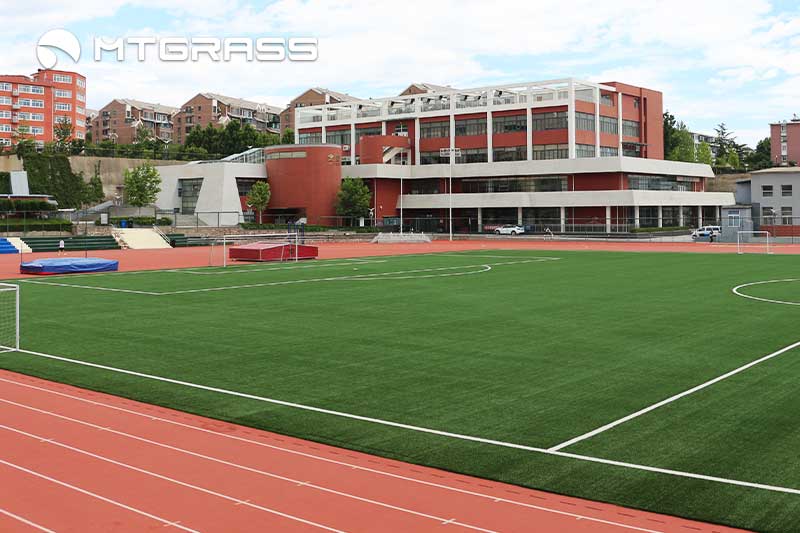
Todos los años, los administradores escolares de todo el mundo se enfrentan al mismo reto recurrente: Los campos que antes parecían verdes y utilizables a menudo se llenan de parches y barro después de un uso frecuente o de la lluvia, lo que lleva a reprogramar las clases de educación física y a que las condiciones de juego no sean óptimas para los equipos deportivos.
Según un reciente análisis de mercado, se prevé que el mercado mundial de césped artificial crezca de aproximadamente $4,14 mil millones en 2025 a $4,38 mil millones en 2026. Las instalaciones deportivas constituyen una de las mayores áreas de aplicación (≈45%), con las escuelas y las instalaciones institucionales entre los segmentos de más rápido crecimiento.
Para los responsables de la educación, la pregunta ya no es: "¿Es el césped artificial una opción? tipo de césped artificial escolar es la solución más práctica y rentable".
Esta guía explora por qué las escuelas están adoptando el césped sintético, qué beneficios reales están viendo, las preocupaciones comunes y lo que más importa antes de hacer el cambio.
¿Por qué el césped natural ya no es ideal para los colegios?
La hierba natural fue en su día el material por defecto de los campos escolares. Pero en entornos de alto uso presenta retos persistentes que afectan tanto a las operaciones como a los presupuestos:
1. Costes de mantenimiento elevados e imprevisibles
Mantener el césped natural sano para el uso diario exige cortarlo, regarlo, abonarlo, controlar las malas hierbas y reparar los parches con regularidad. Para muchos colegios, los presupuestos anuales de mantenimiento aumentan año tras año.
En una comparación típica de campos institucionales, el mantenimiento de la hierba natural puede costar más de tres veces el gasto anual del césped artificial a lo largo de su ciclo de vida.
2. Horas de uso limitadas
Los campos de hierba natural requieren un tiempo de recuperación tras un uso intensivo, lo que limita considerablemente la frecuencia con la que pueden programarse. En la práctica, esto se traduce en menos horas disponibles para las clases de educación física, los entrenamientos de los equipos y los programas de fin de semana, lo que reduce la utilización general de los campos y la eficiencia de los centros escolares.
3. Sensibilidad meteorológica
El césped natural depende en gran medida de las condiciones meteorológicas. La lluvia puede embarrar rápidamente los campos, mientras que la sequía y el calor excesivo pueden dañar la calidad del césped. Esta imprevisibilidad dificulta el mantenimiento de unas condiciones de juego uniformes y aumenta la complejidad de la gestión de los campos.
4. Seguridad y responsabilidad
Las superficies irregulares, los parches de barro y las zonas desnudas aumentan el riesgo de tropiezos y torceduras, problemas que los centros escolares no pueden pasar por alto a la hora de planificar la responsabilidad civil.
Principales ventajas del césped artificial para colegios
Césped artificial no es sólo un "sustituto del césped", sino que representa una mejora estratégica del uso que los centros escolares hacen de sus instalaciones al aire libre.
1. Mantenimiento reducido y costes previsibles
El césped artificial elimina la siega, el riego, el abono y los parches frecuentes. Con sólo una limpieza e inspección ocasionales, los colegios pueden reducir significativamente los gastos anuales de mantenimiento. En muchas comparaciones, el coste total de propiedad del césped artificial a lo largo de 10 años sigue siendo significativamente inferior al del césped natural, a pesar de una mayor inversión inicial.
2. Accesibilidad todo el año
El césped artificial se puede utilizar con lluvia, sol y uso frecuente. Permite a las escuelas programar clases de educación física, entrenamientos de equipos y eventos comunitarios con confianza, sin esperar a que la hierba se recupere, mejorando así de forma integral la experiencia de aprendizaje de los alumnos y sus capacidades deportivas sin ningún impedimento. Según la escuela primaria Beijing Shicheng, tras sustituir sus campos de hierba natural por césped artificial, el tiempo de uso real de los campos casi se duplicó.
3. Superficie de juego consistente y más segura
Los sistemas de césped modernos ofrecen una superficie plana y uniforme con una amortiguación diseñada para reducir los resbalones y minimizar las discrepancias de desgaste que suelen afectar a los campos naturales.
4. Estética del campus y atractivo para la comunidad
El césped artificial se mantiene verde y con un aspecto profesional durante todo el año, lo que contribuye a crear un entorno positivo en el campus que padres y visitantes perciben.
Además, si su escuela está abierta al público, puede colaborar con empresas locales, equipos deportivos y centros comunitarios para compartir el uso del césped artificial para actividades atléticas. Esto no sólo satisface las necesidades de varios grupos comunitarios, sino que también genera ingresos adicionales para la escuela.
Preocupaciones comunes de los colegios sobre el césped artificial
Las ventajas del césped artificial son evidentes: mayor durabilidad, uso en cualquier condición meteorológica y menor mantenimiento.
Sin embargo, para los administradores, gestores de instalaciones y equipos de compras, la adopción de césped artificial es mucho más que una simple mejora de las instalaciones: es una inversión a largo plazo. En consecuencia, siempre se plantean las mismas preguntas:
"¿Es seguro el césped artificial para los alumnos?"
La seguridad depende de la calidad del sistema y de la instalación. Un césped bien diseñado, con una adecuada absorción de impactos y fibras no tóxicas, es seguro en el uso diario y goza de gran aceptación en los entornos escolares.
"¿Se calentará demasiado la superficie?"
El calor de la superficie es una preocupación válida, especialmente bajo un sol fuerte. Las escuelas de climas cálidos suelen elegir fibras resistentes al calor, colores más claros o estructuras de fibra mejoradas que reflejan más la luz solar y reducen la temperatura de la superficie.
"¿Cómo funciona el drenaje?"
El césped artificial con una base de ingeniería y un soporte permeable puede drenar el agua de forma eficaz, a menudo más rápido que un campo de hierba saturado, por lo que se puede utilizar rápidamente después de la lluvia.
"¿Cuánto durará con el uso diario?"
El césped sintético de alta calidad diseñado para uso institucional suele tener una vida útil de entre 8 y 10 años, dependiendo del tipo de fibra, la estructura de la base, la intensidad de uso y las prácticas de mantenimiento anuales.
Si bien estas preocupaciones son válidas, pueden abordarse eficazmente con el diseño del sistema adecuado, la selección de materiales, y la instalación profesional. En MightyGrass, trabajamos en estrecha colaboración con las escuelas y los clientes institucionales para desarrollar soluciones de césped artificial que el equilibrio de seguridad, durabilidad y valor a largo plazo. De los sistemas de absorción de impactos a las estructuras de drenaje eficiente y opciones de fibra consciente del calor, cada proyecto está diseñado para satisfacer las demandas específicas de los entornos educativos.
¿Qué deben tener en cuenta los colegios antes de cambiar al césped artificial?
Elegir césped artificial no consiste sólo en comprarlo, sino en diseñar un sistema que se adapte al clima de su campus, a sus pautas de uso y a sus expectativas de seguridad. He aquí una práctica lista de comprobación:
1. Definir cómo se utilizará el campo
¿Servirá para las clases diarias de educación física, los entrenamientos de los equipos, los deportes de competición o los actos comunitarios? La intensidad de uso determina el tipo de fibra, la altura de la pila y las especificaciones del relleno que debe elegir.
2. Tenga en cuenta el clima y las condiciones del lugar
- Regiones cálidas: dar prioridad a las fibras reflectantes del calor y a los colores claros.
- Zonas lluviosas: garantizar un diseño de drenaje sólido.
- Climas fríos: considere sistemas de césped resistentes al estrés por congelación-descongelación.
3. Presupueste pensando en el valor a largo plazo
Los costes iniciales son importantes, pero es en el ahorro de costes del ciclo de vida -en mantenimiento y horas útiles- donde las escuelas suelen obtener los beneficios reales. La planificación presupuestaria debe tener en cuenta la instalación, la renovación periódica y la sustitución al final de la vida útil.
4. Priorizar el rendimiento del sistema sobre el precio
Una base de alta calidad y un drenaje adecuado son tan importantes como la superficie del césped. Una construcción deficiente de la base puede mermar el rendimiento, por muy excelente que parezca el césped.
5. Plan de seguridad
Dependiendo de la edad de los alumnos y de los tipos específicos de actividades que se lleven a cabo, es posible que desee considerar la instalación de una capa de base amortiguadora para mejorar aún más tanto la seguridad del campo como la comodidad del usuario. (Si se instala césped artificial en interiores, se recomienda seleccionar un Césped artificial sin relleno sistema que incluye una almohadilla amortiguadora).
6. Instalación y sistema de sub-base
Una superficie de césped de alta calidad depende en gran medida de la construcción adecuada de la base y del diseño del drenaje. Incluso el mejor césped puede rendir por debajo de sus posibilidades si la instalación no se realiza correctamente.

¿Qué tipos de césped artificial son adecuados para los colegios?
Las distintas zonas de un campus escolar tienen requisitos de uso muy diferentes. Elegir el tipo adecuado de césped artificial no es solo una cuestión de apariencia, sino que afecta directamente a la seguridad, la durabilidad y el coste a largo plazo.
Según nuestra experiencia en MightyGrass, la mayoría de los proyectos escolares pueden dividirse en las siguientes aplicaciones clave:
1. Sistemas de césped deportivo
Diseñado para un uso intensivo y de alto impacto, sistemas de césped deportivo dan prioridad a la durabilidad, la absorción de impactos y la seguridad de los jugadores. El césped artificial deportivo es la opción ideal para instalaciones deportivas de competición y campos de entrenamiento, como los de fútbol, rugby, béisbol y softball, donde la consistencia del rendimiento del campo es de vital importancia.
En MightyGrass, las soluciones de césped deportivo están diseñadas con estructuras de fibra reforzadas y sistemas de base optimizados para soportar un uso frecuente, manteniendo al mismo tiempo unas condiciones de juego estables.
2. Césped polivalente
Las pistas polivalentes requieren un equilibrio entre rendimiento y versatilidad. La césped multideporte deben proporcionar una tracción adecuada, respuesta al balón y comodidad en diferentes deportes.
MightyGrass ofrece sistemas de césped adaptables que pueden personalizarse para varios tipos de pistas, ayudando a los colegios a maximizar la utilización del espacio sin comprometer la calidad del juego.
3. Césped artificial sin relleno
El césped sin relleno es cada vez más popular en las escuelas debido a su instalación simplificada y a sus reducidas necesidades de mantenimiento (sobre todo en instalaciones deportivas cubiertas). Es especialmente adecuado para zonas en las que la limpieza, la seguridad y la facilidad de mantenimiento son prioritarias.
4. Césped paisajístico
Para zonas generales del campus, como paseos, césped abierto y zonas de actividad estudiantil, césped paisajístico se centra en la estética, el confort y la durabilidad a largo plazo. El césped paisajístico MightyGrass está diseñado para ofrecer un aspecto natural con un tacto suave y una gran resistencia al desgaste, por lo que es ideal para el uso diario de los estudiantes.
Al seleccionar y combinar cuidadosamente diferentes tipos de sistemas de césped, MightyGrass permite a su escuela optimizar el gasto presupuestario al tiempo que garantiza un rendimiento superior del campo. En muchos casos, un proyecto bien planificado integrará múltiples tipos de césped en diferentes áreas del campus.
Elegir MightyGrass: Soluciones prácticas para el césped de su colegio
Cuando sus escuelas deciden cambiar al césped artificial, el siguiente reto es elegir un socio fiable que entienda tanto el producto como el proyecto. MightyGrass Como Fabricante de césped artificial homologado por la FIFA y proveedor, estamos especializados en soluciones a medida para instalaciones deportivas, ofreciendo paquetes integrales de sistemas que abarcan desde el diseño del césped hasta la orientación para su instalación.
1. Apoyo integral al proyecto
MightyGrass no sólo vende rollos de césped. Usted se beneficia de:
- Asesoramiento técnico para adaptar el tipo de césped a las pautas de uso
- Orientación sobre la construcción de la subbase y el drenaje
- Proporcionar apoyo técnico y asistencia durante todo el proceso de instalación del césped artificial.
Para los administradores, esto significa menos sorpresas, resultados más predecibles y un campo que funciona según lo prometido.
2. Durabilidad y certificaciones probadas
Todo el césped escolar MightyGrass lo es:
- Césped certificado por la FIFA para el rendimiento
- Sometido a pruebas SGS e ISO de resistencia a los rayos UV, resistencia a la tracción y seguridad medioambiental
- Diseñado para un uso frecuente durante más de 8-10 años con un mantenimiento mínimo
De este modo, los centros escolares obtienen una superficie segura, duradera y fiable que cumple las normas reglamentarias y educativas.
3. Adaptación a las necesidades de la escuela
Cada escuela tiene sus propios requisitos:
- Campos deportivos de alto uso → fibras reforzadas de mayor densidad.
- Parques infantiles polivalentes → césped más blando y amortiguador.
- Zonas de aulas al aire libre → opciones estéticamente atractivas y de bajo mantenimiento.
MightyGrass puede adaptar la altura del pelo, la estructura de la fibra, el color y el soporte a estas necesidades.
Nuestro césped artificial es apto para una amplia gama de deportes, incluido el fútbol, rugby, hockey sobre hierbaActividades multideportivas, tenis, y pádel. Hierba poderosa también ofrecen soluciones de césped para zonas recreativas multifuncionales y paisajismo. Desde el diseño y la fabricación hasta la instalación y el mantenimiento, nuestro equipo se asegura de que todos los espacios sean duraderos y ofrezcan un rendimiento excepcional.
¿Qué colegios han instalado césped artificial MightyGrass?
Los sistemas de césped artificial MightyGrass se han instalado en universidades, colegios y campus escolares en diferentes climas y escenarios de uso. Estos proyectos reales demuestran el rendimiento del césped sintético en condiciones de uso académico diario, actividades deportivas intensivas y diversas condiciones ambientales.
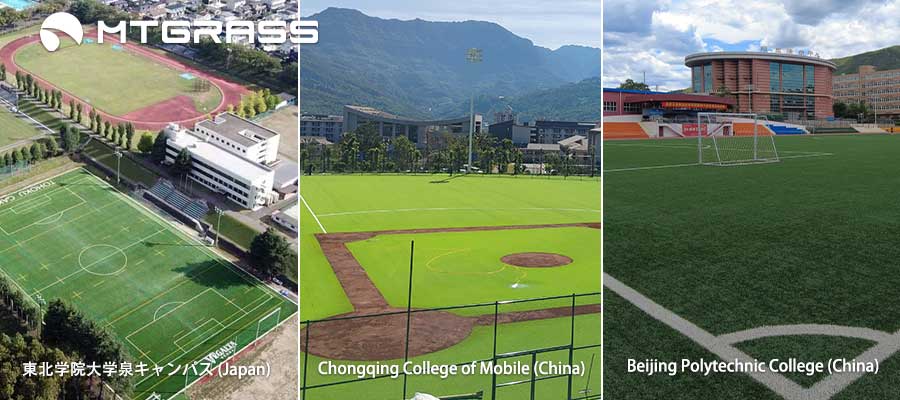
- 東北学院大学泉キャンパス (Japón): Instalación de césped deportivo sintético duradero y multifuncional (apto tanto para fútbol como para rugby), optimizado para albergar sesiones de entrenamiento frecuentes y eventos en todo el campus.
- Colegio Politécnico de Pekín (China): Un sistema de césped sintético deportivo de alta densidad, certificado por la FIFA, con una base reforzada, diseñado específicamente para soportar el intenso tráfico diario.
- Escuela Superior de Comunicación Móvil de Chongqing (China): A béisbol y softball césped sintético con un diseño de drenaje mejorado, adaptado al clima local y a las fuertes precipitaciones para minimizar el tiempo de inactividad.
- Campo de fútbol de Genting Highlands (Malasia): Un campo de fútbol certificado por la FIFA situado a 1.800 metros de altitud; diseñado para resistir las condiciones climáticas extremas de la región montañosa, a la vez que sirve de escenario para eventos corporativos, actividades recreativas para invitados y diversos programas de entrenamiento.
Conclusión
El cambio al césped artificial es algo más que una mejora de la superficie: es una decisión estratégica que repercute en la seguridad de los alumnos, la utilización del campo y los presupuestos escolares.
Le recomendamos que considere detenidamente una amplia gama de factores, incluidos los patrones de uso previstos, las condiciones climáticas locales y las normativas de seguridad, la calidad de la instalación y la construcción, los requisitos de mantenimiento a largo plazo y los costes totales del ciclo de vida.
...las escuelas pueden tomar una decisión informada. MightyGrass ofrece soluciones de césped a medida, durabilidad probada y soporte técnico para garantizar que su campus disfrute de una superficie segura, apta para todo tipo de clima y de alto rendimiento en los años venideros.
Si usted está evaluando el césped artificial para su escuela, discutir el uso y los requisitos de su campo con un consultor MightyGrass. Solicitar una muestra o cotización del proyecto, convertir su campo de la escuela en un espacio confiable, todo tipo de clima que apoya a los estudiantes, educadores, y toda la comunidad - con MightyGrass como su socio de confianza.
Preguntas frecuentes
¿Necesita mantenimiento el césped artificial en los colegios?
Sí, pero bastante menos que la hierba natural.
El mantenimiento típico incluye:
- Retirada de residuos (hojas, basura)
- Cepillado ocasional para mantener la verticalidad de las fibras
- Inspección periódica de las costuras y el relleno
En comparación con el césped natural, las escuelas pueden reducir sustancialmente la mano de obra, el consumo de agua y los costes de mantenimiento.
¿Es el césped artificial más barato que el natural para los colegios?
Aunque el césped artificial tiene un coste inicial más elevado, suele ser más rentable con el tiempo.
Las escuelas ahorran en:
- Facturas de riego y agua
- Equipo y mano de obra para el cuidado del césped
- Abonos y reparaciones
A lo largo de un ciclo de vida de 8-10 años, el césped artificial puede ofrecer un menor coste total de propiedad, especialmente para campos escolares de alto uso.
¿Puede utilizarse el césped artificial para varios deportes en los colegios?
Sí. La mayoría de los sistemas escolares de césped artificial están diseñados para un uso polideportivo, incluyendo:
- Fútbol
- Rugby
- Clases de educación física
- Actividades generales de los estudiantes
Esta versatilidad es una de las principales razones por las que las escuelas eligen el césped sintético en lugar del natural.
¿Cómo gestiona el césped artificial la lluvia y el drenaje?
Los sistemas de césped artificial se construyen con un soporte permeable y capas de drenaje, que permiten que el agua pase rápidamente.
En muchos casos, los campos de césped artificial son más aptos para el juego después de la lluvia que los de hierba natural, lo que los hace ideales para colegios con calendarios ajustados.


